
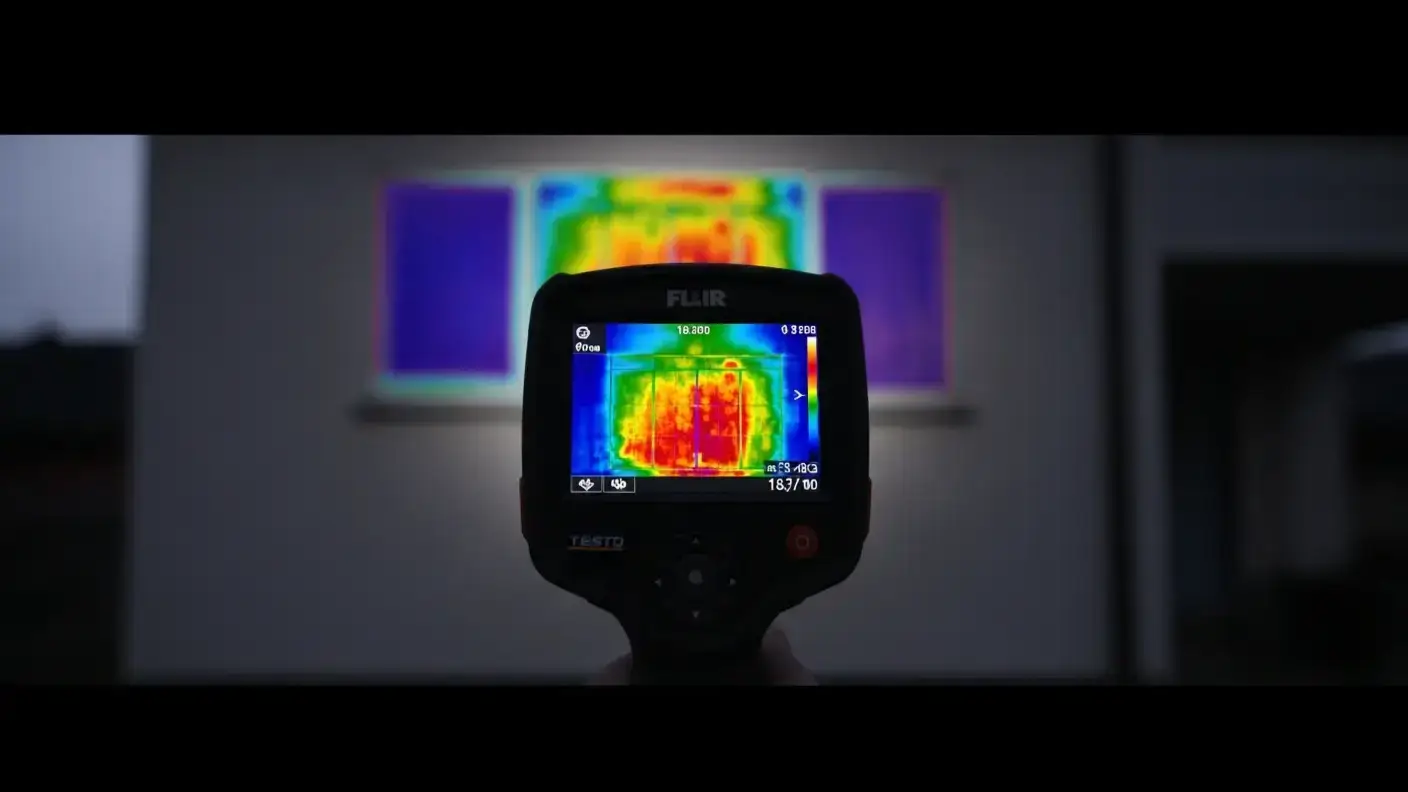
Thermal Imaging Surveys
Professional thermal imaging surveys for detecting hidden pest activity, moisture ingress, and insulation defects in commercial and residential properties across the North East.
Why You Need Professional Thermal Imaging Surveys
Thermal imaging uses infrared camera technology to detect temperature differences in walls, ceilings, floors, and roof spaces that indicate hidden pest activity, moisture ingress, or insulation failures. Our NPTA-qualified technicians use professional-grade thermal imaging equipment to identify problems that are invisible to the naked eye, including rodent nesting sites in wall cavities, insect colonies behind cladding, water leaks feeding damp conditions, and heat loss through failed insulation. Thermal imaging surveys provide clear, documented evidence that supports targeted treatment, building maintenance decisions, and insurance or property transaction requirements.
What's Included
Why acting quickly matters
Hidden pest activity behind walls, above ceilings, and within structural voids can cause significant damage before visible signs appear. By the time droppings, gnaw marks, or odour become noticeable, the infestation is often well established. Thermal imaging detects the heat signatures of nesting colonies, active runways, and moisture-related conditions that attract pests, allowing intervention before damage escalates.
Need a thermal imaging survey?
Non-invasive pest and moisture detection for businesses and homeowners across the North East.
Request a free call back
Prefer to get in touch another way? Contact us or email info@wynyardpestcontrol.co.uk
Threat Assessment
Nuisance:
4/10MODERATEThermal imaging itself addresses hidden problems that cause nuisance. Undetected pest nesting in walls creates noise, odour, and structural damage. Moisture ingress leads to damp, mould growth, and deterioration of building fabric. Insulation defects increase energy costs and create cold spots that attract condensation.
Hazard:
6/10MODERATEHidden rodent nesting in wall cavities creates fire risks through gnawed wiring and health hazards from accumulated droppings and urine. Undetected moisture ingress promotes conditions for woodworm, fungal decay, and mould that can cause respiratory problems. In commercial properties, hidden pest activity can lead to audit failures, enforcement notices, and product contamination.
Vital Statistics
| Technology | Infrared thermography (non-contact) |
| Detection range | Temperature differences as small as 0.05 degrees Celsius |
| Survey method | Non-invasive, non-destructive |
| Report format | Annotated thermal and visual images |
| Applications | Pest detection, moisture, insulation, building surveys |
| Coverage | All North East commercial and residential properties |
Key Facts
- Rodent colonies nesting in wall cavities produce detectable heat signatures. Thermal imaging can locate nesting sites without opening walls or ceilings.
- Moisture ingress hidden behind walls and above ceilings creates conditions that attract woodworm, fungal decay, and pest species that thrive in damp environments.
- Gnawed electrical wiring inside wall voids is a leading cause of unexplained fires. Thermal imaging can detect hotspots caused by damaged wiring before a fire occurs.
- Failed insulation in walls and roof spaces creates cold spots that attract condensation, leading to damp conditions and potential pest harbourage.
- Thermal imaging cameras detect infrared radiation emitted by all objects, converting temperature differences into visible images. Warmer areas appear as brighter colours, cooler areas as darker colours.
- Professional thermal imaging cameras can detect temperature differences as small as 0.05 degrees Celsius, sensitive enough to identify a rodent nest behind a plasterboard wall.
- Thermal imaging is completely non-invasive. No holes are drilled, no panels removed, and no disruption to the building fabric. The survey is carried out from inside the occupied space.
- Thermal surveys are most effective when there is a temperature difference between the inside and outside of the building, typically during cooler months or early morning.
"Really good experience with this company. They were quick to respond, professional and easy to deal with. [the technician] handled the job and was friendly, knowledgeable and explained everything clearly. Would definitely recommend."
Beth Smith · Google review, March 2026
Suspect hidden pest activity?
Thermal imaging detects what the eye cannot see. Free consultation and survey quotation across the North East.
How Thermal Imaging Detects Pest Activity
A colony of rats nesting in a wall cavity generates enough heat to create a detectable thermal signature through plasterboard, identifying the exact location without opening the wall.
All living organisms produce heat, and colonies of nesting rodents or insects generate enough thermal energy to create detectable temperature differences on the surfaces surrounding their harbourage. A professional thermal imaging camera translates these temperature differences into visible images, revealing the location of hidden activity.
Rodent nesting: A colony of rats or mice nesting in a wall cavity, ceiling void, or beneath a floor produces a warm spot that appears clearly on a thermal image. The heat comes from the animals' body temperature and the insulating effect of nesting materials. Multiple warm spots along a wall or ceiling can indicate travel routes between nesting and feeding areas.
Insect colonies: Large colonies of social insects such as wasps nesting in loft spaces or wall cavities generate significant heat, particularly in summer. Thermal imaging can pinpoint the exact location of a nest without the need to open up the building fabric.
Moisture-related conditions: Damp areas appear as cooler zones on thermal images because evaporating moisture draws heat from the surface. These damp conditions attract moisture-loving pests including woodworm, silverfish, and cockroaches. Identifying and resolving moisture problems is an essential part of long-term pest prevention.
The Survey Process
A thermal imaging survey follows a structured process designed to cover the entire property systematically and produce clear, actionable findings.
- Pre-survey consultation: We discuss the reasons for the survey, any known or suspected problems, the building's construction type, and areas of particular concern. This helps focus the survey on the most relevant zones.
- External scan: The exterior of the building is scanned to identify heat loss patterns, moisture ingress points, insulation gaps, and any thermal anomalies around the building envelope. Particular attention is paid to roof lines, eaves, and areas where services enter the building.
- Internal scan: Every room and accessible space is scanned systematically. The camera is used to examine all walls, ceilings, floors, and around service penetrations. Thermal anomalies are cross-referenced with visual observations and the building's construction details.
- Detailed investigation: Any thermal anomalies are investigated further using additional reference images, moisture meters, or other non-destructive testing methods where appropriate.
- Report preparation: A detailed report is prepared containing annotated thermal images alongside standard photographs, with clear explanations of each finding and recommendations for action.
Equipment and Technology
We use professional-grade thermal imaging cameras with high thermal sensitivity (capable of detecting temperature differences as small as 0.05 degrees Celsius), high-resolution thermal sensors for detailed imaging, visual camera integration for side-by-side comparison of thermal and standard images, and on-board reporting tools for annotating images during the survey.
The equipment is calibrated regularly and operated by technicians trained in thermographic interpretation. Reading thermal images correctly requires understanding of building construction, heat transfer principles, and the factors that can create misleading thermal patterns (reflections, air movement, surface emissivity differences).
Our technicians combine thermal imaging expertise with practical pest control knowledge, allowing them to distinguish between pest-related thermal anomalies and other causes such as heating pipes, electrical equipment, or structural features.
Applications in Building Surveys
Thermal imaging is increasingly used as part of building surveys for property purchases, insurance assessments, and maintenance planning. It provides evidence of hidden conditions that would otherwise require destructive investigation to confirm.
Pre-purchase surveys: Thermal imaging can reveal hidden moisture ingress, failed insulation, blocked cavities, and evidence of current or historic pest activity that would not be visible during a standard building survey. This information is valuable for negotiating purchase price and planning remedial work.
Insurance claims: Thermal images provide clear documentary evidence of moisture ingress, leak damage, and structural defects for insurance purposes. The annotated images are widely accepted by insurers as supporting evidence.
Planned maintenance: Regular thermal surveys of commercial properties identify developing problems before they cause damage or disruption. This is particularly valuable for facilities management teams responsible for maintaining building condition across portfolios of properties.
Moisture Detection and Pest Prevention
Moisture is a primary driver of pest activity. Damp timbers attract woodworm, wet environments support mould and fungal growth that feeds certain insect species, and standing water provides a resource for rats and other pests. Thermal imaging identifies moisture problems at an early stage, before visible damage appears.
Common moisture issues detected by thermal imaging include roof leaks entering loft spaces and wall cavities, rising damp in ground-floor walls, condensation in poorly ventilated spaces, leaking pipes within floor and wall voids, and failed damp-proof courses. By addressing these moisture issues, you remove the conditions that attract and sustain pest populations, an approach that is central to effective integrated pest management.
Why Choose Us for Thermal Imaging Surveys
Professional-Grade Equipment
We use high-sensitivity thermal cameras capable of detecting temperature differences as small as 0.05 degrees Celsius. Regular calibration ensures accurate and reliable results.
Pest Control Expertise
Our technicians combine thermal imaging skills with practical pest control knowledge, allowing them to interpret thermal anomalies in the context of pest behaviour and building construction.
Clear, Actionable Reports
Annotated thermal and visual images with plain-language explanations, likely causes, and prioritised recommendations. Reports are suitable for owners, managers, insurers, and other professionals.
Non-Invasive Method
No holes drilled, no panels removed, no disruption to the building. The survey is carried out from within the occupied space with no mess and no damage.
Integrated Service
Thermal imaging findings feed directly into our pest management programmes. We can act on findings immediately, from treatment to proofing to moisture remediation referrals.
North East Coverage
Full coverage across the North East from Newcastle to Darlington. Available for both commercial and residential properties.
Insulation Assessment
Thermal imaging reveals the condition and effectiveness of insulation throughout the building envelope. Failed, missing, or poorly installed insulation appears clearly as thermal anomalies: areas where heat is escaping through the building fabric.
Common findings include gaps in cavity wall insulation where fill has slumped or was never installed, missing or displaced loft insulation, thermal bridging around window and door openings, uninsulated service penetrations, and cold spots caused by condensation risk areas. These insulation failures not only increase energy costs but create the cool, damp conditions that attract pests and promote condensation. Addressing insulation defects as part of a building maintenance programme supports both energy efficiency and pest prevention.
Survey Reports and Documentation
Every thermal imaging survey produces a detailed report designed to be clear, actionable, and suitable for use by building owners, facilities managers, insurers, and pest control professionals.
The report includes annotated thermal images with colour-coded temperature scales, corresponding standard photographs for reference, a description of each thermal anomaly identified, an assessment of the likely cause (pest activity, moisture, insulation failure, etc.), recommended actions prioritised by urgency, and a summary of survey conditions (ambient temperature, weather, time of survey).
Reports are provided in digital format and can be shared with other professionals involved in the property, including surveyors, builders, and insurers. For commercial clients, thermal imaging reports integrate with your pest management and building maintenance records.
When to Schedule a Thermal Survey
Thermal imaging can be carried out at any time of year, but certain conditions produce the most informative results.
Autumn and winter: The temperature difference between heated interiors and cold exteriors is greatest during the colder months, making insulation defects, heat loss, and warm pest harbourages more prominent on thermal images. This is also when rodents are most likely to be nesting indoors.
Early morning: Surveys carried out before the building has been heated or before direct sunlight warms the exterior surfaces provide the clearest baseline for detecting anomalies.
After suspected pest activity: If you are hearing noises in walls or ceilings, finding droppings, or noticing unexplained smells, a thermal survey can locate the source without opening up the building fabric.
Before property purchase: A thermal survey as part of your pre-purchase due diligence can reveal hidden problems that affect the property value and your future maintenance costs.
We cover the entire North East, from Newcastle and Sunderland to Darlington and Middlesbrough.
Commercial and Residential Applications
For businesses: Regular thermal surveys support proactive maintenance and pest management. Food businesses can identify moisture and insulation problems before they create conditions that attract pests. Facilities management teams use thermal surveys to prioritise maintenance spending. Warehouse and industrial operators identify heat loss and moisture ingress that affect both energy costs and stock condition.
For homes: Homeowners benefit from thermal imaging when investigating unexplained cold spots, damp patches, pest noises in walls, or high energy bills. The survey is completely non-invasive, typically takes 1 to 2 hours, and produces a clear report with practical recommendations.
Thermal imaging is often combined with other inspection methods. For suspected rodent problems, we may combine a thermal survey with a traditional pest inspection. For moisture concerns, thermal imaging may be supplemented with moisture meter readings for confirmation.
Our Thermal Imaging Surveys Process
A structured, three-stage approach that treats the problem and prevents it returning.
Step 1
Inspect and Plan
A detailed property inspection identifies entry points, infestation hotspots, and the species involved. A targeted treatment plan is developed based on findings.
Step 2
Treatment
Professional control measures are applied using advanced techniques and CRRU-compliant products. Proofing and sealing work addresses the root cause at the same time.
Step 3
Ongoing Support
Follow-up visits confirm the problem is resolved. You receive clear documentation, prevention advice, and recommendations for ongoing protection.
Suspect hidden pest activity?
Thermal imaging detects what the eye cannot see. Free consultation and survey quotation across the North East.
Limitations and What Thermal Imaging Cannot Do
Thermal imaging is a powerful diagnostic tool, but it has limitations that are important to understand.
Thermal imaging detects surface temperature differences. It does not see through walls or materials directly. Instead, it detects heat conducted through surfaces from conditions behind them. Very thick walls, highly insulated surfaces, and reflective materials can reduce the visibility of anomalies behind them.
A single thermal image is a snapshot. Environmental conditions, heating patterns, and recent activity all affect what the camera detects. Professional interpretation is essential to distinguish between genuine anomalies and normal thermal patterns caused by heating systems, sunlight exposure, or building features.
Thermal imaging identifies areas of concern that may require further investigation. It does not replace a physical pest inspection, a structural survey, or a damp investigation. It complements these services by directing them to the right locations, reducing the need for exploratory work and making subsequent investigations more targeted and cost-effective.
"Really good experience with this company. They were quick to respond, professional and easy to deal with. [the technician] handled the job and was friendly, knowledgeable and explained everything clearly. Would definitely recommend."
Beth Smith · Google review, March 2026
NPTA Member
We are full members of the National Pest Technicians Association (NPTA). This means our technicians meet strict training and competency standards, carry appropriate insurance, and follow the association's code of practice. NPTA membership is your assurance that the work is carried out professionally and responsibly.
Fair, Transparent Pricing
Every job is different. The cost depends on the type of pest, scale of the problem, and what treatment is needed. We provide a free assessment and an honest quotation before any work begins. No hidden costs, no surprises.
View our pricing guideSatisfaction Guaranteed
Every thermal imaging survey is backed by our thoroughness guarantee. We scan every accessible surface, investigate every anomaly, and provide a detailed report with clear, actionable recommendations. If you believe any area was missed, we will return and re-survey at no additional cost.
Frequently Asked Questions
A typical residential survey takes 1 to 2 hours. Commercial surveys vary depending on the size and complexity of the premises. Multi-storey or multi-unit properties may take half a day or longer. We provide a time estimate when booking.
Not at all. Thermal imaging is completely non-invasive. No holes are drilled, no panels removed, and no mess created. The survey is carried out from within the occupied space using a handheld camera. Normal business or domestic activity can continue during the survey.
Yes. Moisture from leaks, rising damp, and condensation creates cool zones that are clearly visible on thermal images. We can detect leaks hidden behind walls, above ceilings, and beneath floors without any destructive investigation.
Yes. Every survey produces a detailed report with annotated thermal images, corresponding standard photographs, explanations of each finding, and prioritised recommendations. Reports are provided digitally and are suitable for sharing with other professionals, insurers, and building owners.
Surveys are most informative during cooler months (October to March) and early in the day before buildings have been heated or sun-warmed. However, useful results can be obtained at any time of year, and we schedule surveys at the most appropriate time for your specific concerns.
No. Thermal imaging complements a traditional pest inspection by identifying hidden anomalies that direct the physical inspection to the right locations. It is most valuable when combined with hands-on survey work by experienced pest control technicians.
Survey costs depend on the size and type of property. Contact us for a free consultation and quotation. We will discuss your concerns, explain what the survey can and cannot achieve, and provide a clear price before any work is carried out.
Our Other Services
Areas We Cover
We provide thermal imaging surveys services across the North East of England.
Ready to talk to us?
Free survey and quotation for businesses and homeowners. No obligation, no pressure.
We will get back to you as soon as we can.