
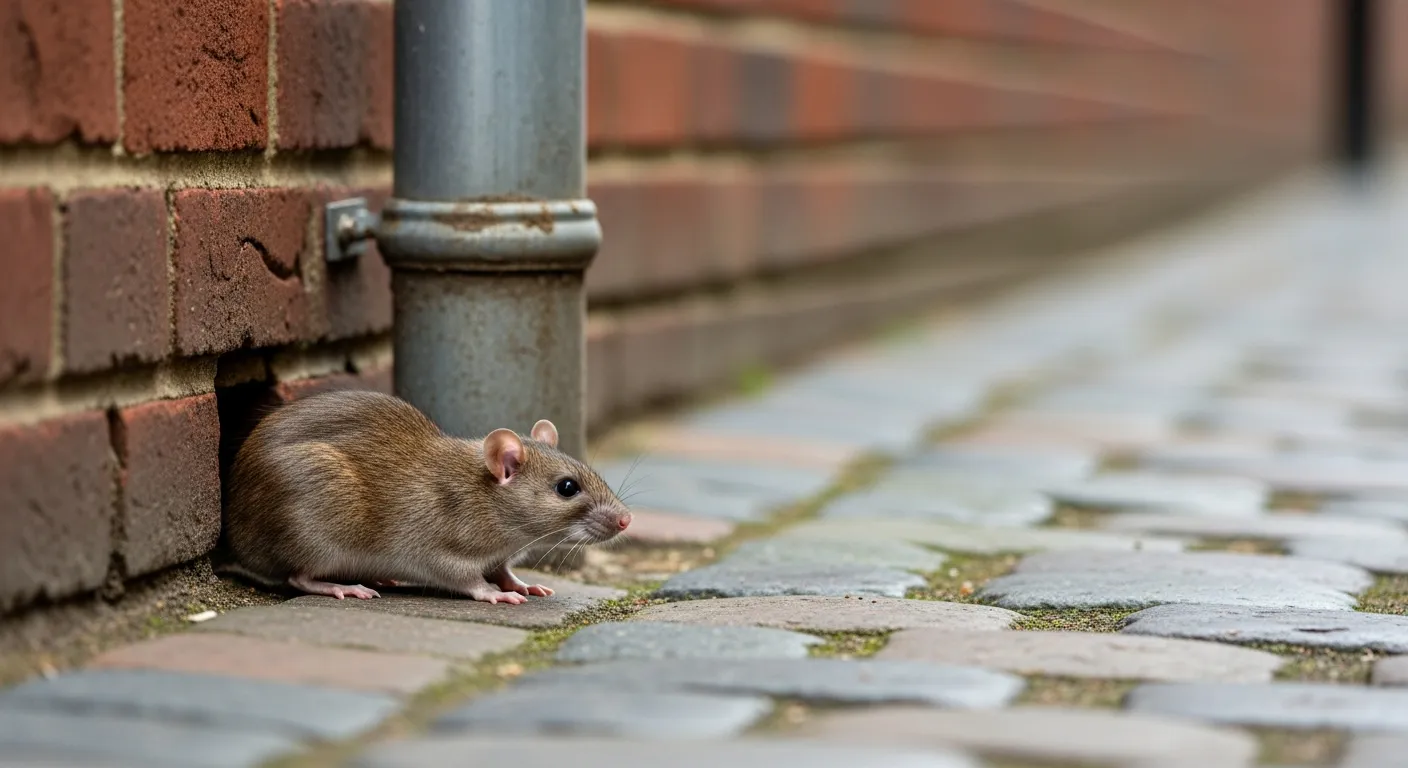
Rat Control
Professional rat control and prevention for businesses and homes across the North East.
Why You Need Professional Rat Control
Rat control is essential when you spot the first signs of activity. Rats pose serious health risks, carrying diseases such as Leptospirosis (Weil's disease), Salmonella, and Hantavirus. They cause significant structural damage by gnawing through wiring, pipes, and woodwork, creating fire hazards and compromising buildings. Our NPTA-qualified technicians provide rapid response rat control with a clear focus on long-term prevention, not just short-term fixes.
What's Included
Why acting quickly matters
In ideal conditions, two rats can produce a colony of over 1,200 within 12 months. By month 24 that number reaches 776,000, and within 36 months it climbs to approximately 482 million. Offspring begin breeding at just 8 weeks old, causing populations to grow exponentially. In practice, mortality and competition limit these numbers, but the biology is clear: a small problem today becomes a serious infestation within weeks, not months.
Need urgent help with rats?
Same-day emergency response across the North East. Free survey and quotation for businesses and homeowners.
Request a free call back
Prefer to get in touch another way? Contact us or email info@wynyardpestcontrol.co.uk
Threat Assessment
Nuisance:
8/10VERY HIGHRats cause widespread damage in both urban and rural properties. They gnaw through structural materials, contaminate stored food, and create noise disturbance. Outdoor areas, gardens, decking, and outbuildings are all affected.
Hazard:
9/10VERY HIGHRats carry Leptospirosis (Weil's disease), Salmonella, and Hantavirus. They gnaw electrical wiring, creating a serious fire risk. Burrowing weakens foundations. The Prevention of Damage by Pests Act 1949 places legal duties on property owners to control rat populations.
Vital Statistics
| Species | Brown rat (Rattus norvegicus) |
| Body length | 20 to 27cm |
| Tail length | 17 to 23cm |
| Weight | 280 to 500g |
| Colour | Brown/grey fur, lighter grey or white underside |
| Lifespan | 12 to 18 months |
| Litter size | 6 to 12 pups |
| Litters per year | 3 to 6 |
| Sexual maturity | 8 to 12 weeks |
| Diet | Omnivore, 25 to 30g of food per day |
| Water intake | Approximately 60ml per day |
Key Facts
- Rats carry Leptospirosis (Weil's disease), a potentially fatal bacterial infection spread through contact with rat urine in water or soil.
- Gnawing through electrical wiring is a leading cause of unexplained house fires in the UK.
- A single pair of rats can produce over 1,200 descendants in 12 months under ideal conditions.
- Rats contaminate far more food than they eat through constant urination and defecation as they travel.
- Property owners have a legal duty to control rat populations under the Prevention of Damage by Pests Act 1949.
- Brown rats were introduced to Britain in the 1720s and are now found in every county.
- A rat can squeeze through a gap as small as 20mm, roughly the size of a 20 pence coin.
- Rats are nocturnal. Seeing a rat during daylight indicates a well-established colony.
- Brown rats are excellent swimmers and commonly enter properties through damaged sewer and drainage pipes.
- Rats have poor eyesight but an excellent sense of smell and follow the same routes repeatedly, leaving greasy rub marks on surfaces.
- Their front teeth grow continuously at around 12cm per year, forcing them to gnaw constantly on hard materials.
"Gotta say a massive thanks to [the technician]! Professional and timely service!"
Paul Kay · Google review, March 2026
Spotted signs of rats?
Free survey and quotation for businesses and homeowners. Same-day response across the North East.
Rat Species in the UK
Two species of rat cause concern in the UK, and identifying which species you are dealing with helps determine the most effective treatment approach.
Brown Rat (Rattus norvegicus): The brown rat is the dominant species across the UK and the only rat species found in UK sewers. Adults grow up to 40cm in length (including the tail, which is shorter than the head and body combined) and weigh between 350 and 500g. They have a blunt nose, small ears, and a thick, heavy body. Brown rats are omnivorous, preferring cereals but eating around 30g of food per day and drinking up to 60ml of water. They are ground dwellers that prefer to burrow, commonly found near or beneath solid structures such as sheds, garages, decking, and foundations. Gestation is approximately 3 weeks, producing 7 to 8 young per litter with 3 to 6 litters per year. They reach sexual maturity in 10 to 12 weeks.
Black Rat (Rattus rattus): The black rat, also known as the roof rat or ship rat, is rare in the UK and now largely confined to port areas. Adults are smaller than the brown rat, measuring 16 to 24cm in body length with a tail that is longer than the head and body combined. They weigh 150 to 200g and have a pointed nose, large thin ears, and a slender build. Black rats prefer moist fruits, eating around 15g per day and drinking just 15ml. They are excellent climbers and are typically found at height, nesting in lofts, roof spaces, and upper floors rather than at ground level. Gestation is approximately 3 weeks, producing 5 to 10 young per litter with 3 to 6 litters per year. They reach sexual maturity in 12 to 16 weeks.
How to tell them apart: The simplest identification clues are tail length (brown rat's tail is shorter than its body; black rat's tail is longer), ear size (brown rat has small ears; black rat has large, prominent ears), and body shape (brown rat is stocky; black rat is slender). In the North East, the overwhelming majority of rat call-outs involve the brown rat.
Signs of a Rat Infestation
Rats produce up to 40 droppings per night. If you are finding droppings, the colony is already well established.
Rats are nocturnal, so signs of an infestation are usually spotted before the rats themselves. Knowing what to look for helps you act quickly before the problem escalates.
- Droppings: Dark brown, tapered, spindle-shaped pellets resembling a large grain of rice. Rats produce up to 40 droppings per night, typically concentrated along travel routes and near food sources.
- Rub marks: Greasy dark smudges along skirting boards, walls, and floor edges. Rats have poor eyesight and follow the same routes repeatedly, leaving oil and dirt from their fur on surfaces.
- Gnaw marks: Large, rough chew marks on wood, plastics, pipes, and electrical wiring. Gnawed cables are a significant fire hazard.
- Nests and burrows: Brown rats dig burrow systems near solid structures with entrance holes of 5 to 10cm diameter. Indoors, nests are found in lofts, cavity walls, and behind appliances, built from shredded insulation, cardboard, and fabric.
- Scratching noises: Nocturnal sounds from within walls, ceilings, and loft spaces caused by rats travelling, nesting, and gnawing.
- Odour: A strong, stale, ammonia-like smell from rat urine. A putrid smell may indicate a dead rat in an inaccessible space.
Seeing a rat during daylight is a strong signal of a well-established infestation, as it indicates the population is large enough that weaker rats are being forced out to forage during the day. If you notice any of these signs, contact us for a free assessment.
How Rat Infestations Start
Rat infestations develop through three stages: attraction, entry, and establishment.
Rats are drawn by accessible food (unsecured bins, open compost, spilled bird seed, pet food left outdoors), shelter and warmth (clutter, woodpiles, overgrown vegetation), and water sources (leaking pipes, standing water in gutters). Brown rats drink around 60ml of water per day.
A rat can squeeze through a gap as small as 20mm, roughly the size of a 20 pence coin. They enter through cracks in foundations, gaps around utility pipes and cables, damaged air bricks, and loose roofing. Brown rats commonly travel through sewer and drainage pipes, entering properties via damaged waste connections. If a gap is too small, rats will gnaw it wider through wood, plastic, or plaster.
Once inside, rats nest in quiet, dark spaces and begin breeding rapidly. A female can produce up to 12 pups per litter with multiple litters per year. The colony establishes greasy travel paths between nesting and feeding areas, and signs become increasingly obvious as the population grows.
Rat Behaviour and Activity Patterns
Understanding how rats behave helps explain why they are so difficult to control without professional intervention.
Rats are nocturnal and crepuscular, meaning they are most active at dusk (shortly after sunset) and dawn (just before sunrise). During the day, they remain hidden in nesting sites. Seeing a rat during daylight hours is a strong signal of a well-established colony. It typically indicates a large population that is forcing weaker individuals to forage outside normal hours, or that the colony is running short of food.
Neophobia: Rats are naturally cautious of new objects in their environment. This trait, known as neophobia, is one of the reasons shop-bought traps often fail. A rat may avoid a newly placed trap or bait station for days or even weeks before approaching it. Professional technicians account for this behaviour when positioning treatment equipment, using pre-baiting techniques and placement along confirmed rat runs to improve acceptance rates.
Hiding spots: Indoors, rats favour lofts and attic spaces (nesting in insulation and behind stored boxes), wall voids and cavity walls (which serve as concealed travel routes through the building), basements and crawl spaces (near boilers and hot water pipes for warmth), behind refrigerators, cookers, washing machines, and dishwashers (warm, rarely disturbed spaces near food), and within ductwork and false ceilings. Outdoors, they burrow under sheds, porches, patios, and decking, along building foundations, under dense vegetation, and around unsecured bins and compost areas.
Climbing ability: Rats are excellent climbers with sharp claws that grip tiny imperfections in surfaces and textured foot pads that create friction. They can scale rough exterior walls (brick, stucco, wood cladding), drainpipes, utility cables, and ventilation shafts. Trees, ivy, and thick shrubs growing against a building act as ready-made access routes to loft spaces. Black rats (Rattus rattus) are particularly agile climbers and often nest at height, which is why they are also known as roof rats. Rats cannot climb smooth surfaces such as glass, polished metal, or high-gloss tiles.
Where to Check for Rats
Inside your property: Lofts and attic spaces (look for shredded insulation and droppings), kitchens and laundry rooms (behind cookers, washing machines, and dishwashers), gaps where pipework or cables enter from outside, crawlspaces, suspended ceilings, and cavity walls.
Outside your property: Decking edges (gnawing and burrowing damage), sheds and outbuildings (rat holes along edges and walls), garages (gaps around door frames), compost bins (holes and gnaw marks), overgrown vegetation, and around drain covers. Look for burrows with smooth, worn entrances and loose dirt fanned outward, and narrow worn pathways (rat runs) along walls and fences.
Seasonal Rat Activity in the North East
Hover or tap a month to see Rat activity details
Established colonies active indoors. Breeding continues in warm spaces. Peak call-out period.
Indoor infestations well established. Gnaw damage and droppings increase. Loft and cavity wall activity.
Breeding accelerates as temperatures rise. Outdoor burrows expand. Preventative monitoring important.
Outdoor foraging increases. Spring breeding peaks. Good time for commercial preventative visits.
Rats active in gardens and outbuildings. Outdoor sightings increase. Burrow activity visible.
Most activity outdoors. Fewer indoor call-outs. Ideal time for proofing and sealing entry points.
Peak outdoor foraging. Lowest indoor risk. Best period for preventative proofing work.
Outdoor activity remains high. Gardens, bins, and compost areas attract foraging. Prepare for autumn.
Autumn ingress begins. Rats start moving indoors as temperatures drop. Entry points become active.
Peak autumn ingress period. Properties near farmland and waterways most vulnerable.
Indoor colonies establishing. Scratching and droppings noticed. Urgent call-outs increase.
Rats fully established indoors. Nesting near heat sources. Breeding continues through winter.
A small autumn ingress left untreated can grow into a significant infestation by January. Rats breed through winter in wall cavities, lofts, and near heating pipes - so early action in September or October prevents a much larger problem later.
Spotted droppings or heard scratching? Do not wait - rat populations grow quickly once indoors. Call us for a free assessment before the problem escalates.
Autumn (September to November) - Peak period: This is when rat call-outs surge across the North East. As temperatures drop, rats that have been foraging outdoors all summer move into buildings seeking warmth, shelter, and food. Watch for scratching sounds in walls and lofts at night, fresh droppings along skirting boards and behind appliances, and gnaw marks on cables or pipework. Properties near farmland, waterways, and older drainage systems in Hartlepool, Sunderland, and North Shields are particularly vulnerable during this period.
Winter (December to February) - Established colonies: Rats that entered during autumn are now breeding indoors. Cavity walls, lofts, and spaces near heating pipes are favoured nesting sites. Watch for a strong ammonia smell in enclosed areas, greasy rub marks along walls and joists where rats follow the same routes, and increasing gnaw damage to stored items, insulation, and wiring. A small autumn entry left untreated can become a serious infestation by January.
Spring (March to May) - Breeding accelerates: Rising temperatures trigger larger and more frequent litters. Outdoor burrow systems expand in gardens and around outbuildings. Watch for new burrow holes (roughly 6 to 9cm across) appearing in garden borders, compost areas, and near sheds. This is an important period for commercial clients to schedule preventative monitoring before populations grow further.
Summer (June to August) - Outdoor activity peaks: Rats are most active outdoors during summer, foraging around bins, compost heaps, allotments, and along waterways. Indoor call-outs are at their lowest. Watch for outdoor sightings at dusk near food waste areas and runs through vegetation. This is the best window for rodent proofing - seal gaps around pipework, fit brush strips to doors, and repair drain defects while rats are outside and entry points are not actively in use.
North East pressure points: Properties near the River Tees, River Wear, and coastal infrastructure experience higher rat pressure year-round. Rural properties on the edges of Darlington, Stockton, Middlesbrough, Durham, and Newcastle also see elevated autumn ingress as rats move from harvested fields into buildings. If your property is in a high-risk area, a summer proofing survey is the most cost-effective step you can take.
Why Choose Us for Rat Control
NPTA-Qualified Technicians
Our team holds full NPTA membership, ensuring every rat treatment meets the highest professional and safety standards.
Same-Day Emergency Response
Urgent rat problems receive priority. We offer same-day call-outs across the North East for active infestations.
CRRU-Compliant Treatments
All rodenticide use follows Campaign for Responsible Rodenticide Use standards, protecting non-target wildlife and the environment.
Full Proofing Included
We identify and seal all entry points as part of the treatment, not as an afterthought. This prevents re-infestation.
Drain and Sewer Expertise
Rats commonly enter through damaged drains. We provide CCTV drain surveys and rat blocker installation to close this route permanently.
Health Risks and Property Damage
Weil's disease, caused by rat urine, can be fatal if untreated. Seek medical advice if you have been in contact with water or soil contaminated by rats.
Rats carry diseases transmitted through droppings, urine, saliva, bites, and through parasites such as fleas and ticks. Key diseases include Leptospirosis (Weil's disease, a bacterial infection spread through contact with rat urine in water or soil), Salmonellosis (food poisoning from contaminated surfaces), and Hantavirus (spread by inhaling dust contaminated with rodent droppings). Rats contaminate far more food and surfaces than they consume through constant urination and defecation as they travel.
Property damage is driven by their continuously growing teeth, which force constant gnawing. This includes electrical wiring (fire hazard), wood (joists, beams, skirting boards), plastic and lead piping (causing leaks), and insulation. Burrows near foundations can compromise building stability.
The Prevention of Damage by Pests Act 1949 places legal duties on property owners. Businesses must also comply with Health and Safety at Work Act 1974, COSHH regulations, and food safety legislation. Penalties include fines, restrictions, and potential criminal prosecution. Our rodent control services are designed to help both commercial and domestic clients meet these obligations.
Rodent-Borne Diseases
Beyond the three most commonly referenced diseases (Leptospirosis, Salmonellosis, and Hantavirus), rats carry a wider range of disease-causing organisms including bacteria, viruses, protozoa, and parasitic worms. They also act as vectors for diseases through ectoparasites such as fleas, ticks, lice, and mites.
- Rat-Bite Fever: Caused by Streptobacillus moniliformis and Spirillum minus. Transmitted through bites, scratches, or contact with contaminated food and water. Symptoms include fever, vomiting, muscle pain, joint pain, and rash. Treatable with antibiotics but requires prompt medical attention.
- Weil's Disease: A severe form of Leptospirosis that occurs in approximately 10% of cases. It can result in organ failure, internal bleeding, jaundice, and death. Weil's disease requires urgent hospital treatment including ventilation, dialysis, and intravenous antibiotics. The bacteria are spread through contact with water or soil contaminated by rat urine.
- Rat Tapeworm: Hymenolepis nana and H. diminuta. Transmitted through food or water contaminated with rat or beetle faeces. Can cause abdominal pain, diarrhoea, loss of appetite, and restlessness. More serious in children than adults.
- Tularemia: Caused by Francisella tularensis, one of the most infectious diseases known. Transmitted through contact with infected animals, contaminated food or water, and tick or flea bites.
- Toxoplasmosis: Caused by the protozoan Toxoplasma gondii. Rodents are intermediate hosts, passing the parasite to cats which then infect humans through faeces. Poses particular risk to pregnant women and people with weakened immune systems.
How rodent diseases are transmitted: Inhalation or direct contact with rodent urine, faeces, or saliva. Handling or inhaling particles from contaminated materials (hay, woodpiles, compost heaps). Sweeping or disturbing rodent-infested spaces, which can aerosolise harmful particles. Bites and scratches from rodents. Contaminated food or drinking water. Ectoparasites (fleas, ticks, mites) carrying pathogens between rodents and humans. Pets eating infected rodents and passing parasites such as tapeworms to their owners.
Rats in Drains and Sewers
Brown rats are strong swimmers and the UK sewer network provides them with a protected highway system connecting properties across entire streets and neighbourhoods. Rats travel freely through main sewers and branch drains, surfacing wherever they find a weakness in the pipework.
The most common entry point is a broken or displaced drain collar, the joint where your property's waste pipe connects to the main sewer line. Cracked clay pipes, tree root damage, ground subsidence, and ageing Victorian drainage are all frequent causes. Once a rat finds a gap, it will return repeatedly and other rats will follow the same route.
Signs that rats are entering through your drains include activity concentrated around bathrooms, kitchens, or utility rooms at ground level, scratching sounds from beneath floors, and droppings near toilet bases or beneath kitchen units.
We offer CCTV drain surveys to identify exactly where the breach is, followed by targeted repair and the installation of non-return rat blockers that allow waste to flow out but prevent rats from travelling back up the pipe. This closes the entry route permanently without the need for excavation in most cases.
DIY vs Wynyard Pest Control
| DIY | Wynyard Pest Control | |
|---|---|---|
| Best for | Single outdoor sighting | Established colony or indoor activity |
| Entry points found | ✗ Not included | ✓ Full survey and proofing |
| CRRU compliant | ✗ Risk of misuse | ✓ Certified technicians |
| Pet and child safe | ⚠ Varies by product | ✓ Tamper-resistant stations |
| Effectiveness | Surface-level only | Root cause resolved |
| Follow-up visits | ✗ None | ✓ 2 to 3 included |
| Guarantee | ✗ None | ✓ Elimination guarantee |
Shop-bought rat control products have a place, but it is important to understand their limitations before relying on them for an active infestation.
When DIY may be sufficient: A single rat sighting outdoors, in a garden or outbuilding, where there are no signs of an established colony. A well-placed snap trap or a sealed bait station from a hardware shop may resolve an isolated incident.
When you need Wynyard Pest Control: If you are seeing droppings indoors, hearing scratching in walls or lofts, finding gnaw damage, or noticing a recurring problem after previous attempts, you are dealing with an established colony. At this stage, shop-bought products rarely work for several reasons.
- Bait resistance: Rats are cautious feeders (neophobic). They avoid unfamiliar objects and will often ignore poorly placed bait for days or weeks. Professional technicians understand feeding behaviour and placement strategy.
- Entry points remain open: Killing individual rats without identifying and sealing entry points means new rats will continue to enter from the same route. Treatment without proofing is a temporary fix.
- Secondary poisoning risk: Rodenticide sold over the counter can pose risks to pets, children, and non-target wildlife if not used in tamper-proof stations and placed correctly. All our treatments follow CRRU (Campaign for Responsible Rodenticide Use) standards.
- Scale of the problem: By the time you see one rat indoors, there are usually more. A professional survey identifies the full extent of activity, the species involved, and the most effective treatment approach.
We always recommend a Wynyard Pest Control assessment for any indoor rat activity or any situation where signs have been present for more than a few days.
Our Rat Control Process
A structured, three-stage approach that treats the problem and prevents it returning.
Step 1
Inspect and Plan
A detailed property inspection identifies entry points, infestation hotspots, and the species involved. A targeted treatment plan is developed based on findings.
Step 2
Treatment
Professional control measures are applied using advanced techniques and CRRU-compliant products. Proofing and sealing work addresses the root cause at the same time.
Step 3
Ongoing Support
Follow-up visits confirm the problem is resolved. You receive clear documentation, prevention advice, and recommendations for ongoing protection.
Spotted signs of rats?
Free survey and quotation for businesses and homeowners. Same-day response across the North East.
Commercial vs Residential Rat Control
The approach to rat control differs significantly depending on whether the property is commercial or residential. We tailor every treatment programme to the specific requirements of the environment.
For businesses: Commercial rat control centres on compliance and risk mitigation. Food premises (restaurants, cafes, hotels, food processing facilities) have statutory obligations under food safety and hygiene regulations to maintain pest-free environments. A rat sighting during an Environmental Health Officer (EHO) inspection can result in closure notices, improvement orders, and lasting reputational damage.
Our commercial service includes comprehensive site surveys with COSHH and Environmental Risk Assessments, documented treatment records that are fully auditable for regulatory inspections and food safety audits (BRC, HACCP), and scheduled pest management contracts with regular preventative visits. We work with businesses of all sizes, from single-site restaurants to multi-site warehouse and logistics operations. We also provide specialist services for healthcare facilities, schools and universities, and rental properties where pest control compliance is a legal requirement.
For homes: Residential rat control focuses on targeted treatment that is safe for families and pets. We identify and treat activity in the most common domestic hotspots: lofts, cavity walls, kitchens, garages, sheds, decking, and compost areas. Tamper-resistant bait stations are placed in positions inaccessible to children and pets, and all safety precautions are explained during the visit.
For residential properties, we also offer rat-specific drain surveys to identify whether rats are entering through damaged waste pipes or sewer connections. Nine out of ten residential rat problems can be linked to defective drains, and fixing the drain is often the single most effective long-term solution.
Professional Rat Bait Stations
Tamper-resistant bait stations are a cornerstone of professional rodent control, designed to keep staff, customers, children, pets, and non-target wildlife safe while remaining fully legally compliant. Every bait station we deploy is labelled and tracked as part of your site documentation.
Plastic bait stations: Manufactured in tough polypropylene with a secure single lock. Can be fixed to a wall or the ground and tested to withstand a pull weight in excess of 30kg. Suitable for all weather conditions. Recommended for external areas not generally accessible to the public.
Metal bait stations: Manufactured in zinc-coated steel with polyester powder coating to resist corrosion. Secured with a unique key lock and tamper-resistant to kicking and heavy loads, staying locked under a vertical load of up to 350kg. Suitable for all weather conditions. Recommended for high-risk areas used by the general public, children, and non-target wildlife.
Both station types protect your business against litigation, lost profits, and reputational damage. They ensure rodent control complies with Health and Safety regulations, demonstrate due diligence for audits and inspections, and comply with the CRRU Code of Best Practice.
Rat Prevention Guide
Effective rat prevention follows the ERDM framework: Exclusion, Restriction, Destruction, and Monitoring. The priority is always to deny rats access to food, water, and shelter before resorting to treatment.
Remove food sources: Store all food in airtight, hard-sided containers. Rats easily chew through cardboard and plastic bags. Ensure all indoor and outdoor bins have secure, tight-fitting lids and clean them regularly to remove food residue. Avoid leaving rubbish bags outside bins. Clean up spills immediately, including behind and under appliances. Use rodent-proof compost bins and avoid adding cooked food to open compost heaps. For businesses, ensure commercial waste skips are locked and emptied on schedule. Store pet food in sturdy containers with fitted lids, preferably above ground level. Clean up bird seed debris from beneath feeders.
Remove water sources: Fix all dripping taps, leaky pipes, and faulty appliances. Empty containers in gardens that trap water, including pot saucers and trays. Ensure water butts have secure lids. Brown rats need daily access to water (up to 60ml per day) and cannot survive long without it.
Deny shelter: Clear piles of clutter, old boxes, unused items, and debris from around the property. Maintain short grass and cut back overgrown vegetation, especially ivy or dense shrubbery growing against building walls. Stack firewood and building materials neatly, raised off the ground and away from walls.
Physical proofing: This is the most important long-term measure. Key areas to address include the following.
- Doors: Fit brush strips to the bottoms of external doors. Young rats squeeze under doorways with surprisingly small gaps. Check integral garage doors and internal doors for gaps.
- Gaps in exterior walls: Seal holes around utility cables and pipework with stainless steel wire wool packed tightly and finished with cement mortar or metal plating. Do not use expanding foam, wood, or silicone alone as rats gnaw through these easily.
- Roofs: Repair damaged roof tiles and gaps under eaves. Use wire mesh to seal openings. Trim overhanging branches and cut back climbing plants that provide access to loft spaces.
- Drains: Keep toilet lids closed. Cover drains with tightly fitting metal grates. Regularly check pipework for damage. Install non-return valves (metal, not plastic). Nine out of ten residential rat problems can be linked to defective drains.
- Vents and air bricks: Cover all air bricks, vents, and utility openings with sturdy galvanised wire mesh with gaps of 5mm or less.
For professional proofing, see our rodent proofing service.
What to Do Before the Technician Arrives
If you have booked a rat control visit, there are a few practical steps you can take beforehand to help your technician work more effectively.
- Secure food sources: Store all food in sealed, hard-sided containers. Move pet food bowls and bird feeders indoors or into a sealed space. Empty and clean kitchen bins.
- Photograph evidence: Take photographs of any droppings, gnaw marks, rub marks, or damage you have found. Note the locations. This helps the technician build a picture of activity patterns before the survey begins.
- Note sounds and timings: If you are hearing scratching or movement in walls, lofts, or under floors, make a note of where the sounds come from and at what time. Rats are mostly active between dusk and dawn, and the location of sounds helps narrow down nesting sites.
- Do not block entry holes: It is tempting to stuff gaps with wire wool or foam, but doing this before treatment can trap rats inside wall cavities or lofts, making the problem worse. Your technician will advise on proofing after the treatment programme is underway.
- Keep children and pets away from droppings: Rat droppings and urine carry disease. Do not attempt to sweep or vacuum droppings without wearing gloves and a dust mask, as disturbing dried droppings can release harmful particles into the air.
- Clear access to key areas: Move stored items away from walls in lofts, garages, and outbuildings so the technician can inspect behind and beneath them. Ensure access to the loft hatch is clear.
These steps are not essential for the visit to go ahead, but they help us identify the problem faster and start treatment sooner.
What Happens on Your First Visit
Most treatments are completed within 3 to 4 visits over 2 to 4 weeks. The initial visit typically takes 45 minutes to an hour.
Knowing what to expect from a professional rat control visit can take the uncertainty out of the process. Here is a step-by-step overview of what happens when our technician arrives.
- Arrival and introduction: Your technician arrives at the agreed time and introduces themselves. They will ask about the signs you have noticed, how long the problem has been present, and any relevant details about the property.
- Full property survey: A thorough inspection of the interior and exterior of the property. The technician checks lofts, cavity walls, kitchens, bathrooms, garages, outbuildings, decking, drains, and the perimeter of the building. They are looking for droppings, gnaw marks, rub marks, burrows, entry points, and nesting sites.
- Species identification: Confirming whether the problem is brown rats, black rats (rare in the UK), or mice is important because treatment approaches differ. Droppings, gnaw patterns, and behaviour all help identify the species.
- Findings and recommendations: The technician explains what they have found, where the rats are getting in, the estimated scale of the infestation, and the recommended treatment plan. You will have the opportunity to ask questions before any work begins.
- Treatment placement: Tamper-proof bait stations, traps, or monitoring blocks are placed in targeted locations based on the survey findings. All placements are recorded and positioned to minimise risk to children, pets, and non-target wildlife.
- Written report and next steps: You receive a written report covering the findings, the treatment carried out, and the recommended follow-up schedule. Most rat treatment programmes involve 2 to 3 follow-up visits over the following weeks to monitor activity and confirm the infestation is fully resolved.
The initial visit typically takes 45 minutes to an hour depending on the size and complexity of the property. For a detailed overview of our approach, see how we work.
What to Expect After Treatment
Understanding what happens between visits helps you get the best results from your treatment programme and avoid common mistakes.
- Continued activity is normal: You may continue to see signs of rat activity for 7 to 14 days after the first treatment. Anticoagulant rodenticides require multiple feeds over several days before taking effect. Continued activity during this period does not mean the treatment is failing.
- Do not move bait stations: Bait stations remain in place between visits. Do not move, open, or tamper with them. Their positions are chosen based on the survey findings and rat travel routes.
- Dead rats between visits: Dead rats may be found in accessible areas between visits. Report these to your technician so they can be safely removed and the activity pattern updated.
- Odour from inaccessible spaces: If a rat dies inside a wall cavity, under a floor, or in another inaccessible space, a decomposition odour may persist for several weeks. This is unpleasant but not a health risk. Professional odour-neutralisation products are available if needed.
- Act on proofing recommendations: Once the treatment programme is complete, acting promptly on the technician's proofing recommendations is the single most important step to prevent re-infestation. Sealing entry points stops new rats from following the same routes.
Your technician will check bait take, monitor for continued activity, and adjust the treatment at each follow-up visit. Most programmes are completed within 3 to 4 visits over 2 to 4 weeks.
Rodent Odour Control
After rodenticide treatment, rodents may die in inaccessible locations such as cavity walls, beneath floors, or inside ceiling voids. The decomposition odour can be intense and may persist for several weeks.
We use specialist vapour-based scenting cubes developed by Ambius to neutralise and eliminate smells at the source. Unlike standard aerosols or sprays, the small droplet size behaves like a vapour and remains suspended in the air for up to four hours at a time rather than falling to the floor. The treatment leaves no residue and is far more effective than anything available over the counter.
For businesses: A lingering odour in a customer-facing environment can cause reputational damage that far outweighs the cost of treatment. Our odour control service is discreet and efficient, removing the problem without the need to cut holes in walls or lift floorboards.
For homes: If a dead rodent cannot be physically accessed, our vapour treatment eliminates the smell quickly and is safe for families and pets. It is a cost-effective alternative to structural work and avoids the disruption of removing plasterboard or flooring.
Pet and Child Safety During Rat Treatment
The safety of your family and pets is built into every stage of our rat control process.
All rodenticide is placed inside tamper-resistant bait stations that are designed to prevent access by children, pets, and non-target wildlife. These stations are locked, anchored in position, and cannot be opened without a specialist key. All bait we use contains Bitrex, a powerful bittering agent that deters accidental consumption by humans and animals.
However, there is a secondary poisoning risk during the treatment period. Dogs, cats, foxes, and birds of prey can be affected if they consume a rodent that has ingested rodenticide. To minimise this risk, we recommend the following precautions during your treatment programme.
- Keep pets away from bait station locations and inform all household members where stations are placed.
- Monitor pets closely, particularly dogs that may pick up dead rodents outdoors.
- Seek immediate veterinary advice if you suspect your pet has ingested bait or consumed a dead rodent during the treatment period.
- Tell children not to touch bait stations. The tamper-resistant design provides strong protection, but awareness is important.
- Do not attempt to sweep or vacuum rat droppings without gloves and a dust mask, as airborne particles can carry disease.
All our rodenticide use follows CRRU (Campaign for Responsible Rodenticide Use) guidelines to minimise risk to non-target wildlife and the wider environment.
"Have been with these guys since 2022, amazing customer service and knowledge - highly recommend"
Serious Lee · Google review, March 2026

NPTA Member
We are full members of the National Pest Technicians Association (NPTA). This means our technicians meet strict training and competency standards, carry appropriate insurance, and follow the association's code of practice. NPTA membership is your assurance that the work is carried out professionally and responsibly.
Fair, Transparent Pricing
Every job is different. The cost depends on the type of pest, scale of the problem, and what treatment is needed. We provide a free assessment and an honest quotation before any work begins. No hidden costs, no surprises.
View our pricing guideSatisfaction Guaranteed
Every rat treatment is backed by our elimination guarantee. We assess the scale of the problem, plan the right number of visits, and carry out treatment until the infestation is fully resolved. If activity returns after our treatment programme, we come back and re-treat at no extra cost.
Frequently Asked Questions
Rat droppings are 10 to 20mm long, dark brown, and spindle-shaped. Mouse droppings are much smaller, around 3 to 8mm, and more pointed. Rat gnaw marks are larger and rougher. If you are unsure, our technicians can identify the species during a survey visit and recommend the right treatment.
We offer same-day emergency response for urgent rat infestations across the North East. A typical treatment programme involves an initial visit followed by 2 to 3 follow-up visits over the following weeks to confirm the infestation is fully resolved.
Yes. Identifying entry points is a core part of our rat control process. We carry out a detailed survey of the property, including checking drains where appropriate, and recommend proofing work to seal all access routes permanently.
Yes. We use tamper-proof bait stations designed to prevent access by children, pets, and non-target wildlife. Our technicians place stations in secure, targeted locations and explain all safety measures during the visit.
Yes. For businesses and properties with recurring risk, we provide scheduled pest management contracts with regular preventative visits, monitoring, and proofing maintenance. This is particularly important for food businesses, warehouses, and properties near waterways or farmland.
A typical rat treatment programme involves 3 to 4 visits over 2 to 4 weeks, depending on the severity of the infestation and the size of the property. A single visit is rarely enough for an established colony. The initial visit includes a full survey and treatment placement. Follow-up visits monitor bait take, check for continued activity, and confirm the infestation is fully resolved before the case is closed.
The cost of rat control depends on the size of the property, the severity of the infestation, the number of visits required, and any proofing or drain work needed. We provide a fixed quote after the initial survey with no hidden charges. Council pest control services may be available in some areas but often have limited availability, longer wait times, and may not include proofing or follow-up visits.
Yes. Autumn and winter are the busiest periods for rat call-outs across the North East. As temperatures drop from September onwards, rats that have been foraging outdoors move indoors seeking warmth, shelter, and reliable food sources. Properties near waterways, farmland, and older drainage systems are particularly affected. Booking a survey at the first sign of activity in autumn prevents a small problem from becoming a full infestation over winter.
Probably not. Rats are highly adaptable and can survive several days without food, and up to two weeks if they have access to water. They scavenge tiny crumbs, pet food residue, insects, and even non-food items. As long as the property provides warm shelter and a water source, they have a strong incentive to stay. Rats are more likely to relocate to a different part of the property or travel to a neighbouring property than abandon the area entirely.
No. Rats do not hibernate and remain active throughout the year. During colder months, they seek warm, sheltered, and dry places to nest, which is why indoor rat activity typically increases during autumn and winter. If you are hearing scratching or movement in your loft or walls during cold weather, it is likely rats seeking warmth rather than any seasonal change in behaviour.
Any confirmed rat activity in or around a property should be treated as a potential infestation requiring immediate action. Rats breed rapidly, and if one rat is seen, especially more than once, a colony is highly likely. Seeing a rat during daylight suggests the population is already large or food is becoming scarce. Even a single confirmed sighting should trigger pest control measures.
Occasional rat sightings in gardens are more common than many people expect. Gardens provide food (bird seed, fallen fruit, compost), water, and shelter. Seeing a single rat at dusk or night may be a minor occurrence. However, frequent sightings, daytime activity, or signs such as droppings, gnaw marks, or burrow holes near structures indicate an established problem that needs professional attention.
The property owner or business operator is legally responsible under UK law. The Prevention of Damage by Pests Act 1949 places duties on property owners and occupiers, and local authorities can require action if an infestation poses a risk. Businesses must also comply with health and safety and food safety legislation. For rented residential properties, the landlord is typically responsible when the infestation results from a failure to make structural repairs.
A dead rat produces a strong, musky odour caused by decomposition gases. The smell can be very intense when a rat dies inside a wall cavity, floor void, or another inaccessible space. The odour may persist for several weeks depending on conditions. Professional odour-neutralisation products are available to manage the smell quickly and discreetly without the need to access the carcass directly.
Our Other Services
Areas We Cover
We provide rat control services across the North East of England.
Ready to talk to us?
Free survey and quotation for businesses and homeowners. No obligation, no pressure.
We will get back to you as soon as we can.