
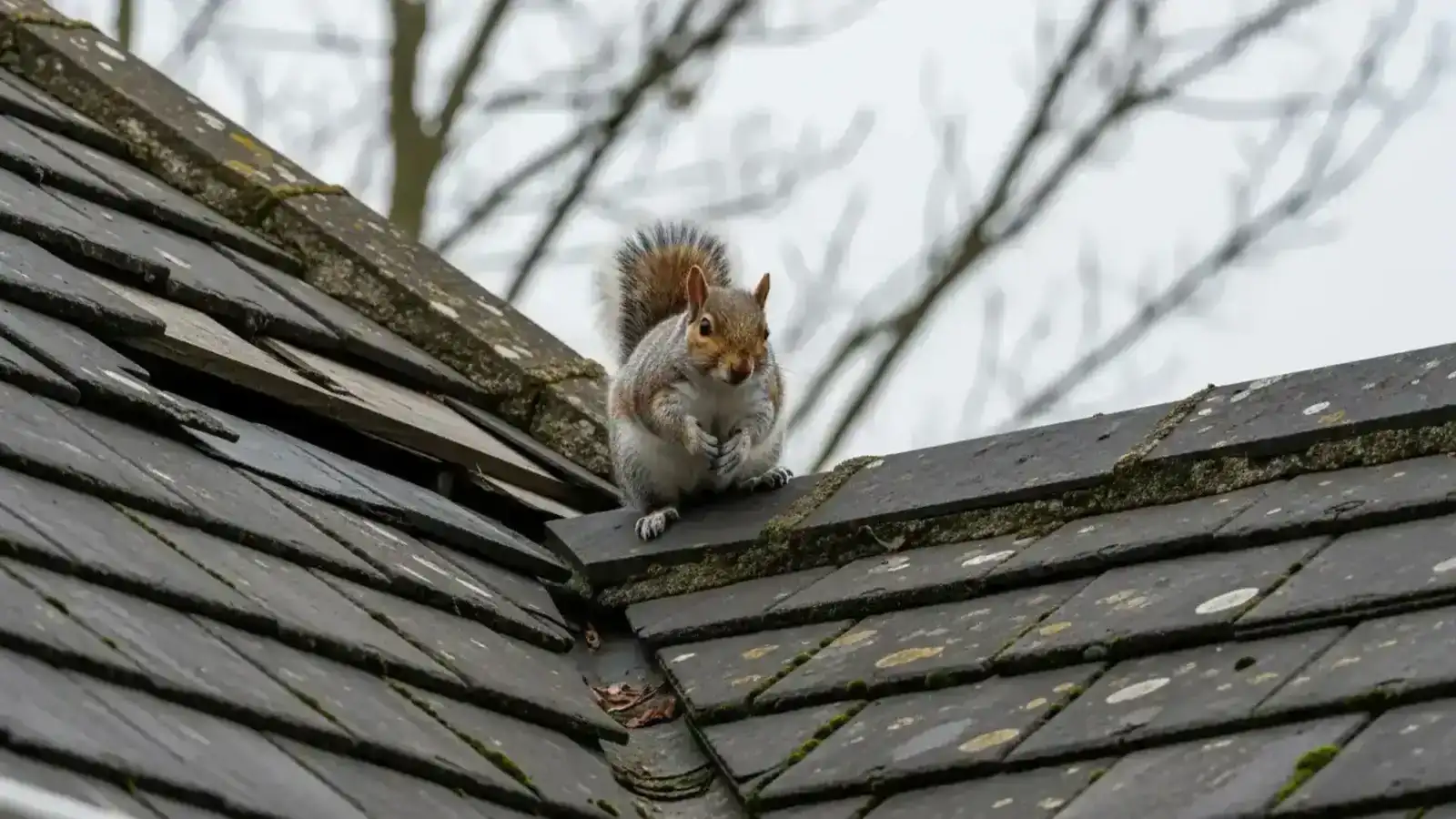
Squirrel Control
Humane grey squirrel trapping and proofing for businesses and homes across the North East. Fully compliant with the Wildlife and Countryside Act 1981. No rodenticide used.
Why You Need Professional Squirrel Control
Grey squirrels are classified as an invasive non-native species in the UK. Unlike red squirrels, which are fully protected, grey squirrels have no legal protection and can be controlled year round. Left unchecked, they cause structural damage to roof timbers, fire hazards from gnawed electrical wiring, contamination from droppings and urine, and significant noise disturbance in lofts and roof spaces. Our technicians carry out humane live cage trapping, professional proofing, and follow-up monitoring to resolve infestations and prevent return.
What's Included
Why acting quickly matters
Squirrels gnaw constantly to wear down their ever-growing incisor teeth. Electrical cables in loft spaces are a common target, creating a direct fire risk. Squirrels also chew through plastic water pipes and tank fittings, leading to leaks and flooding. The longer an infestation continues, the greater the risk of serious property damage.
Squirrels in your loft?
Prompt response across the North East. Free survey and quotation for businesses and homeowners.
Request a free call back
Prefer to get in touch another way? Contact us or email info@wynyardpestcontrol.co.uk
Related Services
Threat Assessment
Nuisance:
6/10MODERATEGrey squirrels cause persistent noise disturbance in lofts and roof spaces, particularly during early morning and late afternoon. They shred insulation for nesting material, leave droppings and urine throughout roof voids, and hoard food in unusual indoor locations. Once established, they return to the same site year after year unless entry points are sealed.
Hazard:
7/10HIGHGnawed electrical wiring in loft spaces creates a direct fire risk and is one of the most serious consequences of an untreated squirrel infestation. Squirrels also chew through plastic water pipes and tank fittings causing leaks and flooding, and weaken roof timbers, fascia boards, and joists through persistent gnawing. Grey squirrels carry Squirrelpox virus, which is fatal to native red squirrels.
Vital Statistics
| Species | Grey squirrel (Sciurus carolinensis) |
| Adult size | 24 to 26 cm body length, plus 20 cm tail |
| Weight | 400 to 600 g |
| Lifespan | Typically 2 to 4 years in the wild, up to 9 years |
| Breeding season | December to February and May to June (2 litters per year possible) |
| Litter size | 3 to 4 young per litter |
| Teeth | Incisors grow continuously - squirrels must gnaw constantly to wear them down |
| Legal status | Invasive non-native species (Schedule 9, Wildlife and Countryside Act 1981) |
Key Facts
- Gnawed electrical wiring in loft spaces is a leading cause of unexplained fires in UK properties.
- Squirrels chew through plastic water pipes and tank fittings, causing leaks and flooding.
- Grey squirrels carry Squirrelpox virus, which is harmless to them but fatal to red squirrels.
- It is a criminal offence to release a trapped grey squirrel back into the wild under UK law.
- There is no rodenticide approved for use against grey squirrels in the UK. Live cage trapping is the only legally compliant method.
- Grey squirrels are classified as an invasive non-native species under Schedule 9 of the Wildlife and Countryside Act 1981.
- Squirrels are creatures of habit and will return to the same nesting site year after year unless entry points are sealed.
- Squirrel droppings are similar in size to rat droppings but rounded at both ends rather than tapered.
- Squirrels hoard food as a survival behaviour and may carry seeds, nuts, or acorns through entry points into roof spaces.
- Red squirrels are fully protected under the Wildlife and Countryside Act 1981. Specialist advice is required if red squirrels are present.
"Amazing job"
Eleonore Colley · Google review, April 2026
Hearing scratching in your roof space?
Free assessment for businesses and homeowners. Humane trapping, full proofing, and follow-up visits included.
Why Squirrel Control Matters
Grey squirrels carry Squirrelpox virus, which is entirely harmless to grey squirrels but fatal to red squirrels. Controlling grey squirrel numbers directly supports red squirrel survival.
Grey squirrels are classified as an invasive non-native species in the UK under Schedule 9 of the Wildlife and Countryside Act 1981. Unlike red squirrels (which are fully protected), grey squirrels have no legal protection and can be controlled year round.
Left unchecked, squirrels cause:
- Structural damage to roof timbers, fascia boards, and joists
- Fire hazards from gnawed electrical wiring in loft spaces
- Water damage from chewed plastic pipes and tank fittings
- Contamination from droppings and urine in roof insulation
- Noise disturbance in residential and commercial lofts and roof spaces
Grey squirrels also pose a serious ecological threat. They carry Squirrelpox virus, which is entirely harmless to grey squirrels but fatal to red squirrels. In areas where red squirrel populations survive, including parts of northern England and Scotland, controlling grey squirrel numbers is a conservation priority.
Properties near mature woodland, urban parks, and tree-lined streets across the North East are most vulnerable. In Darlington, Durham, Stockton, and Middlesbrough, established grey squirrel populations are present year round. Older properties with soffit damage, missing tiles, or unfilled gaps around roofline pipework are particularly at risk because squirrels can gnaw through wood, plastic, and expanding foam to create or enlarge entry holes within hours.
Unlike rats and mice, there is no rodenticide approved for use against grey squirrels in the UK. The only legally compliant and effective method is humane live cage trapping combined with professional proofing to seal all entry points with chew-resistant materials once the infestation has been cleared.
Common Signs of Squirrel Activity
Squirrels are most active during early morning and late afternoon, which helps distinguish them from rats (mainly active at night). Signs of activity are usually noticed before the squirrels themselves are seen.
- Scratching, scurrying, or rolling sounds in lofts or wall cavities, especially during early morning and late afternoon. Squirrel footsteps are heavier and more irregular than mouse sounds, and the rolling sound of cached nuts is distinctive
- Droppings in roof spaces, similar in size to rat droppings (roughly 10 to 15mm) but rounded at both ends rather than tapered. Squirrel droppings are lighter in colour when fresh
- Gnaw marks on woodwork, plastic pipework, and electrical cables. Squirrel gnaw marks are broader and more ragged than rat marks due to their larger incisors
- Damaged insulation that has been torn, shredded, or displaced for nesting material. Large disturbed patches of loft insulation are a strong indicator
- Nesting material such as leaves, twigs, and shredded insulation gathered in corners of loft spaces, often combined with outdoor material brought through the entry hole
- Entry holes in soffits, fascia boards, or gaps around roof tiles. Look for fresh woodchips or bite marks around the edges of the hole
- Cached food stores such as seeds, nuts, or acorns found in unusual indoor locations. Squirrels hoard food as a survival behaviour and may carry material through entry points into the roof space
Signs are most noticeable in autumn (September to November) when squirrels move indoors, and during the first breeding season (December to February) when nesting activity peaks. If you notice any of these signs, contact us for a free assessment. Early intervention prevents further damage and reduces the risk of fire from gnawed wiring.
How Squirrel Control Works
There is no rodenticide approved for use against grey squirrels in the UK. Live cage trapping is the only legally compliant and effective control method.
Assessment and survey: Control begins with a detailed assessment of the infestation and identification of all entry points. A certified technician inspects the property, roof line, and surrounding area to determine the extent of activity and the most effective approach.
Humane trapping: Live cage traps are positioned at entry points and along known squirrel runs. Traps are checked regularly in accordance with the Animal Welfare Act 2006. Grey squirrels caught in live traps cannot be released back into the wild under the Wildlife and Countryside Act 1981 (as amended by the Infrastructure Act 2015). Humane dispatch is carried out where required.
Proofing and exclusion: Once the infestation is cleared, entry points are sealed using metal mesh, galvanised steel plates, or other chew-resistant materials. Overhanging branches are identified and recommendations provided for trimming to reduce roof access routes. Deterrent advice is given to prevent return.
For comprehensive proofing work across the full property, see our rodent proofing service.
What Happens During Treatment
Most squirrel infestations are resolved in 2 to 3 visits over 2 to 4 weeks. Complex or multi-entry infestations may require additional visits.
Squirrel control follows a structured programme of visits to clear the infestation, seal entry points, and confirm the problem is resolved.
Complex or multi-entry infestations may require additional monitoring visits before proofing can be completed.
Before Treatment: Customer Checklist
To get the best results from treatment, there are practical steps you can take before the first visit.
- Clear access to the loft hatch and ensure the loft space is accessible
- Note the times of day when you hear the most activity, as this helps the technician identify the main routes
- Do not block or seal any entry points yourself before the visit, as trapping is more effective when squirrels can access the traps freely
- If you have noticed entry holes in soffits, fascia boards, or around roof tiles, point these out to the technician
- Secure any stored items in the loft that could be damaged by squirrel activity
- Ensure pets are kept away from areas where traps will be placed
Seasonal Squirrel Activity in the North East
Hover or tap a month to see Squirrel activity details
Squirrels active in lofts for warmth. First breeding season begins (December to February). Gnaw damage continues.
Breeding season continues. Nesting activity increases in roof spaces. Noise complaints peak.
First litters born. Females with young are protective and active. Some outdoor foraging resumes.
Young squirrels growing in loft nests. Increased activity as juveniles explore. Good time for trapping.
Second breeding season begins. Squirrels more active outdoors. Ideal time for proofing work.
Peak outdoor activity. Most foraging happens outside. Best period for entry point sealing.
Lowest indoor risk. Squirrels feeding on natural food sources outdoors. Proofing work most effective now.
Outdoor activity remains high. Squirrels begin caching food for winter. Prepare proofing before autumn.
Autumn ingress begins. Squirrels enter loft spaces for warmth and food storage. Entry points become active.
Peak loft entry period. Squirrels hoarding food in roof spaces. Gnaw damage to wiring and timber accelerates.
Squirrels fully established in lofts. Scratching and rolling sounds most noticeable. Fire risk from gnawed wiring.
Indoor activity highest. First breeding season begins. Squirrels settled near heat sources in roof voids.
Grey squirrels follow a strong seasonal pattern in the North East. Autumn is the peak period for loft entry as squirrels seek warmth and storage space for hoarded food. Activity indoors remains high through winter and into the first breeding season (December to February). Summer offers the best window for proofing work while squirrels are foraging outdoors.
Seal entry points in summer before the autumn ingress. Proofing while squirrels are outdoors prevents the gnaw damage, fire risk, and noise disturbance that follow an established loft infestation.
Autumn (September to November) - Peak loft entry: As natural food becomes scarcer and temperatures drop, grey squirrels move into loft spaces seeking warmth and storage space for hoarded food. This is the period when most new infestations begin. Watch for scratching and rolling sounds in the loft during early morning and late afternoon, fresh droppings appearing in roof spaces, and new gnaw marks around soffits and fascia boards. Properties near mature woodland and parks in Darlington, Durham, and Middlesbrough see the sharpest increase in call-outs during this period.
Winter (December to February) - Breeding season and established colonies: The first breeding season runs from December to February. Females build nests (dreys) in the warmest, most sheltered part of the loft, often shredding large amounts of insulation for nesting material. Watch for increasing noise levels as juveniles become active, larger areas of displaced or shredded insulation, and gnaw damage to electrical cables and plastic pipework near the nest site. A loft that went untreated in autumn can sustain significant wiring and pipe damage by January.
Spring (March to May) - First litters and juvenile activity: The first litters are born and juveniles begin exploring the loft space. Females with young are territorial and more active than usual. Watch for increased scratching, scurrying, and squeaking sounds, new entry holes appearing as juveniles test different exit routes, and droppings in areas that were previously clean. This is a good period for trapping as squirrels are actively moving through the space. The second breeding season begins in May.
Summer (June to August) - Best window for proofing: Grey squirrels spend most of their time foraging outdoors during summer. Indoor activity drops to its lowest level. Watch for squirrels running along fences, rooflines, and branches near your property, as this indicates an established local population that will return indoors in autumn. This is the ideal time to carry out proofing work - seal entry holes, fit mesh over soffits, and trim overhanging branches while squirrels are outside and entry points are not actively defended.
North East pressure points: Properties in Stockton, Sunderland, Hartlepool, and North Shields with mature trees within 2 metres of the roofline are at highest risk. Urban parks, allotment boundaries, and cemetery grounds all support resident grey squirrel populations that exploit nearby buildings for winter shelter.
Why Choose Us for Squirrel Control
Full Legal Compliance
Grey squirrel control is governed by the Wildlife and Countryside Act 1981, Animal Welfare Act 2006, and Infrastructure Act 2015. Our technicians are trained in all relevant legislation and carry out every trapping and dispatch operation in full compliance.
Humane Methods Only
We use live cage traps positioned at entry points and along known squirrel runs. Traps are checked regularly in accordance with the Animal Welfare Act 2006. Humane dispatch is carried out where required by law.
Professional Proofing Included
Once the infestation is cleared, we seal all entry points using metal mesh, galvanised steel plates, and other chew-resistant materials. Overhanging branches are identified and recommendations provided for trimming.
Red Squirrel Awareness
Before any control work begins, the presence of red squirrels in the local area is established. If red squirrels are present or suspected, specialist ecological advice is sought before proceeding.
No Chemicals or Rodenticide
There is no rodenticide approved for squirrel control in the UK. Our methods are entirely physical: live cage trapping and proofing. No chemicals, no toxicants, and no risk to non-target wildlife.
After Treatment: What to Expect
Understanding what happens between visits helps you get the best results from the treatment programme.
- Do not interfere with traps: Live cage traps must remain in position between visits. Do not touch, move, or reset them. Their placement is based on the survey findings
- Report any activity: If you hear continued scratching, scurrying, or see new gnaw marks, contact your technician so they can adjust the trapping strategy
- Do not seal entry points yourself: Wait until the technician has confirmed the infestation is fully cleared. Sealing entry points while squirrels are still inside the roof space traps them indoors and can cause significantly more damage
- Electrical safety: Once the infestation is cleared, arrange an inspection of loft wiring by a qualified electrician. Gnawed wiring may not be visible without a thorough check
- Insulation damage: If roof insulation has been heavily contaminated or shredded, consider having it replaced once the loft has been cleared and proofed
Pet and Child Safety
Squirrel control uses no chemicals, no rodenticide, and no toxic substances of any kind. The treatment is entirely physical, making it one of the safest pest control methods available.
Live cage traps are designed to capture squirrels alive without injury. They do not use spring mechanisms that could harm fingers or paws. However, traps should be positioned in areas where children and pets cannot easily access them, typically in loft spaces, roof voids, or external locations.
No vacate period is required. Because no chemicals are involved, there is no risk to household members at any stage of the treatment programme. This is a significant advantage compared to chemical treatments used for rats and mice, which require tamper-resistant bait stations and careful placement around children and pets.
Comparison with other rodent treatments: Rat and mouse control often involves rodenticide placed in locked bait stations, which carry a secondary poisoning risk if a pet or non-target animal accesses a dead rodent. Squirrel control eliminates this risk entirely. No bait, no poison, no secondary poisoning risk, and no need to restrict access to treated areas.
If you have cats that access the loft space or roof area, inform the technician before traps are set so that trap placement can be adjusted accordingly. Dogs and small children should be kept away from ground-level trap positions during the treatment period.
Key Risks of Untreated Infestations
Gnawed electrical wiring in loft spaces is a leading cause of unexplained fires in UK properties. Every week of delay increases the risk.
Delaying squirrel control increases the risk of serious and costly property damage. The longer an infestation continues, the more damage accumulates, and the more expensive remediation becomes.
- Fire hazard: Gnawed electrical wiring is the most serious consequence of an untreated squirrel infestation. Exposed live wires in loft insulation create a direct ignition risk. Rewiring a loft space typically costs several hundred pounds, but the consequences of an electrical fire can be catastrophic. Home insurance claims arising from rodent damage to wiring are one of the most common pest-related claims in the UK
- Water damage: Squirrels chew through plastic water pipes, tank fittings, and overflow connections. A burst pipe in an unoccupied loft can cause thousands of pounds in ceiling, wall, and floor damage before it is discovered. Cold water tanks are particularly vulnerable during the winter breeding season when squirrels are most active in roof spaces
- Structural damage: Persistent gnawing weakens roof timbers, fascia boards, joists, and rafters. Over several seasons, this compromises the structural integrity of the roof and creates further entry points for weather damage and other pests
- Contamination: Droppings and urine accumulate in roof insulation, reducing its thermal effectiveness and creating hygiene concerns. In severe cases, contaminated insulation must be removed and replaced entirely
- Noise and distress: Constant activity in lofts during early morning and late afternoon causes significant disturbance for residents. For rental property landlords, tenant complaints about loft noise can escalate quickly if not addressed
Once a squirrel has found a warm, dry loft with accessible food nearby, it has strong reasons to stay. Squirrels are creatures of habit and will return to the same site year after year unless entry points are professionally sealed with chew-resistant materials. A single breeding pair can produce 6 to 8 young per year across two litters, turning a minor issue into a significant infestation within months.
Legal Framework
Squirrel control in the UK is governed by several pieces of legislation that determine how grey squirrels can be managed and what protections apply to red squirrels.
- Wildlife and Countryside Act 1981 (as amended): Grey squirrels are listed under Schedule 9 as an invasive non-native species. It is illegal to release a trapped grey squirrel back into the wild
- Animal Welfare Act 2006: All trapping and dispatch must be carried out humanely. Traps must be checked regularly
- Infrastructure Act 2015: Reinforced the ban on releasing grey squirrels, making it a criminal offence
- Red squirrel protection: Red squirrels are fully protected under the Wildlife and Countryside Act 1981. If red squirrels are present in the local area, specialist ecological advice must be sought before any control work begins
Any pest controller suggesting rodenticide as a squirrel treatment should be questioned. There is no rodenticide approved for use against grey squirrels in the UK.
Our Squirrel Control Process
A structured, three-stage approach that treats the problem and prevents it returning.
Step 1
Inspect and Plan
A detailed property inspection identifies entry points, infestation hotspots, and the species involved. A targeted treatment plan is developed based on findings.
Step 2
Treatment
Professional control measures are applied using advanced techniques and CRRU-compliant products. Proofing and sealing work addresses the root cause at the same time.
Step 3
Ongoing Support
Follow-up visits confirm the problem is resolved. You receive clear documentation, prevention advice, and recommendations for ongoing protection.
Hearing scratching in your roof space?
Free assessment for businesses and homeowners. Humane trapping, full proofing, and follow-up visits included.
Squirrel Prevention
Prevention is the most effective long-term approach to keeping squirrels out of your property.
- Trim overhanging branches: Cut back tree branches to at least 2 metres from the roof line. Squirrels use branches as direct access routes to roofs and loft spaces
- Seal entry points: Use metal mesh, galvanised steel plates, or chew-resistant materials to close gaps in soffits, fascia boards, and around roof tiles. Squirrels can gnaw through wood, plastic, and expanding foam
- Secure bird feeders: Use squirrel-proof bird feeders and avoid scattering food on the ground. Remove fallen fruit and nuts from the garden
- Check the roof line regularly: Inspect soffits, fascia boards, and eaves for new damage or gnaw marks, especially in autumn when squirrels are preparing for winter
- Cover chimney pots: Fit wire mesh guards to open chimney pots to prevent entry
- Maintain the building envelope: Replace damaged roof tiles promptly and repair any gaps in the brickwork or rendering near the roof line
For professional proofing with commercial-grade materials, see our rodent proofing service.
DIY vs Wynyard Pest Control
Grey squirrels are classified as an invasive species. It is illegal to release a grey squirrel once caught. Professional trapping ensures legal compliance and humane handling.
| DIY | Wynyard Pest Control | |
|---|---|---|
| Best for | Occasional garden visitor | Squirrels in loft or causing damage |
| Species identified | ✗ Often confused with rats | ✓ Professional ID on first visit |
| Legal compliance | ✗ Risk of illegal methods | ✓ Licensed, legal trapping |
| Pet and child safe | ⚠ Trap placement risk | ✓ Safe, controlled placement |
| Effectiveness | May deter temporarily | Full removal and proofing |
| Follow-up visits | ✗ None | ✓ Monitoring included |
| Guarantee | ✗ None | ✓ Removal and exclusion guarantee |
When DIY may be sufficient: A squirrel visiting your garden bird feeder. Squirrel-proof feeders and trimming branches that overhang the roof may be enough to discourage visits.
When you need Wynyard Pest Control: If you hear scratching or running in your loft, find gnawed wiring or woodwork, or see a squirrel entering a gap in your roof line, you have a nesting problem. Grey squirrels are classified as an invasive species under UK law and must not be released once caught. Properties across Durham, Newcastle, and Sunderland with mature trees close to the building are particularly vulnerable.
Commercial vs Residential Squirrel Control
The approach to squirrel control differs depending on whether the property is commercial or residential. We tailor every treatment programme to the specific requirements of the environment.
For businesses: Commercial squirrel control centres on protecting assets and maintaining operational continuity. Warehouses, office buildings, retail units, and food premises with accessible rooflines are vulnerable. Squirrel damage to roof-mounted electrical systems, HVAC units, cabling, and insulation can disrupt operations and create compliance issues. For properties subject to Environmental Health inspections or pest management audits, documented evidence of a structured control programme is expected.
Our commercial service includes full roof line and building envelope surveys, documented treatment records for audit compliance, scheduled preventative monitoring where repeat access risk is identified, and coordination with facilities management teams. We work with businesses of all sizes across the North East, from single-site offices to multi-building educational campuses and hospitality venues.
For homes: Residential squirrel control focuses on clearing the loft infestation safely and sealing all entry points to prevent return. Most domestic squirrel problems involve a single entry point in the soffits, fascia, or around roof tiles. Our technicians inspect the full roof line, place traps in the most effective positions, and carry out proofing using metal mesh and galvanised steel plates that squirrels cannot gnaw through.
For rental properties, landlords are responsible for maintaining the building envelope. A squirrel infestation caused by unsealed entry points is a landlord's responsibility to resolve, and professional proofing is the most cost-effective way to prevent recurring tenant complaints and repair bills.
Whether commercial or domestic, all squirrel control work follows the same legal framework under the Wildlife and Countryside Act 1981 and the Animal Welfare Act 2006. Learn more about how we work.
Sectors Commonly Affected
Squirrel infestations affect a wide range of property types across the North East. Understanding the risk for your sector helps with early intervention and prevention planning.
- Commercial properties: Warehouses, office buildings, and retail units with accessible rooflines are vulnerable, particularly where flat roofs or parapets provide sheltered nesting sites. Roof-mounted electrical systems and HVAC units are at risk from gnaw damage
- Domestic properties: Lofts, attics, and roof spaces in residential properties are the most common sites for squirrel infestations. Properties with mature trees within 2 metres of the roof line are at highest risk
- Food businesses: Restaurants, cafes, and food storage premises with accessible rooflines. Squirrel contamination from droppings and nesting material in roof spaces above food preparation areas creates food safety compliance issues
- Education: School buildings, especially older structures with accessible eaves and soffits, provide ideal harbourage. Squirrel activity near playgrounds and outdoor dining areas can cause concern for staff and parents
- Hospitality: Hotels, B&Bs, and guest houses. Noise from loft-based squirrel activity directly affects guest experience and can generate negative reviews
- Healthcare: Clinics, dental practices, and care homes where hygiene standards are critical. Contamination from squirrel droppings and urine in roof spaces above clinical areas is a regulatory concern
- Rental properties: Landlords and letting agents are responsible for maintaining the building envelope, including sealing entry points that allow squirrels into loft spaces. Tenant complaints about noise and damage can escalate quickly
- Heritage and rural properties: Older buildings with more entry points and proximity to woodland are particularly vulnerable. Listed building constraints may require specialist proofing approaches that protect the character of the property
We work with property managers, facilities teams, and homeowners across Darlington, Hartlepool, Durham, Stockton, Middlesbrough, Sunderland, and the wider North East to resolve squirrel problems quickly and prevent recurrence.
"Professional service throughout and sorted out our pest problem. We would definitely recommend [the technician] and Wynyard Pest Control."
Ben Drury · Google review, March 2026
NPTA Member
We are full members of the National Pest Technicians Association (NPTA). This means our technicians meet strict training and competency standards, carry appropriate insurance, and follow the association's code of practice. NPTA membership is your assurance that the work is carried out professionally and responsibly.
Fair, Transparent Pricing
Every job is different. The cost depends on the type of pest, scale of the problem, and what treatment is needed. We provide a free assessment and an honest quotation before any work begins. No hidden costs, no surprises.
View our pricing guideSatisfaction Guaranteed
Every squirrel treatment is backed by our proofing guarantee. We trap, clear, and seal all entry points using chew-resistant materials. If squirrels breach a barrier we installed, we return and resolve it at no extra cost.
Frequently Asked Questions
The most common routes are overhanging tree branches providing direct roof access, gaps in soffits and fascia boards, damaged roof tiles, and unguarded chimney pots. Squirrels are agile climbers and can scale rough brickwork and drainpipes with ease.
Yes. Squirrels gnaw constantly to wear down their ever-growing incisor teeth, and electrical cables in loft spaces are a common target. Exposed wiring creates a direct fire risk. This is one of the most serious consequences of an untreated squirrel infestation. Arrange a wiring inspection with a qualified electrician once the infestation is cleared.
Yes. Grey squirrels are listed under Schedule 9 of the Wildlife and Countryside Act 1981 as an invasive non-native species. They have no legal protection and can be controlled at any time of year using live cage traps or by shooting in appropriate settings.
Under the Wildlife and Countryside Act 1981 (as amended by the Infrastructure Act 2015), it is a criminal offence to release a live grey squirrel once trapped. The law exists to protect native species, particularly red squirrels, from the ecological damage caused by grey squirrel expansion. Trapped grey squirrels must be humanely dispatched.
Red squirrels are fully protected under the Wildlife and Countryside Act 1981. Before any squirrel control begins, the presence of red squirrels in the local area must be established. If red squirrels are present or suspected, specialist ecological advice is sought before proceeding.
Grey squirrels carry Squirrelpox virus, which is fatal to red squirrels but poses no risk to humans. They can carry fleas and ticks that may affect pets. Their droppings and urine in roof spaces create hygiene concerns, particularly where insulation has been heavily contaminated.
Unlikely. Once a squirrel has found a warm, dry loft with accessible food nearby, it has strong reasons to stay. Squirrels are creatures of habit and will return to the same site year after year unless entry points are sealed. Without active trapping and proofing, activity in a loft tends to increase over time.
Related Services
Our Other Services
Areas We Cover
We provide squirrel control services across the North East of England.
Ready to talk to us?
Free survey and quotation for businesses and homeowners. No obligation, no pressure.
We will get back to you as soon as we can.