
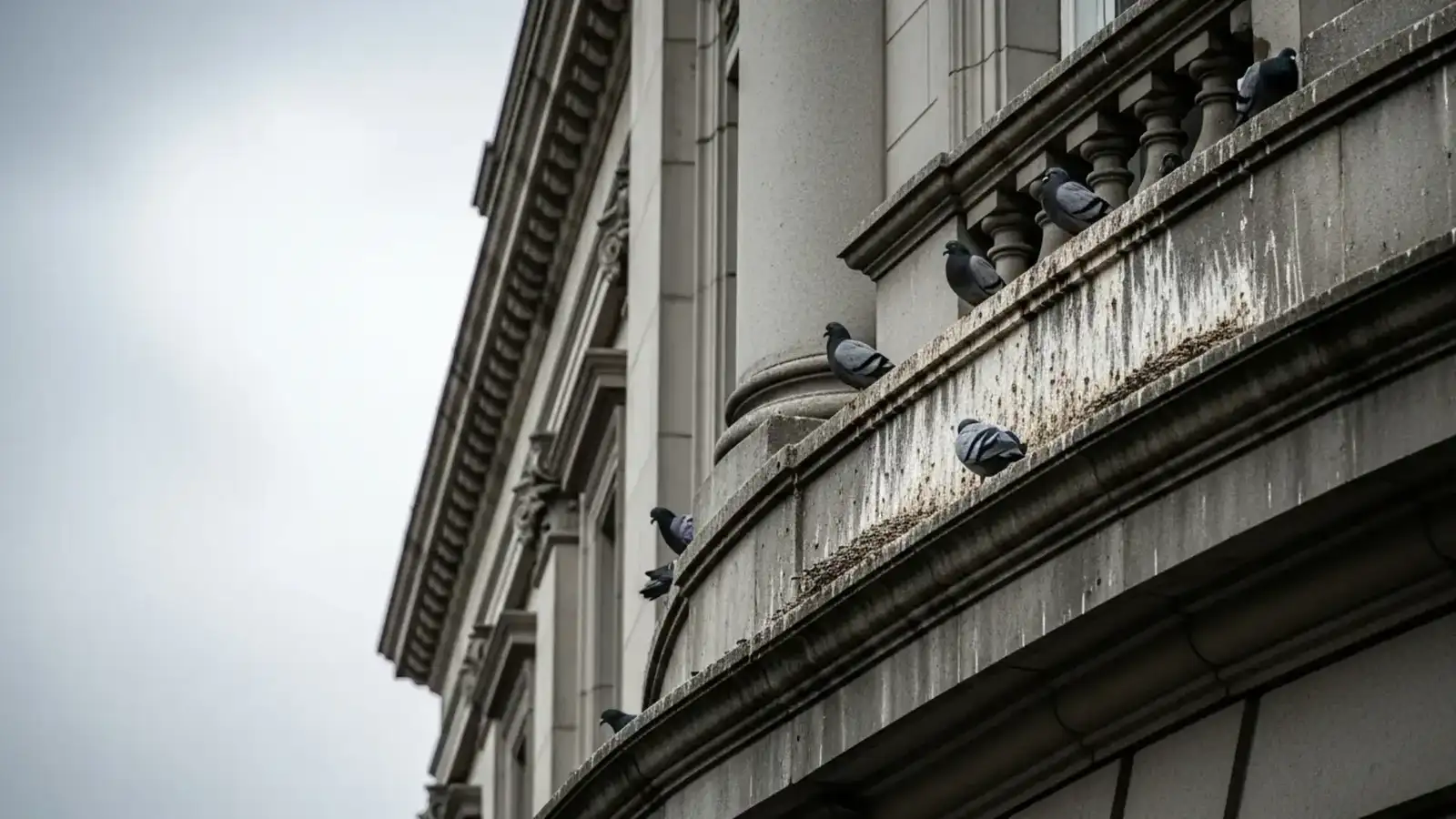
Bird Control
Professional bird control, proofing, and deterrent solutions for businesses and homes across the North East. NPTA member, Wildlife Act compliant.
Why You Need Professional Bird Control
Bird pests cause significant property damage, health risks, and compliance problems for businesses and homeowners across the North East. Droppings erode building surfaces, nesting materials block drainage and ventilation, and secondary pest infestations often follow. Our NPTA-qualified technicians provide a full range of bird control solutions, from proofing and deterrent systems to hawking and guano cleanup, all carried out in compliance with the Wildlife and Countryside Act 1981.
Our Services
Why acting quickly matters
Bird populations grow quickly once established, and every season without intervention allows fouling to accumulate, structural damage to worsen, and secondary pest infestations to develop. Once birds have nested successfully at a site, they return year after year, making the problem progressively harder and more costly to resolve.
Need urgent help with a bird problem?
Same-day emergency response across the North East. Free survey and quotation for businesses and homeowners.
Request a free call back
Prefer to get in touch another way? Contact us or email info@wynyardpestcontrol.co.uk
Threat Assessment
Nuisance:
7/10HIGHBirds cause widespread disruption to both commercial and residential properties. Droppings deface buildings, vehicles, and signage. Nesting materials block gutters, drainage, and ventilation. Noise from roosting and breeding flocks creates persistent disturbance, particularly during the spring and summer breeding season.
Hazard:
7/10HIGHDried bird droppings release airborne bacteria and fungal spores linked to Histoplasmosis, Cryptococcosis, Psittacosis, E. coli, and Salmonellosis. Droppings are acidic and erode stonework, paintwork, roofing membranes, and solar panels. Nesting materials create fire hazards. Secondary infestations from bird mites, beetles, and flies often follow. Food businesses, hospitality venues, and healthcare facilities risk breaching the Food Safety Regulations 1995 and health and safety standards.
Vital Statistics
| Common pest bird species | Feral pigeon, herring gull, lesser black-backed gull, starling, house sparrow |
| Breeding pattern | All species breed annually, some year-round |
| Common roosting areas | Rooftops, ledges, canopies, solar panels, loft spaces |
| Key legislation | Wildlife and Countryside Act 1981 |
| Control approach | Deterrence and exclusion preferred, lethal control only as last resort |
| Activity pattern | Year-round, peak breeding March to July |
Key Facts
- Dried bird droppings release airborne spores that can cause Histoplasmosis and Cryptococcosis, both potentially serious respiratory infections.
- Bird fouling is acidic and erodes stonework, paintwork, roofing membranes, and solar panel coatings, causing costly structural damage over time.
- Nesting materials block gutters, drainage, and ventilation systems, increasing the risk of flooding, water damage, and fire.
- Uncontrolled bird activity at food businesses, hospitality venues, and healthcare facilities may breach the Food Safety Regulations 1995 and result in enforcement action.
- All wild birds are protected under the Wildlife and Countryside Act 1981. Control must be lawful, proportionate, and justified under applicable general licences.
- Bird nests often support secondary pest infestations including bird mites, beetles, and flies that can spread into occupied buildings once birds are deterred.
- Non-lethal deterrence and exclusion methods are always preferred. Lethal control is only considered as a last resort where no alternative exists.
- Effective bird management requires an integrated approach combining deterrent systems, proofing, and ongoing monitoring to deliver lasting results.
"Have been with these guys since 2022, amazing customer service and knowledge - highly recommend"
Serious Lee · Google review, March 2026
Need help with birds?
Free survey and quotation for businesses and homeowners. Same-day response across the North East.
Why Bird Control Matters
Dried bird droppings release harmful bacteria and fungal spores that become airborne and can cause serious respiratory infections in people nearby.
Several species of birds are classed as pests in the UK. They cause property damage, spread serious diseases, and create compliance risks for businesses. Dried droppings are the primary concern: as they break down, harmful bacteria and fungal spores become airborne and can be inhaled. Key diseases associated with bird fouling include Histoplasmosis, Cryptococcosis, E. coli infections, Psittacosis, and Salmonellosis.
Droppings erode stonework, paintwork, roofing membranes, and solar panel systems. Nesting materials block gutters, drainage, and ventilation, increasing the risk of flooding, water damage, and fire hazards. Bird nests also support secondary pest infestations including bird mites, beetles, and flies. For food businesses, hospitality venues, and healthcare facilities, uncontrolled bird activity risks breaching the Food Safety Regulations 1995, potentially resulting in enforcement action or reputational damage.
Our Approach to Bird Management
Every bird control job starts with a site survey to identify the species, assess pressure points, and recommend the most effective and proportionate solution.
We treat every bird problem as a three-stage process: survey, intervention, and ongoing management. A thorough site survey identifies the species involved, the scale of activity, roosting and nesting locations, and potential entry points. We then recommend the most effective combination of deterrent and exclusion methods for your property.
Solutions range from physical exclusion systems such as netting, spikes, and wire systems to active management programmes including bioacoustic deterrents and hawking with trained birds of prey. Where fouling has accumulated, we provide professional guano cleanup with full biocide treatment, PPE, and waste disposal in accordance with regulations.
All methods prioritise humane, non-lethal deterrence and exclusion. Lethal control is only considered as a last resort where no alternative exists, and all work is carried out in compliance with the Wildlife and Countryside Act 1981.
Signs of a Bird Problem
Early detection prevents costly damage. A small roosting problem left unaddressed quickly becomes a large resident colony.
Recognising the signs of bird activity early allows for more cost-effective intervention before populations become established. The key indicators to look for include:
- Concentrated droppings: Fouling accumulating on ledges, rooftops, loading bays, signage, and walkways below roosting or nesting areas.
- Blocked drainage: Nesting materials and feathers blocking gutters, downpipes, and ventilation, potentially causing damp, flooding, or fire risk.
- Persistent noise: Continuous cooing, calling, or chick cries, particularly during the breeding season from March to July.
- Regular settling patterns: Birds returning to the same ledges, rooftops, or canopies at predictable times, indicating established roosting behaviour.
- Damaged goods or packaging: Pecking and fouling damage to stock, outdoor displays, or stored materials.
- Secondary pests: Bird mites, beetles, or flies appearing indoors, often originating from nests in roof spaces or eaves.
For guidance on assessing bird activity at your property, see our commercial bird control and residential bird control pages, or contact us for a free site survey.
When Are Bird Problems Most Common?
The breeding season runs from March to July for most species, but some pest birds can breed year-round in urban environments with adequate food supply.
Bird activity follows seasonal patterns driven by breeding cycles, food availability, and weather. The main breeding season across the North East runs from March to July. During this period, nesting activity increases, birds become more territorial near nest sites, and noise complaints peak. Some species breed year-round in urban areas where food supply is consistent, meaning bird pressure can be a year-round issue for properties with established colonies.
Autumn and winter bring different challenges. Large roosting flocks gather on buildings for warmth and shelter, and accumulated fouling from summer breeding adds to the damage. Properties near the coast, industrial estates, and waste facilities face particular pressure.
For detailed species-specific seasonal management, see our hawking and egg removal and bird scaring and deterrents pages. Businesses in Darlington, Durham, and Middlesbrough can arrange proactive site assessments ahead of the breeding season.
Legislation and Legal Duties
All wild birds are protected under the Wildlife and Countryside Act 1981. It is illegal to kill, injure, or disturb wild birds, or damage active nests, without lawful authority.
All wild birds in the UK are protected under the Wildlife and Countryside Act 1981. It is illegal to intentionally kill, injure, or disturb wild birds, or to damage or destroy active nests and eggs, without lawful authority. Bird control is only permitted where there is a demonstrable risk to public health, safety, or property, and any action must be proportionate and compliant with legislation.
Certain pest species can be managed under general licences issued by DEFRA and Natural England, which permit disturbance, nest removal, and egg taking where they are causing damage to property. We advise on the legal position for each species before any work begins and ensure all control is carried out within the terms of applicable licences.
For businesses in regulated sectors such as food manufacturing, hospitality, healthcare, and education, maintaining a documented bird management programme demonstrates compliance with health, safety, and food hygiene standards.
Commercial and Domestic Bird Management
Commercial bird management programmes include scheduled visits, proofing maintenance, hawking rounds, and audit-ready documentation for compliance.
We provide bird control for businesses and homes of all sizes across the North East. While the same species cause problems in both settings, commercial and domestic situations require different approaches.
Commercial premises: Businesses need proactive management to prevent bird populations from establishing. Our commercial bird control programmes include proofing installation, scheduled hawking visits, egg removal rounds, bioacoustic system monitoring, and deterrent maintenance. We work with food manufacturers and retailers, hotels and restaurants, healthcare facilities, warehouses and distribution centres, rental and managed properties, and schools and universities.
Domestic properties: Most residential bird problems can be resolved with targeted proofing such as solar panel mesh guards, spike systems on ledges, or wire deterrents on flat roofs. For persistent problems, we offer seasonal egg removal and hawking programmes.
We cover Darlington, Stockton, Middlesbrough, Hartlepool, Durham, Sunderland, and Newcastle.
Prevention Tips
Early action is significantly cheaper than dealing with an established colony. A regular inspection schedule catches problems before they escalate.
Preventing birds from becoming established is always more cost-effective than dealing with an entrenched population. Key steps for businesses and property owners include:
- Remove food sources: Keep outdoor eating areas clean. Secure bin lids and clear spilled food promptly. Reduce accessible food waste around buildings.
- Seal access points: Close off gaps, damaged tiles, and openings where birds can enter roof spaces. Professional bird proofing prevents access to the most common roosting and nesting sites.
- Protect solar panels: Solar panel mesh guards prevent birds from nesting underneath panels, avoiding fouling damage and loss of energy output.
- Regular inspections: Schedule periodic checks of rooftops, ledges, and building exteriors for early signs of roosting or nesting. Early intervention prevents costly infestations.
- Remove old nests: Where legally permitted, remove old nests outside the breeding season to discourage birds from returning to the same location.
For businesses in Darlington, Sunderland, Newcastle, and across the North East, we provide free site surveys to assess your property and recommend the most effective prevention measures.
Our Bird Control Process
A structured, three-stage approach that treats the problem and prevents it returning.
Step 1
Inspect and Plan
A detailed property inspection identifies entry points, infestation hotspots, and the species involved. A targeted treatment plan is developed based on findings.
Step 2
Treatment
Professional control measures are applied using advanced techniques and CRRU-compliant products. Proofing and sealing work addresses the root cause at the same time.
Step 3
Ongoing Support
Follow-up visits confirm the problem is resolved. You receive clear documentation, prevention advice, and recommendations for ongoing protection.
Why Choose Us for Bird Control
Full Range of Deterrents
We install netting, spikes, and wire systems, bioacoustic deterrents, and provide hawking services. We assess your property and recommend the most effective approach for the species and site.
NPTA Member
All bird control work is carried out by NPTA-qualified technicians trained in wildlife legislation, safe working at height, and professional pest management standards.
Wildlife Act Compliant
All work is carried out in full compliance with the Wildlife and Countryside Act 1981 and applicable general licences. We advise on the legal position for each species before any work begins.
Free Site Survey
We inspect your property, identify pressure points and species behaviour, and provide a fixed-price quotation with no obligation. Commercial clients can combine the bird survey with a broader pest management assessment.
Ongoing Management
Scheduled maintenance programmes including hawking visits and egg removal rounds, bioacoustic system monitoring, and deterrent inspections keep your property protected year after year.
Commercial and Domestic
From multi-site commercial contracts with scheduled visits and compliance documentation to residential properties, we manage bird problems at any scale across Darlington, Stockton, Middlesbrough, Durham, and Newcastle.
NPTA Member
We are full members of the National Pest Technicians Association (NPTA). This means our technicians meet strict training and competency standards, carry appropriate insurance, and follow the association's code of practice. NPTA membership is your assurance that the work is carried out professionally and responsibly.
Fair, Transparent Pricing
Every job is different. The cost depends on the type of pest, scale of the problem, and what treatment is needed. We provide a free assessment and an honest quotation before any work begins. No hidden costs, no surprises.
View our pricing guideSatisfaction Guaranteed
If birds return to a proofed area within the guarantee period, we return and resolve the problem at no extra cost. Netting and spike systems come with a 5-year installation guarantee.
Frequently Asked Questions
Yes, provided the correct methods are used and work is carried out under applicable general licences. All wild birds are protected under the Wildlife and Countryside Act 1981. We advise on the legal position for each species and ensure all control is lawful, proportionate, and humane.
Our methods focus on deterrence and exclusion. Birds are not harmed. Non-lethal methods are always preferred, and lethal control is only considered as a last resort where no alternative exists. All work is carried out in compliance with the Wildlife and Countryside Act 1981 and applicable general licences.
Our Other Services
Areas We Cover
We provide bird control services across the North East of England.
Ready to talk to us?
Free survey and quotation for businesses and homeowners. No obligation, no pressure.
We will get back to you as soon as we can.