
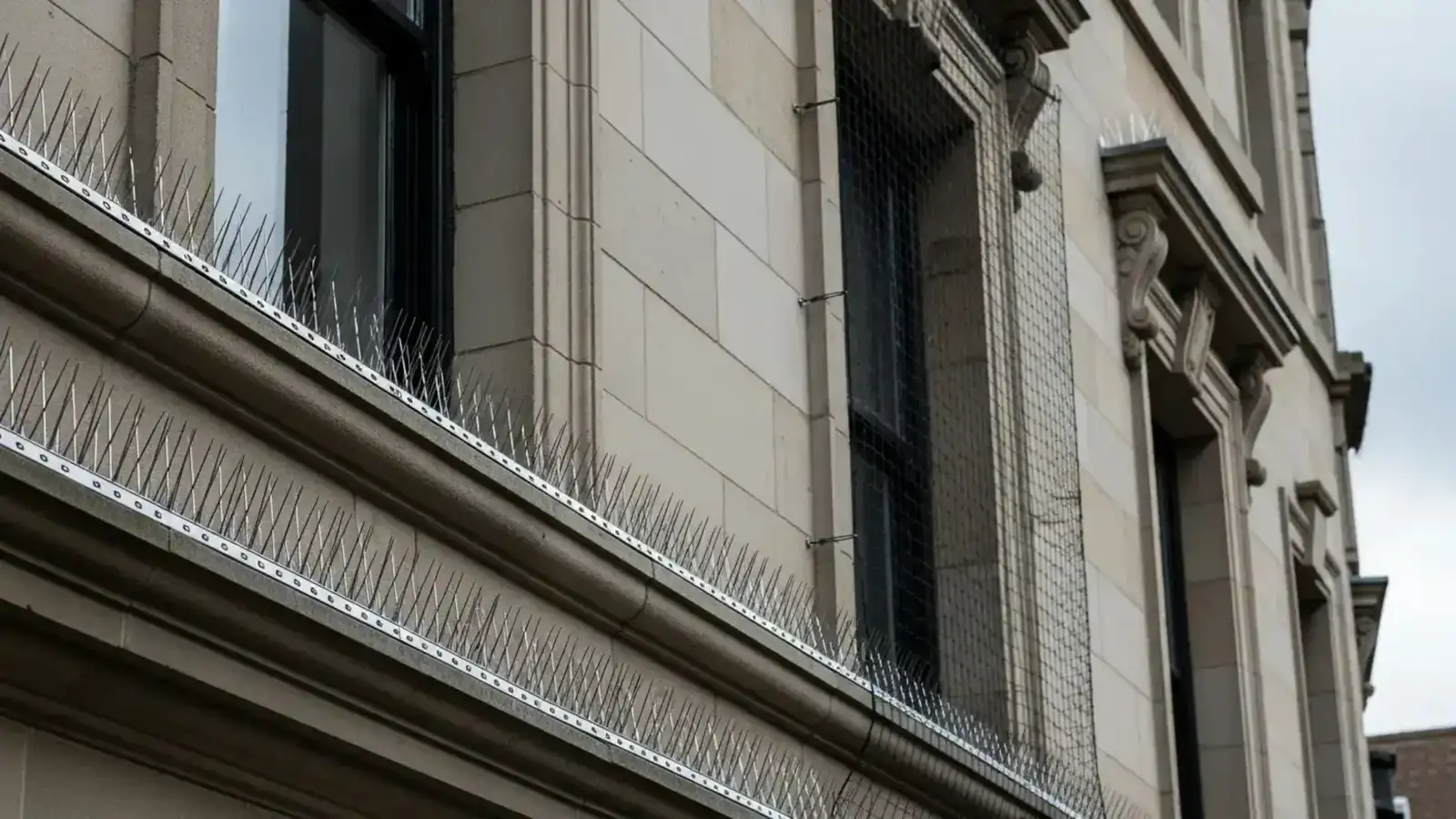
Commercial Bird Control
Professional bird management for businesses across the North East. NPTA member, fully compliant with UK regulations, tailored programmes for all sectors.
Why You Need Professional Commercial Bird Control
Birds pose significant risks to commercial facilities, affecting employee wellbeing, damaging commercial reputations, and potentially violating UK health and safety regulations. If bird problems are not treated swiftly, they can quickly affect business reputation and revenue. Staff may find working on premises intolerable, and customers may stay away. We develop a tailored bird management plan in close consultation with each client, ensuring full compliance with all UK regulations.
What's Included
Why acting quickly matters
Bird populations at commercial sites grow rapidly once established. Accumulated fouling creates compliance risks under the Food Safety Regulations 1995 and health and safety standards. Addressing bird problems early avoids costly disruption, enforcement action, and reputational damage.
Need urgent commercial bird control?
Same-day emergency response for businesses across the North East. Call now for a free site assessment.
Request a free call back
Prefer to get in touch another way? Contact us or email info@wynyardpestcontrol.co.uk
Threat Assessment
Nuisance:
8/10VERY HIGHAt commercial sites, birds cause widespread disruption including fouling of building facades, signage, vehicles, and outdoor areas. Noise from roosting flocks disturbs staff and customers. Nesting materials block gutters, drainage, and ventilation systems, leading to water damage and maintenance costs.
Hazard:
8/10VERY HIGHCommercial bird infestations carry serious compliance risks. Dried droppings release airborne bacteria linked to Histoplasmosis, Cryptococcosis, and Salmonellosis. Food businesses, hospitality, and healthcare sites risk breaching the Food Safety Regulations 1995. Secondary infestations from bird mites, beetles, and flies create additional hygiene failures.
Vital Statistics
| Primary commercial pest species | Feral pigeon, herring gull, lesser black-backed gull |
| Key legislation | Wildlife and Countryside Act 1981 |
| Food safety regulation | Food Safety Regulations 1995 |
| Pigeon breeding | Year-round, 2 to 3 broods per year |
| Flock size | 50 to 500 birds (gregarious) |
| Gull nesting season | April to August |
Key Facts
- Uncontrolled bird activity at food businesses may breach the Food Safety Regulations 1995, resulting in enforcement action or closure.
- Dried bird droppings release airborne spores that can cause serious respiratory infections in staff and visitors.
- Bird fouling damages building facades, signage, vehicles, and outdoor seating, creating a poor impression for customers.
- Secondary infestations from bird mites, beetles, and flies often follow established bird colonies in commercial premises.
- All bird control must comply with the Wildlife and Countryside Act 1981. Feral pigeons are managed under General Licence GL41.
- Commercial bird management programmes include scheduled visits, monitoring, and audit-ready documentation for compliance purposes.
- Multi-site businesses benefit from a single contract covering all locations, with centralised reporting and account management.
"[The technician] gave me great advice regarding some fleas. Would recommend."
Hannah SCOTT · Google review, March 2026
Birds affecting your business?
Free commercial site survey and tailored management plan. Same-day response across the North East.
Why Businesses Need Professional Bird Control
<a href="/sectors/food-businesses">Food businesses</a>, <a href="/sectors/hospitality">hospitality</a>, and <a href="/sectors/healthcare">healthcare</a> sites face the highest compliance risk from uncontrolled bird activity.
Commercial premises attract birds because they offer food, warmth, and sheltered roosting and nesting sites. Warehouses, loading bays, flat roofs, car parks, and outdoor dining areas are particularly vulnerable. Without a proactive management plan, bird populations grow quickly and the associated costs escalate.
Key risks for businesses include hygiene failures during food safety audits, slip hazards from accumulated droppings, damage to stock and equipment from pecking and fouling, blocked drainage and ventilation from nesting materials, and aggressive gull behaviour near staff and customers during the breeding season.
Sectors We Serve
We provide bird management programmes for over 15 commercial sectors across the North East, each tailored to the specific compliance and operational requirements of that industry.
We provide tailored bird control programmes for businesses across all sectors, including:
- Food businesses and food manufacturers
- Hotels, restaurants, and hospitality
- Healthcare facilities and care homes
- Industrial and warehousing
- Airports and transport hubs
- Churches and places of worship
- Schools and universities
- Offices and retail
- Rental and managed properties
Each sector has specific compliance requirements and operational constraints. We work with site managers and facilities teams to develop programmes that fit around your business operations.
Our Commercial Bird Management Process
Every commercial programme begins with a free site survey to assess species, pressure points, and compliance requirements.
Our commercial bird control service follows a structured process:
- Site survey and risk assessment: We identify the species involved, map roosting and nesting sites, assess structural vulnerabilities, and review compliance requirements specific to your industry.
- Tailored management plan: Based on the survey findings, we design a bird control programme combining the most effective methods for your site. This may include proofing, deterrents, hawking, egg removal, or a combination.
- Implementation: Our NPTA-qualified technicians install all systems and carry out initial treatments with minimal disruption to your operations.
- Ongoing monitoring: Scheduled maintenance visits, monitoring reports, and rapid response call-outs ensure continued protection. All activity is logged via our online management portal.
- Compliance documentation: Service reports, risk assessments, and treatment records are available for audit purposes at any time.
Online Management Portal
Commercial clients benefit from our online management portal, providing:
- Request service visits and report new activity
- Access compliance reports and treatment records
- Track scheduled visits and technician activity
- Monitor bird activity trends across your site or multi-site estate
- Download audit-ready documentation for BRC, SALSA, Red Tractor, and other standards
The portal gives facilities managers and compliance officers real-time visibility of your bird management programme without needing to contact us for updates.
Multi-Site and Contract Management
For businesses with multiple locations across the North East, we provide single-contract management covering all sites. This includes centralised account management, consistent service standards across all locations, consolidated reporting and invoicing, and priority scheduling for urgent call-outs. We work with national and regional businesses operating in Darlington, Middlesbrough, Sunderland, Newcastle, and across the wider North East.
Symterra Pulse for Commercial Properties
One product, all bird species, permanent results. Symterra Pulse provides a single electromagnetic solution that deters every bird species without chemicals, noise, or ongoing maintenance.
For commercial clients seeking a low-maintenance, permanent bird deterrent, we install Symterra Pulse electromagnetic systems. This technology disrupts the biological navigation system that all bird species rely on, deterring them from landing in the protected area. Because the system targets bird biology rather than behaviour, it provides a permanent solution that birds cannot overcome or habituate to.
Symterra Pulse is particularly suited to commercial properties where:
- Traditional methods such as netting and spikes degrade in exposed UK weather and require periodic repair or replacement
- Multiple bird species are present and a single solution covering all species is preferred
- Noise-sensitive environments such as offices, hospitality, and healthcare sites rule out bioacoustic systems
- Aesthetic considerations make visible deterrents undesirable for client-facing premises
- Facilities management teams require a solution with minimal ongoing intervention after installation
The system is IP65 rated for permanent outdoor use, FCC and CE certified, and typically installed in under one hour. Common commercial install zones include rooflines and ledges, beams and canopies, loading docks, rooftop plant equipment, and signage. For full technical specifications, see our bird proofing page.
Seasonal Bird Activity in the North East
Hover or tap a month to see Commercial Bird activity details
Feral pigeon fouling continues year-round at commercial sites. Starling winter roosts at peak size, creating concentrated droppings on building facades, car parks, and signage. Food safety and hygiene audit preparations should account for bird fouling risk.
Early pigeon and gull breeding pairs scouting commercial rooftops, loading bays, and flat roof plant rooms. Final window to commission proofing and deterrent installations before the breeding season begins in March.
Breeding season starts. Feral pigeons and herring gulls begin nest building on flat roofs, plant rooms, ledges, and loading bay structures. Proactive bird management programmes should already be active. Nest removal under General Licence GL41 begins.
Active nesting across commercial sites. Herring gulls become territorial on rooftops, creating staff and visitor safety risks in car parks and outdoor areas. Food Safety Regulations 1995 compliance risks from fouling increase sharply.
Chicks hatching. Maximum gull aggression towards staff, delivery drivers, and customers in car parks, loading areas, and outdoor dining spaces. Peak fouling, noise complaints, and health and safety incident reports.
Gull chicks growing on commercial rooftops. Pigeon breeding continues in warehouses and loading bays with second clutches laid. Food safety audit failure risk at its highest. Droppings accumulate on stock, equipment, and vehicles.
Late breeding season. Gull fledglings on rooftops and car parks creating fouling and noise. Second pigeon broods in progress. Significant droppings accumulation on building facades and outdoor areas requires deep cleaning.
Breeding season winding down. Gull aggression subsides as chicks become independent. Ideal window for proofing installations, deep guano cleaning, and planned maintenance before autumn without legal restrictions on nest disturbance.
Best period for scheduled maintenance and new proofing installations. Nesting complete, allowing unrestricted access to all roof areas. Commission annual programme reviews and plan for the next breeding season.
Starling flocks begin forming large communal winter roosts near commercial buildings, creating concentrated fouling. Feral pigeon populations settle into winter roosting patterns in warehouses and loading bays.
Large starling roosts create heavy concentrated fouling on commercial facades, signage, and car parks. Feral pigeons seek warm sheltered areas inside warehouses, loading bays, and roof voids. Bird mite and beetle infestations follow established colonies.
Year-round pigeon breeding continues in heated commercial environments. Starling winter roosts at peak size. Scheduled maintenance visits ensure proofing systems, netting, and deterrents remain intact and effective through winter.
Commercial bird pressure is year-round for feral pigeons, which breed continuously in sheltered warehouse and loading bay environments. Gull activity peaks sharply from April to July when nesting adults become aggressive towards staff, customers, and delivery drivers. Starlings create large communal winter roosts from October to March, concentrating fouling on building facades and car parks. A proactive management programme with scheduled visits throughout the year provides the most consistent protection for businesses, reducing compliance risk and operational disruption.
Planning your annual bird management programme? The most effective approach is to commission proofing and deterrent work before March, when the breeding season begins. Contact us for a free commercial site survey and management proposal.
Spring (March to May) - Breeding season and compliance risk: This is when commercial bird management programmes become critical. Feral pigeons begin nesting on flat roofs, in loading bays, and inside warehouse roof spaces. Herring gulls and lesser black-backed gulls build large nests on commercial rooftops and plant rooms. By April, gulls become highly territorial and begin dive-bombing staff, delivery drivers, and customers near nests. Food businesses, hospitality venues, and healthcare facilities face rising compliance risk as fouling accumulates on food preparation areas, outdoor seating, and building facades. Watch for: new nesting material on flat roofs and ledges, gull pairs circling and landing repeatedly on your building, pigeon droppings on stock, vehicles, and loading bay floors, and staff complaints about aggressive bird behaviour in car parks.
Summer (June to August) - Peak aggression and audit risk: Gull chicks grow rapidly on commercial rooftops through June and July. Adult gulls are at their most aggressive, creating genuine health and safety risks for staff and visitors in outdoor areas. Pigeon breeding continues inside warehouses and loading bays, with second clutches laid soon after the first brood fledges. Fouling on stock, equipment, and vehicles is at its worst. Food safety audit failure risk is at its highest during this period. Watch for: staff and customer incidents involving aggressive gulls, heavy fouling on building facades, signage, and outdoor dining areas, droppings contaminating stock or products in open loading bays, and secondary pest infestations (bird mites, beetles, flies) near established nesting colonies.
Autumn (September to November) - Maintenance window and starling roosts: The breeding season ends and gull aggression subsides, creating the best window for proofing installations, deep cleaning, and scheduled maintenance. Nesting is complete, so technicians can access all roof areas without legal restrictions on nest disturbance. From October, large starling flocks begin forming communal winter roosts near commercial buildings, creating concentrated fouling on facades, car parks, and signage. Feral pigeons settle into winter roosting patterns inside buildings. Watch for: starling flocks gathering at dusk near your building, increasing pigeon activity in warm areas of the site (plant rooms, loading bays, roof voids), and damaged or degraded netting, spikes, or deterrent systems that need repair before winter.
Winter (December to February) - Year-round pigeon pressure: Feral pigeons breed year-round in heated commercial environments, meaning fouling and damage continue through winter. Starling winter roosts are at peak size from December to February, with flocks of thousands creating heavy concentrated droppings on building facades and car parks. Scheduled maintenance visits during this period ensure proofing systems, netting, and deterrents remain intact and effective. February is the last opportunity to commission new proofing before the next breeding season. Watch for: pigeon droppings inside warehouses and loading bays indicating active roosting, starling fouling on customer-facing areas affecting business reputation, and blocked gutters or drainage from accumulated nesting material and droppings.
North East commercial pressure points: Food manufacturing and distribution sites in Darlington, Stockton, and Middlesbrough experience year-round pigeon pressure in loading bays and warehouse interiors. Coastal commercial properties in Hartlepool, South Shields, and North Shields face the highest gull nesting pressure from April to August. Town centre hospitality and retail premises across Durham, Sunderland, and Newcastle deal with pigeon fouling on outdoor areas year-round and starling winter roosts from October to March. If your business is in a high-pressure area, a proactive management programme with scheduled visits throughout the year provides the most consistent protection.
Our Commercial Bird Control Process
A structured, three-stage approach that treats the problem and prevents it returning.
Step 1
Inspect and Plan
A detailed property inspection identifies entry points, infestation hotspots, and the species involved. A targeted treatment plan is developed based on findings.
Step 2
Treatment
Professional control measures are applied using advanced techniques and CRRU-compliant products. Proofing and sealing work addresses the root cause at the same time.
Step 3
Ongoing Support
Follow-up visits confirm the problem is resolved. You receive clear documentation, prevention advice, and recommendations for ongoing protection.
Why Choose Us for Commercial Bird Control
Compliance Focused
Every programme is designed to meet the specific compliance requirements of your industry, whether that is food safety, health and safety, or environmental standards. Audit-ready documentation is provided as standard.
NPTA Member
All commercial bird control is carried out by NPTA-qualified technicians. NPTA membership means our work is insured, auditable, and compliant with industry codes of practice.
Free Site Survey
We inspect your premises, identify species and pressure points, and provide a detailed management proposal with fixed pricing and no obligation.
Ongoing Management
Scheduled maintenance visits, monitoring, and rapid response call-outs keep your premises protected year-round. Activity is logged via our online portal for full transparency.
Multi-Site Capability
Single-contract management for businesses with multiple locations. Consistent standards, centralised reporting, and priority scheduling across all sites.
"Really good experience with this company. They were quick to respond, professional and easy to deal with. [the technician] handled the job and was friendly, knowledgeable and explained everything clearly. Would definitely recommend."
Beth Smith · Google review, March 2026
NPTA Member
We are full members of the National Pest Technicians Association (NPTA). This means our technicians meet strict training and competency standards, carry appropriate insurance, and follow the association's code of practice. NPTA membership is your assurance that the work is carried out professionally and responsibly.
Fair, Transparent Pricing
Every job is different. The cost depends on the type of pest, scale of the problem, and what treatment is needed. We provide a free assessment and an honest quotation before any work begins. No hidden costs, no surprises.
View our pricing guideSatisfaction Guaranteed
Our commercial bird management programmes include scheduled visits and monitoring. If bird activity returns to a treated or proofed area within the agreed service period, we return and resolve the problem at no extra cost.
Frequently Asked Questions
Yes. All commercial programmes include service reports, risk assessments, and treatment records suitable for BRC, SALSA, Red Tractor, and other audit standards. Documentation is available via our online management portal.
Yes. We provide single-contract management for businesses with multiple locations, with centralised reporting, consistent service standards, and priority scheduling across all sites.
We offer same-day emergency response across the North East. For contract clients, rapid response call-outs are included as standard.
We use a combination of methods tailored to each site, including netting, spike and wire systems, bioacoustic deterrents, hawking with birds of prey, egg and nest removal, and environmental management. The right approach depends on the species, site layout, and level of activity.
Yes. If bird activity returns to a treated or proofed area within the agreed service period, we return and resolve the problem at no extra cost. Proofing systems such as netting and spikes are backed by a 5-year installation guarantee.
Our Other Services
Areas We Cover
We provide commercial bird control services across the North East of England.
Ready to talk to us?
Free survey and quotation for businesses and homeowners. No obligation, no pressure.
We will get back to you as soon as we can.