
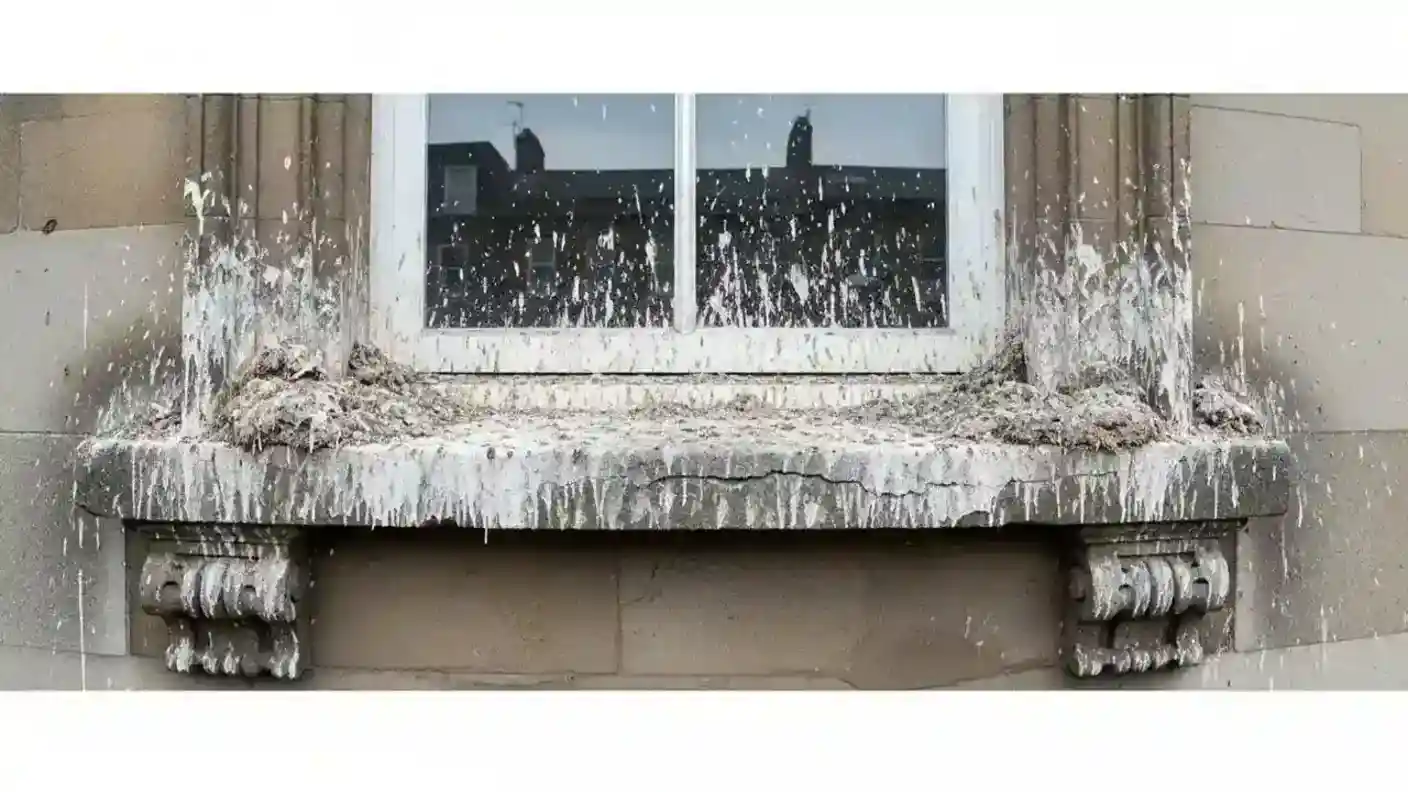
Guano and Fouling Cleanup
Professional bird guano removal, fouling cleanup, and surface restoration for commercial and residential properties across the North East. Safe biohazard handling with full PPE.
Why You Need Professional Guano and Fouling Cleanup
Bird guano (droppings) and fouling accumulations are a serious health hazard, not simply an aesthetic problem. Pigeon, gull, and starling guano can harbour dangerous pathogens including Histoplasma capsulatum (histoplasmosis), Chlamydia psittaci (psittacosis or ornithosis), and Cryptococcus neoformans (cryptococcosis). Dried guano becomes airborne when disturbed, creating an inhalation risk for anyone in the vicinity. Our NPTA-qualified technicians carry out safe guano removal using full respiratory protection and PPE, followed by surface disinfection and restoration. We work at height where required and connect you with our bird proofing services to prevent re-accumulation.
What's Included
Why acting quickly matters
Accumulated bird guano is classified as a biohazard. It contains fungal spores, bacteria, and parasites that can cause serious respiratory illness. Histoplasmosis, psittacosis, and cryptococcosis are all potentially fatal conditions. Dried guano that is disturbed during building works, maintenance, or cleaning releases airborne particles that can be inhaled by anyone nearby. Professional removal with respiratory protection is essential. Do not attempt to sweep, brush, or pressure-wash guano without proper PPE.
Need guano removal?
Safe biohazard removal with full PPE across the North East. Surface disinfection and bird proofing included.
Request a free call back
Prefer to get in touch another way? Contact us or email info@wynyardpestcontrol.co.uk
Threat Assessment
Nuisance:
8/10VERY HIGHBird guano causes significant aesthetic damage to buildings, vehicles, signage, and street furniture. It is highly corrosive to stone, concrete, metal, and painted surfaces. Accumulated guano creates unpleasant odours, attracts secondary pests (flies, carpet beetles), and creates a strongly negative impression for customers, visitors, and staff.
Hazard:
9/10VERY HIGHBird guano is a recognised biohazard. It harbours Histoplasma capsulatum (histoplasmosis, a potentially fatal fungal lung infection), Chlamydia psittaci (psittacosis, a severe respiratory infection), and Cryptococcus neoformans (cryptococcosis, a fungal infection particularly dangerous for immunocompromised individuals). Dried guano particles become airborne when disturbed and can be inhaled. The Health and Safety at Work Act 1974 places duties on building owners to manage these risks.
Vital Statistics
| Primary pathogens | Histoplasma, Chlamydia psittaci, Cryptococcus |
| Waste classification | Biohazardous waste |
| RPE requirement | FFP3 respiratory protection minimum |
| Surface damage | Corrosive to stone, metal, and paint |
| pH level | Highly acidic (pH 3 to 4.5) |
| Disposal | Licensed waste carrier required |
Key Facts
- Histoplasmosis is a potentially fatal fungal lung infection caused by inhaling spores of Histoplasma capsulatum, which thrives in accumulated bird and bat guano. It can cause chronic lung disease resembling tuberculosis.
- Psittacosis (ornithosis) is a bacterial infection caused by Chlamydia psittaci, found in bird droppings, feathers, and respiratory secretions. It causes severe pneumonia and can be fatal if untreated.
- Cryptococcosis is a fungal infection caused by Cryptococcus neoformans, commonly found in pigeon droppings. It is particularly dangerous for immunocompromised individuals and can cause meningitis.
- Dried bird guano becomes airborne when disturbed by sweeping, brushing, or pressure washing. Inhaling these particles without respiratory protection exposes you to all the pathogens present in the guano.
- Bird guano is highly acidic (pH 3 to 4.5) and corrosive. It damages stonework, concrete, metal roofing, painted surfaces, and vehicle paintwork. Uric acid in guano accelerates the deterioration of building materials.
- Pigeon guano can accumulate at a rate of approximately 12kg per bird per year. A roosting colony of 50 pigeons can deposit over half a tonne of guano annually.
- Secondary pests including flies, carpet beetles, and bird mites are attracted to guano accumulations. Removing the guano eliminates the food source for these secondary infestations.
- Building owners have a duty of care under the Health and Safety at Work Act 1974 to manage guano accumulations that could affect the health of employees, tenants, visitors, or the public.
"[The technician] gave me great advice regarding some fleas. Would recommend."
Hannah SCOTT · Google review, March 2026
Bird guano damaging your building?
Free site assessment and quotation for guano removal, disinfection, and bird proofing across the North East.
Health Risks From Bird Guano
Do not attempt to clean bird guano without respiratory protection. Disturbing dried guano releases airborne fungal spores and bacteria that can cause serious lung infections.
Bird guano, particularly from pigeons, is a recognised biohazard that poses serious health risks to anyone who comes into contact with it or inhales particles from it.
Histoplasmosis: Caused by the fungus Histoplasma capsulatum, which grows in soil enriched with bird or bat droppings. When contaminated material is disturbed, fungal spores become airborne and can be inhaled. Most cases cause mild flu-like symptoms, but severe cases can cause chronic lung disease resembling tuberculosis. In immunocompromised individuals, the infection can disseminate to other organs and be fatal.
Psittacosis (ornithosis): Caused by the bacterium Chlamydia psittaci, found in bird droppings, feathers, and respiratory secretions. Inhalation of contaminated dust causes severe pneumonia with high fever, headache, and dry cough. It is treatable with antibiotics but can be fatal if undiagnosed or untreated.
Cryptococcosis: Caused by the yeast Cryptococcus neoformans, commonly found in pigeon droppings. The organism can survive in dried pigeon guano for years. In healthy individuals, infection may cause mild pneumonia. In immunocompromised individuals (including those with HIV/AIDS), it can cause cryptococcal meningitis, a life-threatening condition.
These risks make professional removal with full respiratory protection and PPE essential. Do not sweep, brush, vacuum, or pressure-wash bird guano without proper protection.
Our Guano Removal Process
Our guano removal follows a structured, safety-first process designed to protect our technicians, your staff, and anyone in the vicinity.
- Site assessment: We inspect the accumulation, assess the volume, check the condition of underlying surfaces, identify access requirements, and prepare a method statement and risk assessment for the specific site.
- Area exclusion: The work area is secured to prevent access by other people during removal. Warning signage is displayed. If the work is in a public area, barriers and signage are set up to redirect pedestrians.
- PPE and RPE: All technicians wear full personal protective equipment including disposable coveralls, chemical-resistant gloves, safety footwear, and FFP3 respiratory protection as a minimum. For extensive accumulations in enclosed spaces, powered air-purifying respirators (PAPRs) may be used.
- Guano removal: The guano is dampened with a biocidal solution to suppress dust before removal. It is then carefully scraped, shovelled, and bagged into sealed, labelled biohazard waste bags. We avoid any dry sweeping or brushing that would generate airborne particles.
- Surface disinfection: After removal, all affected surfaces are treated with an EN-certified disinfectant to eliminate any remaining pathogens.
- Waste disposal: All guano waste, contaminated PPE, and cleaning materials are disposed of as biohazardous waste through licensed waste carriers.
Height Access and Working at Height
Bird guano accumulations are frequently found at height: on roofs, ledges, sills, canopies, in loft spaces, on roof plant rooms, and inside building voids. Safe access is essential for effective removal.
We provide a range of height access solutions depending on the location and scale of the work, including mobile elevated work platforms (cherry pickers and scissor lifts), fixed scaffolding for extended or complex jobs, roof ladders and crawl boards for pitched roofs, and internal access equipment for loft spaces and ceiling voids.
All work at height is carried out in accordance with the Work at Height Regulations 2005. Our technicians are trained in the safe use of access equipment and hold the relevant IPAF, PASMA, or roof work certifications. For high-risk locations, we prepare specific method statements and risk assessments.
Surface Damage and Restoration
Bird guano is highly acidic (pH 3 to 4.5) due to the uric acid content. Over time, it causes significant damage to building surfaces including stonework and masonry (erosion, pitting, and staining), concrete (surface degradation and rebar corrosion in severe cases), metal roofing and cladding (corrosion and paint failure), painted surfaces (blistering, discolouration, and paint stripping), timber (staining and surface degradation), and vehicle paintwork (etching and permanent staining).
After guano removal and disinfection, we can carry out surface restoration where needed, including pressure washing of stone and concrete surfaces, repainting of metal and painted surfaces, and application of protective coatings to prevent future staining.
For listed buildings and heritage structures, we work with conservation specialists to ensure restoration methods are appropriate for the building's age, materials, and listed status. Heritage buildings require particular care to avoid further damage during the cleaning process.
Connection to Bird Proofing
Removing guano without addressing the source of the problem will result in re-accumulation. Bird proofing prevents birds from roosting and nesting on your building, eliminating the guano problem at source.
Bird proofing measures include netting to exclude birds from ledges, canopies, and roof spaces, spike systems on ledges, sills, and parapets, wire systems on building facades and signage, and bird deterrent systems for specific problem areas.
We recommend carrying out bird proofing immediately after guano removal, while the access equipment is in place. This avoids the cost of a second mobilisation and prevents any gap during which birds can return to the cleaned surfaces.
For commercial premises with ongoing bird problems, we can design a long-term pest management programme that combines bird proofing, monitoring, and periodic maintenance to keep your building guano-free.
Why Choose Us for Guano and Fouling Cleanup
Full Biohazard Protection
All guano removal is carried out with FFP3 respiratory protection, disposable coveralls, and chemical-resistant gloves as a minimum. Powered air respirators are used for extensive accumulations in enclosed spaces.
Licensed Waste Disposal
All guano waste is bagged, sealed, and disposed of as biohazardous waste through licensed carriers. Full waste documentation provided for your records.
Height Access Capability
Cherry pickers, scaffolding, and specialist roof access equipment available. IPAF and PASMA certified technicians for safe working at height.
Surface Disinfection Included
After guano removal, all surfaces are treated with EN-certified disinfectant to eliminate remaining pathogens. Not just removal but complete decontamination.
Bird Proofing Integration
We combine guano removal with bird proofing installation to prevent re-accumulation. One mobilisation, two problems solved.
NPTA-Qualified Technicians
Full NPTA membership ensures every job meets the highest standards for safety, effectiveness, and documentation.
Commercial Building Exteriors
Guano accumulations on commercial building exteriors create a strongly negative impression for customers, visitors, and staff. For hotels, restaurants, retail premises, and offices, the visual impact of guano-stained facades, signage, and entrance areas can deter customers and damage your brand.
Beyond aesthetics, building owners and occupiers have responsibilities under the Health and Safety at Work Act 1974 and the Defective Premises Act 1972 to maintain the exterior of their buildings in a condition that does not endanger the health or safety of people below. Falling guano, loose nesting material, and debris from bird-infested areas can cause slip hazards and contamination at ground level.
We provide rapid commercial guano cleanup with minimal disruption to your business, typically carried out early morning, evening, or weekend to avoid peak trading hours. Access equipment is positioned and removed the same day wherever possible.
Heritage and Listed Buildings
Heritage buildings, churches, and listed structures are particularly vulnerable to guano damage because of their age, the soft or porous materials used in their construction (limestone, sandstone, lead), and the extended timescales over which guano can accumulate unnoticed.
Pigeon guano has caused significant damage to cathedrals, churches, town halls, and other historic buildings across the UK. The uric acid in guano accelerates the weathering of stone and corrodes lead roofing and flashings. In enclosed roof spaces, accumulated guano can add significant dead load to structural timbers.
Our approach to heritage buildings prioritises non-damaging removal methods, appropriate surface cleaning techniques, and consultation with conservation officers where Listed Building Consent may be required for proofing installations.
Secondary Pest Infestations
Bird guano and nesting materials attract secondary pest species that can spread from the bird-infested area into the wider building.
Bird mites: Parasites that feed on birds. When the birds leave or the nest is removed, bird mites migrate in search of alternative hosts and can bite humans, causing itching and skin irritation.
Carpet beetles: Larvae feed on feathers, dried guano, and other organic debris in bird nests. They can spread into the building and damage carpets, textiles, and natural fibre materials.
Flies: Blowflies and lesser houseflies breed in guano accumulations and dead birds. Large numbers of flies emerging from roof spaces and wall voids are a common sign of hidden bird nesting.
Textile moths: Like carpet beetles, their larvae feed on feathers and organic debris in nesting material.
Our guano removal service includes the removal of all nesting material and biological debris, not just the droppings. This eliminates the food source for secondary pests and reduces the risk of them spreading into your premises.
Legal Responsibilities
Building owners and occupiers have legal responsibilities regarding bird guano that go beyond mere aesthetics.
The Health and Safety at Work Act 1974 requires employers to ensure, so far as reasonably practicable, the health and safety of their employees and others affected by their undertaking. Guano accumulations that pose a health risk to employees, visitors, or the public fall within this duty.
The Environmental Protection Act 1990 addresses statutory nuisance. Guano accumulations that are prejudicial to health or a nuisance can be the subject of enforcement action by the local authority.
Under the Highways Act 1980, building occupiers are responsible for preventing hazards to people using the highway from objects or materials falling from their buildings. Guano, nesting material, and debris falling from bird-infested buildings can create slip hazards and contamination on pavements and roads.
Proactive guano management, combined with bird proofing, demonstrates compliance with these duties and protects you from enforcement action and liability claims.
Our Guano and Fouling Cleanup Process
A structured, three-stage approach that treats the problem and prevents it returning.
Step 1
Inspect and Plan
A detailed property inspection identifies entry points, infestation hotspots, and the species involved. A targeted treatment plan is developed based on findings.
Step 2
Treatment
Professional control measures are applied using advanced techniques and CRRU-compliant products. Proofing and sealing work addresses the root cause at the same time.
Step 3
Ongoing Support
Follow-up visits confirm the problem is resolved. You receive clear documentation, prevention advice, and recommendations for ongoing protection.
Bird guano damaging your building?
Free site assessment and quotation for guano removal, disinfection, and bird proofing across the North East.
Guano Removal Across the North East
We carry out guano removal and fouling cleanup for commercial and residential properties across the entire North East, from Newcastle and Sunderland to Darlington, Stockton, and Middlesbrough.
Common locations include office buildings and commercial facades, hotels and restaurants, industrial units and warehouses, car parks and multi-storey structures, churches and heritage buildings, residential balconies and communal areas, and school and university buildings.
Whether the job requires a single-storey clean or a multi-day programme on a large commercial building, we have the access equipment, PPE, and expertise to deliver safe, thorough results.
"Brilliant service every time! Always very helpful. Thank you."
Ava Wilkinson · Google review, March 2026
NPTA Member
We are full members of the National Pest Technicians Association (NPTA). This means our technicians meet strict training and competency standards, carry appropriate insurance, and follow the association's code of practice. NPTA membership is your assurance that the work is carried out professionally and responsibly.
Fair, Transparent Pricing
Every job is different. The cost depends on the type of pest, scale of the problem, and what treatment is needed. We provide a free assessment and an honest quotation before any work begins. No hidden costs, no surprises.
View our pricing guideSatisfaction Guaranteed
Every guano removal job is backed by our thoroughness guarantee. We remove all guano and nesting material, disinfect all surfaces, and dispose of waste through licensed carriers. If any area is missed or re-contamination occurs due to incomplete removal, we return and rectify at no additional cost.
Frequently Asked Questions
Yes. Bird guano harbours dangerous pathogens including Histoplasma capsulatum (histoplasmosis), Chlamydia psittaci (psittacosis), and Cryptococcus neoformans (cryptococcosis). These can cause serious respiratory illness, particularly when dried guano is disturbed and particles become airborne. Professional removal with respiratory protection is essential.
We strongly advise against it unless you have the correct respiratory protective equipment (FFP3 minimum), disposable coveralls, and appropriate waste disposal arrangements. Sweeping or pressure washing dried guano without protection releases airborne particles that can cause serious lung infections.
All guano waste is sealed in biohazard bags, labelled, and disposed of through licensed waste carriers. Full waste transfer documentation is provided for your records. Contaminated PPE and cleaning materials are disposed of through the same route.
Yes. We have the access equipment and certified technicians to carry out guano removal at any height, including rooftops, high ledges, and internal roof spaces. All work at height complies with the Work at Height Regulations 2005.
Duration depends on the volume of guano and the access requirements. A small ledge clean can be completed in a few hours. Large commercial building exteriors with extensive accumulations may take several days. We provide a time estimate following the site assessment.
Yes. Bird guano is highly acidic (pH 3 to 4.5) and corrodes stonework, concrete, metal, and painted surfaces over time. Prolonged exposure causes permanent staining, pitting, and surface degradation. Early removal limits the damage and may avoid the need for costly surface restoration.
Yes. Every guano removal job produces a written report including the areas treated, methods used, waste disposal documentation, and a summary of any recommendations for bird proofing or ongoing management. This is suitable for EHO, health and safety, and insurance purposes.
Our Other Services
Areas We Cover
We provide guano and fouling cleanup services across the North East of England.
Ready to talk to us?
Free survey and quotation for businesses and homeowners. No obligation, no pressure.
We will get back to you as soon as we can.