
Heat Treatment
Professional heat treatment for pest elimination without chemicals. Effective against bed bugs, stored product insects, and woodworm across the North East.
Why You Need Professional Heat Treatment
Heat treatment uses precisely controlled high temperatures to eliminate pests at all life stages, including eggs, larvae, and adults, without the use of any chemical pesticides. By raising the ambient temperature throughout the treatment area to levels lethal to target pests (typically 56 degrees Celsius sustained for several hours), heat treatment penetrates into furniture, fabrics, wall voids, and structural timbers where pests hide. Our NPTA-qualified technicians use professional heating equipment with real-time temperature monitoring to ensure every part of the treatment area reaches and maintains the required lethal temperature.
What's Included
Why acting quickly matters
Bed bugs, stored product insects, and wood-boring beetles are among the most difficult pests to eliminate with conventional treatments alone. Bed bugs have developed widespread resistance to many common insecticides. Heat treatment bypasses chemical resistance entirely, killing pests through thermal exposure that no insect can survive. Delaying treatment allows populations to spread to adjacent rooms, units, or properties.
Need urgent heat treatment?
Rapid response for bed bugs and severe infestations across the North East. Chemical-free, single-visit elimination.
Request a free call back
Prefer to get in touch another way? Contact us or email info@wynyardpestcontrol.co.uk
Threat Assessment
Nuisance:
7/10HIGHPests requiring heat treatment, particularly bed bugs, cause significant distress, reputational damage (especially for hotels and rental properties), and ongoing disruption until fully eliminated. Stored product pests contaminate food commodities and trigger audit failures. The disruption of treatment itself, while less than fumigation, still requires temporary room evacuation.
Hazard:
6/10MODERATEBed bug bites cause allergic reactions in some individuals and significant psychological distress. Stored product pest contamination creates food safety risks. Wood-boring beetle damage compromises structural timbers over time. For hospitality businesses, a bed bug problem can lead to negative reviews, compensation claims, and loss of bookings.
Vital Statistics
| Lethal temperature | 56 degrees Celsius (sustained) |
| Treatment duration | 6 to 12 hours per room |
| Effective against | Bed bugs, stored product insects, woodworm |
| Chemical residue | None (completely chemical-free) |
| Re-entry time | Same day after cooling |
| Monitoring | Real-time wireless temperature sensors |
Key Facts
- Bed bugs have developed resistance to many common insecticides, including pyrethroids. Heat treatment bypasses all chemical resistance mechanisms.
- A single bed bug can lay 200 to 500 eggs in its lifetime. Heat treatment kills eggs, nymphs, and adults simultaneously, preventing any survivors from rebuilding the population.
- Wood-boring beetle larvae can survive inside structural timbers for years. Heat treatment penetrates throughout the timber, reaching larvae that surface sprays cannot contact.
- Stored product insects hidden deep within grain, flour, and dried goods are unreachable by surface treatments. Heat treatment raises the temperature of the entire commodity mass.
- All insects have a thermal death point. At 56 degrees Celsius, sustained for a sufficient period, no insect species can survive regardless of its resistance to chemical treatments.
- Heat treatment leaves no chemical residue, making it suitable for use in food preparation areas, hospitals, care homes, and environments where chemical treatments are not appropriate.
- Modern heat treatment uses wireless temperature sensors placed throughout the treatment area to verify that every zone reaches the lethal temperature. Data is logged for verification.
- After cooling, the treated space can be reoccupied the same day. There is no ventilation period, no chemical smell, and no residue to clean.
- Heat treatment can be completed in a single visit, whereas chemical bed bug treatments typically require 2 to 3 visits over several weeks.
"[The technician] was fantastic highly recommend"
Nicola Sewell · Google review, April 2026
Chemical treatments not working?
Heat treatment bypasses insecticide resistance. Free assessment and quotation for businesses and homeowners across the North East.
How Heat Treatment Works
All insects have a thermal death point. At 56 degrees Celsius sustained for several hours, no insect species can survive, regardless of any resistance to chemical treatments.
Heat treatment works on a simple biological principle: all insects have a thermal death point above which they cannot survive. By raising the ambient temperature throughout the treatment area to 56 degrees Celsius and maintaining it for several hours, we eliminate the target pest at every life stage, eggs, larvae, pupae, and adults, in a single treatment.
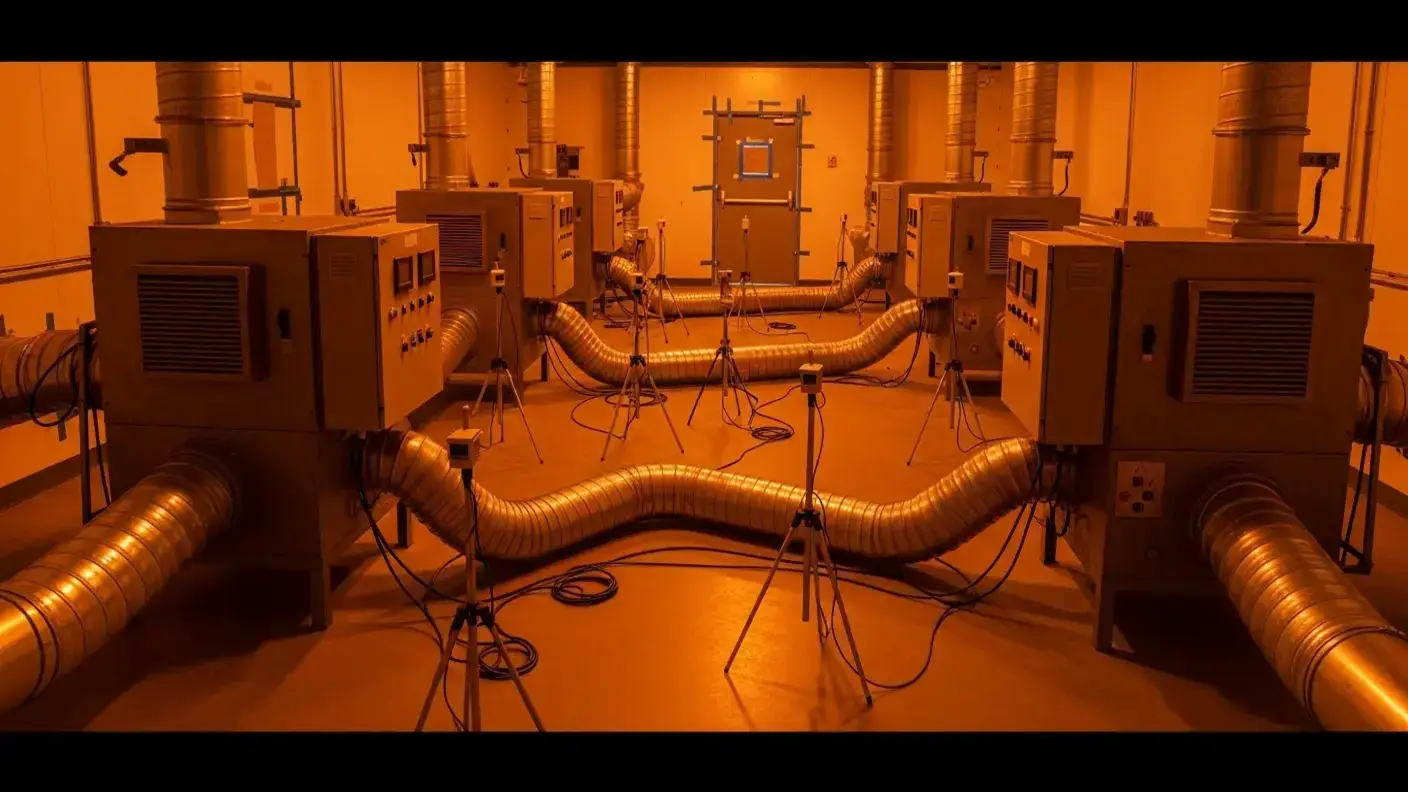
Professional heaters are positioned throughout the treatment area and gradually raise the temperature over several hours. Wireless temperature sensors are placed at strategic points, including inside furniture, behind skirting boards, in wall voids, and at floor level, to verify that the lethal temperature is reached in every zone. Our technicians monitor the temperature data in real time from outside the treatment area and adjust heater positions if any cold spots are detected.
Industrial fans circulate the heated air to ensure even distribution, preventing pockets of cooler air where pests could survive. The treatment is maintained at the target temperature for a minimum exposure period before heaters are switched off and the space is allowed to cool naturally.
Target Pests for Heat Treatment
Heat treatment is effective against a wide range of pest species, but it is particularly valuable where chemical resistance, product sensitivity, or environmental concerns make conventional treatments less suitable.
Bed bugs: Bed bugs are the most common reason for heat treatment in the UK. They have developed widespread resistance to pyrethroid insecticides, and their habit of hiding deep within mattress seams, bed frames, headboards, and wall voids makes them extremely difficult to reach with sprays. Heat treatment eliminates entire populations in a single visit, including eggs that are resistant to many chemical treatments.
Stored product insects: Grain beetles, flour beetles, biscuit beetles, Indian meal moths, and warehouse moths. Heat treatment is used for commodity treatment in food storage and production facilities where chemical residues are unacceptable.
Wood-boring beetles: Common Furniture Beetle, Deathwatch Beetle, and House Longhorn Beetle larvae develop deep within structural timbers for years. Heat treatment penetrates throughout the timber cross-section, reaching larvae that surface sprays and pastes cannot contact.
Textile pests: Carpet beetles and clothes moths in heritage collections, museums, and archives where chemical treatments risk damaging artefacts.
Heat Treatment for Bed Bugs
Bed bug heat treatment is the most effective single-visit solution for bed bug infestations. Unlike chemical treatments, which typically require 2 to 3 visits over several weeks and rely on bed bugs contacting treated surfaces, heat treatment kills every bed bug in the room simultaneously, including those hidden inside mattresses, headboards, electrical sockets, picture frames, and wall voids.
The process for a typical hotel room or bedroom takes 6 to 8 hours:
- Heaters and fans are positioned and wireless temperature sensors are placed in key locations including inside the bed frame, behind headboards, and in furniture joints.
- The room is heated gradually to 56 degrees Celsius. Rapid heating is avoided to prevent bed bugs from fleeing to adjacent rooms.
- The target temperature is maintained for a minimum of 4 hours to ensure lethal exposure throughout the room, including inside deep harbourages.
- Temperature data is logged throughout and provided as documentary evidence of treatment effectiveness.
For hotels and serviced accommodation, heat treatment offers a major advantage: the room can be returned to service the same day after cooling, with no chemical smell, no residue, and no need for multiple follow-up visits. For rental properties and housing associations, it provides certainty that the problem is resolved in a single visit.
Heat Treatment for Stored Product Pests
In food storage and manufacturing environments, heat treatment provides complete pest elimination without introducing chemical residues into the food chain. The entire storage area or processing room is heated to lethal temperatures, killing pests within the commodity, in packaging, and in structural harbourages simultaneously.
This approach is particularly valuable for organic food processors and stores where chemical treatments are not permitted, premises operating under BRC, SALSA, or retailer codes of practice where chemical use must be minimised and documented, businesses wanting to avoid product contamination risks associated with fumigation chemicals, and situations where fumigation is not practical due to building construction or ventilation limitations.
After heat treatment, we recommend implementing a monitoring programme using pheromone traps and regular inspection as part of your integrated pest management programme to provide early warning of any re-introduction.
Heat Treatment for Woodworm
Heat treatment is an effective alternative to chemical woodworm treatment for structural timbers, particularly where chemical application is difficult due to access limitations, timber type, or the presence of sensitive materials.
Wood-boring beetle larvae develop inside timbers for 2 to 5 years, feeding on the wood and creating tunnels (galleries) that weaken the structure. Surface-applied sprays and pastes can only treat the outer few millimetres of timber, relying on emerging adult beetles making contact with the treated surface. Heat treatment penetrates throughout the entire cross-section of the timber, killing larvae wherever they are.
Heat treatment of structural timbers is particularly suitable for heritage buildings, churches, and listed properties where chemical treatments may not be permitted or where preserving the appearance of exposed timbers is important. It is also used where timbers are partially enclosed or where access for spray application is restricted.
Why Choose Us for Heat Treatment
Completely Chemical-Free
Heat treatment eliminates pests through thermal exposure alone. No pesticides, no chemical residue, no smell. Safe for families, pets, and food environments.
Single-Visit Resolution
Most heat treatments are completed in one visit, unlike chemical treatments that require multiple applications over several weeks.
Real-Time Temperature Monitoring
Wireless sensors placed throughout the treatment area verify that every zone reaches the lethal temperature. Data logs are provided as documentary proof.
Same-Day Re-Entry
Once cooling is complete, the space can be reoccupied immediately. No ventilation period, no waiting, no disruption to the next day's operations.
Bypasses Chemical Resistance
Heat kills through thermal exposure. There is no mechanism for insects to develop heat resistance, making it effective where chemical treatments have failed.
NPTA-Qualified Technicians
Our team holds full NPTA membership and specialist training in heat treatment equipment operation, temperature monitoring, and building preparation.
Advantages Over Chemical Treatment
Heat treatment offers several significant advantages over conventional chemical pest control methods:
- No chemical resistance: Heat kills through thermal exposure. There is no mechanism by which insects can develop resistance to high temperatures, unlike chemical insecticides where resistance is increasingly common.
- No chemical residue: After cooling, the treated space contains no chemical residue whatsoever. This is essential for food preparation areas, healthcare settings, and environments where chemical use is restricted or undesirable.
- Single treatment: Most heat treatments are completed in a single visit. Chemical bed bug treatments typically require 2 to 3 visits over several weeks, with the risk of re-infestation between visits.
- Same-day re-entry: Once the space has cooled, it can be reoccupied immediately. There is no ventilation period, no chemical odour, and no surfaces to clean.
- Total penetration: Heat reaches into every crack, crevice, void, mattress seam, and timber interior. Chemical sprays only treat surfaces that the spray contacts directly.
Heat treatment is not suitable for every situation. Very large open spaces, temperature-sensitive contents, and certain building types may be better suited to fumigation or conventional treatments. We always recommend the most appropriate method based on your specific circumstances.
Preparing Your Premises for Heat Treatment
Preparation for heat treatment is relatively straightforward compared to fumigation, but a few steps help ensure the best results.
- Remove heat-sensitive items: Candles, cosmetics, aerosols, medicines, plants, and perishable food should be removed from the treatment area. Your technician will provide a full checklist.
- Leave furniture in place: Unlike chemical treatments, you do not need to empty wardrobes, strip beds, or move furniture. Heat treatment works most effectively when the room is in its normal state, as this ensures pests are in their usual harbourages.
- Ensure the space can be heated: Windows and doors must close fully. Our technician will seal gaps to retain heat and prevent pests from escaping.
- Electronics and appliances: Most electronics (TVs, laptops, phones) should be removed as a precaution, although the temperatures used are below the damage threshold for most devices. Your technician will advise case by case.
For commercial premises, we schedule treatment to minimise disruption, including out-of-hours and weekend sessions. The treated area is typically ready for use within 2 to 4 hours after the heaters are switched off.
Temperature Monitoring and Verification
Effective heat treatment depends on every part of the treatment area reaching the lethal temperature. We use wireless temperature sensors placed at multiple points throughout the room to verify coverage in real time.
Sensors are positioned at floor level (where bed bugs congregate), inside furniture (bed frames, wardrobes, drawers), behind skirting boards and headboards, in corners and areas furthest from heaters, and inside wall voids where accessible. Temperature data is logged continuously throughout the treatment and provided to the client as documentary evidence. The log shows that every monitoring point reached and maintained the target temperature for the required duration.
If any sensor indicates a cold spot, the technician repositions heaters and fans to address it before the treatment is concluded. This data-driven approach ensures complete coverage and provides verifiable proof of treatment effectiveness for audit and compliance purposes.
Commercial vs Residential Heat Treatment
We deliver heat treatment for both commercial and residential clients, adapting the approach to the specific requirements of each environment.
For businesses: Hotels and serviced accommodation benefit from single-visit bed bug elimination with same-day room turnaround. Food businesses use heat treatment for chemical-free stored product pest control. Multi-room and multi-floor treatments are coordinated to prevent pest displacement between treatment zones. Full documentation supports BRC, SALSA, and audit compliance.
For homes: Residential heat treatment is carried out with care for your belongings and furnishings. Our technician explains the process, removes any heat-sensitive items, and ensures the treated rooms are safe for your family and pets to reoccupy the same day. Heat treatment is particularly reassuring for families concerned about chemical residues in bedrooms and living spaces.
We cover the entire North East, from Newcastle and Sunderland to Darlington, Stockton, and Middlesbrough.
Our Heat Treatment Process
A structured, three-stage approach that treats the problem and prevents it returning.
Step 1
Inspect and Plan
A detailed property inspection identifies entry points, infestation hotspots, and the species involved. A targeted treatment plan is developed based on findings.
Step 2
Treatment
Professional control measures are applied using advanced techniques and CRRU-compliant products. Proofing and sealing work addresses the root cause at the same time.
Step 3
Ongoing Support
Follow-up visits confirm the problem is resolved. You receive clear documentation, prevention advice, and recommendations for ongoing protection.
Chemical treatments not working?
Heat treatment bypasses insecticide resistance. Free assessment and quotation for businesses and homeowners across the North East.
What to Expect After Heat Treatment
After the treatment period is complete, the heaters are switched off and the space is allowed to cool naturally. Forced cooling using fans is applied where appropriate to speed up the process.
Once the room temperature has returned to a comfortable level (typically within 2 to 4 hours), the space can be reoccupied immediately. There is no ventilation period, no chemical smell, and no treated surfaces to avoid.
You may find dead insects in the treated area for a few days after treatment. This is normal and expected, as pests that were killed in hidden harbourages gradually fall out as the space is used. Vacuuming will remove them.
Our technician provides a treatment report including the temperature log showing coverage, a summary of findings, and recommendations for preventing re-infestation. For bed bug treatments, we recommend a follow-up inspection 2 to 4 weeks after treatment to confirm complete elimination.

NPTA Member
We are full members of the National Pest Technicians Association (NPTA). This means our technicians meet strict training and competency standards, carry appropriate insurance, and follow the association's code of practice. NPTA membership is your assurance that the work is carried out professionally and responsibly.
Fair, Transparent Pricing
Every job is different. The cost depends on the type of pest, scale of the problem, and what treatment is needed. We provide a free assessment and an honest quotation before any work begins. No hidden costs, no surprises.
View our pricing guideSatisfaction Guaranteed
Every heat treatment is backed by our temperature verification guarantee. Real-time wireless sensors confirm that every part of the treatment area reaches the lethal temperature. If our follow-up inspection finds surviving pest activity, we re-treat at no additional cost.
Frequently Asked Questions
A typical room treatment takes 6 to 12 hours depending on the room size, contents, and target pest. The space can be reoccupied the same day once cooling is complete. For multi-room treatments, we can treat rooms in sequence or simultaneously depending on equipment availability.
The temperatures used (around 56 degrees Celsius) are below the damage threshold for most household items, including furniture, clothing, mattresses, and soft furnishings. Heat-sensitive items such as candles, aerosols, and certain cosmetics are removed before treatment. Electronics are generally removed as a precaution.
Wireless temperature sensors placed throughout the treatment area log temperatures continuously. The data confirms that every monitoring point reached and maintained the lethal temperature for the required duration. This log is provided to you as documentary evidence of treatment effectiveness.
Pets must be removed from the treatment area during the heat treatment process. Once the room has cooled to normal temperature, it is completely safe for pets to return. There are no chemical residues, treated surfaces, or lingering fumes.
You will need to vacate the rooms being treated during the heating period, but other rooms in the property can remain occupied as normal. For whole-property treatments, you will need to leave the premises for the duration of the treatment and cooling period.
Our Other Services
Areas We Cover
We provide heat treatment services across the North East of England.
Ready to talk to us?
Free survey and quotation for businesses and homeowners. No obligation, no pressure.
We will get back to you as soon as we can.