
Digital and Connected Solutions
Smart pest monitoring systems, connected bait stations, real-time alerts, and data-driven pest management for commercial premises across the North East.
Why You Need Professional Digital and Connected Solutions
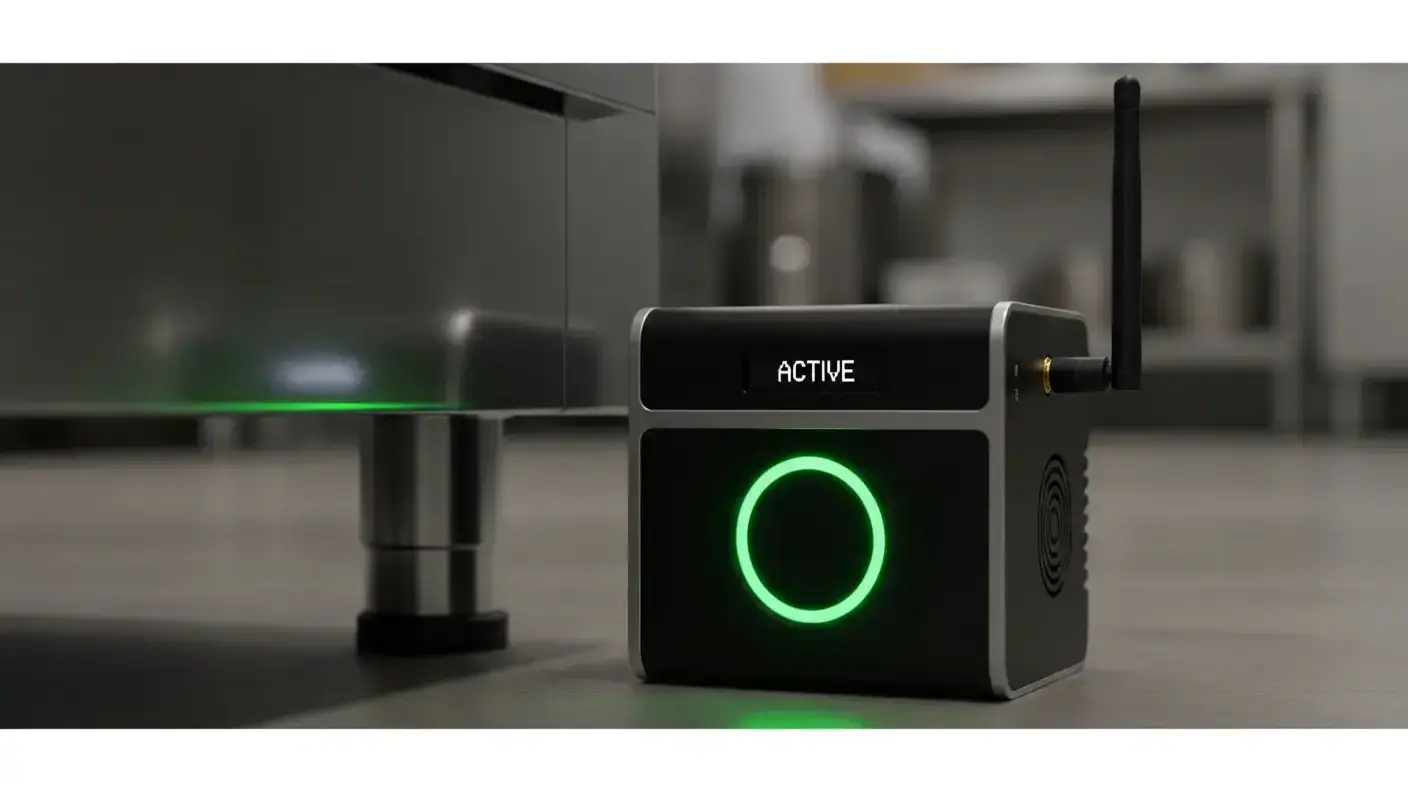
Digital and connected pest management uses sensor technology, wireless communication, and data analytics to transform how businesses monitor, detect, and respond to pest activity. Connected bait stations, remote monitoring sensors, and online reporting platforms provide real-time visibility of pest conditions across your premises 24 hours a day, 7 days a week. Our NPTA-qualified technicians design, install, and manage connected monitoring systems that provide early warning of pest activity, reduce response times, generate audit-ready documentation, and deliver measurable cost savings compared to traditional scheduled visit programmes.
What's Included
Why acting quickly matters
Traditional pest management relies on periodic scheduled visits where a technician physically inspects monitoring equipment. Between visits, pest activity can develop undetected for days or weeks. Connected monitoring detects activity within minutes and sends an alert immediately. For food businesses, warehouses, and premises operating under audit standards, this early warning capability can mean the difference between a minor intervention and a major infestation, product contamination, or audit failure.
Want to upgrade to connected monitoring?
Free site survey and system design consultation for commercial premises across the North East.
Request a free call back
Prefer to get in touch another way? Contact us or email info@wynyardpestcontrol.co.uk
Threat Assessment
Nuisance:
3/10LOWDigital monitoring itself does not create nuisance. It addresses the fundamental gap in traditional pest management: the period between scheduled visits when activity can develop undetected. The nuisance from pest problems caught early by connected systems is significantly lower than problems discovered at a routine visit days or weeks later.
Hazard:
7/10HIGHDelayed detection of pest activity in food businesses can lead to product contamination, stock losses, and enforcement action. In warehouses and distribution centres, undetected rodent activity creates fire risks from gnawed wiring and contamination of goods in transit. Connected monitoring closes the detection gap, reducing the hazard of delayed response from days or weeks to minutes.
Vital Statistics
| Monitoring type | 24/7 wireless connected sensors |
| Alert speed | Real-time notification within minutes |
| Battery life | Up to 5 years depending on device |
| Connectivity | LoRaWAN, cellular, or Wi-Fi |
| Data storage | Cloud-based with full audit trail |
| Report format | Online portal, PDF, API integration |
Key Facts
- Traditional monitoring relies on scheduled visits, typically every 4 to 8 weeks. Between visits, pest activity can develop for days or weeks before detection. Connected monitoring detects activity within minutes.
- A single undetected rodent entering a food production facility can contaminate product, trigger a product recall, and result in enforcement action from the Food Standards Agency.
- BRC Issue 9 (Global Standard for Food Safety) specifically encourages the use of digital pest monitoring as part of a comprehensive pest management programme.
- Rodent gnawing on electrical wiring is a leading cause of unexplained fires in commercial premises. Real-time detection of rodent activity near electrical infrastructure allows immediate intervention.
- Connected bait stations use sensors to detect rodent entry and feeding activity. Each event is timestamped, logged, and transmitted to a cloud platform where it generates an alert and updates trend data.
- Environmental sensors can monitor temperature, humidity, and air pressure in storage areas, identifying conditions that attract pests before pest activity begins.
- Online reporting portals provide auditors, facilities managers, and head office teams with real-time access to pest monitoring data, trend reports, and site status without waiting for technician visit reports.
- Connected systems reduce the number of routine inspection visits needed, redirecting technician time to proactive prevention, proofing, and targeted response to genuine activity.
"[The technician] sorted a mouse problem we had in days. Very knowledgeable and professional! Highly recommend"
Ben Flower · Google review, March 2026
Ready for smarter pest management?
Connected monitoring provides 24/7 visibility, instant alerts, and audit-ready data. Free consultation for businesses across the North East.
How Connected Pest Monitoring Works
Connected monitoring detects pest activity within minutes and sends an alert immediately. Traditional monitoring relies on discovery at the next scheduled visit, which could be days or weeks later.
Connected pest monitoring replaces passive monitoring devices (traps, bait stations, sticky boards that are only checked during technician visits) with sensor-equipped units that detect and report activity in real time.
Each connected device contains sensors that detect specific events: a rodent entering a bait station, a trap being triggered, an insect being caught on a monitoring board, or environmental conditions changing beyond set thresholds. When an event is detected, the device transmits a signal via wireless network (LoRaWAN, cellular, or Wi-Fi) to a cloud-based platform.
The platform logs the event with a timestamp and device location, evaluates the event against your site's alert rules, sends notifications to designated personnel via email, SMS, or app notification, updates the site dashboard and trend reports, and creates an audit trail entry for compliance documentation.
Your pest management technician receives the same alerts and can respond to genuine activity immediately rather than discovering it at the next scheduled visit.
Connected Rodent Monitoring
Connected rodent monitoring devices are the most widely deployed category of digital pest management technology. They provide continuous surveillance of rodent activity at critical control points throughout your premises.
Connected bait stations: Tamper-resistant bait stations equipped with sensors that detect rodent entry and feeding activity. Each event is logged with a timestamp and transmitted to the monitoring platform. Patterns of activity over time indicate whether a problem is developing, stable, or resolving.
Connected traps: Electronic kill traps that detect when a rodent has been caught and send an immediate alert. The trap can be serviced and reset promptly, maintaining continuous protection. This is particularly valuable in sensitive environments where a dead rodent must be removed quickly.
Non-toxic monitoring sensors: Infrared and motion sensors that detect rodent movement without the use of bait or poison. Suitable for organic food environments and premises where chemical-free monitoring is required.
For food businesses, connected rodent monitoring provides the continuous surveillance that auditors increasingly expect to see as part of a BRC or SALSA pest management programme.
Environmental Monitoring
Environmental conditions directly influence pest activity. Temperature, humidity, and moisture levels determine which pest species are attracted to an area and how quickly populations can develop.
Our environmental monitoring sensors track conditions in storage areas, production zones, roof spaces, and other critical locations. The data is logged continuously and alerts are triggered when conditions move outside acceptable ranges.
For example, stored product pests require specific temperature and humidity ranges to breed. If a storage area exceeds these thresholds, an alert prompts corrective action before pest activity develops. Damp conditions in roof spaces attract woodworm and other moisture-loving pests. A humidity sensor provides early warning of conditions that need attention.
Environmental data also supports Legionella risk management by monitoring water temperatures in storage tanks and distribution systems.
Online Reporting and Dashboards
All monitoring data is accessible through a secure online portal that provides real-time visibility of pest conditions across your premises. The portal is designed for use by facilities managers, site managers, head office compliance teams, and auditors.
Key features include a live site map showing the location and status of every monitoring device, activity alerts with timestamps, device identification, and recommended actions, trend analysis charts showing activity patterns over weeks, months, and years, automated reporting that can be scheduled daily, weekly, or monthly, audit-ready documentation that can be downloaded or printed for inspection, and multi-site dashboards for businesses operating across several locations.
For BRC, SALSA, and retailer audits, the portal provides instant access to pest monitoring records without the need to locate paper files or wait for your technician to prepare reports. Auditors can see the complete history of monitoring activity, technician responses, and corrective actions at a glance.
Audit Compliance and BRC Benefits
Digital pest monitoring directly supports compliance with the leading food safety audit standards, including BRC Global Standard for Food Safety (Issue 9), SALSA, Red Tractor, and major retailer codes of practice.
BRC Issue 9 specifically encourages the use of digital pest monitoring technology as part of a comprehensive pest management programme. Connected systems demonstrate continuous surveillance (not just periodic inspection), immediate response to detected activity, documented evidence of monitoring frequency far exceeding manual visit schedules, trend analysis showing the effectiveness of preventative measures, and an auditable trail linking detection to response to resolution.
For food businesses preparing for their next BRC or SALSA audit, implementing connected monitoring can strengthen your pest management score significantly. Our technicians can advise on the optimal sensor placement and reporting configuration to meet your specific audit requirements.
Why Choose Us for Digital and Connected Solutions
24/7 Real-Time Monitoring
Connected sensors monitor your premises around the clock. Activity is detected within minutes and alerts are sent immediately to your team and ours.
Audit-Ready Reporting
Online portal provides instant access to monitoring data, trend analysis, and documented evidence for BRC, SALSA, and retailer audits. No waiting for paper reports.
Tailored System Design
Every system is designed specifically for your premises following a site survey. Device types, quantities, and placement are optimised for your risk profile and building layout.
Reduced Response Times
Real-time alerts mean our technicians can respond to genuine activity immediately rather than discovering it at the next scheduled visit, typically days or weeks later.
Cost-Effective Protection
Early detection prevents small problems from becoming large infestations. Reduced routine visits, fewer emergencies, and prevented stock losses deliver measurable cost savings.
NPTA-Qualified Technicians
Systems are designed, installed, and managed by our own NPTA-qualified technicians who combine technology expertise with practical pest control experience.
Reducing Costs with Connected Monitoring
Connected monitoring shifts pest management from a reactive, visit-driven model to a proactive, data-driven approach. This delivers measurable cost savings in several areas.
Reduced routine visits: When connected sensors provide continuous surveillance, the number of routine inspection visits can be reduced. Technician time is redirected from checking devices to proactive prevention, proofing, and targeted response to genuine activity.
Earlier intervention: Detecting activity within minutes rather than at the next scheduled visit means smaller problems are addressed before they become large infestations. Smaller problems cost less to resolve.
Reduced product losses: In food storage and manufacturing, early detection prevents contamination from spreading through stock. The cost of a single product recall or batch rejection far exceeds the cost of a connected monitoring system.
Fewer audit failures: Comprehensive monitoring documentation reduces the risk of pest-related audit non-conformances, avoiding the cost of re-audits, corrective action plans, and potential customer loss.
System Design and Installation
Every connected monitoring system is designed specifically for your premises. Our technician carries out a site survey to assess the building layout, identify critical control points, evaluate wireless connectivity options, and recommend the appropriate number and type of monitoring devices.
The design process considers building construction and materials (which affect wireless signal propagation), critical control points based on pest risk assessment, access routes and areas of highest vulnerability, existing monitoring device locations, power and connectivity infrastructure, and integration with existing building management or IT systems.
Installation is carried out by our technicians with minimal disruption to your operations. Devices are tested on-site to confirm wireless connectivity and correct data transmission to the monitoring platform. Training is provided for your team on how to access the portal, interpret alerts, and respond to notifications.
Integration with Existing Systems
Connected pest monitoring platforms can integrate with your existing building management and compliance systems. Data can be exported via API to facilities management software, CAFM (Computer Aided Facilities Management) systems, food safety management platforms, and business intelligence dashboards.
For multi-site businesses, integration allows head office teams to monitor pest conditions across all locations from a single dashboard, compare performance between sites, and identify trends that may indicate a systemic issue rather than a site-specific problem.
We work with your IT team to establish the appropriate integration approach, whether that is automated data feeds, scheduled report exports, or direct API connections. The goal is to embed pest monitoring data into your existing workflows without creating additional administrative burden.
IoT Pest Management and the Future
Connected pest monitoring is part of the broader Internet of Things (IoT) transformation of building management. As sensor technology, battery life, and wireless connectivity continue to improve, the capabilities of connected pest management systems are expanding rapidly.
Current developments include AI-powered analysis of activity patterns to predict pest pressure before it occurs, image-based species identification using cameras integrated into monitoring devices, acoustic sensors that detect rodent ultrasonic communication, integration with smart building systems for automated environmental response, and blockchain-based audit trails for food supply chain transparency.
We invest in staying at the forefront of digital pest management technology, evaluating new products and systems as they become available and recommending them to clients when they offer genuine benefits. Our approach is technology-informed but practical: we recommend connected solutions where they add value, not as a replacement for the expertise and experience of qualified pest control technicians.
Our Digital and Connected Solutions Process
A structured, three-stage approach that treats the problem and prevents it returning.
Step 1
Inspect and Plan
A detailed property inspection identifies entry points, infestation hotspots, and the species involved. A targeted treatment plan is developed based on findings.
Step 2
Treatment
Professional control measures are applied using advanced techniques and CRRU-compliant products. Proofing and sealing work addresses the root cause at the same time.
Step 3
Ongoing Support
Follow-up visits confirm the problem is resolved. You receive clear documentation, prevention advice, and recommendations for ongoing protection.
Ready for smarter pest management?
Connected monitoring provides 24/7 visibility, instant alerts, and audit-ready data. Free consultation for businesses across the North East.
Commercial Applications Across the North East
We design and manage connected pest monitoring systems for commercial clients across the entire North East, from Newcastle and Sunderland to Darlington, Stockton, and Middlesbrough.
Key sectors include food manufacturing and storage (continuous monitoring for BRC and SALSA compliance), hotels and hospitality (discreet monitoring in guest-facing areas), warehouses and distribution centres (large-scale rodent monitoring across extensive floor areas), healthcare facilities (chemical-free monitoring in sensitive environments), and educational institutions (campus-wide monitoring with centralised reporting).
Whether you are a single-site operation or a multi-site business, connected monitoring can be scaled to match your requirements and integrated with your existing pest management programme.
"Top service, fast and responsive"
Christopher Nottingham · Google review, April 2026
NPTA Member
We are full members of the National Pest Technicians Association (NPTA). This means our technicians meet strict training and competency standards, carry appropriate insurance, and follow the association's code of practice. NPTA membership is your assurance that the work is carried out professionally and responsibly.
Fair, Transparent Pricing
Every job is different. The cost depends on the type of pest, scale of the problem, and what treatment is needed. We provide a free assessment and an honest quotation before any work begins. No hidden costs, no surprises.
View our pricing guideSatisfaction Guaranteed
Every connected monitoring installation is backed by our system reliability guarantee. We design, install, test, and maintain the system. If any device fails or connectivity is lost, we replace and restore it at no additional cost as part of your monitoring contract.
Frequently Asked Questions
Sensor-equipped devices (bait stations, traps, or environmental monitors) detect pest activity or environmental changes and transmit data wirelessly to a cloud platform. The platform logs events, sends alerts to your team and ours, and stores data for trend analysis and audit documentation.
Yes, but the nature and frequency of visits changes. Instead of routine inspections to check passive devices, technician visits focus on responding to activity alerts, carrying out proactive prevention, maintaining devices, and reviewing monitoring data with your team. The result is more effective use of technician time.
Yes. Connected monitoring systems can be scaled from a small number of devices for a single site to hundreds of devices across multiple locations. For smaller premises, even a few connected bait stations can provide significantly better detection than traditional passive monitoring.
Devices communicate via LoRaWAN (long-range, low-power wireless), cellular networks, or Wi-Fi depending on the device type and building. LoRaWAN is most common for pest monitoring as it provides excellent range and battery life. A single gateway can support hundreds of devices across a large site.
Battery life varies by device type but typically ranges from 2 to 5 years for LoRaWAN-connected monitoring devices. Battery status is monitored by the platform and alerts are sent when replacement is needed. Battery replacement is included in the monitoring contract.
Yes. BRC Issue 9 specifically encourages digital pest monitoring. Connected systems demonstrate continuous surveillance, immediate response, documented trend analysis, and an auditable trail that significantly strengthens your pest management score. Auditors can access data directly through the online portal.
Yes. You receive secure login credentials for the online portal, which provides real-time access to live site maps, activity alerts, trend charts, and downloadable reports. The portal is accessible from any web browser on desktop and mobile devices.
The platform sends an immediate alert to your designated contacts and to our technician team. The alert includes the device location, event type, and timestamp. Our technician assesses the alert and schedules a response visit if needed, typically the same day or next working day for genuine rodent activity.
Our Other Services
Areas We Cover
We provide digital and connected solutions services across the North East of England.
Ready to talk to us?
Free survey and quotation for businesses and homeowners. No obligation, no pressure.
We will get back to you as soon as we can.