
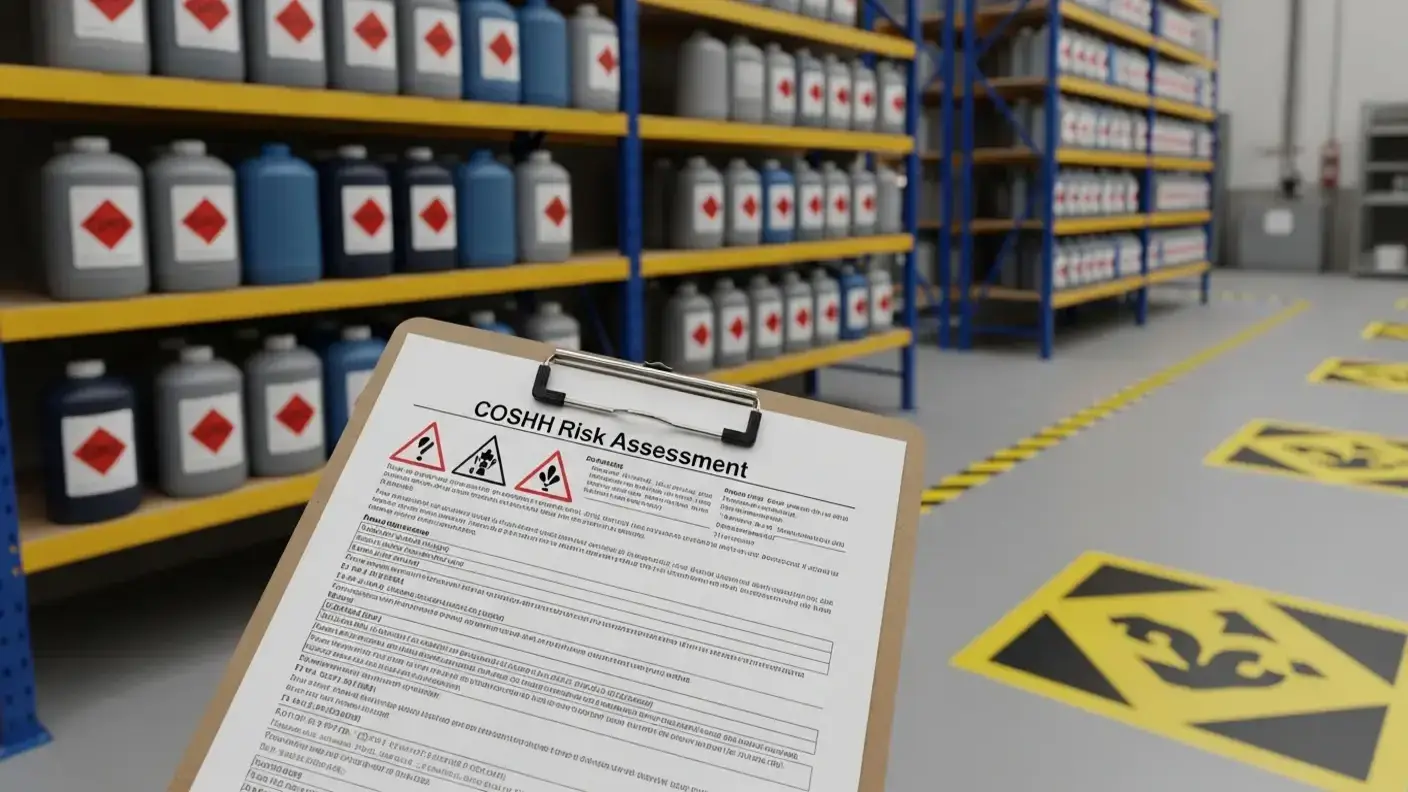
COSHH Risk Assessments
Professional COSHH risk assessments for pest control chemicals and workplace hazardous substances across the North East. Fully documented and audit-ready.
Why You Need Professional COSHH Risk Assessments
The Control of Substances Hazardous to Health Regulations 2002 (COSHH) require every employer to assess the risks from hazardous substances used or encountered in the workplace, and to implement control measures to protect employees and others. In pest control, COSHH assessments cover every pesticide, rodenticide, insecticide, fumigant, and biocide used on your premises. Our NPTA-qualified technicians prepare comprehensive COSHH risk assessments for every treatment we carry out, and we also provide standalone COSHH assessment services for businesses that need to review their own chemical safety compliance.
What's Included
Why acting quickly matters
COSHH compliance is not optional. The Health and Safety Executive (HSE) can inspect any workplace without notice and require evidence of COSHH assessments for all hazardous substances in use. Failure to carry out assessments, implement controls, or maintain records is a criminal offence with penalties including unlimited fines and imprisonment. In pest control, the substances involved include rodenticides, insecticides, and fumigants that can cause serious harm if mishandled.
Need COSHH assessments for your premises?
Professional COSHH risk assessments for pest control chemicals and workplace substances across the North East.
Request a free call back
Prefer to get in touch another way? Contact us or email info@wynyardpestcontrol.co.uk
Threat Assessment
Nuisance:
2/10LOWCOSHH compliance is a documentation and procedural requirement. The nuisance arises when compliance is absent: HSE enforcement visits, improvement notices, and the administrative burden of retrospective assessment under pressure. Proactive COSHH management eliminates this disruption.
Hazard:
8/10VERY HIGHPest control chemicals include substances that are toxic, corrosive, and harmful to health. Rodenticides cause internal bleeding. Insecticides affect the nervous system. Fumigants can be lethal at working concentrations. Without proper COSHH assessment and controls, employees, customers, and the public are at risk. HSE prosecution for COSHH failures can result in unlimited fines and imprisonment.
Vital Statistics
| Regulation | COSHH Regulations 2002 (as amended) |
| Enforcing body | Health and Safety Executive (HSE) |
| Applies to | All employers using hazardous substances |
| Review frequency | At least annually or when substances change |
| Penalties | Unlimited fines, up to 2 years imprisonment |
| Key documents | Risk assessments, SDSs, training records, monitoring records |
Key Facts
- COSHH assessments are a legal requirement for every hazardous substance used in the workplace. This includes all pesticides, rodenticides, insecticides, disinfectants, and cleaning chemicals.
- The HSE can inspect any workplace without notice and demand evidence of COSHH compliance. Failure to produce assessments is a criminal offence with unlimited fines.
- Rodenticides containing anticoagulant active ingredients can cause fatal internal bleeding in humans and animals if ingested. CRRU (Campaign for Responsible Rodenticide Use) compliance is a COSHH requirement.
- Fumigants such as phosphine are immediately dangerous to life at working concentrations. COSHH assessments for fumigation must include specific emergency procedures and medical protocols.
- Employers must provide COSHH training to all employees who may be exposed to hazardous substances. Training records must be maintained and available for inspection.
- A COSHH assessment identifies the hazardous substance, who is at risk, how exposure could occur, what control measures are needed, and what to do in an emergency.
- Safety Data Sheets (SDSs) are the primary source of hazard information for COSHH assessments. Suppliers must provide SDSs for all hazardous products, and employers must keep them accessible.
- Workplace Exposure Limits (WELs) set the maximum concentration of a substance in workplace air, averaged over a reference period. Monitoring may be required to confirm exposure is below the WEL.
- COSHH assessments must be reviewed whenever there is a significant change, such as a new substance being introduced, a change in working practices, or new information about a substance's hazards.
"[The technician] sorted a mouse problem we had in days. Very knowledgeable and professional! Highly recommend"
Ben Flower · Google review, March 2026
Is your COSHH documentation up to date?
Free consultation on COSHH compliance for businesses across the North East. Audit-ready assessments and SDS management.
What Are the COSHH Regulations
COSHH compliance is a criminal law requirement. The HSE can prosecute employers who fail to assess risks from hazardous substances, with unlimited fines and up to 2 years imprisonment.
The Control of Substances Hazardous to Health Regulations 2002 (COSHH) are part of UK health and safety law. They require employers to protect employees and others from the health risks of hazardous substances used at work.
COSHH applies to chemicals, products containing chemicals, fumes, dusts, vapours, mists, nanotechnology, gases, biological agents (germs), and any substance that has a Workplace Exposure Limit (WEL). In pest control, this includes all rodenticides, insecticides, fungicides, fumigants, disinfectants, and biocides, as well as any hazardous substances generated during treatment (such as dust from disturbing rodent droppings).
The regulations require employers to assess the risks, decide what precautions are needed, prevent or adequately control exposure, ensure control measures are used and maintained, monitor exposure where necessary, carry out health surveillance where appropriate, prepare plans and procedures to deal with accidents and emergencies, and ensure employees are properly informed, trained, and supervised.
What a COSHH Assessment Covers
A COSHH assessment is a structured evaluation of the risks posed by a specific hazardous substance in a specific workplace context. For pest control chemicals, each assessment covers:
- Substance identification: Product name, active ingredient, concentration, formulation type, and supplier. Cross-referenced with the Safety Data Sheet (SDS).
- Hazard classification: The GHS (Globally Harmonised System) hazard pictograms, signal words, and hazard statements from the product label and SDS.
- Route of exposure: How people could be exposed: inhalation, skin contact, ingestion, or eye contact. The likely duration and frequency of exposure.
- Who is at risk: Employees, contractors, visitors, customers, members of the public, children, pets, and vulnerable groups.
- Control measures: The specific actions taken to prevent or minimise exposure, including elimination, substitution, engineering controls, administrative controls, and PPE.
- PPE requirements: The specific personal protective equipment required when handling, applying, or being in proximity to the substance.
- Emergency procedures: First aid measures, spill response, fire response, and medical treatment guidance specific to the substance.
- Storage and disposal: Safe storage requirements, incompatible substances, shelf life, and disposal method.
COSHH in Pest Control
Pest control involves the use of substances that are inherently hazardous. They are designed to kill or control living organisms, and many can cause harm to humans if not handled correctly.
Rodenticides: Anticoagulant rodenticides (difenacoum, bromadiolone, brodifacoum) prevent blood clotting and can cause fatal internal bleeding in humans and animals if ingested. All use must comply with CRRU (Campaign for Responsible Rodenticide Use) stewardship requirements. COSHH assessments cover storage, handling, deployment, monitoring, and disposal.
Insecticides: Pyrethroid, organophosphate, and neonicotinoid insecticides are used for insect control. Exposure routes include skin contact during application, inhalation of spray mist, and ingestion through contaminated food or surfaces. COSHH assessments specify application methods, ventilation requirements, re-entry periods, and PPE.
Fumigants: Phosphine and sulfuryl fluoride are lethal at working concentrations. Fumigation COSHH assessments are the most detailed, covering gas detection, exclusion zones, emergency procedures, and respiratory protective equipment.
Disinfectants: Disinfection products can be corrosive, irritant, or sensitising. COSHH assessments cover dilution procedures, contact times, PPE, and ventilation requirements.
Safety Data Sheets and Record Keeping
Safety Data Sheets (SDSs) are the foundation of COSHH compliance. They are legally required documents provided by the manufacturer or supplier of every hazardous product, containing detailed information about the substance's hazards, safe handling, storage, exposure controls, and emergency measures.
Employers must obtain the current SDS for every hazardous substance used on their premises, keep SDSs accessible to all employees who may be exposed (not locked in an office), review SDSs when updated versions are issued, and use the SDS as the basis for the COSHH risk assessment.
COSHH records must be maintained and available for inspection. This includes the risk assessments themselves, SDSs for all substances in use, training records for all employees exposed to hazardous substances, monitoring records where exposure monitoring is carried out, health surveillance records where health surveillance is required, and maintenance records for control equipment (ventilation, RPE, etc.).
We provide complete COSHH documentation for every pest control treatment we carry out on your premises, including substance identification, risk assessment, control measures, and PPE records. This documentation integrates with your existing pest management files.
PPE Requirements for Pest Control
Personal Protective Equipment (PPE) is the last line of defence in the COSHH hierarchy of controls. It is used when other control measures (elimination, substitution, engineering controls) cannot reduce exposure to acceptable levels.
For pest control operations, typical PPE requirements include chemical-resistant gloves (nitrile or neoprene) for handling rodenticides and insecticides, coveralls or chemical-resistant suits for spray applications, respiratory protective equipment (RPE) for fumigation, fogging, and dust-generating activities, eye protection (safety goggles or face shield) for spray and fogging applications, and safety footwear for site work.
The specific PPE requirements depend on the substance, the application method, and the environment. These are specified in the COSHH assessment for each treatment. All our technicians are trained in the correct selection, fitting, use, and maintenance of PPE. Face-fit testing for tight-fitting respiratory protective equipment is carried out in accordance with HSE guidance.
Why Choose Us for COSHH Risk Assessments
Complete COSHH Documentation
Every pest control treatment includes a full COSHH assessment covering the substances used, exposure routes, control measures, PPE, and emergency procedures. Audit-ready from day one.
SDS Library Management
We maintain current Safety Data Sheets for every product we use and provide copies for your site files. SDSs are updated whenever manufacturers issue revised versions.
CRRU Stewardship Compliance
All rodenticide use meets Campaign for Responsible Rodenticide Use standards, including point-of-sale stewardship, environmental risk assessment, and responsible use protocols.
Standalone Assessment Service
Beyond pest control chemicals, we provide COSHH assessments for your own cleaning products, disinfectants, and workplace chemicals. Full compliance for your entire substance inventory.
Training Integration
COSHH awareness is included in our pest awareness training programmes. We can also deliver dedicated COSHH training for your teams.
NPTA-Qualified Assessors
All assessments are prepared by NPTA-qualified technicians with practical experience of the substances being assessed. Our assessments reflect real-world use, not theoretical desk exercises.
Employer Responsibilities
Under COSHH, employers have specific legal duties that cannot be delegated. Even if you use an external pest control contractor, you remain responsible for ensuring that the substances used on your premises are covered by COSHH assessments, that your employees are informed about the substances being used and the precautions in place, that warning signs, exclusion zones, and re-entry periods are observed, that COSHH records for pest control treatments are retained as part of your site documentation, and that employees who handle or are exposed to hazardous substances receive appropriate training.
When we carry out pest control on your premises, we provide COSHH assessments for every substance we use, safety information for your staff regarding the treatment, warning signage and access restrictions where required, and copies of all documentation for your records.
For businesses that use their own cleaning chemicals, disinfectants, or other hazardous products, we can carry out standalone COSHH assessments to ensure your in-house chemical use is also compliant.
COSHH Training Requirements
COSHH Regulation 12 requires employers to provide suitable and sufficient information, instruction, and training to employees who may be exposed to hazardous substances. Training must cover the substances they may encounter and their hazards, the precautions they should take to protect themselves and others, the results of any exposure monitoring (in general terms), and the emergency procedures for spills, accidents, and exposure incidents.
Training should be provided before an employee first works with or near hazardous substances, when new substances are introduced, when working practices change, and at regular refresher intervals.
Our pest awareness training programmes include a COSHH awareness module covering the basics of chemical safety in the context of pest control. For businesses that want more comprehensive COSHH training, we can deliver tailored sessions covering your specific substance inventory and workplace procedures.
COSHH and Audit Compliance
COSHH documentation is a required element of many commercial audit standards. BRC, SALSA, Red Tractor, and retailer codes of practice all require evidence that hazardous substances are properly assessed and controlled.
For food businesses, COSHH assessments for pest control chemicals must be available alongside your pest management records. Auditors expect to see the current COSHH assessment for every pesticide used on site, the corresponding Safety Data Sheet, evidence that products are stored correctly (locked cabinet, away from food), training records for staff awareness, and a log of substances applied with dates, locations, and quantities.
Our pest management documentation is designed to satisfy these requirements. For every treatment visit, we provide a record of the substances used, quantities applied, locations, COSHH assessment reference, and the technician responsible. This integrates directly with your food safety management system.
Storage and Disposal of Pest Control Chemicals
COSHH requires that hazardous substances are stored safely and disposed of correctly. For pest control chemicals, this means storage in a locked, dedicated cabinet or store away from food, drinks, and animal feed, segregation of incompatible substances (as specified in the SDS), clear labelling of all containers, a current inventory of all substances held, and disposal of waste chemicals, empty containers, and unused products through licensed waste carriers.
Our technicians manage all pest control chemicals used during treatments. We supply, transport, apply, and remove products in accordance with COSHH requirements. No pest control chemicals are left unsecured on your premises. Bait stations and traps are tamper-resistant and locked.
For businesses that hold their own stocks of cleaning chemicals, disinfectants, or other hazardous products, we can advise on storage arrangements, labelling, and disposal procedures as part of a COSHH assessment service.
Our COSHH Risk Assessments Process
A structured, three-stage approach that treats the problem and prevents it returning.
Step 1
Inspect and Plan
A detailed property inspection identifies entry points, infestation hotspots, and the species involved. A targeted treatment plan is developed based on findings.
Step 2
Treatment
Professional control measures are applied using advanced techniques and CRRU-compliant products. Proofing and sealing work addresses the root cause at the same time.
Step 3
Ongoing Support
Follow-up visits confirm the problem is resolved. You receive clear documentation, prevention advice, and recommendations for ongoing protection.
Is your COSHH documentation up to date?
Free consultation on COSHH compliance for businesses across the North East. Audit-ready assessments and SDS management.
Environmental Risk Assessments
In addition to COSHH (which focuses on human health), pest control treatments require environmental risk assessments to protect non-target wildlife, water courses, and the wider environment.
All rodenticide use follows CRRU stewardship requirements, which include environmental risk assessment as a mandatory step. Key considerations include proximity to water courses, ponds, and ditches, the presence of non-target wildlife (birds of prey, hedgehogs, badgers), nesting sites of protected species, the type and location of bait stations (to prevent access by non-target animals), and the duration of treatment and the schedule for bait removal.
Environmental risk assessments are documented alongside COSHH assessments and form part of the complete treatment record. For businesses operating near sensitive environmental features, we tailor our treatment approach to minimise any risk to the surrounding ecosystem.
"Have been with these guys since 2022, amazing customer service and knowledge - highly recommend"
Serious Lee · Google review, March 2026
NPTA Member
We are full members of the National Pest Technicians Association (NPTA). This means our technicians meet strict training and competency standards, carry appropriate insurance, and follow the association's code of practice. NPTA membership is your assurance that the work is carried out professionally and responsibly.
Fair, Transparent Pricing
Every job is different. The cost depends on the type of pest, scale of the problem, and what treatment is needed. We provide a free assessment and an honest quotation before any work begins. No hidden costs, no surprises.
View our pricing guideSatisfaction Guaranteed
Every COSHH assessment is prepared to meet the requirements of the COSHH Regulations 2002 in full. If an HSE inspector or auditor identifies any gap in our assessment documentation, we will update and correct it at no additional cost.
Frequently Asked Questions
A COSHH assessment identifies the hazardous substance, its hazards, who is at risk, how exposure could occur, the control measures needed, PPE requirements, and emergency procedures. For pest control, each pesticide, rodenticide, and biocide used on your premises has its own assessment.
Yes. If a pest control contractor uses hazardous substances on your premises, COSHH assessments must be in place. We provide these as part of every treatment. You must retain copies in your site files and ensure your staff are informed about the substances used and precautions in place.
COSHH assessments must be reviewed when there is a significant change, such as a new product being used, a change in application method, or new hazard information. As good practice, we recommend an annual review of all assessments to ensure they remain current.
Yes. We provide standalone COSHH assessment services covering cleaning products, disinfectants, degreasers, and any other hazardous substances your business uses. This gives you a complete COSHH file covering both pest control and your own chemical inventory.
Failure to carry out COSHH assessments is a criminal offence. The HSE can issue improvement notices, prohibition notices, and prosecute. Penalties include unlimited fines and up to two years imprisonment. Having assessments in place before an inspection is essential.
A Safety Data Sheet (SDS) is a document provided by the manufacturer or supplier of a hazardous product. It contains 16 sections covering identification, hazards, composition, first aid, fire fighting, handling and storage, exposure controls, and disposal. SDSs are the primary reference for COSHH assessments.
Yes. BRC, SALSA, and most food safety audit standards require evidence that hazardous substances are assessed under COSHH. This includes pest control chemicals, cleaning products, and any other hazardous substances used on the premises. Our documentation is designed to satisfy these requirements.
Our Other Services
Areas We Cover
We provide coshh risk assessments services across the North East of England.
Ready to talk to us?
Free survey and quotation for businesses and homeowners. No obligation, no pressure.
We will get back to you as soon as we can.