
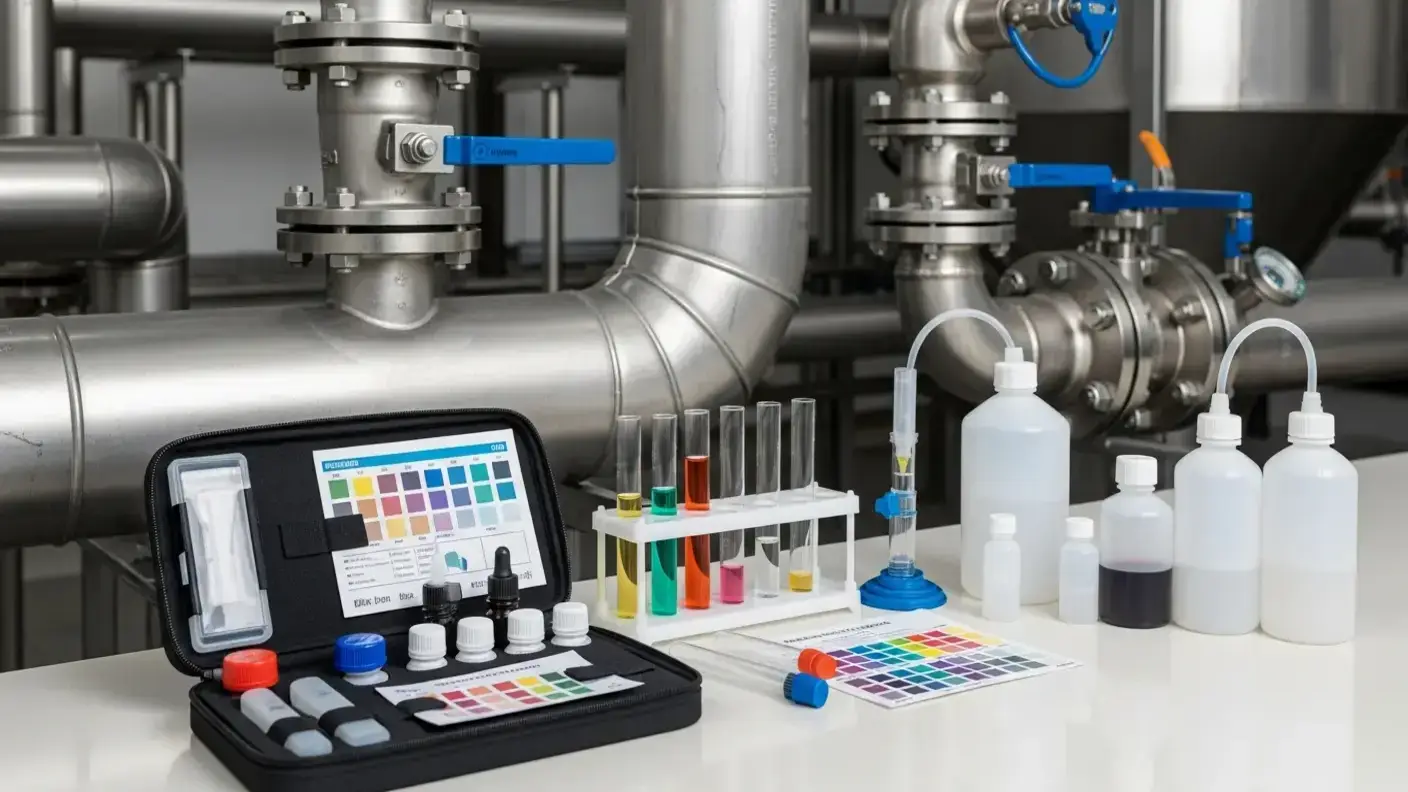
Legionella Services
Professional Legionella risk assessments, water sampling, temperature monitoring, and remedial action for commercial premises across the North East. ACOP L8 and HSG274 compliant.
Why You Need Professional Legionella Services
Legionella bacteria thrive in water systems where temperatures fall between 20 and 45 degrees Celsius. If inhaled in aerosol form from contaminated showers, cooling towers, spa pools, or water outlets, Legionella causes Legionnaires' disease, a severe and sometimes fatal form of pneumonia. Under the Health and Safety at Work Act 1974 and the HSE's Approved Code of Practice L8, all employers, landlords, and duty holders are legally required to assess and control the risk of Legionella in their water systems. Our NPTA-qualified technicians carry out comprehensive Legionella risk assessments, water sampling, temperature monitoring, and remedial actions for businesses and landlords across the North East.
What's Included
Why acting quickly matters
Legionnaires' disease kills approximately 10 to 15 percent of those who contract it and is more dangerous for older adults, smokers, and people with weakened immune systems. Outbreaks have been linked to poorly maintained cooling towers, hot water systems, spa pools, and even decorative water features. The HSE can prosecute duty holders who fail to carry out Legionella risk assessments and implement control measures. Fines are unlimited, and prison sentences of up to two years are possible for breaches that endanger life.
Need a Legionella risk assessment?
ACOP L8 compliant assessments for businesses and landlords across the North East. Do not wait for an HSE inspection.
Request a free call back
Prefer to get in touch another way? Contact us or email info@wynyardpestcontrol.co.uk
Threat Assessment
Nuisance:
3/10LOWLegionella contamination is not a visible or immediately noticeable problem. There is no odour, discolouration, or obvious sign that water is contaminated. The risk is entirely hidden, which makes proactive assessment and monitoring essential. The nuisance only becomes apparent when illness occurs or when testing reveals contamination.
Hazard:
10/10VERY HIGHLegionnaires' disease is a potentially fatal form of pneumonia with a case fatality rate of 10 to 15 percent. The HSE considers Legionella risk management a critical health and safety obligation. Duty holders who fail to assess and control the risk face unlimited fines and up to two years' imprisonment. Outbreaks can result in multiple fatalities, criminal prosecution, and permanent reputational damage.
Vital Statistics
| Bacteria | Legionella pneumophila (most common) |
| Growth range | 20 to 45 degrees Celsius |
| Killed at | Above 60 degrees Celsius |
| Dormant below | 20 degrees Celsius |
| Case fatality rate | 10 to 15 percent |
| UK regulation | ACOP L8, HSG274, HSWA 1974 |
Key Facts
- Legionnaires' disease kills approximately 10 to 15 percent of those who contract it. It is more dangerous for adults over 45, smokers, heavy drinkers, and people with weakened immune systems.
- All employers, landlords, and building owners have a legal duty under ACOP L8 to assess and control the risk of Legionella in their water systems. Failure to comply is a criminal offence.
- HSE prosecution for Legionella failures can result in unlimited fines and prison sentences of up to two years. Corporate manslaughter charges are possible if deaths occur.
- Dead legs (sections of pipework with no regular flow) are among the highest-risk features in any water system. Stagnant water at ambient temperature provides ideal growth conditions for Legionella.
- Cooling towers are the highest-risk source of Legionella outbreaks because they produce large volumes of aerosol that can travel considerable distances downwind.
- Legionella bacteria are found naturally in freshwater environments such as lakes, rivers, and reservoirs. They enter building water systems through the mains supply and multiply when conditions are favourable.
- Legionella cannot be transmitted from person to person. Infection occurs only through inhalation of contaminated water aerosol, not through drinking contaminated water.
- Hot water should be stored at a minimum of 60 degrees Celsius and distributed at a minimum of 50 degrees Celsius at the outlet to prevent Legionella growth.
- Legionella risk assessments must be reviewed at least every two years, or more frequently if there are changes to the water system, building use, or the people at risk.
"Brilliant service every time! Always very helpful. Thank you."
Ava Wilkinson · Google review, March 2026
Is your water system compliant?
Free consultation and quotation for Legionella risk assessments, sampling, and ongoing monitoring across the North East.
What Is Legionella and Why Is It Dangerous
Legionnaires' disease has a case fatality rate of 10 to 15 percent. It is one of the most dangerous waterborne infections in the UK.
Legionella is a genus of bacteria found naturally in freshwater environments. The species Legionella pneumophila is responsible for the vast majority of Legionnaires' disease cases in the UK. The bacteria enter building water systems through the mains supply and can multiply rapidly when water temperatures are between 20 and 45 degrees Celsius, nutrients are available (scale, sediment, biofilm, rust), and water is stagnant or slow-moving.
Infection occurs when a person inhales fine water droplets (aerosol) containing Legionella bacteria. Common sources of aerosol include showers, taps (especially spray taps), cooling towers, spa pools, decorative water features, and air conditioning systems that use water. Legionella is not transmitted from person to person, and drinking contaminated water does not cause infection in healthy individuals.
Legionnaires' disease causes severe pneumonia with symptoms including high fever, cough, shortness of breath, muscle aches, and headache. It requires hospitalisation and antibiotic treatment. The fatality rate is approximately 10 to 15 percent overall, and higher among vulnerable groups.
Legal Requirements for Duty Holders
The legal framework for Legionella risk management in the UK is established by the Health and Safety at Work Act 1974, the Management of Health and Safety at Work Regulations 1999, the Control of Substances Hazardous to Health Regulations 2002 (COSHH), and the HSE's Approved Code of Practice L8 (Legionnaires' disease: The control of legionella bacteria in water systems).
Under ACOP L8, every employer, landlord, and building owner (known as the duty holder) must identify and assess sources of risk in their water systems, prepare a written scheme for preventing or controlling the risk, implement, manage, and monitor the precautions, keep records, and appoint a competent person to manage the control measures.
This applies to virtually every commercial premises, rental property, and workplace with a water system. There are simplified requirements for low-risk premises (domestic-type hot and cold water systems in small buildings), but the duty to assess the risk cannot be avoided entirely.
Failure to comply with ACOP L8 is a criminal offence. The HSE and local authorities can prosecute, with penalties including unlimited fines and imprisonment of up to two years. If a death results from negligence, corporate manslaughter charges may apply.
Our Legionella Risk Assessment Service
Our Legionella risk assessment is a thorough, systematic evaluation of your water systems against the requirements of ACOP L8 and the technical guidance in HSG274.
The assessment covers identification of all water systems on the premises (hot water, cold water, cooling systems, spa pools, and any other systems that store or distribute water), evaluation of the water system design, age, materials, and condition, identification of specific risk features including dead legs, blind ends, infrequently used outlets, storage tanks, calorifiers, and mixing valves, temperature measurements at key points throughout the hot and cold water systems, assessment of the people at risk, including employees, visitors, residents, and particularly vulnerable groups, review of existing control measures, monitoring records, and maintenance procedures, and a schematic drawing or description of the water system layout.
The assessment produces a written report containing the findings, a risk rating for each element of the system, and specific recommendations for remedial action prioritised by urgency. This report is your primary compliance document and must be kept available for inspection by the HSE or local authority.
Water Sampling and Laboratory Testing
Water sampling provides direct evidence of whether Legionella bacteria are present in your water system and at what concentration. We collect water samples following the technical procedures set out in BS 7592 (Sampling for Legionella bacteria in water systems) and submit them to UKAS-accredited laboratories for analysis.
Routine sampling is recommended annually for most commercial systems, and more frequently for higher-risk systems such as cooling towers and spa pools. Additional sampling is carried out after remedial work, system changes, or if monitoring data suggests a control failure.
Results are reported as colony-forming units per litre (cfu/L). Action levels are defined in HSG274: below 100 cfu/L indicates satisfactory control, 100 to 1,000 cfu/L requires review of control measures, and above 1,000 cfu/L requires immediate investigation and remedial action including possible system disinfection.
Temperature Monitoring
Temperature monitoring is the most important ongoing control measure for Legionella risk. Maintaining hot water above 60 degrees Celsius at the storage point and above 50 degrees Celsius at outlets, and cold water below 20 degrees Celsius, keeps water outside the Legionella growth range.
Our monitoring programme includes monthly temperature checks at sentinel outlets (the nearest and furthest outlets from each hot water storage vessel), quarterly checks at all other hot and cold water outlets, regular checks on hot water storage temperatures (calorifier thermostats), cold water storage tank temperature checks, and recording of all results in a monitoring log available for inspection.
We can also install connected temperature sensors that monitor water temperatures continuously and send alerts if temperatures drift outside safe ranges. This provides 24/7 surveillance that is impossible to achieve with manual monitoring alone.
Seasonal Legionella Risk in the North East
Hover or tap a month to see Legionella Services activity details
Cold water temperatures remain low. Heating systems running. Monitor hot water storage temperatures and calorifier performance.
Similar to January. Ensure hot water systems maintain 60 degrees Celsius storage temperature. Check for dead legs in infrequently used areas.
Rising ambient temperatures begin to warm cold water pipework in uninsulated areas. Schedule spring risk assessment review.
Cold water temperatures rising. Unlagged pipes in warm plant rooms may exceed 20 degrees Celsius. Review temperature monitoring records.
Warming conditions increase risk in cold water systems. Ensure cold water storage tanks are shielded from heat sources.
Peak risk period begins. Cold water temperatures approach or exceed 20 degrees Celsius in many systems. Increase monitoring frequency.
Highest risk month. Cold water often exceeds 20 degrees Celsius. Holiday absences create stagnation in infrequently used outlets.
Peak risk continues. Summer closures in schools and offices create stagnation. Flush all outlets before re-opening after closures.
Risk remains elevated. Schools and universities returning create potential exposure as systems come back into full use.
Cold water temperatures declining. Review annual monitoring data and schedule annual risk assessment review.
Heating systems restarting. Check calorifier temperatures and ensure hot water circulation maintains minimum temperatures.
Christmas closures can create stagnation. Flush systems before closing and on return. Monitor hot water storage temperatures.
Legionella risk peaks during the summer months (June to August) when cold water temperatures rise above the 20 degree Celsius growth threshold. Holiday closures in schools, offices, and hospitality premises create stagnation that further increases risk. Increased monitoring and flushing protocols during summer are essential.
Summer is peak Legionella risk season. If you have not reviewed your risk assessment or increased monitoring frequency for the warmer months, contact us now.
Summer (June to August) - Peak risk: Legionella risk is at its highest during summer when ambient temperatures push cold water systems above the critical 20°C growth threshold. Cold water storage tanks in lofts and roof spaces are particularly vulnerable to solar heating. Water temperatures in the 20-45°C range create ideal conditions for Legionella bacteria to multiply rapidly. Schools, offices, and commercial premises in Darlington, Middlesbrough, and across the North East should increase monitoring frequency during this period.
Autumn (September to November) - Post-holiday risk: Water systems in premises that were closed or had reduced occupancy during the summer holidays pose a significant Legionella risk when they return to full use. Stagnant water in unused outlets, dead legs, and little-used showers can harbour dangerous bacterial levels. Schools, universities, and seasonal businesses should carry out a thorough flushing regime before reopening.
Winter (December to February) - Reduced but present risk: Cold water temperatures generally remain below the 20°C growth threshold during winter, reducing (but not eliminating) the risk. Hot water systems remain a year-round concern - calorifiers, hot water cylinders, and distribution pipework must maintain temperatures above 60°C at all times. Mixed-use properties with complex water systems require ongoing monitoring regardless of season.
Spring (March to May) - Pre-summer preparation: Water system risk assessments and temperature monitoring should be reviewed ahead of the summer risk period. This is the best time to address any remedial actions identified during the previous year's assessment - flushing dead legs, servicing TMVs, cleaning calorifiers, and checking cold water storage tank insulation. Proactive compliance prevents the reactive scramble when temperatures rise.
Why Choose Us for Legionella Services
ACOP L8 Compliant Assessments
Every risk assessment follows the requirements of HSE Approved Code of Practice L8 and the technical guidance in HSG274. Your compliance documentation will satisfy HSE and local authority inspection.
UKAS-Accredited Laboratory Testing
Water samples are collected following BS 7592 protocols and submitted to UKAS-accredited laboratories for analysis. Results are reliable, defensible, and accepted by regulators.
Clear, Actionable Reports
Risk assessment reports contain specific, prioritised recommendations with clear deadlines, not vague guidance. You know exactly what needs to be done and by when.
Ongoing Monitoring Contracts
Temperature monitoring, sampling, flushing protocols, and annual reviews under a single contract. Continuous compliance without the need to manage multiple suppliers.
Sector-Specific Expertise
Tailored assessments for healthcare, hospitality, education, and rental properties. We understand the specific requirements and guidance for each sector.
North East Coverage
Full coverage across the North East from Newcastle to Darlington. Same-day response for urgent issues.
Dead Legs, Calorifiers, and High-Risk Features
Certain features of water systems create elevated Legionella risk and require specific attention during risk assessment and ongoing management.
Dead legs: Sections of pipework that are connected to the system but have no regular flow. Water in dead legs stagnates at ambient temperature, providing ideal growth conditions. Dead legs should be removed or regularly flushed. Common causes include abandoned outlets after building refurbishment, capped-off branches, and infrequently used outlets in seasonal areas.
Calorifiers: Hot water storage vessels. The temperature at the base of the calorifier must be maintained at a minimum of 60 degrees Celsius. Scale and sediment accumulation at the bottom of calorifiers provides nutrients for bacterial growth and must be managed through regular maintenance.
Cold water storage tanks: Must be properly covered, insulated, and located away from heat sources. Tanks in warm plant rooms or unventilated roof spaces are at higher risk of exceeding 20 degrees Celsius, particularly during summer months.
Mixing valves (TMVs): Thermostatic mixing valves blend hot and cold water to safe outlet temperatures to prevent scalding. However, the mixed water downstream of the valve is at the ideal temperature for Legionella growth. TMVs must be maintained, tested, and included in the monitoring programme.
Landlord Obligations
Landlords have the same legal duties as other duty holders under ACOP L8. This applies to landlords of both commercial and residential rental properties.
For residential rental properties, landlords must carry out a Legionella risk assessment before letting the property and keep the assessment up to date (reviewed at least every two years or when the property or tenancy changes). In most domestic properties with standard combi boilers or system boilers and no water storage tanks, the risk assessment is straightforward and the risk is typically low.
For properties with stored water (cold water tanks in lofts, hot water cylinders), the assessment must consider whether temperatures are maintained outside the growth range, whether outlets are all in regular use, and whether the system is kept clean and in good repair.
For housing associations and portfolio landlords, we provide bulk assessment services covering multiple properties with consolidated reporting and a scheduled review programme.
Healthcare and Hospitality Requirements
NHS and CQC guidance requires enhanced Legionella controls in healthcare settings, including more frequent monitoring and sampling for premises with vulnerable patients.
Healthcare premises face enhanced Legionella requirements due to the vulnerability of their patient populations. NHS Estates guidance (HTM 04-01: Safe water in healthcare premises) sets standards that exceed the general requirements of ACOP L8, including more frequent temperature monitoring, routine water sampling, and specific measures for augmented care units.
Hotels, guest houses, and leisure facilities with showers, spa pools, and decorative water features must pay particular attention to Legionella control. Guest rooms that are unoccupied for extended periods create stagnation risk, and flushing protocols must be in place to ensure all outlets are run regularly. Spa pools and hot tubs require specific management regimes including continuous disinfection and regular microbiological sampling.
We provide sector-specific Legionella risk assessments and monitoring programmes tailored to the requirements of healthcare, hospitality, and leisure premises, ensuring compliance with both ACOP L8 and any sector-specific guidance.
Remedial Actions and Corrective Works
When our risk assessment or monitoring identifies issues requiring action, we provide clear recommendations and can carry out or coordinate the necessary remedial work.
Common remedial actions include removing or regularly flushing dead legs, adjusting calorifier and hot water storage temperatures, replacing failed thermostatic mixing valves, installing cold water tank lids, insulation, and screening from heat sources, implementing flushing regimes for infrequently used outlets, carrying out thermal or chemical disinfection of contaminated systems, and upgrading pipework or system components to reduce risk.
All remedial work is documented and the risk assessment is updated to reflect the changes. We provide ongoing monitoring to confirm that the corrective actions are effective and that control measures are being maintained.
Our Legionella Services Process
A structured, three-stage approach that treats the problem and prevents it returning.
Step 1
Inspect and Plan
A detailed property inspection identifies entry points, infestation hotspots, and the species involved. A targeted treatment plan is developed based on findings.
Step 2
Treatment
Professional control measures are applied using advanced techniques and CRRU-compliant products. Proofing and sealing work addresses the root cause at the same time.
Step 3
Ongoing Support
Follow-up visits confirm the problem is resolved. You receive clear documentation, prevention advice, and recommendations for ongoing protection.
Is your water system compliant?
Free consultation and quotation for Legionella risk assessments, sampling, and ongoing monitoring across the North East.
Ongoing Monitoring and Management
Legionella risk management is not a one-off exercise. It requires ongoing monitoring, maintenance, and periodic review to remain effective and compliant.
We offer ongoing management contracts that include scheduled temperature monitoring visits (monthly sentinel, quarterly all outlets), annual water sampling and laboratory testing, annual risk assessment review and update, flushing protocols for seasonal or infrequently used outlets, maintenance reminders for calorifiers, TMVs, and storage tanks, and continuous compliance documentation for inspection.
For businesses across the North East, from Newcastle and Sunderland to Darlington and Middlesbrough, our ongoing monitoring contracts provide peace of mind that your Legionella obligations are being met continuously, not just at the point of assessment.
NPTA Member
We are full members of the National Pest Technicians Association (NPTA). This means our technicians meet strict training and competency standards, carry appropriate insurance, and follow the association's code of practice. NPTA membership is your assurance that the work is carried out professionally and responsibly.
Fair, Transparent Pricing
Every job is different. The cost depends on the type of pest, scale of the problem, and what treatment is needed. We provide a free assessment and an honest quotation before any work begins. No hidden costs, no surprises.
View our pricing guideSatisfaction Guaranteed
Every Legionella risk assessment is backed by our compliance guarantee. Our assessment reports are designed to meet ACOP L8 and HSG274 requirements in full. If a regulator identifies any gap in our assessment documentation, we will return and address it at no additional cost.
Frequently Asked Questions
Yes. Under ACOP L8, every employer, landlord, and building owner with responsibility for a water system must carry out a Legionella risk assessment. This applies to virtually all commercial premises and rental properties. Even low-risk systems require a documented assessment.
ACOP L8 requires the risk assessment to be reviewed regularly, at least every two years, and more frequently if there are changes to the water system, building use, or the population at risk. Annual reviews are recommended for most commercial premises.
A dead leg is a section of pipework connected to the water system but with no regular flow. Water in dead legs stagnates and can reach temperatures that support Legionella growth. Dead legs are one of the most common risk factors identified during assessments and should be removed or regularly flushed.
Hot water should be stored at a minimum of 60 degrees Celsius. This is above the temperature range that supports Legionella growth (20 to 45 degrees Celsius). Hot water should reach a minimum of 50 degrees Celsius at outlets within one minute of running. Cold water should be maintained below 20 degrees Celsius.
Water samples are collected following the procedures in BS 7592 from representative points in the hot and cold water systems. Samples are submitted to UKAS-accredited laboratories for culture analysis. Results are reported as colony-forming units per litre (cfu/L) with action levels defined in HSG274.
The action depends on the concentration. Below 100 cfu/L is satisfactory. 100 to 1,000 cfu/L requires review of control measures. Above 1,000 cfu/L requires immediate investigation, remedial action, and possible system disinfection. We guide you through the correct response and carry out the necessary corrective work.
Yes. We offer ongoing management contracts covering temperature monitoring, water sampling, flushing protocols, annual risk assessment reviews, and continuous documentation. This provides assurance that your obligations are being met month by month, not just at the point of initial assessment.
Our Other Services
Areas We Cover
We provide legionella services services across the North East of England.
Ready to talk to us?
Free survey and quotation for businesses and homeowners. No obligation, no pressure.
We will get back to you as soon as we can.