
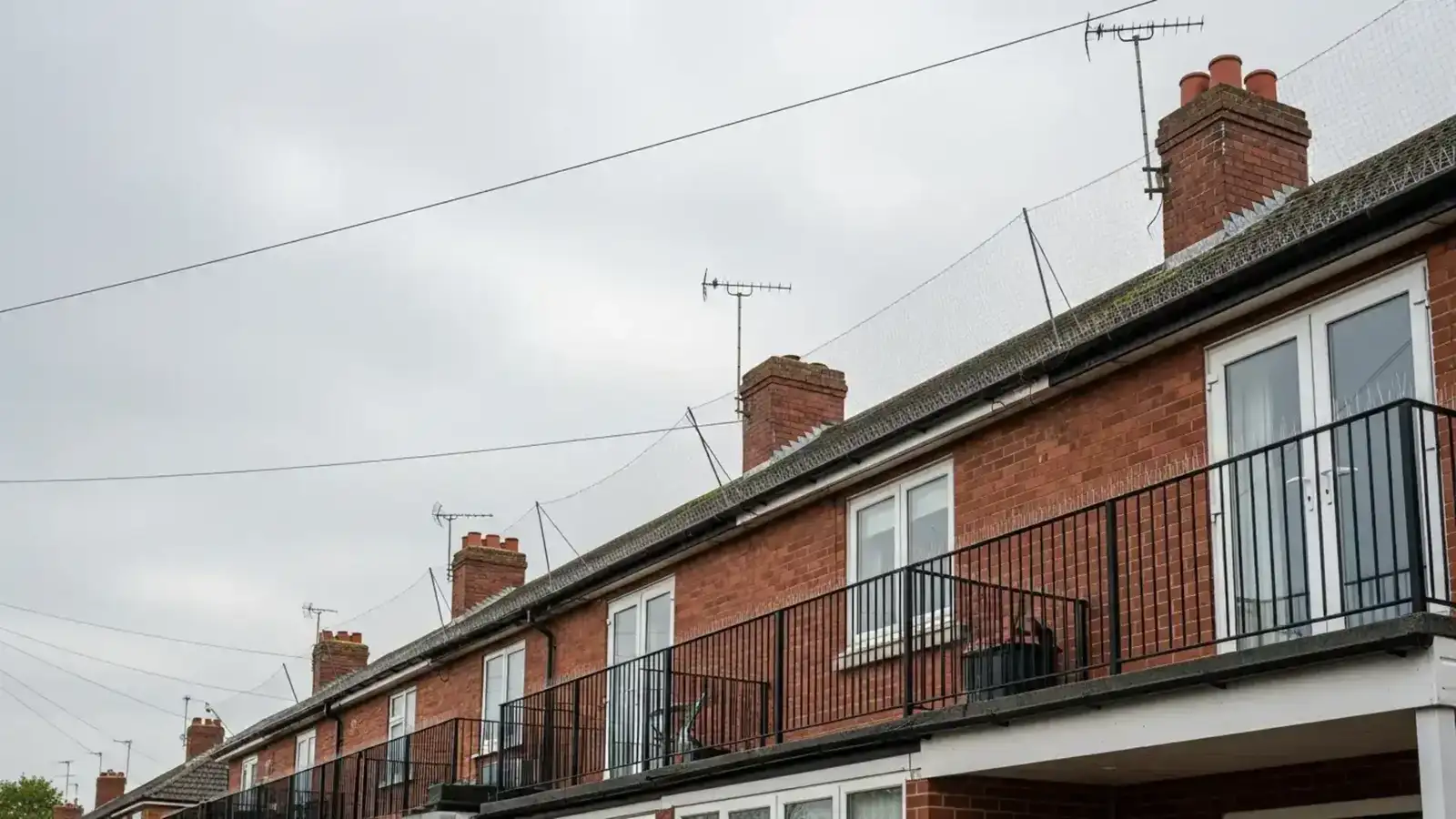
Residential Bird Control
Professional bird control for homeowners across the North East. Pigeons, gulls, starlings, and sparrows removed humanely and prevented from returning.
Why You Need Professional Residential Bird Control
Birds become a problem when they nest or roost in and around homes. Pigeons, seagulls, sparrows, and starlings cause structural damage and pose health risks through droppings and nesting habits. Tailored solutions deter birds from the property and prevent their return, protecting both the home and household health. We provide free surveys and quotations for homeowners across the North East.
What's Included
Why acting quickly matters
A single pair of pigeons can produce 2 to 3 broods per year and quickly attract more birds. Gulls return to the same nesting site annually and become aggressive during the breeding season. Acting before birds establish a breeding colony is significantly more cost-effective and avoids the complications of working around active nests.
Need urgent help with birds at your home?
Same-day response across the North East. Free survey and quotation with no obligation.
Request a free call back
Prefer to get in touch another way? Contact us or email info@wynyardpestcontrol.co.uk
Threat Assessment
Nuisance:
7/10HIGHResidential bird problems cause persistent noise (cooing, scratching, gull calls), visible droppings on windows, cars, patios, and washing, unpleasant odour from nesting material, and secondary pest infestations from bird mites entering the home.
Hazard:
6/10MODERATEDried bird droppings release airborne bacteria and fungal spores linked to respiratory infections. Nesting materials block gutters, creating flooding and damp risks. Birds under solar panels damage wiring, creating fire risk. Bird mites from nests can enter living spaces and bite occupants.
Vital Statistics
| Common residential pest birds | Feral pigeon, herring gull, starling, house sparrow |
| Pigeon broods per year | 2 to 3 (can breed year-round) |
| Gull nesting season | April to August (aggressive nest defence) |
| Starling broods per year | Up to 2 (4 to 6 eggs per clutch) |
| Sparrow broods per year | Up to 3 (4 to 6 eggs per clutch) |
| Key legislation | Wildlife and Countryside Act 1981 |
Key Facts
- Bird mites from nests in eaves and loft spaces can enter the home through gaps in the roofline and bite occupants, particularly at night.
- Nesting materials block gutters and drainage, increasing the risk of damp, water damage, and flooding inside the home.
- Dried pigeon droppings on windowsills and patios release bacteria that can cause respiratory infections when disturbed.
- Gulls nesting on residential roofs become aggressive during the breeding season, dive-bombing residents and pets.
- All wild birds are protected under the Wildlife and Countryside Act 1981. Professional control ensures legal compliance.
- Pigeons can squeeze through gaps as small as 25mm to access loft spaces and buildings.
- Proofing is a permanent solution. Once installed correctly, no repeat visits are needed unless the system is physically damaged.
"Professional service throughout and sorted out our pest problem. We would definitely recommend [the technician] and Wynyard Pest Control."
Ben Drury · Google review, March 2026
Birds causing problems at your home?
Free home survey and quotation. Humane, permanent solutions for pigeons, gulls, starlings, and sparrows.
Common Residential Bird Problems
Pigeons nesting under solar panels is now one of the most common residential bird calls we receive across the North East.
The most common residential bird issues we deal with include:
- Pigeons under solar panels: The gap between solar panels and the roof provides warmth and shelter, making it an ideal nesting site. Droppings damage panels and reduce efficiency. See our dedicated solar panel pigeon proofing service.
- Gulls on flat roofs and dormers: Herring gulls and lesser black-backed gulls increasingly nest on residential roofs, especially in coastal towns like Hartlepool and South Shields. They become aggressive during the breeding season, dive-bombing anyone who approaches.
- Starlings and sparrows in eaves: These smaller species access loft spaces through small gaps in soffits and fascias, building nests that attract bird mites and other secondary pests.
- Pigeons in loft spaces: Pigeons can squeeze through gaps as small as 25mm and will roost in loft spaces if they gain access, causing fouling and noise.
Health Risks at Home
Bird mites from nests in eaves can enter bedrooms through gaps in the roofline and bite occupants, particularly at night when they are most active.
Bird activity around the home creates several health concerns:
- Respiratory infections: Dried bird droppings release airborne bacteria and fungal spores. Histoplasmosis and Cryptococcosis are the most serious risks, though these are uncommon in domestic settings with good ventilation.
- Bird mites: Nests in eaves, loft spaces, and under solar panels harbour bird mites. When birds leave or are removed, the mites migrate into the home and can bite occupants. This is a common complaint following starling and sparrow nesting.
- Slip hazards: Accumulated droppings on paths, patios, and steps become slippery, particularly when wet.
- Contamination: Droppings on washing lines, garden furniture, and children's play equipment create hygiene concerns for families.
Our Residential Bird Control Solutions
We always recommend the least invasive solution first. Most residential bird problems can be resolved permanently with proofing alone.
We provide a range of solutions for homeowners, selected based on the species, the location of the problem, and the level of activity:
- Spike systems: Prevent birds from perching on ledges, window sills, chimney pots, and guttering. Suitable for pigeons and gulls.
- Wire deterrent systems: Tensioned wires across flat roof areas deter gulls from landing without causing harm.
- Solar panel mesh: Purpose-designed clip-on mesh seals the gap beneath solar panels, preventing pigeons from nesting. See solar panel pigeon proofing.
- Entry point sealing: We seal gaps in soffits, fascias, and eaves to prevent starlings, sparrows, and pigeons from accessing loft spaces.
- Guano removal: Safe, professional cleaning of droppings and nesting material, with biocide treatment to kill bacteria and deter birds from returning.
All work is carried out by NPTA-qualified technicians. We provide free surveys and quotations across Darlington, Durham, Stockton, Hartlepool, and the wider North East.
What to Expect During Your Visit
Most residential bird proofing installations are completed within a single visit. You do not need to vacate the property.
Our residential bird control visits follow a straightforward process:
- Survey: We inspect the exterior of your property to identify species, nesting and roosting sites, and entry points. We explain the problem and recommend the best solution.
- Quotation: A fixed-price quotation is provided on the spot with no obligation.
- Installation: Proofing systems are installed cleanly and neatly with minimal disruption. Most residential jobs are completed in a single visit.
- Cleaning: Any accessible droppings and nesting material are removed and the area treated with biocide.
- Aftercare advice: We explain what to expect after treatment and provide tips for preventing future bird problems.
DIY vs Wynyard Pest Control
| DIY | Wynyard Pest Control | |
|---|---|---|
| Species identified | ✗ Guesswork | ✓ Confirmed by NPTA technician |
| Correct solution selected | ⚠ Trial and error | ✓ Matched to species and location |
| Wildlife law compliance | ✗ Risk of prosecution | ✓ Fully compliant |
| Bird mite treatment | ✗ Not addressed | ✓ Treated alongside nest removal |
| Safe working at height | ✗ Risk of falls | ✓ Trained with specialist equipment |
| Guarantee | ✗ None | ✓ 5-year installation guarantee |
When DIY may be sufficient: A single pigeon perching on an open garden fence or birds visiting a garden feeder you can simply remove. If birds are only passing through and not nesting or roosting on the building itself, basic environmental changes may resolve the issue.
When you need Wynyard Pest Control: If birds are nesting in your eaves, loft, or under your solar panels, if you are finding droppings on windowsills, patios, or vehicles daily, if you are being dive-bombed by gulls during the breeding season, or if you have noticed bird mites in your bedrooms. These are signs of an established problem that requires professional assessment. We provide free surveys across Darlington, Durham, Hartlepool, and the wider North East.
Seasonal Bird Activity in the North East
Hover or tap a month to see Residential Bird activity details
Feral pigeons continue roosting in lofts, under eaves, and beneath solar panels through winter. Starling murmurations form large communal roosts near homes. Gull activity low inland but herring gulls remain in coastal towns such as Hartlepool and South Shields.
Pigeon pairs begin scouting nest sites under solar panels, in loft spaces, and on sheltered ledges. Herring gulls and lesser black-backed gulls return to previous nesting roofs. House sparrows inspect eaves and soffits for nesting gaps. Last opportunity for proofing before breeding begins.
Pigeon breeding season begins with first clutches of 2 eggs laid. Gulls start nest building on flat roofs and dormers. Starlings and sparrows carry nesting material into gaps in soffits and fascias. Proofing installed now prevents the entire breeding season's problems.
Active nesting across all residential pest bird species. Gull eggs laid on flat roofs, dormers, and chimney stacks. Starlings and sparrows occupy loft spaces through 25mm gaps. Pigeon incubation underway (17 to 19 days). Cooing, scratching, and droppings complaints increase sharply.
Chicks hatching across species. Herring gulls become aggressively territorial, dive-bombing residents, pets, and postal workers near nests. Maximum noise from gull calls and pigeon cooing. Bird mite populations begin building in nest material in eaves and loft spaces.
First pigeon broods fledging (35 to 37 days in nest). Gull chicks growing on rooftops. Starling second clutches in progress (4 to 6 eggs). Droppings accumulation on windowsills, patios, and cars at its worst. Bird mites may begin migrating into bedrooms from nests in eaves.
Gull fledglings learning to fly from rooftops. House sparrow third broods possible (up to 3 broods per year). Late pigeon breeding continues in sheltered loft spaces. Fouling on paths and patios creates slip hazards, particularly when wet.
Breeding season winding down for gulls and starlings. Gull aggression subsides as chicks become independent. Ideal window for proofing and entry point sealing before autumn. Bird mites from vacated nests migrate indoors seeking new hosts.
Best month for residential proofing installations. Nesting complete and birds dispersing. Seal gaps in soffits, fascias, and eaves now to prevent next year's nesting. Pigeon roosting continues but breeding slows.
Bird activity around homes reduces. Feral pigeons seek warm sheltered roosting spots for winter including lofts and beneath solar panels. Starlings begin forming large communal roosts. Good time for guano cleanup before winter.
Minimal breeding activity. Overwintering pigeons settle into established roosts in loft spaces and under solar panels. Bird mites from old nests may migrate indoors as temperatures drop, biting occupants at night.
Pigeons shelter in lofts, under eaves, and beneath solar panels for warmth through the coldest months. Year-round breeding possible in heated or sheltered environments with adequate food supply nearby.
Most residential bird problems follow the breeding season from March to August, with peak activity in April and May when nesting, noise, and aggressive gull behaviour are at their worst. Pigeons can breed year-round in sheltered spots such as lofts and beneath solar panels, meaning droppings and noise never fully stop without proofing. The best window for proofing work is late summer to early autumn (August to October), after breeding finishes and before birds settle into winter roosting patterns.
Hearing cooing in your loft, finding droppings on your patio, or being dive-bombed by gulls? Do not wait for the colony to grow. Book a free home survey now and we will recommend the right solution before the next breeding season.
Spring (March to May) - Breeding season begins: This is when residential bird complaints surge across the North East. Feral pigeons lay their first clutches of 2 eggs, with 17 to 19 days of incubation before chicks appear. Herring gulls and lesser black-backed gulls build large nests on flat roofs, dormers, and chimney stacks. Starlings carry nesting material into gaps in soffits and fascias, often accessing loft spaces through openings as small as 25mm. House sparrows begin their first of up to 3 broods per year. Watch for: cooing sounds from loft spaces or beneath solar panels, nesting material visible in gutters or around eaves, gull pairs circling and landing repeatedly on your roof, and fresh white droppings appearing on windowsills and patios.
Summer (June to August) - Peak activity and aggression: By June, most species have active nests with chicks. Herring gulls become highly aggressive during this period, dive-bombing residents, pets, and anyone approaching the nest. Gull chicks grow rapidly on rooftops before fledging in July. Pigeon broods fledge after 35 to 37 days and second clutches are laid quickly, meaning continuous breeding through summer. This is when bird mite populations build up in nest material in eaves and loft spaces, and mites may migrate into bedrooms seeking new hosts, biting occupants at night. Watch for: aggressive gull behaviour near your roof, heavy fouling on paths, patios, washing lines, and vehicles, scratching or fluttering sounds in walls and ceilings, and unexplained insect bites at night (bird mites from nests in eaves).
Autumn (September to November) - Best window for proofing: As the breeding season ends, bird activity reduces and most species disperse. September is the ideal month for residential bird proofing: nests are vacated, birds are not territorial, and there are no legal restrictions on disturbing nests. Feral pigeons begin seeking warm roosting sites for winter, including loft spaces and beneath solar panels. Starlings form large communal roosts. Watch for: pigeons investigating roof spaces and solar panel gaps as temperatures drop, starling flocks gathering at dusk near your property, and bird mite activity indoors as old nests dry out and mites seek new hosts.
Winter (December to February) - Overwintering and early scouting: Pigeons that gained access in autumn are now established in lofts and under solar panels, roosting through the coldest months and potentially breeding year-round in heated environments. Gull activity is low inland but herring gulls remain present in coastal towns like Hartlepool and South Shields. By February, early pigeon pairs begin scouting nest sites and gulls return to previous nesting roofs. Watch for: persistent cooing from loft spaces or wall cavities, fresh droppings near solar panels or on window ledges, and gulls circling your roof in February as they assess last year's nesting site.
North East residential pressure points: Coastal properties in Hartlepool, South Shields, and North Shields experience the highest gull pressure, with herring gulls nesting on rooftops from April to August. Homes with solar panels across Darlington, Durham, and Stockton are increasingly vulnerable to pigeon nesting colonies year-round. Older properties with deteriorating soffits and fascias in Sunderland and Newcastle are most susceptible to starling and sparrow access. If your home is in a high-risk area, a proofing survey before March is the most effective step you can take.
Our Residential Bird Control Process
A structured, three-stage approach that treats the problem and prevents it returning.
Step 1
Inspect and Plan
A detailed property inspection identifies entry points, infestation hotspots, and the species involved. A targeted treatment plan is developed based on findings.
Step 2
Treatment
Professional control measures are applied using advanced techniques and CRRU-compliant products. Proofing and sealing work addresses the root cause at the same time.
Step 3
Ongoing Support
Follow-up visits confirm the problem is resolved. You receive clear documentation, prevention advice, and recommendations for ongoing protection.
Why Choose Us for Residential Bird Control
Free Home Survey
We inspect your property, identify the species and problem areas, and provide a fixed-price quotation with no obligation.
NPTA Member
All residential work is carried out by NPTA-qualified technicians trained in safe working at height and wildlife legislation.
5-Year Guarantee
Proofing systems including spikes, wire, netting, and mesh are backed by a 5-year installation guarantee.
Humane Methods
We use deterrent and exclusion methods that prevent birds from returning without causing harm. Non-lethal solutions are always preferred.
Local Coverage
We cover the entire North East including Darlington, Durham, Stockton, Middlesbrough, Hartlepool, Sunderland, and Newcastle.
"[The technician] gave me great advice regarding some fleas. Would recommend."
Hannah SCOTT · Google review, March 2026

NPTA Member
We are full members of the National Pest Technicians Association (NPTA). This means our technicians meet strict training and competency standards, carry appropriate insurance, and follow the association's code of practice. NPTA membership is your assurance that the work is carried out professionally and responsibly.
Fair, Transparent Pricing
Every job is different. The cost depends on the type of pest, scale of the problem, and what treatment is needed. We provide a free assessment and an honest quotation before any work begins. No hidden costs, no surprises.
View our pricing guideSatisfaction Guaranteed
Proofing systems including spikes, netting, and mesh are backed by a 5-year installation guarantee. If birds return to a proofed area within the guarantee period, we return and resolve the problem at no extra cost.
Frequently Asked Questions
Pigeons nesting under solar panels is now our most common residential bird call across the North East. Gulls on flat roofs and starlings in eaves are also very common.
No. Our proofing systems are designed to be non-invasive. Spike systems and wire deterrents fix to surfaces without causing structural damage. Solar panel mesh clips on without drilling.
Most residential bird proofing installations are completed in a single visit of two to four hours, depending on the size of the property and the scope of work. Cleaning is included.
No. All bird control work is carried out externally. You can remain in your home throughout the visit.
Yes. If bird nesting has caused a bird mite infestation inside your home, we treat the mites as well as removing the nests and sealing the entry points. Treating the mites without addressing the source of the problem will not provide a lasting solution.
It depends on the species and timing. Feral pigeon nests can be removed at any time under General Licence GL41. Active nests of most other species are protected during the breeding season. We advise on the legal position for your specific situation.
Our Other Services
Areas We Cover
We provide residential bird control services across the North East of England.
Ready to talk to us?
Free survey and quotation for businesses and homeowners. No obligation, no pressure.
We will get back to you as soon as we can.