
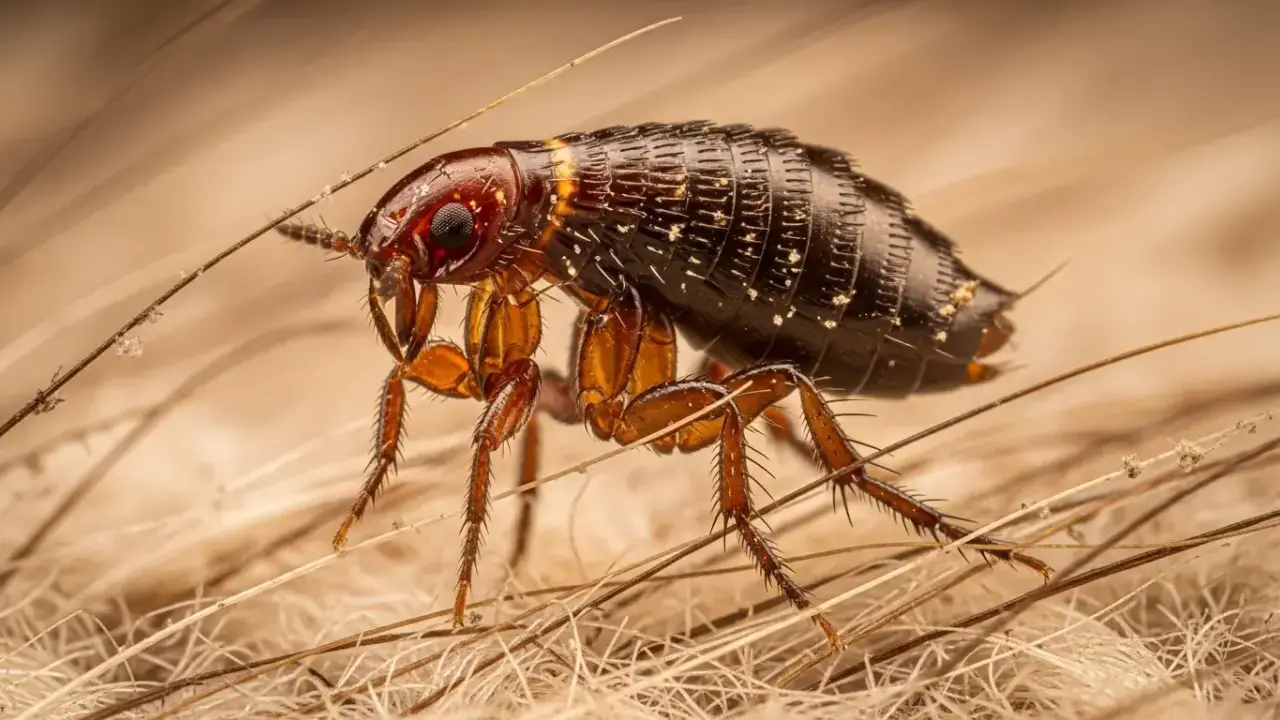
Flea & Mite Control
Professional flea and mite control for businesses and homes across the North East. Multi-visit treatment programmes targeting all lifecycle stages. Pet-safe once dry.
Why You Need Professional Flea & Mite Control
Fleas are small, wingless parasitic insects that feed on the blood of mammals and birds. The most common in the UK is the cat flea, which despite its name will readily bite dogs and people too. Fleas are a common problem in UK homes, especially those with pets. Properties without pets can also become infested if previous owners kept cats or dogs, as flea pupae can remain dormant in cocoons for up to 9 months and hatch when they detect vibrations, heat, or carbon dioxide from new occupants. A female flea produces more than 25 eggs per day, allowing infestations to spread rapidly.
What's Included
Why acting quickly matters
A female flea produces more than 25 eggs per day. Depending on temperature, eggs can develop into adults in as little as 14 days, allowing infestations to spread rapidly. Flea pupae can remain dormant in cocoons for up to 9 months.
Urgent Flea Treatment
Severe flea infestations cause distress and health concerns. We offer rapid response for both residential and commercial properties across the North East.
Request a free call back
Prefer to get in touch another way? Contact us or email info@wynyardpestcontrol.co.uk
Related Services
Threat Assessment
Nuisance:
8/10VERY HIGHFlea bites cause itching, irritation, and allergic reactions. Infestations spread rapidly as a single female produces more than 25 eggs per day. Dormant pupae can survive up to 9 months and hatch when new occupants move in, making empty properties a common source.
Hazard:
5/10MODERATEFleas transmit Murine Typhus, Tapeworm, and Tularemia. Flea Allergic Dermatitis (FAD) is the most common skin disease in domestic pets. Dust mites cause allergic rhinitis and asthma. Bird mites bite humans when nesting birds leave.
Vital Statistics
| Common species (UK) | Cat Flea, Dog Flea, Bird Flea, Human Flea |
| Size (adult) | 1 to 4 mm depending on species |
| Eggs per day | More than 25 per female |
| Lifecycle | Egg, larva, pupa, adult (2 weeks to 8 months) |
| Dormancy | Pupae survive up to 9 months in cocoons |
| Diet | Blood of mammals and birds |
| Jumping ability | Approximately 6 inches (Dog Flea) |
| Active period | Year round indoors, peak in warm months |
| Disease transmission | Murine Typhus, Tapeworm, Tularemia |
| Most common trigger | Pets (cats and dogs) |
| Adult lifespan | 2 to 3 months (up to 100 days on a host) |
Key Facts
- The cat flea is the most common flea species in UK homes and will readily bite dogs and people too
- Flea pupae can remain dormant in cocoons for up to 9 months and hatch when they sense vibrations, heat, or CO2 from new occupants
- Flea Allergic Dermatitis (FAD) is the most common skin disease in domestic pets, caused by an allergic reaction to proteins in flea saliva
- The dog flea is a vector of the Dog Tapeworm (Dipylidium caninum), which can also affect humans
- Fleas can enter properties without pets via dormant pupae from previous owners, wildlife in walls or attics, or hitchhiking on clothing
- There are over 2,500 flea species worldwide, but only a handful are common in the UK
- Fleas are attracted to body heat, vibrations, carbon dioxide, movement in air currents, and shadows cast by potential hosts
- The Human Flea is now uncommon in the UK except in farming areas where it survives on pigs
- Bird fleas multiply rapidly in hen houses and battery farms but can only survive indoors for a short time
- Dust mites feed on shed human skin flakes and are a major cause of allergic rhinitis and asthma
"Great and knowledgable service, very tidy and punctual. Would happily recommend [the technician] to anyone"
Luke Jackson · Google review, April 2026
Flea Problem in Your Home or Business?
Do not let a flea infestation take hold. Contact us for a thorough inspection and multi-visit treatment programme that targets all lifecycle stages. Pet treatment coordination advice included.
Common UK Flea Species
Cat Flea (Ctenocephalides felis)
- Approximately 3 mm long, wingless, flattened from side to side with long jumping legs
- Most common flea species in UK homes
- Four-stage lifecycle: egg, larva, pupa, adult (2 weeks to 8 months)
- Cannot complete lifecycle feeding only on human blood
- Nests where the host rests (cat basket), where eggs and larvae drop to mature
Dog Flea (Ctenocephalides canis)
- Adults are 1 to 4 mm long, brownish black (reddish black after feeding)
- Feeds on dogs and cats, occasionally bites humans
- Vector of the Dog Tapeworm (Dipylidium caninum), which can also affect humans
- Can jump approximately 6 inches and infest garden lawns
Bird Flea (Ceratophyllus gallinae)
- Adults are generally brownish, 1 to 8 mm long
- Multiply rapidly in hen houses, breeders, and battery farms
- Can only survive indoors for a short time and only in nests
Human Flea (Pulex irritans)
- Adults are 1 to 4 mm, black to brownish black, wingless
- Now uncommon in the UK except in farming areas where they survive on pigs
- Known vector of Yersinia pestis (plague)
Flea-Borne Diseases
Flea Allergic Dermatitis (FAD) is the most common skin disease in domestic pets. If your pet is scratching excessively, consult your vet for treatment alongside professional environmental flea control.
While flea bites are primarily an irritation, fleas are known vectors for several diseases:
- Murine Typhus: Caused by Rickettsia typhi bacteria, transmitted through infected flea faeces entering bite wounds or mucous membranes. Symptoms include fever, headache, body aches, and rash.
- Tapeworm (Dipylidium caninum): Transmitted when a person or pet accidentally ingests an infected flea. Children are most at risk.
- Tularemia: Caused by Francisella tularensis. Can be transmitted through flea bites as well as tick bites and direct contact with infected animals. Highly infectious.
- Flea Allergic Dermatitis (FAD): The most common skin disease in domestic pets. An allergic reaction to proteins in flea saliva causing intense itching, hair loss, and skin infections. Requires veterinary treatment alongside environmental flea control.
Signs of a Flea Infestation
- Pets scratching or biting at fur, especially hind quarters (dogs) or head and neck (cats)
- Flea dirt: Fine black droppings resembling ground black pepper, visible on pet skin, bedding, carpets, or rugs. Use a flea comb over white paper to spot it.
- Visible fleas crawling on pet's coat (reddish brown, approximately 2 mm long)
- Flea eggs: Tiny (0.5 mm), oval, white, almost impossible to see. Found in carpets, rugs, bedding, and gaps between floorboards.
- Flea bites on people: small red dots, often in clusters around lower legs, feet, and ankles
- Itchy rash or eczema as allergic reaction to bites
Homeowners across Darlington, Stockton, and Middlesbrough should act quickly at the first signs of flea activity to prevent the infestation from spreading.
How Fleas Get In (Even Without Pets)
- Previous owners' pets: Flea pupae in dormant cocoons survive up to 9 months in carpets and flooring, hatching when they sense vibrations, heat, or CO2 from new occupants
- Wildlife: Mice, rats, squirrels, or birds living in walls, attics, or crawlspaces carry fleas. If the animal dies or leaves, fleas seek new hosts in the living areas
- Hitchhikers: Adult fleas can transfer onto clothing from infested environments (visiting friends with flea problems, sitting where stray animals rested)
- Neighbours: In flats, terraced housing, or apartments, fleas travel through gaps around pipes, wiring, baseboards, or shared hallways
Flea infestations are sometimes confused with bed bug bites. Professional identification ensures the correct treatment is applied.
Prevention Tips
Daily vacuuming for at least 14 days is recommended during active infestations. Vacuuming stimulates dormant pupae to hatch, making them vulnerable to treatment.
- Vacuum carpets, furnishings, cracks in floorboards, and upholstered furniture thoroughly and regularly (daily for at least 14 days during active infestations)
- Use vacuum attachments on skirting boards, vents, floor cracks, carpet edges, and room corners
- Empty vacuum contents outside the property, seal before disposing in an outside bin
- Groom pets regularly with a flea comb, paying attention to neck and back
- Wash pet bedding weekly at 50 degrees or above
- Pay particular attention to areas where pets sleep or spend the most time
- Consult a vet for pet-specific flea treatments (sprays, powders, spot-on treatments)
Seasonal Flea Activity in the North East
Hover or tap a month to see Flea & Mite activity details
Indoor flea activity continues in heated homes. Outdoor activity minimal.
Dormant pupae may hatch in warm indoor environments. Pet fleas remain active.
Increasing warmth triggers dormant pupae to hatch. Spring cleaning may reveal infestations.
Flea activity increasing as temperatures rise. Pets begin spending more time outdoors.
Rapid flea breeding begins. Lifecycle accelerates in warm conditions.
Peak flea season begins. Warm, humid conditions ideal for rapid reproduction.
Peak activity. Fleas breed rapidly with eggs developing into adults in as little as 14 days.
Continued peak activity. Harvest mites active in gardens and parkland.
High activity continues. Bird mites may enter homes as nesting birds leave.
Outdoor activity declining. Indoor infestations persist in heated properties.
Reduced outdoor activity. Indoor flea populations sustained by central heating.
Low outdoor activity. Dormant pupae in carpets can hatch if conditions are warm enough.
Flea activity peaks in late summer when warm, humid conditions accelerate breeding. Pet flea problems are worst between July and September. Vacant holiday lets, rental properties, and homes left empty after tenants leave are common call-outs as dormant flea pupae hatch in response to vibration and warmth when new occupants arrive.
If moving into a previously occupied property or reopening a holiday let, be aware that dormant flea pupae can hatch weeks after the previous occupants left. A pre-occupancy treatment prevents an unpleasant welcome.
Spring (March to May) - Cycle restarts: As temperatures rise above 15°C, flea eggs and larvae that have survived the winter in carpets, pet bedding, and soft furnishings begin developing more quickly. Cat and dog fleas (Ctenocephalides felis and C. canis) are the most common species across the North East. Watch for: pets scratching more frequently, small dark specks (flea dirt) in pet bedding and on light-coloured carpets, and the first bites appearing around ankles and lower legs, particularly in homes across Hartlepool, Sunderland, and Darlington.
Summer (June to August) - Peak flea season: Warm, humid conditions create the ideal environment for rapid flea breeding. A single female can lay up to 50 eggs per day, and the full lifecycle from egg to adult can complete in as little as two weeks. This is the busiest period for flea call-outs across the region. Watch for: fleas jumping on clothing and skin, particularly around carpeted rooms and pet resting areas; clusters of itchy bites in lines on legs and feet; and visible fleas on pets' bellies and around their ears. Rental properties between tenancies are especially vulnerable.
Autumn (September to November) - Indoor migration: As pets spend more time indoors, flea populations concentrate inside homes. Central heating maintains warm temperatures that allow breeding to continue well beyond the outdoor season. Watch for: increasing bite complaints despite treating pets, flea dirt accumulating in carpet fibres near radiators and under furniture, and new outbreaks in rooms where pets rest. Care homes and hotels across Middlesbrough and Stockton should schedule preventative inspections before winter.
Winter (December to February) - Dormant pupae persist: Adult flea activity slows but pupae remain viable in carpets and cracks between floorboards for months. Vacant properties, holiday lets, and rental properties are at particular risk because dormant pupae hatch en masse when vibration from new occupants triggers emergence. Watch for: sudden biting outbreaks in previously empty rooms, particularly after the heating is switched on. This is an important period for landlords to arrange treatment between tenancies.
Why Choose Us for Flea & Mite Control
All Life Stages
Our treatments target eggs, larvae, pupae, and adults with insect growth regulators to break the breeding cycle completely.
Multi-Visit Programme
Follow-up visits timed to catch hatching pupae ensure complete elimination, not just temporary knockdown.
Pet Treatment Coordination
We advise on concurrent pet treatment and coordinate timing with your vet for maximum effectiveness.
Flea Trap Monitoring
Monitoring units provide early warning of activity and measure treatment effectiveness over time.
Pet-Safe Once Dry
Treatments are safe for pets and children once surfaces are dry, typically within two to four hours.
Professional Treatment Methods
- Targeted insecticidal sprays: Professional-grade surface sprays applied to carpets, soft furnishings, and harbourage areas with insect growth regulators (IGR) to prevent egg and larval development
- Chemical-free heat treatments: Effective at killing fleas at all lifecycle stages without chemicals
- Flea trap monitoring units: Heated light source mimics host animal warmth, attracting adult fleas onto a non-toxic sticky pad. Reduces flea numbers and provides early warning of activity
- Flea Riddance programme: Multi-visit approach combining flea trap monitoring units with targeted spray treatments over 2 to 3 visits depending on severity
Concurrent pet treatment is essential. No matter how effective the property treatment, if pets are not treated simultaneously they will reinfest the property.
Treatment Programme
Treat pets at the same time as the property. If pets are not treated simultaneously, they will immediately reintroduce fleas to the treated environment. Consult your vet for a prescription-strength spot-on treatment timed to coincide with the property treatment visit.
Flea treatment must address all lifecycle stages. A single treatment rarely eliminates an infestation completely due to pupae remaining dormant in cocoons and emerging weeks after the initial visit. A multi-visit programme is standard.
Before Treatment: How to Prepare
- Vacuum thoroughly all carpets, rugs, soft furnishings, skirting boards, and gaps in floorboards immediately before the visit. This stimulates dormant pupae to hatch, making them vulnerable to the treatment. Dispose of the vacuum bag outside immediately afterwards.
- Wash all pet bedding at 60 degrees or above on the day of treatment
- Remove pets (including birds and fish tanks, cover tanks and switch off air pumps) from the property during treatment
- Move or remove children's toys from floor areas, especially soft toys
- Ensure pet treatment (vet prescribed) is arranged to coincide with the same day as the property treatment
- Clear floors of clutter to give full access to all carpeted and soft flooring areas
After Treatment: What to Expect
- Vacate the property for 2 to 4 hours after treatment and ventilate thoroughly on return
- Do not vacuum for at least 14 days after treatment. Vacuuming removes the insecticide residue and IGR before it can work through the flea lifecycle.
- It is normal to see more flea activity in the days after treatment as treated pupae emerge and come into contact with the insecticide
- Keep pets on their vet-prescribed flea prevention programme for at least 3 months after treatment
- Wash pet bedding weekly at 60 degrees throughout the treatment period
- If flea activity is still observed at week 3 to 4, contact your technician. Do not apply DIY spray over the top of professional treatment without advice.
Our Flea & Mite Control Process
A structured, three-stage approach that treats the problem and prevents it returning.
Step 1
Inspect and Plan
A detailed property inspection identifies entry points, infestation hotspots, and the species involved. A targeted treatment plan is developed based on findings.
Step 2
Treatment
Professional control measures are applied using advanced techniques and CRRU-compliant products. Proofing and sealing work addresses the root cause at the same time.
Step 3
Ongoing Support
Follow-up visits confirm the problem is resolved. You receive clear documentation, prevention advice, and recommendations for ongoing protection.
Flea Problem in Your Home or Business?
Do not let a flea infestation take hold. Contact us for a thorough inspection and multi-visit treatment programme that targets all lifecycle stages. Pet treatment coordination advice included.
Mite Control
Mites (including dust mites) cause allergic reactions and respiratory issues. Treatment options include targeted insecticidal sprays, heat treatments, and ongoing environmental management.
Common Mite Species
- Dust Mites (Dermatophagoides pteronyssinus): Microscopic mites that feed on shed human skin flakes. Found in mattresses, pillows, carpets, and upholstered furniture. A major cause of allergic rhinitis and asthma. Do not bite but produce allergens in their faeces and body fragments.
- Scabies Mite (Sarcoptes scabiei): Burrows into the outer layer of human skin causing intense itching, especially at night. Spread by prolonged skin-to-skin contact. Requires medical treatment with prescription creams or lotions.
- Bird Mites: Parasites of wild birds (pigeons, starlings, sparrows) that may enter buildings when bird nests are abandoned. Bite humans causing itching and irritation. Control involves removing the bird nest source and treating affected areas.
- Harvest Mites (Trombicula autumnalis): Tiny orange-red mites active in late summer and autumn. Larvae bite humans and animals, causing intensely itchy red welts. Found in long grass, gardens, and parkland.
Residential Flea Control
- Initial contact and survey arranged at a convenient time
- Technician identifies flea species and assesses severity of infestation
- Targeted treatment plan based on species, property layout, and infestation level
- Child and pet-friendly treatments used
- Prevention advice provided including pet treatment guidance
- Aftercare monitoring to ensure new activity is resolved quickly
Commercial Flea Control
Fleas in commercial premises can quickly affect business reputation, revenue, and staff morale. Our commercial service includes:
- Discreet appointments arranged with minimal disruption to business operations
- Technicians understand different species and tailor solutions accordingly
- Flea Riddance and monitoring solution available for ongoing protection
- Monitoring traps positioned in any location to provide early warning of flea activity, protecting staff and customers
- Low-energy bulbs in monitoring units reduce running costs
Sectors particularly at risk include hospitality, healthcare, care homes, rental properties, schools and nurseries, and kennels or catteries. We provide commercial flea control across Hartlepool, Durham, Sunderland, and the wider North East. Find out more about how we work with businesses.
Pet and Child Safety
- Children: Vacate for 2 to 4 hours after treatment. Once the spray has dried and the property has been ventilated, it is safe to return. Avoid children crawling or playing directly on treated floors for 24 hours where possible.
- Dogs and cats: Remove from the property during treatment and for 2 to 4 hours afterwards. Pets should receive concurrent vet-prescribed flea treatment on the same day as the property treatment.
- Fish tanks and reptiles: Cover tanks fully and switch off air pumps before treatment begins. Air pumps should remain off for 1 to 2 hours after the technician leaves. Fish and reptiles are highly sensitive to airborne insecticide particles.
- Birds (pet): Remove from the property entirely during treatment and for at least 2 to 4 hours after. Birds are extremely sensitive to insecticide fumes.
DIY vs Wynyard Pest Control
Vacuum thoroughly before and after professional treatment. Vibration from vacuuming triggers dormant flea pupae to hatch, exposing them to the insecticide residue.
| DIY | Wynyard Pest Control | |
|---|---|---|
| Best for | Pet flea prevention | Established home infestation |
| All life stages | ✗ Adults only | ✓ Eggs, larvae, pupae, and adults |
| Inspection included | ✗ Not included | ✓ Full property survey |
| Pet and child safe | ⚠ Varies by product | ✓ Controlled application, safe re-entry times |
| Effectiveness | Partial reduction in adults | Complete breeding cycle broken |
| Follow-up visits | ✗ None | ✓ Timed to pupae hatch cycle |
| Guarantee | ✗ None | ✓ Elimination guarantee |
When DIY may be sufficient: Preventing fleas on a pet with a vet-recommended flea treatment before an infestation takes hold. Regular vacuuming and hot-washing pet bedding can help in the early stages.
When you need Wynyard Pest Control: If you are being bitten indoors, seeing fleas jumping on carpets or furniture, or finding bites on ankles and lower legs, you have an established infestation. Flea pupae can remain dormant in carpets for months and hatch when vibration or warmth triggers them, which is why properties across Darlington, Durham, and Sunderland often see a sudden flea explosion when returning from holiday.
"Have been with these guys since 2022, amazing customer service and knowledge - highly recommend"
Serious Lee · Google review, March 2026

NPTA Member
We are full members of the National Pest Technicians Association (NPTA). This means our technicians meet strict training and competency standards, carry appropriate insurance, and follow the association's code of practice. NPTA membership is your assurance that the work is carried out professionally and responsibly.
Fair, Transparent Pricing
Every job is different. The cost depends on the type of pest, scale of the problem, and what treatment is needed. We provide a free assessment and an honest quotation before any work begins. No hidden costs, no surprises.
View our pricing guideSatisfaction Guaranteed
All flea treatment programmes include follow-up visits. If flea activity persists after your treatment programme is complete, we will return and re-treat at no additional charge.
Frequently Asked Questions
No. Once fleas find a host they stay for life. Eggs drop onto surfaces (carpets, rugs, pet bedding, sofas) and larvae develop into adults in cocoons, emerging to feed and restart the cycle. The lifecycle ranges from 2 weeks to 8 months. Both pets and the home must be treated to break the cycle.
Fleas are attracted to body heat, vibrations, carbon dioxide from warm-blooded mammals, movement in air currents, and shadows cast by potential hosts. They jump toward perceived shadows and often stay on the underbelly of animals, transferring easily to carpets and furnishings when the animal lies down.
Vacuuming helps remove adults, eggs, and larvae, but alone it is unlikely to eliminate an infestation. Daily vacuuming for at least 14 days is recommended during active infestations, targeting all carpets, rugs, flooring, and soft furnishings. Professional treatment is needed for established infestations.
Yes. Common causes include dormant pupae from previous owners' pets, wildlife in attics or walls (mice, rats, squirrels, birds), hitchhiking on clothing from infested environments, and migration from neighbouring properties through gaps in shared walls or hallways.
Flea bites are not typically dangerous but cause itching, irritation, and potential allergic reactions (rash, eczema, hives). Scratching bites can lead to secondary bacterial infection. Pets may develop allergies to flea saliva causing reddened skin and thinning fur.
Vacuum all carpeted areas and hard floors thoroughly, then empty the vacuum bag or cylinder into an outside bin. Wash all pet bedding at 60 degrees or above. Clear items from floors so the technician can treat all surfaces. Ensure pets are treated with a veterinary flea product on the same day.
You may still see fleas for up to two weeks after treatment as dormant pupae hatch and contact the treated surfaces. This is normal and does not mean the treatment has failed. The residual insecticide and insect growth regulator remain active for several weeks, killing newly emerged fleas on contact.
Related Services
Our Other Services
Areas We Cover
We provide flea & mite control services across the North East of England.
Ready to talk to us?
Free survey and quotation for businesses and homeowners. No obligation, no pressure.
We will get back to you as soon as we can.