
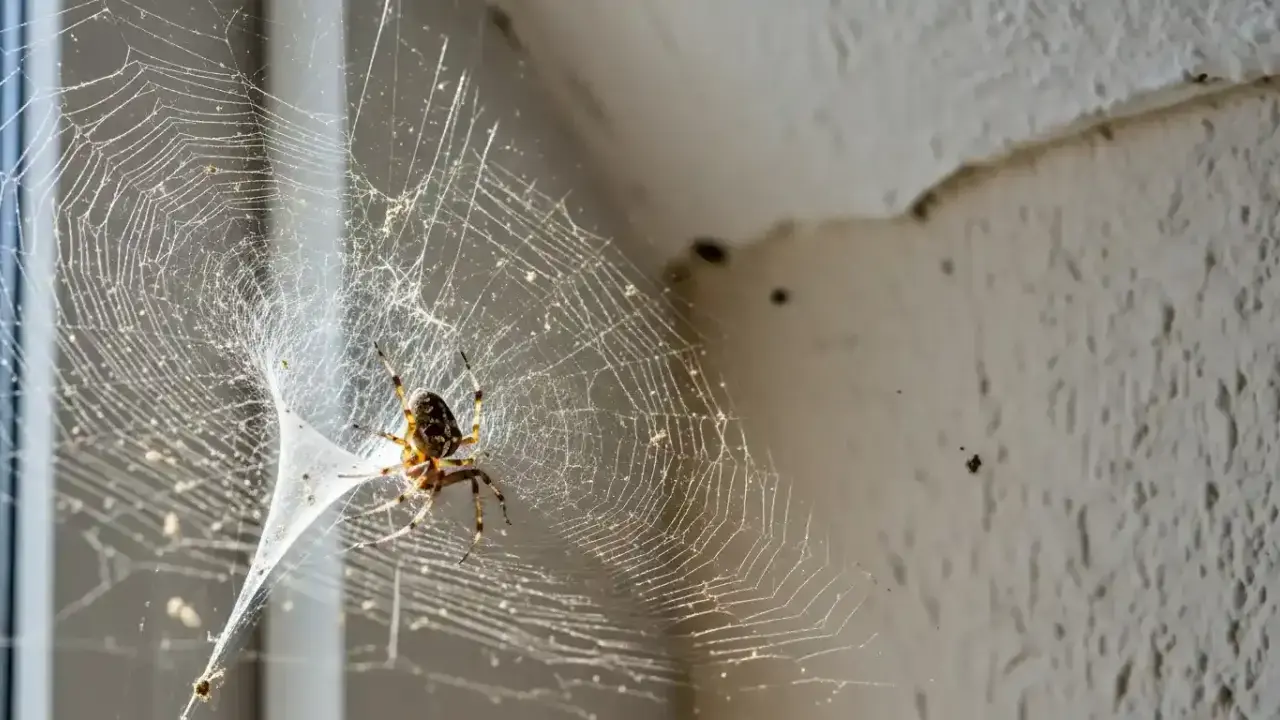
Spider Control
Professional spider control for businesses and homes across the North East. Species identification including false widow spiders. Web clearing, residual treatments, invertebrate monitoring, and proofing.
Why You Need Professional Spider Control
There are over 35,000 species of spiders worldwide, but only approximately 650 are found in the UK. The vast majority are harmless and not considered pests. Spiders play an important role in the ecosystem, helping to control flying and crawling insects. Many people have an inherent fear of spiders known as arachnophobia, which can cause significant distress. Spiders are most likely to enter homes in autumn in search of a warm place for winter and to find a mate.
What's Included
Why acting quickly matters
Spiders found indoors in autumn are searching for mates and shelter. A single egg sac can contain over 100 eggs, and multiple sacs can be laid in hidden corners. Left unchecked, a seasonal nuisance becomes a permanent resident population by the following spring.
Need professional spider control?
Expert identification and targeted treatment across the North East. Free survey and quotation for homes and businesses.
Request a free call back
Prefer to get in touch another way? Contact us or email info@wynyardpestcontrol.co.uk
Related Services
Threat Assessment
Nuisance:
5/10MODERATESpiders cause significant distress to people with arachnophobia. Webbing in homes and businesses is unsightly. Large numbers of spiders often indicate an underlying prey insect population.
Hazard:
2/10LOWMost UK spiders are harmless. False Widow spiders can deliver a painful bite causing localised pain and swelling, though serious reactions are uncommon. Yellow Sac spider bites can cause erythema and in rare cases a necrotic area.
Vital Statistics
| UK species | Approximately 650 (of over 35,000 worldwide) |
| Common indoor species | Giant House Spider, False Widow, Cellar Spider |
| False Widow size | 7 to 15 mm body, 35 mm leg span |
| Giant House Spider size | 10 to 18 mm body (females) |
| Peak indoor activity | Autumn (searching for mates and shelter) |
| Eggs per sac | Average 100 |
| Diet | Ants, flies, woodlice, and other spiders |
| Dangerous species | None indigenous to the UK are considered dangerous |
| Lifespan | 1 to 3 years (most common UK species). False Widows: up to 7 years |
Key Facts
- None of the indigenous UK spider species are considered dangerous. Most spiders do not bite people, and bites have very little effect on most individuals
- False Widow spiders closely resemble black widows but are identifiable by cream markings on the abdomen (rather than red) and browny-orange legs (rather than black)
- Large numbers of spiders in a property often indicate a healthy population of prey insects, suggesting an underlying insect issue worth investigating
- False Widow spider bites may result in localised pain, tingling, and small swelling. Only bite as a defensive measure when unintentionally squeezed or pinched
- Yellow Sac spider bites can cause a sharp, painful reaction with erythema and swelling, and in rare cases a necrotic area that can take 8 weeks to heal
Spider Problem at Home or Work?
Whether it is a general spider nuisance, false widow identification, or a commercial monitoring requirement, contact us for expert assessment and targeted treatment.
Signs of a Spider Problem
- Webs: Size and shape vary by species. Some are orb-shaped, others funnel-shaped. Some species live in burrows rather than webs. Web location and type helps identify the species
- Location: Spiders found in dark, quiet, secluded areas. Some prefer moist environments (basements, walls, sheds). Others prefer attics, wall and ceiling junctions, closets, and storage boxes
- Egg sacs: Spider eggs are laid into silken sacs (average 100 eggs per sac). Sacs may be fixed to surfaces, hidden in webs, or carried by the female. Sacs fixed indoors indicate more spiders will arrive soon
- Seasonal activity: Spiders become more active in autumn looking for a mate and come out of hiding places. This is when most indoor sightings occur
- Prey insects: Spiders feed on ants, flies, woodlice, and other spiders. A plentiful supply of other insects means spiders will be present
Common UK Species
False Widow Spider (Steatoda)
- Size: 7 to 15 mm body with a leg span of about 35 mm (roughly the size of a 50p coin)
- Appearance: Brown bulbous abdomen with pale cream markings that can sometimes resemble a skull. Browny-orange legs
- Behaviour: Nocturnal, rarely venturing out during the day. Hangs upside down from tangle webs in dark corners. Solitary, preferring dry warm environments
- Females: Can live a few years. Lay eggs in spherical sacs, hatching in 2 to 4 months
Giant House Spider (Tegenaria gigantea)
- Size: Females 11 to 18 mm, males 10 to 14 mm
- Appearance: Mainly brown with conspicuously hairy legs. Produces large, flat sheet webs with a tubular retreat in one corner
- Activity: Found in autumn dashing across floors searching for a mate. Takes about 2 years to reach maturity
Cellar Spider (Pholcidae)
- Also known as the daddy longlegs spider. Adults approximately 2.5 cm with very long thin legs
- Found on ceilings of rooms or cellars. Will rapidly shake its body on the web when disturbed
- Can breed at any time of year
European Garden Spider (Araneus diadematus)
- Females 6 to 20 mm. Colour ranges from light yellow to very dark grey with mottled white markings resembling a cross
- Spins silk and weaves webs at night. Found between shrubs, across paths, and in door frames
- Seen usually between June and November or until killed off by frost
Spider Bites
None of the indigenous UK spider species are considered dangerous. Most spiders do not bite people. Bites have very little effect on most people, but a small minority of species may cause a reaction due to their venom.
False Widow Spider Bites
- Not naturally aggressive toward people. Only bite as a defensive measure when feeling threatened
- Most defensive bites occur when the spider is unintentionally squeezed or pinched
- Bites may result in localised pain, tingling, and small swelling around the bite
- Occasionally more serious symptoms occur but are usually an exceptional individual reaction to the venom
Yellow Sac Spider Bites
- Bite is sharp and painful, causing erythema and swelling
- Pain or numbness at the site may be followed by sweating and nausea lasting up to 24 hours
- A wheal may develop, producing a necrotic area that can take 8 weeks to heal
Treatment Programme
Most spider infestations are resolved in 1 to 2 visits. Unlike pest insects, spiders are not directly killed by residual insecticide. Residual treatments work by killing the prey insects spiders feed on, reducing the food source and causing spiders to move on. Direct contact sprays and fogging can kill spiders directly for more active infestations. For full details of our approach, see how we work.
Spider Prevention
- Limit food sources: Clear away dead flies, woodlice, millipedes, centipedes, and other crawling insects that spiders feed on
- Vacuum regularly: High and low, particularly sheltered spots beneath worktops, backs of cupboards, and under and behind large furniture
- Remove webs: On a regular basis to discourage spiders from settling
- Fill gaps: In walls, around pipework, and under doors to deter entry
- Remove sheltering sites: Firewood piles, garden bags, compost piles, and general clutter near the property
- Manage lighting: Use lighting in ways less attractive to the insects that spiders feed on. Amber or warm-white LEDs attract fewer insects
Spider Control for Businesses
Discovering spiders in business premises can have a big effect on employees due to the common fear of spiders. If the issue is in a public area, it could deter customers and lead to loss of earnings. We provide spider control for businesses across Darlington, Stockton, Middlesbrough, Hartlepool, and Durham.
- Inspection and monitoring service aimed at identifying specific spider species (particularly false widows) and confirming which are harmless
- Free professional business site survey
- Discreet, targeted treatment with minimum disruption to daily operations
- Peace of mind monitoring with invertebrate monitors strategically positioned and regularly checked
- Caught spiders professionally identified. If harmful species found, treatment advice provided
- Sector-specific expertise for hospitality, healthcare, rental properties, and educational premises with full compliance with legal and health and safety requirements
Spider infestations often indicate a wider insect problem. Where flying insects are attracting web-building species, consider our fly control service to address the root cause.
Is Treatment Safe for Children and Pets?
- Insecticide spray and fogging: Children and pets should vacate for 2 to 4 hours until surfaces are dry and the property has been ventilated. Once dry, treated surfaces are safe
- Web clearing only: No chemicals involved. Safe to return immediately
- Invertebrate monitor traps: Glue-board traps in low-profile housings. No chemicals or toxicants. Safe for areas used by children and pets
- Fish tanks: Cover tanks and switch off air pumps during insecticide spray or fogging treatments and for 1 to 2 hours afterwards
DIY vs Wynyard Pest Control
Large numbers of spiders usually indicate an underlying insect problem. Treating the prey population is the most effective way to reduce spider numbers long-term.
| DIY | Wynyard Pest Control | |
|---|---|---|
| Best for | Occasional spider indoors | Persistent or large numbers entering |
| Cause identified | ✗ Symptoms treated only | ✓ Entry points and attractants found |
| Other pests checked | ✗ Not considered | ✓ Underlying insect prey identified |
| Pet and child safe | ⚠ Varies by product | ✓ Targeted, controlled application |
| Effectiveness | Temporary deterrent | Long-term reduction |
| Follow-up visits | ✗ None | ✓ Available if needed |
| Guarantee | ✗ None | ✓ Satisfaction guarantee |
When DIY may be sufficient: The occasional house spider in autumn is normal seasonal behaviour. Sealing gaps around windows, doors, and pipework reduces entry points. Regular cleaning of webs discourages spiders from settling.
When you need Wynyard Pest Control: If you are seeing large numbers of spiders regularly, or finding unusual species, the underlying cause is usually a prey insect population. Spiders go where the food is. Properties across Sunderland, Middlesbrough, and Stockton with insect problems (flies, woodlice, silverfish) will attract more spiders. Treating the prey population is the most effective long-term solution.
Seasonal Spider Activity in the North East
Hover or tap a month to see Spider activity details
Most spiders dormant or inactive. Some hibernate indoors.
Minimal spider activity. Cellar spiders may breed year round.
Early spring activity begins. Outdoor spiders becoming active.
Garden spiders active. Zebra jumping spiders appear on windowsills.
Outdoor spider populations growing. Web building increases.
Garden spiders visible. False widows active in warm sheltered areas.
Outdoor spiders at peak. Large webs visible in gardens.
Spider activity increasing. Males preparing to search for mates.
Peak indoor invasion. Male house spiders dashing across floors seeking mates.
Continued indoor activity. Spiders seeking warmth and shelter for winter.
Indoor activity declining. Many die off, some hibernate until spring.
Minimal activity. Surviving spiders dormant in sheltered locations.
Spider activity in homes peaks in September and October when male house spiders come indoors seeking mates. This is the period when large, fast-moving spiders are most commonly seen in living spaces. Summer brings increased outdoor spider activity around windows and doorways as they build webs near external lighting.
If spider sightings cause concern, arrange a preventative treatment in late summer before the autumn mating season brings large spiders indoors.
Spring (March to May) - Spiderlings disperse: Egg sacs laid the previous autumn hatch in spring, releasing dozens of tiny spiderlings. They spread through the property using silk threads, establishing new webs in window frames, ceiling corners, and behind furniture. Watch for: clusters of tiny spiders near windowsills, fine silk threads appearing in corners and around light fittings, and an increase in small webs in conservatories and porches across Hartlepool, Sunderland, and Durham.
Summer (June to August) - Outdoor activity peaks: Most spider species are actively feeding and building webs outdoors. Garden spiders, orb weavers, and false widows construct webs around exterior lights, under eaves, and across doorways where flying insects gather. Watch for: large webs forming around external light fittings and window frames, false widow spiders (Steatoda nobilis) in sheds, garages, and outbuildings, and daddy long-legs spiders in bathrooms and utility rooms. Barrier spray treatments are most effective when applied during this period before the autumn migration indoors.
Autumn (September to November) - Peak indoor season: This is the busiest period for spider call-outs across the North East. Male house spiders (Eratigena atrica) leave their webs to search for mates, which is why larger spiders are seen running across carpets and emerging from behind furniture, particularly in the evenings. Watch for: large spiders appearing in living rooms, bedrooms, and bathrooms; webs accumulating rapidly in corners and behind radiators; and false widow spiders moving into heated rooms in properties across Middlesbrough, Stockton, and Darlington.
Winter (December to February) - Indoor residents: Spiders that entered during autumn remain indoors for the winter. Activity is lower but webs continue to accumulate in undisturbed areas. Watch for: egg sacs attached to skirting boards, behind picture frames, and in the corners of airing cupboards. This is a good time for prevention: seal gaps around windows and doors, fit brush strips to external doors, and remove vegetation touching exterior walls to reduce spider access points.
Our Spider Control Process
A structured, three-stage approach that treats the problem and prevents it returning.
Step 1
Inspect and Plan
A detailed property inspection identifies entry points, infestation hotspots, and the species involved. A targeted treatment plan is developed based on findings.
Step 2
Treatment
Professional control measures are applied using advanced techniques and CRRU-compliant products. Proofing and sealing work addresses the root cause at the same time.
Step 3
Ongoing Support
Follow-up visits confirm the problem is resolved. You receive clear documentation, prevention advice, and recommendations for ongoing protection.
Why Choose Us for Spider Control
Species Identification
We identify the species to determine the right approach, particularly for false widow spiders where specific treatment is recommended.
Barrier Treatments
External residual treatments create a barrier that reduces both spider and insect entry to the property.
Commercial Monitoring
Invertebrate monitor trap programmes provide ongoing surveillance and professional identification of captured spiders.
Seasonal Timing
Treatments timed for late summer and early autumn deliver the best results when spider activity peaks.

NPTA Member
We are full members of the National Pest Technicians Association (NPTA). This means our technicians meet strict training and competency standards, carry appropriate insurance, and follow the association's code of practice. NPTA membership is your assurance that the work is carried out professionally and responsibly.
Fair, Transparent Pricing
Every job is different. The cost depends on the type of pest, scale of the problem, and what treatment is needed. We provide a free assessment and an honest quotation before any work begins. No hidden costs, no surprises.
View our pricing guideSatisfaction Guaranteed
If spider activity persists after treatment, we will return and re-treat at no additional charge.
Frequently Asked Questions
None of the indigenous UK spider species are considered dangerous. The vast majority are harmless. False Widow and Yellow Sac spiders are found in Britain but are quite rare, and bites are uncommon.
Spiders are most likely to enter homes in autumn searching for warmth and a mate. They become more active and come out of hiding places as temperatures drop. Towards the end of autumn many die off, but some hibernate until the following spring.
False widows are 7 to 15 mm long with a browny-orange body and legs. They have a bulbous abdomen with cream markings that can resemble a skull. They are distinguishable from black widows by their cream (not red) markings and browny-orange (not black) colouring.
Finding spider webs is very common and does not necessarily mean professional control is needed. Professional treatment is recommended for large or repeat infestations, particularly if false widow spiders are identified. A serious spider problem can be difficult to resolve without professional help.
Related Services
Our Other Services
Areas We Cover
We provide spider control services across the North East of England.
Ready to talk to us?
Free survey and quotation for businesses and homeowners. No obligation, no pressure.
We will get back to you as soon as we can.