
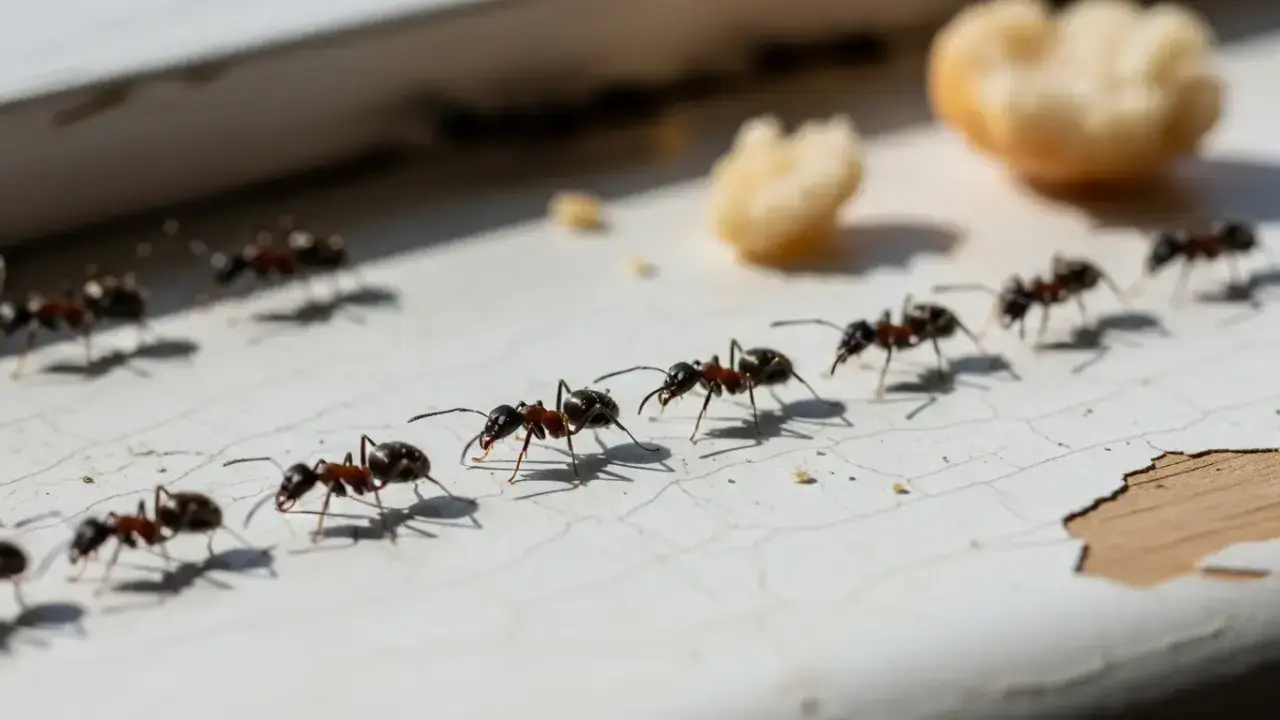
Ant Control
Professional ant control for businesses and homes across the North East. Species-specific treatment for garden ants, pharaoh ants, and ghost ants. NPTA-qualified technicians.
Why You Need Professional Ant Control
The majority of ant species prefer warmer temperatures, so the UK climate is not suitable for many of them. However, the ant species found in the UK can be a nuisance when they get into homes and businesses. Garden ants are not thought to carry diseases, but because you do not know where they have been foraging outside, you will not want them marching through food cupboards. Ants travel in a wide range searching for food, following chemical pheromone trails they have established and clustering around the source of food.
What's Included
Why acting quickly matters
Each colony can hold up to half a million ants and they can all relocate very quickly if the colony is threatened. Shop-bought sprays only kill the ants you can see while the queen continues to lay eggs underground.
Urgent Ant Control for Businesses
Ant infestations in food premises, hospitals, and care homes require immediate professional treatment. We offer rapid response across the North East.
Request a free call back
Prefer to get in touch another way? Contact us or email info@wynyardpestcontrol.co.uk
Threat Assessment
Nuisance:
7/10HIGHAnts contaminate food and food preparation areas. Garden ants are mainly a nuisance, but Pharaoh's and Ghost ants in heated buildings can cause persistent and difficult-to-resolve infestations.
Hazard:
4/10MODERATEGarden ants are not thought to carry diseases, but Pharaoh's ants spread pathogens in hospitals and care homes. Standard spray treatments can cause colonies to split and scatter, making infestations significantly worse.
Vital Statistics
| Common species (UK) | Garden (Black), Ghost, Pharaoh's, Pavement, Roger's |
| Worker size | 1.5 to 5 mm depending on species |
| Queen size | Up to 15 mm (Garden Ant) |
| Colony size | Up to 500,000 individuals |
| Worker lifespan | Up to 7 years |
| Queen lifespan | Up to 15 years |
| Diet | Sweet foods, proteins, grease, dead insects (varies by species) |
| Nesting sites | Soil, under paving, wall cavities, heated buildings |
| Active period | April to September (outdoor), year round (indoor tropical species) |
| Swarming | Flying ant season typically late July to August |
Key Facts
- Pharaoh's ants are a particular concern in hospitals and care homes as they can spread pathogens. Standard spray treatments cause colonies to split and scatter, making the problem worse.
- Each colony can hold up to half a million ants and they can all relocate very quickly if the colony is threatened
- Once an ant has discovered a food source, it leaves a pheromone trail so other ants from the colony can find it too
- New Pharaoh's ant colonies are often formed through nests disturbed by insecticide spray treatments
- Shop-bought sprays only kill the ants you can see while the queen continues to lay eggs underground
- Worker ants can live for up to 7 years and a queen can live for up to 15 years
- Ants belong to the insect order Hymenoptera, making them close relatives of bees and wasps
- Ghost ants have pale, translucent legs and abdomen and are only 1.6 mm long
- Flying Ant Day is a regular occurrence every year towards the end of summer, though it spans several weeks across the country
- Some birds, like Jays, spread their wings on an ant nest to get ants in their feathers. The ants squirt formic acid that helps rid the birds of parasites.
"Brilliant service, super fast and responsive. Would definitely recommend [the technician] :)"
Alisha Edge · Google review, April 2026
Ant Problem in Your Home or Business?
Do not waste time with shop-bought sprays that only kill the ants you can see. Contact us for species-specific treatment that eliminates the colony from within.
Common UK Ant Species
Pharaoh's ants are a particular concern in hospitals and care homes as they can spread pathogens. Standard spray treatments cause colonies to split and scatter, making the problem significantly worse.
There are thousands of ant species worldwide, but in the cooler UK climate the Garden or Black Ant is the most resilient species to live outdoors. Tropical ant species such as Ghost and Pharaoh's ants only survive with the warmth provided inside heated buildings in the UK. Ant problems often occur alongside other insect issues such as flies and cockroaches in commercial kitchens.
Garden Ant (Lasius niger)
- Workers 4 to 5 mm long, queens up to 15 mm long
- Dark brown-black in colour
- Nests often outdoors in soil and below paving slabs on the sunny side of buildings
- Foraging workers follow well-defined trails around food sources; sweet foods are preferred
- Mating takes place on the wing mid to late summer; males perish after mating
Ghost Ant (Tapinoma melanocephalum)
- Pale, translucent legs and abdomen, only 1.6 mm long
- Tropical species that only lives indoors in the UK
- Feeds on sweet substances and grease; nests in small spaces and wall voids
- Attracted to high moisture areas such as kitchen and bathroom cabinets
Pharaoh's Ant (Monomorium pharaonis)
- Workers 1.5 to 2 mm long, yellow-brown with brown abdomen
- Multi-queen colonies; swarming can take place at any time of year
- Each queen produces up to 3,500 eggs in its lifetime
- Deep-seated in cavities in heated buildings; often found in hospitals
- Colonies can range from a few dozen to 300,000 individuals
Pavement and Roger's Ants
Pavement Ant (Tetramorium caespitum)
- Dark brown or blackish, approximately 3 mm long
- Eats almost anything humans eat including pet food
- May move through pipes and electrical wires
- Mounds built near foundations in clusters; colonies found near water
- Tropical species that can only survive indoors in the UK
Roger's Ant (Hypoponera punctatissima)
- Reddish brown, workers 2 mm long, with a sting present
- Workers forage randomly and lay no trails as they hunt live prey, especially springtails
- Will swarm all year round; winged adults often found in electric fly killers
- Nests in damp residues and debris, crevices around drains and behind broken tiles
- Tropical species that can only survive indoors in the UK
Signs of an Ant Infestation
If you have seen a few ants scuttling around on the floor, they are probably searching for food. If the queen ant has set up her colony close to your property, this could be the first sign of a larger infestation.
- Ant nests: A nest site can look like a small pile of soil or dirt. Some species like to make their home in walls or other quiet, dark places, which are more difficult to spot.
- Ant pathways: In and out of the property. Some ant species lay down a pheromone trail to a food source, attracting other ants to find the food.
- Live ants: Large numbers of live insects indicate a problem. Ants in kitchens or food preparation areas require immediate action.
Flying Ants
Often referred to as alates, flying ants are the fertile male and female ants whose sole purpose is to leave the nest to reproduce and start a new colony. This happens in the form of swarms where flying ants from multiple colonies conjoin to breed mid-air, known as nuptial flight.
Identification
- Two sets of wings: front pair longer, back pair shorter with a brown tint
- Two elbowed antennae at the top of their heads (distinguishes them from flying termites)
The Swarming Process
- Flying ants swarm during summer months when conditions are right
- Virgin queens and males from different colonies collide and reproduce in the air
- Swarms happen in large numbers to ensure species survival
- After mating, males die; the queen finds a new location to start her colony
- The new queen sheds her wings, lays her first batch of eggs, and cares for the young until they develop into workers
Flying Ants in Homes
Flying ants can invade through open doors, windows, and cracks in walls and roofs. To prevent entry during swarming season, seal cracks and crevices around the property, keep windows and doors shut, and install fly screens to prevent entry while maintaining ventilation.
How to Prevent Ants
Once an ant has discovered a food source, it leaves a pheromone trail. This chemical helps other ants from the colony find the food too, which is why you can see lines of ants marching in single file.
Most ants only come into your home to look for food. They are especially attracted to anything sweet and sticky. Putting in place simple deterrent measures can prevent infestations from establishing:
- Clear up food and liquid spillages immediately. Even the tiniest crumbs are enough to attract an army of ants.
- Sweep up food crumbs from under kitchen appliances and units.
- Store food in airtight containers or bags in cupboards or refrigerators. Empty fruit bowls with fermenting fruit regularly.
- Pet food: Clear up leftovers straight away and clean bowls after use.
- Block off entry points by sealing cracks and crevices around doors and window frames with silicone or acrylic.
- In the garden: Ensure all rubbish bins have tightly sealed lids.
For persistent ant problems, particularly in properties across Hartlepool, Durham, and Sunderland, professional treatment is recommended. Contact us for a free survey.
Seasonal Ant Activity in the North East
Hover or tap a month to see Ant activity details
Outdoor colonies dormant. Tropical species (Pharaoh's, Ghost) remain active in heated buildings.
Queens overwintering in soil. Indoor tropical species continue breeding.
Queens begin to stir as soil warms. Earliest scouts may appear on mild days.
Eggs laid in late spring. Worker ants begin emerging and foraging for food.
Increasing activity as temperatures rise. Trails become visible around food sources.
High foraging activity. Ants frequently enter homes and businesses seeking food.
Peak activity. Flying ants begin to emerge. Swarming events increase.
Flying Ant Day period. Young queens fly away to establish new colonies. Peak nuisance period.
Activity begins to slow as temperatures drop. Last foraging runs before winter.
Outdoor colonies preparing for dormancy. Indoor tropical species unaffected.
Outdoor activity ceases. Pharaoh's and Ghost ants remain active in heated buildings.
Queens overwintering. Only tropical species active indoors in heated premises.
Black garden ants become active from April as soil warms, with foraging trails appearing on paths, patios, and inside kitchens. Flying ant day (nuptial flights) typically occurs in July. Indoor ant problems peak in late spring and summer when colonies send out foraging scouts seeking food sources.
Treat ant nests early in the season before colonies reach full strength. Spring treatment prevents the large-scale invasions that arrive in summer.
Spring (March to May) - Colonies activate: As soil temperatures rise above 10°C, ant colonies that have overwintered underground begin foraging above the surface. Black garden ants are the first to appear, sending scouts into kitchens, conservatories, and ground-floor rooms across Hartlepool, Sunderland, and Darlington. Watch for: trails of ants following edges of worktops, windowsills, and door frames; small mounds of excavated soil appearing between paving slabs and along path edges; and ants clustering around pet food bowls or spilled crumbs.
Summer (June to August) - Peak activity and flying ant events: This is the busiest period for ant call-outs. Colonies are at full strength and foraging intensifies. Flying ant day (the annual mating flight) typically occurs in July or August, when winged males and queens swarm from nests across entire streets simultaneously. Watch for: large numbers of ants trailing through kitchens and utility rooms, winged ants emerging from cracks in paths or around air bricks, and Pharaoh's ant activity in heated healthcare and hospitality premises which remains constant year-round.
Autumn (September to November) - Activity declines outdoors: Cooler temperatures reduce outdoor foraging. Newly mated queens burrow into soil to establish colonies that will emerge the following spring. Indoor ant problems typically subside, though Pharaoh's ants in heated buildings across Middlesbrough and Stockton continue unabated. Watch for: a sudden drop in visible ants outdoors (normal seasonal behaviour, not a sign the colony has gone), and any continued indoor activity which suggests an indoor nest rather than an outdoor colony foraging inside.
Winter (December to February) - Dormant period: Garden ant colonies are dormant underground and require no treatment during winter. However, this is the ideal time to carry out preventative work: seal gaps around pipework, fill cracks in external walls, and fit brush strips to external doors. Watch for: any continued indoor ant activity during winter, which almost certainly indicates Pharaoh's ants or an indoor nest rather than a garden species. Pharaoh's ants in centrally heated buildings such as care homes and food businesses do not go dormant and require specialist bait treatment at any time of year.
Why Choose Us for Ant Control
Species-Specific Treatment
We identify the exact species and tailor treatment accordingly. Using the wrong method can make the problem worse.
Colony Elimination
Our bait treatments target the queen, not just the workers you can see on the surface.
NPTA-Qualified Technicians
Our technicians hold full NPTA membership and understand the biology and habits of every UK ant species.
Internal and External
We treat both inside the property and external nest sites for thorough control.
Safe for Children and Pets
Tamper-resistant bait stations and targeted application methods minimise risk to non-target animals.
Professional Treatment Methods
NPTA-qualified technicians understand the habits of different ant species and offer discreet, targeted control. Treatment varies greatly depending on the species. Correct identification helps choose the most effective method.
Treatment Options
- Targeted sprays: Direct application to nests and trails (garden ants only)
- Selective baiting: Ants carry insecticidal bait back to the nest, eliminating the colony from within
- Drill and dust: For internal voids and wall cavities
- External bait stations: Tamper-resistant design, safe for use in areas used by children and pets. Uses the ants' roaming instinct to deliver insecticide bait back to the nest
The Professional Process
- Survey: A certified surveyor arranges a convenient inspection inside and outside the premises
- Recommendation: A treatment plan is recommended based on the infestation and species identified
- Treatment: Technician visits are arranged. Multiple visits may be needed depending on the treatment method
- Walkthrough: On the first visit, the technician explains the treatment process before work begins
- Ongoing protection: Regular ant control inspections can be set up to prevent recurrence
DIY vs Wynyard Pest Control
Never use aerosol or surface spray on Pharaoh's ant infestations. Spray treatments cause colonies to split and scatter into new areas, dramatically worsening the infestation. Bait-only treatment is the only safe approach.
| DIY | Wynyard Pest Control | |
|---|---|---|
| Best for | Small outdoor trail near a single nest | Indoor infestations or multiple colonies |
| Species identified | ✗ Usually guesswork | ✓ Professional ID on first visit |
| Queen eliminated | ✗ Surface workers only | ✓ Bait reaches the queen |
| Pet and child safe | ⚠ Varies by product | ✓ Tamper-resistant bait stations |
| Effectiveness | Kills visible ants only | Entire colony eliminated |
| Follow-up visits | ✗ None | ✓ Included in programme |
| Guarantee | ✗ None | ✓ Elimination guarantee |
When DIY may be sufficient: A small trail of black garden ants outdoors, leading to a visible nest in the garden or between paving slabs. A shop-bought ant bait station placed on the trail can eliminate a single, small colony over one to two weeks.
When you need Wynyard Pest Control: If ants are appearing indoors, trails are returning after DIY treatment, or you suspect Pharaoh's ants (tiny, yellow-brown ants in heated buildings), professional treatment is needed. DIY sprays kill the workers you can see but rarely reach the queen. Without eliminating the queen, the colony simply rebuilds. Pharaoh's ants are a particular risk: using the wrong treatment causes the colony to split and spread to new areas, making the problem significantly worse.
Treatment Programme
Treatment duration and visit frequency vary significantly by ant species. Correct identification before treatment begins is essential.
Before Treatment: How to Prepare
- Clear away food debris and clean food preparation surfaces before the visit. This makes bait more attractive to foraging ants.
- Identify and note where ant trails are most active (along skirting, under appliances, around plug sockets, near food).
- Do not apply any DIY ant killer spray before the visit. Residual insecticide repels ants away from treatment areas and reduces effectiveness.
- If you have applied spray previously, inform the technician so treatment can be adjusted.
- Move pet food bowls away from active ant trail areas.
Our Ant Control Process
A structured, three-stage approach that treats the problem and prevents it returning.
Step 1
Inspect and Plan
A detailed property inspection identifies entry points, infestation hotspots, and the species involved. A targeted treatment plan is developed based on findings.
Step 2
Treatment
Professional control measures are applied using advanced techniques and CRRU-compliant products. Proofing and sealing work addresses the root cause at the same time.
Step 3
Ongoing Support
Follow-up visits confirm the problem is resolved. You receive clear documentation, prevention advice, and recommendations for ongoing protection.
Ant Problem in Your Home or Business?
Do not waste time with shop-bought sprays that only kill the ants you can see. Contact us for species-specific treatment that eliminates the colony from within.
After Treatment: What to Expect
After Spray Treatments (Garden Ants)
- Keep children and pets out of treated areas for 30 to 60 minutes until the spray has dried
- Do not clean or mop treated surfaces for at least 48 to 72 hours. This removes the insecticide residue before it has taken effect.
- Increased ant activity for 24 to 48 hours after treatment is normal as ants are disturbed by the application
After Bait Treatments (Pharaoh's, Ghost, Roger's Ants)
- Do not disturb or remove bait placements. This breaks the foraging trail back to the colony.
- Do not apply any cleaning products directly onto bait gel placements
- Bait takes 1 to 2 weeks to show visible effect as the toxicant is carried back through the colony
- Patience is essential. Follow-up visits are timed to monitor uptake and replenish bait before it is fully consumed.
Commercial Ant Control
In the commercial environment, ants are more than just a nuisance. They can cost you money and harm your reputation. This is particularly true for organisations that handle food or need to keep areas sterile.
Premises at risk: Pubs and restaurants, hospitals, offices, hotels, warehouses, and other buildings that store food and water across Darlington, Stockton, Middlesbrough, and the wider North East.
Business Impact Without Adequate Control
- Waste: Contaminated food and products must be thrown away, costing money and resources
- Health risk: Infestations in hospitals and care homes can spread pathogens (Pharaoh's ants) and alarm patients or residents
- Reputation: Customer confidence suffers, directly impacting profits
A tailored control service combats ant issues with the most appropriate and effective methods, whether the infestation is within the premises or around the exterior. Food businesses and education settings should arrange regular inspections during the active season.
Pet and Child Safety
- Spray treatments: Children and pets should vacate treated areas for 30 to 60 minutes until the spray has fully dried. Once dry, the treated surface is safe. Avoid licking treated surfaces (relevant for pets and young children).
- Bait treatments (gel): Gel bait is placed in tiny quantities in cracks, crevices, and behind appliances, inaccessible to children and pets in normal circumstances. External bait stations are tamper-resistant and locked. No vacate period required for bait-only treatments.
- Fish tanks: Cover fish tanks and turn off air pumps during and for 1 to 2 hours after spray treatments, as airborne insecticide particles can be harmful to fish.
"Gotta say a massive thanks to [the technician]! Professional and timely service!"
Paul Kay · Google review, March 2026
NPTA Member
We are full members of the National Pest Technicians Association (NPTA). This means our technicians meet strict training and competency standards, carry appropriate insurance, and follow the association's code of practice. NPTA membership is your assurance that the work is carried out professionally and responsibly.
Fair, Transparent Pricing
Every job is different. The cost depends on the type of pest, scale of the problem, and what treatment is needed. We provide a free assessment and an honest quotation before any work begins. No hidden costs, no surprises.
View our pricing guideSatisfaction Guaranteed
All ant treatment programmes include follow-up visits where required. If ant activity persists after your treatment programme is complete, we will return and re-treat at no additional charge.
Frequently Asked Questions
Ants are attracted to sweet and sticky substances. Even the smallest crumbs or spillages can attract them. Once one ant finds a food source, it leaves a pheromone trail for others to follow, which is why you see lines of ants marching to the same spot.
Garden ants are not thought to carry diseases, but you do not know where they have been foraging outside, so they should be kept out of food areas. Pharaoh's ants can spread pathogens and are a particular concern in hospitals and care homes.
Flying Ant Day occurs towards the end of summer (often August) when fertile male and female ants (alates) leave their nests to reproduce mid-air. It actually spans several weeks across the UK as temperature and humidity conditions vary by location.
Flying ants have two sets of wings (front pair longer than back pair) and elbowed antennae. Flying termites have wings of equal length and straight antennae. Termites are extremely rare in the UK.
Small infestations can be treated with DIY products like ant killer gel, powder, or spray. However, DIY cannot guarantee complete removal. If the nest is in a wall cavity or inaccessible area, or if you cannot kill the queen, she may simply relocate the colony. Professional treatment is recommended for larger or recurring problems.
Worker ants can live for up to 7 years. Queen ants can live for up to 15 years. A single colony can hold up to half a million ants.
Food (especially sweet and sugary items), moisture, and shelter. Pet food left out, unsealed bins, fruit bowls with fermenting fruit, and crumbs under appliances are all common attractants.
Professionals use targeted sprays, selective baiting (ants carry bait back to the nest to eliminate the colony), and drill-and-dust methods for internal voids. External bait stations with tamper-resistant lids are safe for areas used by children and pets.
Our Other Services
Areas We Cover
We provide ant control services across the North East of England.
Ready to talk to us?
Free survey and quotation for businesses and homeowners. No obligation, no pressure.
We will get back to you as soon as we can.