
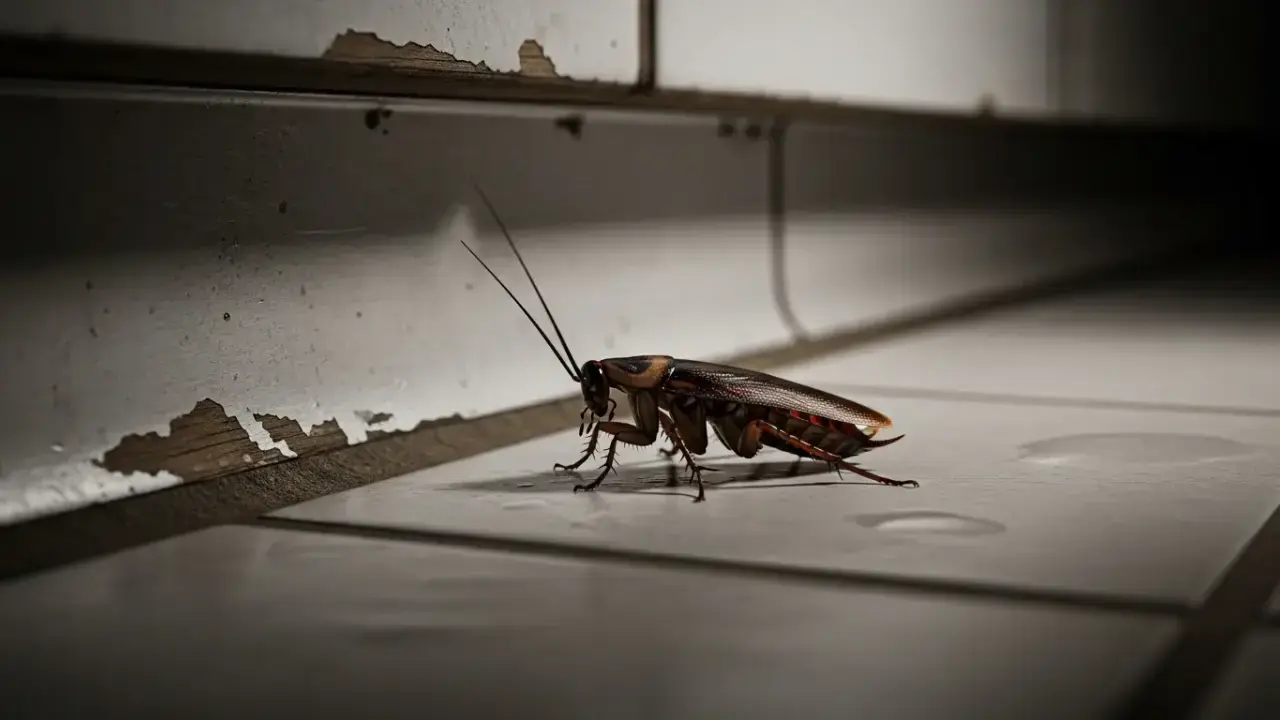
Cockroach Control
Professional cockroach control for businesses and homes across the North East. NPTA-qualified technicians, gel bait and heat treatments, follow-up visits timed to the egg hatch cycle.
Why You Need Professional Cockroach Control
Cockroaches are known carriers of diseases including Salmonella, Dysentery, and Gastro-enteritis. Increases in eczema and asthma have been linked to cockroach droppings. They are mostly nocturnal, hiding in cracks and crevices during the day and coming out to feed at night. They are attracted to food, moisture, and shelter, and if conditions are right their nesting sites can remain active year round. Cockroaches are extremely resilient and breed rapidly. Once an infestation is established it can spread quickly to neighbouring properties. Prompt action at the first signs of activity is critical.
What's Included
Why acting quickly matters
A cockroach sighting during an EHO inspection results in immediate enforcement action. Food businesses can face closure notices, fines, and loss of their food hygiene rating. In flats and multi-occupancy buildings, cockroaches travel through pipe runs, service ducts, and wall voids, spreading rapidly to neighbouring units.
Emergency Cockroach Response
Cockroach sightings in food premises require immediate action. We offer same-day inspections for commercial properties, including nighttime inspections when cockroach activity is at its peak.
Request a free call back
Prefer to get in touch another way? Contact us or email info@wynyardpestcontrol.co.uk
Related Services
Threat Assessment
Nuisance:
8/10VERY HIGHCockroaches contaminate far more food and surfaces than they consume through constant movement. Musty odours taint food and surfaces. Infestations spread rapidly in multi-occupancy buildings through pipe runs and service ducts.
Hazard:
9/10VERY HIGHCockroaches carry Salmonella, Dysentery, and Gastro-enteritis. Droppings, shed skins, and saliva are a significant trigger for asthma in children. A sighting during an EHO inspection results in immediate enforcement action for food businesses.
Vital Statistics
| Common species (UK) | German, Oriental, American, Brown Banded |
| Size (adult) | 10 to 30 mm depending on species |
| Egg case (ootheca) | Contains up to 40 eggs |
| Lifecycle stages | Egg, nymph (5 to 8 moults), adult |
| Lifespan | Up to 1 year depending on species |
| Survival without food | Up to 1 month |
| Active period | Nocturnal, year round indoors |
| Diet | Omnivorous: food, paper, packaging, plastics, fabrics, glue |
| Preferred habitat | Warm, humid cracks and crevices near food and water |
| Disease transmission | Salmonella, Dysentery, Gastro-enteritis, Tapeworms, Roundworm |
Key Facts
- Cockroach droppings, shed skins, and saliva are a significant trigger for asthma in children and a leading cause of allergies in urban areas
- Cockroaches pick up pathogens from unsanitary environments and transfer them to food and surfaces, causing Salmonella, Dysentery, and Gastro-enteritis
- In flats and multi-occupancy buildings, cockroaches travel through pipe runs, service ducts, and wall voids, spreading rapidly to neighbouring units
- A cockroach sighting during an EHO inspection results in immediate enforcement action including closure notices and fines
- Cockroach egg cases (oothecae) are highly resistant to insecticide and can survive initial treatments, making follow-up visits timed to the hatch cycle essential
- Over 3,000 cockroach species exist worldwide, but only a handful are common pests in the UK
- German cockroaches can scale smooth surfaces like glass and polished metal due to sticky pads on their feet
- Oriental cockroaches thrive in cool, damp areas such as basements, drains, and beneath porches
- Cockroaches use pheromones in their droppings to signal safe nesting sites to others
- Cockroach fossils date back 350 to 400 million years, making them one of the most ancient insect groups on Earth
"Gotta say a massive thanks to [the technician]! Professional and timely service!"
Paul Kay · Google review, March 2026
Cockroach Problem in Your Business or Home?
Do not wait for an EHO inspection to force action. Contact us now for a thorough inspection and targeted treatment programme. Same-day response available for commercial premises.
Cockroach Species in the UK
Over 3,000 cockroach species exist worldwide, but only a handful are common pests in the UK. Accurate species identification is essential because each species has different habitat preferences and responds to different treatment approaches.
German Cockroach (Blatella germanica)
- Adult: 12 to 15 mm long, identifiable by 2 dark stripes across the thorax
- Needs warmth and humidity to survive. Most commonly found indoors in kitchens, bathrooms, and laundry rooms
- Good climbers. Can scale smooth surfaces like glass and polished metal due to sticky pads on their feet
- Cannot fly
Oriental Cockroach (Blatta orientalis)
- Adult: 20 to 30 mm long. Uniform dark brown or black
- Thrives in cool, damp areas such as basements, drains, and openings beneath porches
- Can survive outdoors in areas such as rubbish tips and leaf litter
- Known for feeding on garbage and decaying matter. A significant health concern
American Cockroach (Periplaneta americana)
- Adult: 20 to 30 mm long. Reddish brown. One of the largest pest cockroaches
- Prefers dark, humid, undisturbed areas. Found in basements, kitchens, and bathrooms
Brown Banded Cockroach (Supella longipalpa)
- Adult: 10 to 15 mm long. One of the smallest pest cockroaches. Yellow-brown stripes across the abdomen
- Prefers heated buildings, ceilings, attics, and areas inside and around appliance motors
- Primarily active at night. Particularly enjoys materials with high starch content
Health Risks from Cockroaches
A cockroach sighting during an EHO inspection results in immediate enforcement action. Food businesses can face closure notices, fines, and loss of their food hygiene rating.
Cockroaches pose serious health risks because they pick up pathogens from unsanitary environments and transfer them to food and surfaces. Businesses and homeowners across Darlington, Stockton, and Middlesbrough should act quickly at the first signs of cockroach activity. Associated risks include:
- Food poisoning from germs tracked across food and surfaces
- Dysentery from faecal matter contamination
- Salmonella and Gastro-enteritis from contaminated food and surfaces where cockroaches have walked or fed
- Tapeworms causing digestive problems in humans and animals
- Roundworm (pinworms) causing trichinosis
- Fungal infections from droppings and shed skins, affecting lungs and eyes. High risk for asthma sufferers
- Viruses including polio
- Allergens and childhood asthma: cockroach droppings, shed skins, and saliva are a significant trigger for asthma in children and a leading cause of allergies in urban areas
Signs of a Cockroach Infestation
- Unusual smell from an established infestation. Musty, sweet, sometimes almond-like. Taints food and surfaces on contact.
- Droppings that are brown or black cylindrical, approximately 2 mm long (when little water is available)
- Smear marks that are brown and irregular shaped (when water is abundant). Found on horizontal surfaces and at wall-floor junctions.
- Shed skins (cast nymphal skins). Cockroaches shed 5 to 8 times as they mature. Found close to sheltering areas.
- Egg cases (oothecae). Dark brown, purse-shaped capsules approximately 6 to 12 mm long. Found in sheltered areas near food and water sources. Each case contains up to 40 eggs.
- Live or dead cockroaches or body parts, in kitchens, laundry rooms, drains, roof voids, and damp basements
- Damage to packaging, paper, plastics, and fabrics. Cockroaches gnaw on a wide range of materials, leaving irregular holes and chew marks.
Where to Check for Cockroaches
Cockroaches will eat almost anything including food, paper, packaging, plastics, fabrics, glue, grease, pet droppings, and even other cockroaches when food is scarce. Key areas to inspect:
- Kitchens: Cupboards, cabinets, under sinks, behind dishwashers, backs of cookers, fridges, and freezers. Inside smaller appliances (microwaves, coffee makers, toasters). Upper inside corners of cupboards.
- Bathrooms: Back of cabinets, around plumbing behind sinks, baths, and toilets. Any sheltered dark space with access to water or condensation.
- Laundry rooms: Under sinks, where plumbing enters through walls or floors. Warm areas near motors at the back of washers and dryers.
- Basements: Cracks and gaps in walls and floors, under floorboards, in boxes and piles of paper.
- Drains: Inside drains, through damaged covers or pipes, gaps around pipes. Pipe ducts and openings beneath porches or decking.
- Outdoors: Beneath decking, in undisturbed areas of outbuildings, rubbish tips.
Prevention Tips
Cockroaches use pheromones in their droppings to signal safe nesting sites to others. Removing clutter and sealing cracks reduces both hiding spots and pheromone buildup.
Eliminate Food Sources
- Remove leftover food from tables, worktops, counters, and under appliances. Cockroaches need only a minimal amount of food for a meal.
- Use airtight containers for food storage. The smell of food is a key attractant.
- Rinse out bottles, cans, and plastics before recycling.
- Empty bins every day.
- Remove standing water from buckets, plant pots, pet bowls, and sinks. Cockroaches can survive up to 2 weeks without water if food moisture is high.
- Remove pet food, litter trays, and water bowls before nightfall.
Clean
- Keep kitchen, food handling, and storage areas clean and tidy.
- Clear food debris and spillages quickly.
- Vacuum regularly to remove debris from desks, furniture, and floors.
Declutter
- Remove newspapers, magazines, packaging, and cardboard. Cockroaches use pheromones in their droppings to signal safe nesting sites to others. Removing clutter reduces both hiding spots and pheromone buildup.
Building Maintenance
- Fill and seal cracks and holes in walls, around skirting boards, under sinks, around pipework, fitted cabinets, and behind electrical sockets. Use expanding foam where possible.
- Check and repair pipes regularly. Cockroaches thrive in damp areas near pipes and drains.
- Paint or varnish wooden shelves to seal cracks and reduce porous surfaces that absorb cockroach pheromones.
Seasonal Cockroach Activity in the North East
Hover or tap a month to see Cockroach activity details
Active year round indoors in heated premises. Lower activity in unheated spaces.
Continues breeding in warm environments. Kitchens and boiler rooms remain high risk.
Increasing activity as temperatures rise. Spring cleaning may reveal hidden infestations.
Breeding accelerates. Egg cases begin hatching more frequently in warming conditions.
Peak breeding period begins. Commercial kitchens and food premises at highest risk.
High activity across all species. German cockroaches thrive in warm, humid kitchens.
Peak summer activity. Outdoor Oriental cockroach populations at their highest.
Continued peak activity. Multi-unit properties see rapid spread between units.
High activity continues. Oriental cockroaches may seek indoor shelter as nights cool.
Outdoor activity declines. Indoor populations remain stable in heated buildings.
Indoor activity continues. Heated commercial premises remain at risk.
Reduced activity in unheated spaces. Commercial kitchens and heated buildings still vulnerable.
German cockroaches thrive year-round in heated commercial kitchens, bakeries, and food preparation areas. Oriental cockroaches are more seasonal, with outdoor activity peaking in summer. Autumn call-outs increase as heating systems activate and cockroach populations expand in warm indoor environments.
Commercial kitchens and food businesses should schedule regular inspections year-round. Cockroach populations can double within weeks in warm conditions - act at the first sign of droppings or egg cases.
Autumn (September to November) - Harbourage seeking: As outdoor temperatures fall, Oriental cockroaches move deeper into buildings through drains, service ducts, and gaps around pipework. Restaurants, takeaways, and older residential blocks across Sunderland, Middlesbrough, and Hartlepool see a rise in sightings during this period. Watch for: live cockroaches appearing in kitchens and bathrooms at night, an oily or musty smell in cupboards under sinks, and dark smear marks along pipe runs and skirting boards.
Winter (December to February) - Established colonies in heated premises: Central heating creates ideal conditions for German cockroaches to breed rapidly indoors. Kitchens, boiler rooms, and laundry areas in commercial kitchens and multi-occupancy buildings are prime harbourage sites. Watch for: egg cases (oothecae) glued to the underside of drawers, behind fridge motors, and inside electrical fittings; increasing numbers of nymphs appearing during the day suggests a large established colony.
Spring (March to May) - Breeding acceleration: Longer days and rising ambient temperatures trigger faster breeding cycles. German cockroach populations can double in under a month in warm kitchens. This is the critical window for food businesses and hospitality premises to schedule inspections before summer trade peaks. Watch for: shed skins accumulating in harbourage areas, droppings resembling ground pepper along shelf edges, and increased daytime sightings indicating overcrowding.
Summer (June to August) - Peak activity: Both Oriental and German cockroach populations reach their highest numbers. Warmer drains and bin stores attract Oriental cockroaches to ground-floor and basement areas. Watch for: cockroaches appearing in unusual rooms as colonies expand beyond their original harbourage, increased activity around waste areas and grease traps, and complaints from neighbours or adjacent units in terraced properties across Stockton and Darlington.
Why Choose Us for Cockroach Control
HACCP-Compliant
Our treatment programmes are designed to meet food safety audit standards including BRC and SALSA.
Species-Specific Treatment
We identify the exact species and tailor treatment to its biology and harbourage preferences.
Egg Hatch Follow-Up
Follow-up visits are timed to the cockroach egg hatch cycle to ensure complete eradication.
Multi-Unit Coordination
Simultaneous treatment across all affected units in flats, hotels, and restaurant chains to prevent reinfestation.
Minimal Disruption
Gel bait treatments can be applied during operating hours without closing the premises.
Professional Treatment Methods
Professional cockroach treatment combines multiple methods tailored to the species and severity of the infestation:
Gel Baits
Highly targeted bait applied into cracks and crevices where cockroaches hide. Non-toxic to the surrounding environment. Effective at reaching nesting areas that sprays cannot.
Insecticide Sprays
Targeted spray treatments applied to identified hiding spots, cracks, and crevices. Safe, non-toxic products minimise risk in the home.
Dusting Powders
Insecticidal powder applied to hard-to-reach areas and voids where cockroaches shelter.
Heat Treatment (Chemical Free)
Chemical-free heat treatment suitable for sensitive environments. Eliminates cockroaches without insecticide use. Can be combined with Insect Monitor Units (IMU) for ongoing discreet monitoring.
Insect Growth Regulators
Products that disrupt the cockroach lifecycle, preventing nymphs from developing into breeding adults.
Monitoring Traps (Insect Monitor Units)
Adhesive monitoring stations placed in harbourage areas to track population levels, identify hotspots, and measure treatment effectiveness over time. Essential for ongoing commercial contracts and multi-visit programmes.
Follow-up visits are scheduled to coincide with the hatching time of egg cases (oothecae). If treatment is not thorough, eggs can survive and hatch after one to two months, causing reinfestation. Treatment must target nesting and hiding areas, not just visible adults.
Commercial Cockroach Control
Treating a single flat or unit in isolation leads to rapid reinfestation from adjacent properties. Simultaneous treatment across all affected units is critical in multi-occupancy buildings.
Cockroaches can have a serious impact on business reputation and brand. Industries handling food and operating in regulated environments face the greatest risk. Cockroach problems negatively affect hygiene ratings for food businesses. Kitchen and dining areas face considerable food contamination risk.
Commercial services include no-obligation inspections, night-time inspections (cockroaches are nocturnal so nighttime reveals more), tailored treatment plans, chemical-free options for sensitive environments, and tailored insect proofing recommendations. Discreet service with minimum disruption to business operations.
Multi-unit coordination: For housing associations, hotel groups, and restaurant chains, simultaneous treatment across all affected units is critical. Treating a single unit in isolation leads to rapid reinfestation from adjacent properties.
Sectors most at risk include hospitality, healthcare, food businesses, education, and rental properties.
Residential Cockroach Control
Cockroaches in homes pose health risks and cause distress. Treatment begins with a thorough inspection to identify shelters and assess the infestation level. Technicians use the most appropriate treatment (sprays, gel baits, dusting powders) based on the species and extent of the problem. Prevention advice is provided including proofing recommendations to stop reinfestation.
In flats, terraced houses, and multi-occupancy buildings across Hartlepool, Durham, and Sunderland, cockroaches travel through pipe runs, service ducts, and wall voids. Treating one flat while adjacent units remain infested leads to rapid reinfestation. We coordinate treatment across all affected units wherever possible. Learn more about how we work and our treatment process.
DIY vs Wynyard Pest Control
Shop-bought sprays can scatter cockroach colonies into new areas rather than eliminating them. Professional gel bait treatment targets the colony at source without spreading the problem.
| DIY | Wynyard Pest Control | |
|---|---|---|
| Best for | Single cockroach sighting | Recurring or multiple sightings |
| Species identified | ✗ Easily misidentified | ✓ Professional ID determines treatment |
| Harbourage located | ✗ Surface treatment only | ✓ Full survey of hiding spots |
| Pet and child safe | ⚠ Varies by product | ✓ Gel bait in targeted locations |
| Effectiveness | Kills visible cockroaches only | Colony eliminated at source |
| Follow-up visits | ✗ None | ✓ Monitoring programme included |
| Guarantee | ✗ None | ✓ Elimination guarantee |
When DIY may be sufficient: A single cockroach found in a kitchen, likely brought in with a delivery or in luggage. Cleaning thoroughly and sealing gaps around pipework may prevent further sightings.
When you need Wynyard Pest Control: If you see cockroaches during the day, find droppings (small dark smears near harbourage areas), or notice a musty smell, you are dealing with an established infestation. Cockroaches breed rapidly and hide in places shop sprays cannot reach: behind kitchen units, inside wall cavities, around boiler housings, and in drainage systems. Food businesses and hospitality premises across Middlesbrough, Stockton, and Hartlepool require documented, professional treatment to meet EHO standards.
Our Cockroach Control Process
A structured, three-stage approach that treats the problem and prevents it returning.
Step 1
Inspect and Plan
A detailed property inspection identifies entry points, infestation hotspots, and the species involved. A targeted treatment plan is developed based on findings.
Step 2
Treatment
Professional control measures are applied using advanced techniques and CRRU-compliant products. Proofing and sealing work addresses the root cause at the same time.
Step 3
Ongoing Support
Follow-up visits confirm the problem is resolved. You receive clear documentation, prevention advice, and recommendations for ongoing protection.
Cockroach Problem in Your Business or Home?
Do not wait for an EHO inspection to force action. Contact us now for a thorough inspection and targeted treatment programme. Same-day response available for commercial premises.
Treatment Programme
The 4 to 6 week follow-up visit is essential. Cockroach egg cases (oothecae) are highly resistant to insecticide and can survive the initial treatment. Without a visit timed to the egg hatch cycle, the infestation will re-establish.
Our cockroach treatment programme is structured around the cockroach lifecycle to ensure complete eradication:
Before Treatment: How to Prepare
- Thoroughly clean all kitchen surfaces, removing grease, food residue, and food debris. Cockroaches are far less likely to take gel bait if abundant natural food is available.
- Empty and clean the inside of all kitchen cupboards, particularly under the sink, behind the cooker, and around the fridge.
- Pull out appliances (fridge, cooker, dishwasher, washing machine) from the wall to expose the backs and sides. These are primary harbourage areas.
- Remove all items from under sinks and from floor level in the kitchen.
- Do NOT use aerosol insecticide sprays in the days before treatment. These scatter the population deeper into wall voids and can repel cockroaches from gel bait placements, significantly reducing effectiveness.
- Dispose of any unsealed food items and transfer dry goods to airtight containers.
- For businesses: if possible, schedule the inspection for late evening or nighttime when cockroach activity is at its peak.
After Treatment: What to Expect
- Leave all gel bait placements completely undisturbed. Do not wipe down treated surfaces, use surface spray cleaners, or clean cracks and crevices for a minimum of 2 weeks.
- Expect to see cockroaches for up to 2 weeks after initial treatment. This is normal as they come into contact with the insecticide and gel bait. Cockroaches seen in daylight or in large numbers in the first week confirms the infestation level was significant.
- After a heavy infestation, a full professional disinfection of the affected area may be recommended to eliminate disease-causing organisms from contaminated surfaces.
- Report any ongoing or increased activity to your technician between scheduled visits.
Pet and Child Safety
- Gel bait is applied in tiny, targeted amounts directly into cracks and crevices. It is not spread on open surfaces and presents very low risk to children and pets.
- All occupants including pets should vacate the property during treatment and for 2 to 4 hours afterwards, until all sprayed surfaces are fully dry.
- Fish tanks must be covered and air pumps turned off during any insecticide application. Even low concentrations can be harmful to aquatic life.
- Keep pet food bowls, water bowls, and litter trays away from treated areas until surfaces are confirmed dry.
- Once surfaces are dry, the property is safe for children and pets.
"[The technician] gave me great advice regarding some fleas. Would recommend."
Hannah SCOTT · Google review, March 2026

NPTA Member
We are full members of the National Pest Technicians Association (NPTA). This means our technicians meet strict training and competency standards, carry appropriate insurance, and follow the association's code of practice. NPTA membership is your assurance that the work is carried out professionally and responsibly.
Fair, Transparent Pricing
Every job is different. The cost depends on the type of pest, scale of the problem, and what treatment is needed. We provide a free assessment and an honest quotation before any work begins. No hidden costs, no surprises.
View our pricing guideSatisfaction Guaranteed
All cockroach treatment programmes include follow-up visits timed to the egg hatch cycle. If cockroach activity persists after your treatment programme is complete, we will return and re-treat at no additional charge.
Frequently Asked Questions
Yes. A single cockroach may not produce a strong odour, but an infestation produces a heavy, distinguishable scent described as musty, sweet, and sometimes like almond. This taints food and surfaces on contact.
Some species can. Oriental and German cockroaches cannot fly. Brown Banded cockroaches may fly in warm climates.
Cockroaches are omnivorous and do not attack people who are awake. They can bite while sleeping, but only large species can pierce human skin.
Cockroach fossils date back 350 to 400 million years, making them one of the most ancient insect groups on Earth.
Cockroaches commonly enter through gaps around pipework, drains, and ventilation. They can also be brought in with deliveries, second-hand equipment, and stock. German cockroaches in particular are frequently introduced via cardboard packaging from infested supply chains.
Not necessarily. While poor housekeeping makes conditions more favourable, cockroaches can establish in clean premises if they find warmth, moisture, and access. Commercial kitchens, laundries, and swimming pool areas are all susceptible regardless of cleanliness standards.
A typical treatment programme involves an initial treatment followed by two to three follow-up visits over four to six weeks. Gel baits begin working within hours, but complete colony elimination takes time as eggs hatch and new nymphs encounter the bait. The 4 to 6 week follow-up visit is essential because egg cases are highly resistant to insecticide.
Related Services
Our Other Services
Areas We Cover
We provide cockroach control services across the North East of England.
Ready to talk to us?
Free survey and quotation for businesses and homeowners. No obligation, no pressure.
We will get back to you as soon as we can.