
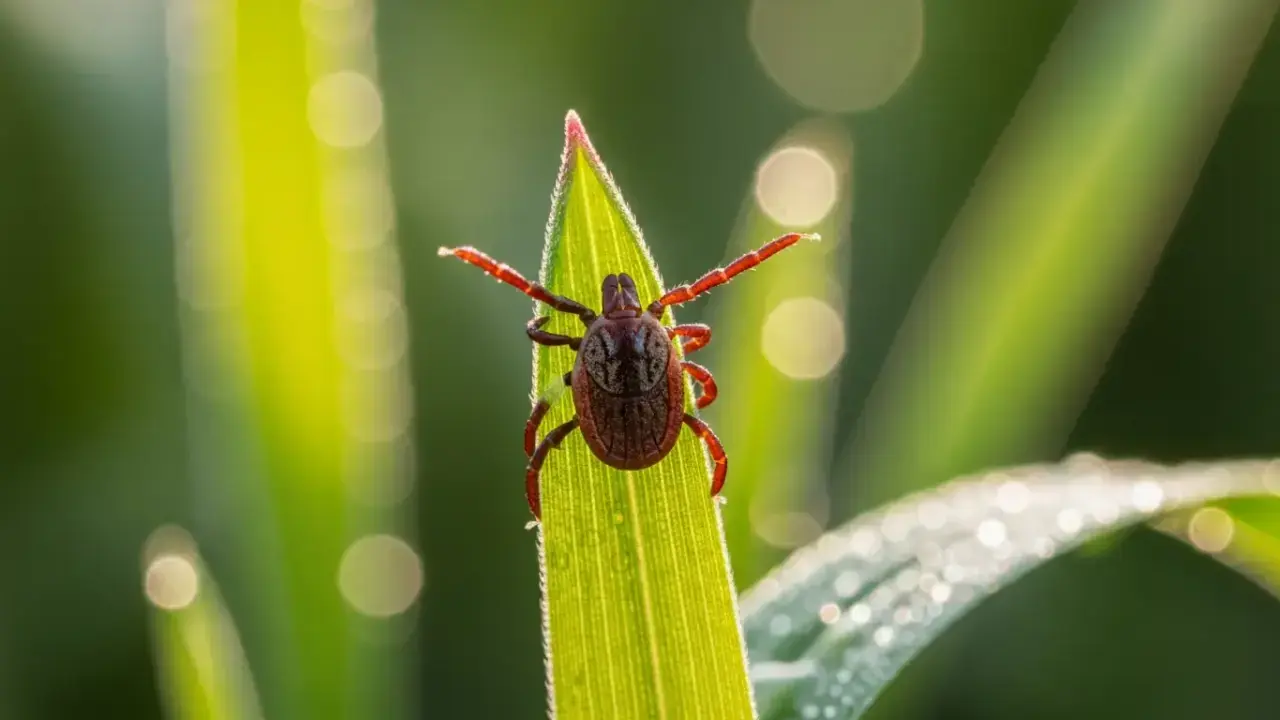
Tick Control
Professional tick control for gardens, paddocks, and outdoor areas across the North East. Targeted acaricide treatments, tick dragging surveys, habitat management, and Lyme disease awareness.
Why You Need Professional Tick Control
Ticks are blood-feeding parasites found in grassland, woodland, moorland, and overgrown gardens across the UK. They attach to humans, pets, and livestock, and can transmit serious diseases including Lyme disease. Tick activity peaks from March to October but they remain active in mild winters. Professional tick control reduces populations in outdoor environments and protects both people and animals from tick-borne illness.
What's Included
Why acting quickly matters
Lyme disease risk increases the longer a tick remains attached, usually requiring 24 to 48 hours before transmission occurs. Professional tick surveys and targeted treatment reduce populations in your garden before bites happen.
Ticks in your garden or grounds?
Professional tick survey and targeted treatment to reduce populations and protect your family and pets. Free assessment across the North East.
Request a free call back
Prefer to get in touch another way? Contact us or email info@wynyardpestcontrol.co.uk
Related Services
Threat Assessment
Nuisance:
5/10MODERATETicks attach to people and pets, causing discomfort and anxiety. Repeated bites in specific garden locations indicate a localised population requiring treatment.
Hazard:
7/10HIGHTicks transmit Lyme disease, with an estimated 2,000 to 3,000 cases diagnosed annually in England and Wales. If untreated, Lyme disease can affect joints, heart, and nervous system. Tick-borne encephalitis has also been identified in parts of England.
Vital Statistics
| Common species | Sheep Tick (Ixodes ricinus), Hedgehog Tick, Brown Dog Tick |
| Sheep tick size | 3 to 4 mm unfed, up to 10 mm engorged |
| Life cycle | 3 stages (larva, nymph, adult) spanning 2 to 3 years |
| Peak activity | March to October (peaks spring and autumn) |
| Lyme disease cases (annual) | 2,000 to 3,000 in England and Wales |
| Transmission time | Typically 24 to 48 hours of attachment before transmission |
| Host animals | Deer, hedgehogs, foxes, rabbits, dogs, cats, livestock |
| Habitat | Long grass, woodland edges, moorland, overgrown gardens |
Key Facts
- Lyme disease risk increases the longer a tick remains attached, typically requiring 24 to 48 hours before transmission occurs. Prompt removal is essential
- An estimated 2,000 to 3,000 cases of Lyme disease are diagnosed in England and Wales each year. Early symptoms include an expanding circular red rash, fatigue, and muscle pain
- Brown Dog Ticks are not native to the UK but can be introduced by dogs travelling from continental Europe. Unlike other UK ticks, this species can complete its entire life cycle indoors
- Ticks cannot survive in dry, exposed areas with low humidity. Keeping grass short and clearing leaf litter are the most effective long-term habitat management measures
Ticks in Your Garden?
Protect your family and pets from tick-borne disease. Contact us for a tick dragging survey and targeted treatment of your outdoor areas.
Tick Species in the UK
Sheep Tick (Ixodes ricinus)
- The most common and medically significant tick in the UK
- Found in rough pasture, moorland, woodland edges, and long grass
- Responsible for the majority of Lyme disease transmission in the UK
- Adults approximately 3 to 4 mm unfed, swelling to 10 mm or more when engorged. Reddish-brown body with darker legs
- Three-stage life cycle (larva, nymph, adult) spanning 2 to 3 years
Hedgehog Tick (Ixodes hexagonus)
- Commonly found on hedgehogs, foxes, and domestic pets
- Often encountered in suburban gardens
- Can also transmit Lyme disease
- Frequently found in pet bedding and kennels
Brown Dog Tick (Rhipicephalus sanguineus)
- Not native to the UK but occasionally introduced by dogs travelling from continental Europe
- Unlike other UK ticks, this species can complete its entire life cycle indoors
- A potential pest in homes and kennels if introduced
Signs of a Tick Problem
- Ticks found on people or pets: The most common indicator. Ticks attach to exposed skin on legs, arms, groin, scalp, and behind ears. On dogs, check around the head, ears, neck, and between toes
- Repeated bites in specific locations: Suggests a localised tick population in the garden or surrounding land
- Ticks found indoors: Usually brought inside on clothing, pets, or wildlife. Brown Dog Ticks can establish indoor infestations in kennels and soft furnishings
- Presence of wildlife hosts: Deer, hedgehogs, foxes, and rabbits in or near the property indicate tick populations nearby
Tick Health Risks
If you develop an expanding circular rash, flu-like symptoms, or joint pain after a tick bite, seek medical advice promptly. Early treatment of Lyme disease with antibiotics is highly effective.
Lyme Disease
The most significant tick-borne disease in the UK. Caused by Borrelia burgdorferi transmitted through infected Ixodes ricinus bites. An estimated 2,000 to 3,000 cases are diagnosed in England and Wales each year.
- Early symptoms include an expanding circular red rash (erythema migrans), fatigue, headache, and muscle and joint pain
- If untreated, it can progress to affect the joints, heart, and nervous system
- Risk increases the longer a tick remains attached (typically 24 to 48 hours before transmission)
Tick-Borne Encephalitis (TBE)
A viral infection recently identified in a small number of tick populations in parts of England. Risk remains very low but is monitored by Public Health England.
Babesiosis
A rare parasitic infection. Cases in the UK are uncommon but have been recorded. Symptoms include fever, fatigue, and haemolytic anaemia.
Treatment Methods
- Environmental treatment: Targeted application of residual acaricides to tick hotspot areas including garden borders, long grass margins, woodland edges, paths, and areas frequented by wildlife
- Vegetation management: Cutting grass short, clearing leaf litter, removing dense undergrowth, and creating gravel or wood chip barriers between lawns and wooded areas. Ticks cannot survive in dry, exposed areas with low humidity
- Wildlife exclusion: Fencing to deter deer and managing hedgehog, fox, and rabbit access to gardens reduces the number of tick hosts on the property
- Tick dragging surveys: Pulling a white flannel cloth across vegetation to identify tick density and hotspot locations before treatment. Allows precise, targeted application
Tick Prevention
- Keep grass short: Especially near pathways, play areas, and garden borders
- Clear leaf litter and debris: From garden borders and woodland edges
- Create barriers: A 1 metre gravel or bark chip strip between lawn and woodland boundaries
- Discourage deer: With fencing or deterrents where practical
- Wear protective clothing: Long sleeves, tuck trousers into socks in tick-prone areas
- Check after outdoor activity: Inspect skin and clothing after time in long grass or woodland
- Treat pets: Use veterinary-approved tick prevention products
- Remove ticks promptly: Using a tick removal tool, twist gently, do not pull
We provide tick surveys and treatment across Darlington, Middlesbrough, and Northallerton. Rural and semi-rural properties in the North East are particularly affected. Tick control often complements flea and mite control for properties with pets and livestock. Agricultural businesses and outdoor education settings benefit from seasonal tick management programmes. See how we work for full details of our process.
Is Treatment Safe for Children and Pets?
- Outdoor acaricide treatment: Keep children and pets off treated areas until the spray has dried (typically 1 to 2 hours). Once dry, treated surfaces are safe
- Vegetation management: No chemicals involved. Safe immediately
- Tick dragging surveys: No chemicals. Safe for all
- Pet tick treatments: Use only veterinary-approved products on pets. Do not use human insect repellent on animals
DIY vs Wynyard Pest Control
Ticks can transmit Lyme disease. If you find a tick attached to your skin, remove it carefully with fine-tipped tweezers or a tick removal tool. Do not squeeze the body. Seek medical advice if a circular rash develops.
| DIY | Wynyard Pest Control | |
|---|---|---|
| Best for | Personal protection outdoors | Garden or land infestation |
| Tick species identified | ✗ Rarely checked | ✓ Species and risk assessment |
| Habitat treated | ✗ Garden sprays limited | ✓ Targeted land treatment |
| Pet and child safe | ⚠ Varies by product | ✓ Controlled, targeted application |
| Effectiveness | Personal deterrent only | Population reduced at source |
| Follow-up visits | ✗ None | ✓ Seasonal monitoring available |
| Guarantee | ✗ None | ✓ Treatment guarantee |
When DIY may be sufficient: Personal protection when walking in tick-prone areas: long trousers tucked into socks, DEET-based repellent, and a thorough tick check afterwards. Keeping garden grass short and removing leaf litter reduces tick habitat around the home.
When you need Wynyard Pest Control: If you, your family, or pets are regularly finding ticks in your garden, or you manage land used by livestock, horses, or the public across Darlington, Durham, and rural areas of the North East, professional treatment reduces the tick population at source. This is particularly important given the risk of Lyme disease transmission.
Seasonal Tick Activity in the North East
Hover or tap a month to see Tick activity details
Minimal tick activity in cold conditions. Mild winters may see some activity.
Ticks largely dormant. Prepare garden for spring with vegetation clearance.
Tick activity begins as temperatures rise. Nymphs becoming active.
Spring peak begins. Adult ticks actively questing in long grass and vegetation.
High activity. Check people, pets, and children after outdoor time in vegetation.
Peak season continues. Nymphs most active and hardest to spot.
Activity may reduce in hot, dry weather as ticks need humidity.
Continued activity in shaded, humid areas. Check dogs after walks.
Autumn peak begins. Adult ticks actively seeking hosts before winter.
Activity declining but still present in mild conditions.
Tick activity reducing as temperatures drop.
Minimal activity. Ticks dormant in leaf litter and soil.
Tick activity peaks from April to October, with the highest risk between May and July when nymphal ticks are most active. Grassland, moorland, and woodland across the North East are tick hotspots. The risk of Lyme disease is present throughout the active season, making early tick checks and removal essential.
If your business operates in outdoor environments - farms, estates, forestry, or outdoor education - arrange staff awareness training and site treatment before the spring tick season begins.
Spring (March to May) - First peak season: Ticks become active as temperatures rise above 7°C and humidity increases. Nymphs (the stage most likely to bite humans) emerge from leaf litter and climb onto low vegetation, waiting for a passing host. Rural and semi-rural properties near woodland, moorland, and farmland across Darlington, County Durham, and Middlesbrough are particularly affected. Watch for: ticks on dogs and cats after walks through long grass, tiny dark nymphs (1 to 2mm) on clothing and skin after gardening, and deer activity in gardens which indicates high tick host presence.
Summer (June to August) - Sustained activity: Tick populations remain active throughout summer, particularly in areas with long grass, bracken, and dense undergrowth. Family gardens backing onto woodland and fields see the highest risk. Watch for: ticks found on children and pets after outdoor play, adult ticks (3 to 4mm, dark brown) on clothing and lower legs, and multiple tick bites from a single area of the garden which indicates a localised hotspot. Outdoor education settings and farming operations should implement tick awareness protocols during this period.
Autumn (September to November) - Second peak: A second surge in tick activity occurs as adult ticks seek hosts before winter. Deer ticks are particularly active during the autumn rut when deer movement increases across the North East. Watch for: larger adult ticks on pets and livestock, ticks appearing on clothing after woodland walks around Stockton, Hartlepool, and North Shields, and tick bites that produce a circular rash (erythema migrans), which requires urgent medical attention as it may indicate Lyme disease.
Winter (December to February) - Low activity but not absent: Most ticks become dormant below 7°C, but mild North East winters can see continued activity during warm spells, particularly in sheltered south-facing garden borders. Watch for: ticks on dogs after walks on mild winter days, and any persistent circular rashes from autumn bites that should be referred to a GP. Winter is the best window for habitat management: cut back overgrown borders, clear leaf litter, create gravel barriers between lawns and woodland, and arrange a tick dragging survey to identify hotspots before spring.
Our Tick Control Process
A structured, three-stage approach that treats the problem and prevents it returning.
Step 1
Inspect and Plan
A detailed property inspection identifies entry points, infestation hotspots, and the species involved. A targeted treatment plan is developed based on findings.
Step 2
Treatment
Professional control measures are applied using advanced techniques and CRRU-compliant products. Proofing and sealing work addresses the root cause at the same time.
Step 3
Ongoing Support
Follow-up visits confirm the problem is resolved. You receive clear documentation, prevention advice, and recommendations for ongoing protection.
Why Choose Us for Tick Control
Tick Dragging Surveys
We survey your garden to identify tick density and hotspot locations before treatment, allowing precise, targeted application.
Habitat Management
Practical advice on vegetation, barriers, and wildlife exclusion for long-term tick reduction.
Lyme Disease Awareness
We provide guidance on tick-borne disease risks, proper tick removal, and when to seek medical advice.
Seasonal Programmes
Timed treatments during peak tick season (spring and autumn) provide the best protection for your family and pets.

NPTA Member
We are full members of the National Pest Technicians Association (NPTA). This means our technicians meet strict training and competency standards, carry appropriate insurance, and follow the association's code of practice. NPTA membership is your assurance that the work is carried out professionally and responsibly.
Fair, Transparent Pricing
Every job is different. The cost depends on the type of pest, scale of the problem, and what treatment is needed. We provide a free assessment and an honest quotation before any work begins. No hidden costs, no surprises.
View our pricing guideSatisfaction Guaranteed
If tick activity persists after treatment, we will return and re-treat at no additional charge.
Frequently Asked Questions
Yes. Lyme disease is present across the UK, and cases have been reported in the North East. Not all ticks carry the bacteria, but prompt removal within 24 to 48 hours significantly reduces the risk of transmission. If you develop a circular rash or flu-like symptoms after a tick bite, seek medical advice.
Ticks are most active from March to October, with peaks in spring and autumn. However, mild winters can extend the active season. Areas with deer, hedgehogs, or other wildlife hosts tend to have higher tick numbers.
Use a tick removal tool or fine-pointed tweezers. Grip the tick as close to the skin as possible and twist gently. Do not pull, squeeze, or burn the tick as this can cause it to regurgitate into the wound, increasing infection risk. Clean the bite area with antiseptic afterwards.
Most UK tick species cannot survive indoors. The exception is the Brown Dog Tick, which is occasionally introduced by dogs travelling from continental Europe and can complete its full life cycle indoors, establishing infestations in kennels and soft furnishings.
Related Services
Our Other Services
Areas We Cover
We provide tick control services across the North East of England.
Ready to talk to us?
Free survey and quotation for businesses and homeowners. No obligation, no pressure.
We will get back to you as soon as we can.