
Carpet Beetle Control
Professional carpet beetle control for businesses and homes across the North East. Species identification, targeted treatment, pheromone monitoring, and source elimination. Heritage property expertise.
Why You Need Professional Carpet Beetle Control
Carpet beetles are one of the most common textile pests in UK homes. The adult beetles are harmless, but the larvae (known as woolly bears) feed on natural fibres including wool, silk, fur, feathers, and leather, causing significant damage to carpets, clothing, upholstery, and museum collections. Infestations often go unnoticed until damage is visible, as the larvae feed in dark, undisturbed areas. Professional treatment combines insecticide application with identification and removal of the food source.
What's Included
Why acting quickly matters
By the time you see adult beetles on windowsills, larvae are almost certainly already feeding on carpets and textiles elsewhere in the property. Early treatment limits damage.
Carpet beetle damage at home?
Do not wait for further damage. Contact us for species identification, source location, and targeted treatment across the North East.
Request a free call back
Prefer to get in touch another way? Contact us or email info@wynyardpestcontrol.co.uk
Related Services
Threat Assessment
Nuisance:
6/10MODERATECarpet beetle damage is costly and often discovered only when significant harm has been done. Larvae feed in dark, undisturbed areas making detection difficult. Infestations frequently originate from old bird nests in loft spaces.
Hazard:
2/10LOWCarpet beetles do not bite or transmit disease. The risk is entirely financial. Some people experience allergic reactions to the tiny barbed hairs on carpet beetle larvae (woolly bears), causing skin irritation.
Vital Statistics
| Common species | Varied Carpet Beetle, Fur Beetle, Museum Beetle |
| Varied Carpet Beetle size | Adult 2 to 3 mm, larva 4 to 5 mm |
| Fur Beetle size | Adult 4 to 6 mm, larva up to 6 mm |
| What causes damage | Larvae only. Adults feed on pollen and nectar |
| Fibres at risk | Wool, silk, fur, feathers, leather, animal hair |
| Common source | Old bird nests in eaves, soffits, and chimneys |
| Life cycle | Normally one generation per year |
| Treatment visits | 2 visits standard (initial plus follow-up at 3 to 4 weeks) |
Key Facts
- Infestations frequently originate from old bird nests in loft spaces, roof eaves, or chimney stacks. Larvae migrate down into the living space from above
- Finding adult beetles on windowsills from April to June usually means larvae are already present somewhere in the property. Do not wait for visible fabric damage before arranging treatment
- Carpet beetle larvae create irregular, patchy holes in natural fibre fabrics, different from the clean round holes made by clothes moths
- Two treatment visits are standard. Carpet beetle eggs can take several weeks to hatch after the first application, so follow-up is essential
Carpet Beetle Damage to Carpets or Clothing?
Do not wait for further damage. Contact us for species identification, source location, and a targeted two-visit treatment programme.
Signs of Carpet Beetle Infestation
- Irregular holes in fabrics: Damage to wool carpets, rugs, clothing, blankets, and upholstery. Holes are irregular and patchy (not the clean round holes made by clothes moths)
- Shed larval skins (cast skins): Small, hairy, hollow shells found on carpets, in wardrobes, and along skirting boards. Larvae moult several times as they grow
- Woolly bear larvae: Small, hairy, brown larvae found in dark, undisturbed areas under furniture, along carpet edges, inside wardrobes, and in stored textiles
- Adult beetles on windowsills: Adults are attracted to light and are often found on windowsills and around windows in spring and summer. This is often the first visible sign
- Frass: Fine, sand-like droppings near damaged areas
Carpet Beetle Species
Varied Carpet Beetle (Anthrenus verbasci)
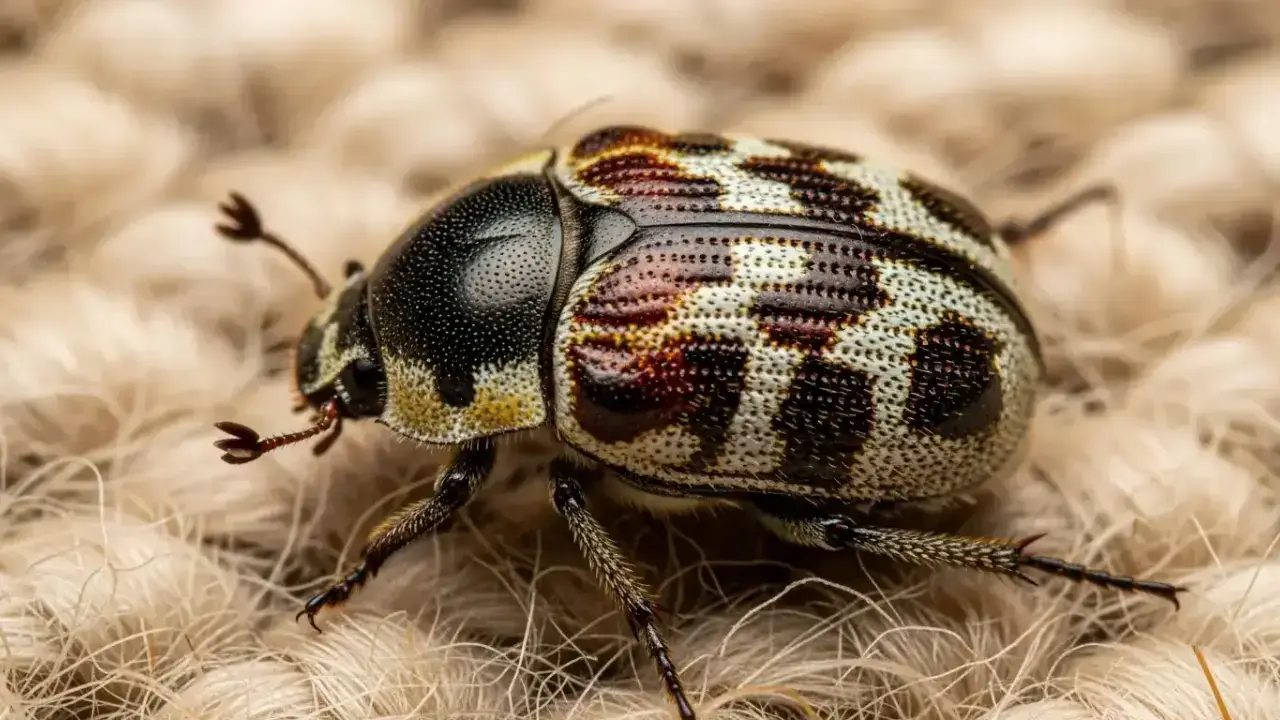
- The most common species in UK homes. Adult is small (2 to 3 mm), rounded, with mottled brown, white, and yellow scales
- Larvae approximately 4 to 5 mm, oval-shaped, and covered in brown hairs (woolly bear)
- Adults are often found on windowsills in spring and summer as they fly toward light
Fur Beetle (Attagenus pellio)
- Slightly larger than the varied carpet beetle (4 to 6 mm). Dark brown to black with a small white spot on each wing case
- Larvae are elongated (up to 6 mm), brown, and hairy with a long tail of hairs
- Commonly found in wardrobes, drawers, and stored textiles. A common inhabitant of bird nests
Museum Beetle (Anthrenus museorum)
- Similar to the varied carpet beetle but slightly smaller
- A significant pest in museums, galleries, and historic collections where it damages taxidermy, mounted specimens, and textile displays
Where to Check
- Under heavy furniture and along carpet edges (especially under beds, sofas, and wardrobes)
- Inside wardrobes, drawers, and storage boxes containing wool, silk, or fur garments
- Airing cupboards and linen stores
- Bird nests in eaves, soffits, or chimneys (a major source of carpet beetle infestations as larvae feed on feathers and debris in old nests)
- Under skirting boards and in floor gaps
- Taxidermy, mounted specimens, and natural history collections
- Piano felts, upholstered furniture, and stuffed toys
Treatment Programme
Two visits are standard for carpet beetle treatment. The initial visit covers inspection, professional vacuuming, and insecticide application. The follow-up reviews pheromone trap data and retreats if any larvae have hatched since the first application.
Prevention
- Vacuum regularly: Especially under furniture, along carpet edges, and around skirting boards where larvae feed undisturbed
- Remove bird nests: Check roof spaces, eaves, and chimney stacks. Remove old nests and block access points to prevent new nesting
- Clean before storing: Wash or dry-clean garments before long-term storage as larvae are attracted to sweat, skin oils, and food stains
- Sealed storage: Store wool, silk, and fur garments in sealed bags or containers
- Reduce clutter: Clean dark, undisturbed areas regularly
- Pheromone traps: Use monitoring traps in wardrobes and vulnerable rooms as an early warning system
Carpet beetle problems are often found alongside fabric pest infestations. If you suspect a textile pest problem, contact us for professional identification.
Residential Carpet Beetle Control
- Carpet beetles are one of the most common textile pest call-outs in UK homes, often discovered when damage to carpets or clothing is already visible
- Infestations frequently originate from old bird nests in loft spaces, roof eaves, or chimney stacks. Larvae migrate down into the living space from above
- All rooms can be affected but damage most commonly occurs in bedrooms, living rooms, and airing cupboards where natural fibre items are stored undisturbed
- For delicate items not suitable for chemical treatment, freezing at minus 18 degrees for 72 hours is an effective alternative
- Technician provides a full inspection report and practical prevention advice to reduce the risk of reinfestation
Homeowners across Darlington, Stockton, Middlesbrough, and Hartlepool can arrange a free inspection. Carpet beetle damage is often confused with moth damage. Professional identification ensures the correct treatment is applied. Find out more about how we work.
Commercial Carpet Beetle Control
- Carpet beetles pose a significant risk to museums, galleries, antique dealers, archives, historic properties, and textile businesses where irreplaceable collections are held
- Hotels, care homes, and serviced apartments with woollen carpets and soft furnishings are also at risk
- Free professional site survey to assess infestation level, identify species, and locate source areas
- Chemical-free treatment options available for sensitive collections and heritage environments, including freezing treatment and controlled atmosphere technology
- Ongoing pheromone monitoring programme for high-risk premises with regular inspection visits
- Discreet, targeted treatment with minimum disruption to business operations
We provide carpet beetle control for commercial premises across Durham and Sunderland and the wider North East.
Is Treatment Safe for Children and Pets?
- Insecticide spray: Children and pets should vacate treated rooms for 2 to 4 hours until surfaces are dry. Once dry, treated surfaces are safe
- Pheromone traps: Non-toxic sticky traps in low-profile housings. No risk to children or pets
- Freezing treatment: No chemicals involved. Items can be used immediately after thawing
- Fish tanks: Cover tanks and switch off air pumps during insecticide treatment and for 1 to 2 hours afterwards
DIY vs Wynyard Pest Control
Adult carpet beetles on windowsills in spring are a warning sign. Check skirting boards, carpet edges, and stored woollens for the hairy 'woolly bear' larvae that cause the actual damage.
| DIY | Wynyard Pest Control | |
|---|---|---|
| Best for | One or two adult beetles found | Larvae damage to carpets or fabrics |
| Larvae found | ✗ Adults spotted only | ✓ Full survey locates larvae |
| Damage source identified | ✗ Surface check only | ✓ Hidden harbourage points found |
| Pet and child safe | ⚠ Varies by product | ✓ Targeted, controlled application |
| Effectiveness | Kills visible adults only | Larvae and eggs eliminated |
| Follow-up visits | ✗ None | ✓ Included in programme |
| Guarantee | ✗ None | ✓ Elimination guarantee |
When DIY may be sufficient: Finding one or two adult carpet beetles on a windowsill in spring. Adults feed on pollen and are attracted to light. Thorough vacuuming and checking stored textiles for larvae may be enough if no damage is found.
When you need Wynyard Pest Control: If you are finding the distinctive hairy "woolly bear" larvae, seeing irregular holes in carpets or clothing, or finding shed larval skins along skirting boards, the infestation is active. Carpet beetle larvae feed on keratin in natural fibres and can cause extensive damage before being noticed. Properties across Darlington, Middlesbrough, and Durham with wool carpets, felt underlay, or antique textiles are most at risk.
Seasonal Carpet Beetle Activity in the North East
Hover or tap a month to see Carpet Beetle activity details
Larvae continue feeding in heated buildings but adult beetle activity is minimal.
Larvae active in carpets and stored textiles. No visible adult beetles yet.
Adult beetles beginning to emerge. Check windowsills for small, round beetles.
Adult carpet beetles appear on windowsills as they fly toward light. If you see adults, larvae are almost certainly present.
Peak adult activity. Beetles entering homes through open windows. Mating and egg-laying on natural fibre textiles.
Peak season continues. Adults feeding on pollen outdoors, laying eggs indoors on wool, silk, and leather.
Adult activity declining. Newly laid eggs beginning to hatch into larvae (woolly bears).
Larvae actively feeding on natural fibres in carpets, wardrobes, and stored textiles.
Larvae continue feeding. Check for shed skins, frass, and irregular holes in fabrics.
Larval feeding continues but slows in cooler, unheated areas.
Larvae dormant or feeding slowly in heated buildings. Good time for preventative inspection.
Minimal activity. Larvae overwintering in carpets and textiles in heated properties.
Adult carpet beetles are most active between April and June when they fly indoors, attracted to light through open windows. They lay eggs on natural fibre carpets, rugs, and textiles. Larvae hatch in summer and feed for months in dark, undisturbed areas - under furniture, along skirting boards, and in wardrobes.
If you find small, hairy larvae or irregular damage to carpets and rugs, act before the next generation of adults emerges in spring. Regular vacuuming under furniture and along carpet edges disrupts the lifecycle.
Spring (March to May) - Adult emergence: Adult carpet beetles emerge from pupae and fly towards light, which is why they are most commonly noticed on windowsills and around light fittings. Varied carpet beetles, two-spot carpet beetles, and fur beetles all emerge during this period. Watch for: small round beetles (2 to 4mm) on windowsills, dead beetles in light fittings, and cast larval skins (hairy, hollow husks) near skirting boards and under furniture in homes across Hartlepool, Sunderland, and Durham.
Summer (June to August) - Egg-laying and larval feeding peaks: Adult beetles lay eggs on or near natural fibre materials. Larvae (known as woolly bears due to their hairy appearance) feed on wool carpets, natural fibre clothing, fur, feathers, and animal products. Damage is concentrated in dark, undisturbed areas. Watch for: bare patches on wool carpets under heavy furniture, irregular holes in stored woollen garments, and woolly bear larvae crawling on walls as they seek pupation sites. Museums and heritage properties across the North East should run pheromone monitoring programmes during this period.
Autumn (September to November) - Larvae continue in heated homes: While adult flights cease, larvae that hatched in summer continue feeding in centrally heated buildings. Damage accumulates in wardrobes, drawers, and under beds where items sit undisturbed for months. Watch for: ongoing damage to stored clothing, larvae in the folds of infrequently used curtains and blankets, and infestations linked to old bird nests in eaves and soffits, which are a common source of carpet beetle introduction across Middlesbrough, Stockton, and Darlington.
Winter (December to February) - Slower larval development: In cooler parts of the property, larval development slows. In heated rooms, feeding continues at a reduced rate. Watch for: woolly bear larvae in airing cupboards and near hot water pipes where warmth sustains activity. Winter is ideal for prevention: vacuum thoroughly behind furniture, under beds, and along skirting boards; launder or dry-clean all natural fibre garments before storing; remove old bird nests from eaves; and inspect loft insulation for larval activity.
Our Carpet Beetle Control Process
A structured, three-stage approach that treats the problem and prevents it returning.
Step 1
Inspect and Plan
A detailed property inspection identifies entry points, infestation hotspots, and the species involved. A targeted treatment plan is developed based on findings.
Step 2
Treatment
Professional control measures are applied using advanced techniques and CRRU-compliant products. Proofing and sealing work addresses the root cause at the same time.
Step 3
Ongoing Support
Follow-up visits confirm the problem is resolved. You receive clear documentation, prevention advice, and recommendations for ongoing protection.
Why Choose Us for Carpet Beetle Control
Source Identification
We locate the origin of the infestation, whether from bird nests, stored textiles, or other sources, and eliminate it.
Two-Visit Programme
Initial treatment plus follow-up at 3 to 4 weeks ensures newly hatched larvae are caught and the infestation is fully cleared.
Heritage Experience
We protect carpets and textiles in historic properties, museums, and private collections using appropriate methods.
Pheromone Monitoring
Sticky traps and pheromone monitors confirm the infestation is cleared and provide early warning of new activity.

NPTA Member
We are full members of the National Pest Technicians Association (NPTA). This means our technicians meet strict training and competency standards, carry appropriate insurance, and follow the association's code of practice. NPTA membership is your assurance that the work is carried out professionally and responsibly.
Fair, Transparent Pricing
Every job is different. The cost depends on the type of pest, scale of the problem, and what treatment is needed. We provide a free assessment and an honest quotation before any work begins. No hidden costs, no surprises.
View our pricing guideSatisfaction Guaranteed
All carpet beetle treatments include a follow-up visit. If activity persists after the two-visit programme, we will return and re-treat at no additional charge.
Frequently Asked Questions
Adult carpet beetles fly and are attracted to light. They typically enter homes through open windows and doors in spring and summer. A major source is old bird nests in the roof space or chimney. Larvae in the nest migrate down into living areas as the nest dries out. They can also be brought in on cut flowers, second-hand furniture, or clothing.
Carpet beetle larvae create irregular, patchy holes in natural fibre fabrics, different from the clean round holes made by clothes moths. You may also find small hairy larvae (woolly bears), shed skins, and fine sandy droppings near damaged areas.
Adults are attracted to light and emerge in spring and summer to feed outdoors on pollen and nectar. Finding adults on windowsills from April to June usually means larvae are already present somewhere in the property. Act promptly and do not wait for visible fabric damage before arranging treatment.
Yes. Two visits are standard. The initial visit covers inspection, vacuuming, and insecticide application. The follow-up at 3 to 4 weeks reviews pheromone trap data and retreats if any larvae have hatched after the first application. This two-visit approach is more reliable than a single treatment.
DIY sprays are available but are rarely effective without thorough professional vacuuming and source identification. If bird nests in the loft are the source, treating the living space alone will not resolve the infestation. Professional treatment is strongly recommended for established infestations or if valuable textiles are at risk.
Related Services
Our Other Services
Areas We Cover
We provide carpet beetle control services across the North East of England.
Ready to talk to us?
Free survey and quotation for businesses and homeowners. No obligation, no pressure.
We will get back to you as soon as we can.