
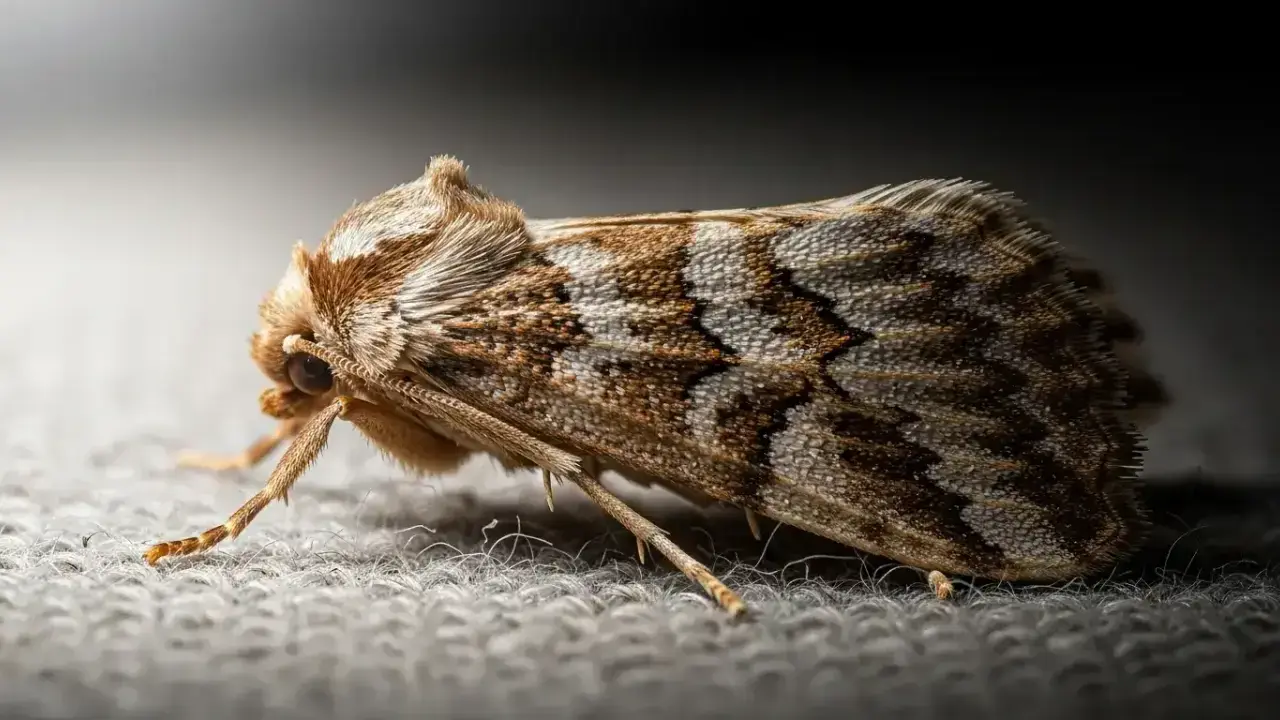
Moth Control
Professional moth control for businesses and homes across the North East. Species identification and targeted treatment for clothes moths, carpet moths, and brown house moths. Chemical-free options including heat treatment, pheromone disruption, and biological control.
Why You Need Professional Moth Control
Around 2,500 moth species are recorded in the UK. The majority are harmless, but a handful cause damage to natural fibres in clothing, carpets, upholstery, and stored food products. Moths do not transmit diseases, but larvae can cause costly damage to textiles containing wool, silk, cotton, leather, feathers, and fur. Adult moths do not feed on fabrics. Their sole purpose is to reproduce. It is the larvae that eat the keratin protein found in natural fibres.
What's Included
Why acting quickly matters
Clothes moth larvae can live for up to 18 months in cold conditions, feeding undetected in dark, undisturbed areas. A female carpet moth can lay up to 200 eggs. By the time damage is visible, the infestation is often well established.
Moth Damage to Clothing or Carpets?
Contact us for same-day advice and rapid treatment. The sooner larvae are dealt with, the less damage to your textiles.
Request a free call back
Prefer to get in touch another way? Contact us or email info@wynyardpestcontrol.co.uk
Related Services
Threat Assessment
Nuisance:
6/10MODERATEMoths cause costly damage to clothing, carpets, upholstery, and stored textiles. Infestations are often not noticed until visible damage appears. Larvae feed in dark, undisturbed areas making detection difficult.
Hazard:
2/10LOWMoths do not transmit diseases or bite. The primary risk is financial damage to textiles, garments, carpets, and heritage collections. Irreplaceable items in museums and historic properties are particularly vulnerable.
Vital Statistics
| Damaging species (UK) | Common Clothes Moth, Case-Bearing Clothes Moth, Brown House Moth, Carpet Moth |
| Adult size | 6 to 14 mm depending on species |
| Larva size | Up to 20 mm (Brown House Moth) |
| What causes damage | Larvae, not adults. Larvae eat keratin in natural fibres |
| Egg to adult | 6 weeks to 18 months depending on conditions |
| Carpet moth eggs per female | Up to 200 |
| Fibres at risk | Wool, silk, cotton, cashmere, leather, feathers, fur |
| Preferred habitat | Dark, undisturbed areas (wardrobes, under beds, skirting boards) |
| Adult lifespan | 2 to 4 weeks. Adults do not feed. Larvae: up to 18 months in cold conditions |
Key Facts
- It is the larvae that cause all the damage. Adult moths do not feed on fabrics. Their sole purpose is to reproduce
- Common clothes moth larvae cause irregular holes in fabrics. They can live for up to 18 months in cold conditions, feeding undetected in dark, undisturbed areas
- Carpet or fur damage can also be caused by carpet beetles. These textile pests are often confused with moths
- Lofts and attics are high-risk areas because moths can be attracted to bird nests in the eaves of homes
- Entosite biological control uses naturally occurring Trichogramma parasitic wasps (less than 0.5 mm) to consume moth eggs, breaking the lifecycle without chemicals
"[The technician] gave me great advice regarding some fleas. Would recommend."
Hannah SCOTT · Google review, March 2026
Moth Damage to Clothing or Carpets?
Do not let moth larvae continue feeding on your textiles. Contact us for species identification and a tailored treatment plan. Chemical-free options available for delicate and heritage items.
Signs of a Moth Infestation
Carpet or fur damage can also be caused by carpet beetles. These textile pests are often confused with moths. Professional identification ensures the correct treatment is applied.
Moth infestations are often not noticed until damage becomes visible. Regular inspection of vulnerable items is the best way to catch problems early. Homeowners and businesses across Darlington, Stockton, and Middlesbrough should check for the following signs:
- Irregular holes or bald patches: In natural fibre fabrics, carpets, or rugs. Common clothes moth larvae cause irregular holes while case-bearing clothes moth larvae create smaller, more regular holes
- Small maggot-like larvae: Moth caterpillars, usually creamy white with a brown head, found on or near damaged textiles
- Silken tubes or cases: Protective tubes in which larvae live and feed. Case-bearing moth larvae drag their cases along the surface as they move
- Pupae (silk cocoons): From which adult moths emerge. Found in folds of fabric, along skirting boards, and in crevices
- Adult moths crawling: Common clothes moths run rather than fly and avoid light, preferring dark undisturbed areas. Seeing moths near wardrobes or in quiet corners is a strong indicator
- Damage to a range of items: Clothes, soft furnishings, carpets, blankets, curtains, and upholstery can all be affected
Common Moth Species
Common Clothes Moth (Tineola bisselliella)
- Size: Adult 6 to 8 mm long. Straw-coloured wings with no markings. Fringed trailing wing edge
- Larvae: Up to 10 mm, creamy white with a brown head
- Damage: Causes irregular-shaped holes in natural fabrics
- Development: Egg to adult typically about 6 weeks, but can take 10 to 18 months in poor food conditions or cold temperatures
- Behaviour: Adults run rather than fly and avoid light
Case-Bearing Clothes Moth (Tinea pellionella)
- Size: Adult 6 to 8 mm long. Dark buff forewings with three faint spots
- Larvae: Up to 10 mm, creamy white. Creates smaller, more regular-shaped holes in garments
- Note: Less common than the Common Clothes Moth. Check imported goods such as hides or objects of animal origin
Brown House Moth (Hofmannophila pseudospretella)
- Size: Adult 8 to 14 mm long. Brown with three or four darker spots
- Larvae: Up to 20 mm. Prefers animal-based materials like feathers and leather
- Note: Most common type of house moth. Generally regarded as a scavenger. Normally one generation per year
Carpet Moth (Trichophaga tapetzella)
- Size: Similar to clothes moths. Larvae feed on keratin in wool carpets and silk rugs
- Egg laying: Females can lay up to 200 eggs in quiet, dark, undisturbed areas
- Development: Larvae can live for up to two years, often the same colour as the carpet fibres they consume
Where Moths Are Found
Moths prefer dark, undisturbed areas. Common locations include:
- Wardrobes, drawers, and cupboards: Especially those containing wool, silk, or cashmere garments that are not regularly worn or disturbed
- Underneath beds: Especially in spare rooms where carpet edges are rarely vacuumed
- Basements, attics, and lofts: High-risk areas, particularly if bird nests are present in the eaves which attract moths
- Behind heavy curtains: Where natural fibre fabrics hang undisturbed for long periods
- Under sofas and heavy furniture: Rarely moved furniture provides the dark, undisturbed environment larvae prefer
- Along skirting boards: Carpet edges against skirting boards are a common feeding area for carpet moth larvae
- Folds of fabric, corners, cracks, and crevices: Any dark recess where natural fibres collect dust and are left undisturbed
Treatment Options
Targeted Insecticide Spray
pH-neutral insecticide spray treatments targeted at infested areas including cracks, crevices, carpet edges, and storage spaces.
Pheromone Disruption System
An insecticide-free approach that uses synthetically produced pheromones to disrupt the moth mating cycle. Pheromone dispensers are placed in infested areas. Male moths become saturated by the synthetic pheromone and cannot locate females to mate. Over time, this reduces the moth population. Non-toxic with no risk of pesticide contamination. Suitable for use in food industry environments and other sensitive commercial settings.
Heat Treatment (Chemical-Free)
Chemical-free heat pod treatment suitable for eliminating moths, larvae, and eggs from delicate items that cannot be laundered or treated with fumigants. Ideal for treasured possessions and sensitive fabrics.
Biological Control (Parasitic Wasps)
Entosite uses naturally occurring Trichogramma parasitic wasps (less than 0.5 mm in size) to control clothes moth infestations. The wasps locate moth eggs and lay their own eggs inside them. When the wasp larvae hatch, they consume the moth eggs, breaking the moth life cycle. The wasps die out naturally when no moth eggs remain. They do not sting or bite and are completely harmless to people and animals. Best suited for delicate, fragile, or antique items of sentimental or historic value where chemical treatments or heat are not appropriate.
Treatment Programme
Moth treatment is tailored to the species, the items affected, and the environment. Multiple methods are often combined within a single programme. The lifecycle of clothes moths (up to 18 months for larvae in cold conditions) means follow-up visits are essential to address newly hatched larvae.
Seasonal Moth Activity in the North East
Hover or tap a month to see Moth activity details
Larvae may still be feeding in heated homes. Adult moth activity minimal.
Larvae continue feeding in warm environments. Good time to inspect wardrobes and storage.
Moth activity begins increasing as temperatures rise. Early adults may emerge.
Adult clothes moths becoming active. Egg laying begins in wardrobes and dark areas.
Peak moth season begins. Adults active and laying eggs on natural fibre items.
Peak activity. Larvae hatching and feeding in carpets, wardrobes, and storage areas.
Continued peak activity. Warm conditions accelerate larval development.
High activity continues. Check stored clothing and carpets for signs of damage.
Activity beginning to decline but larvae continue feeding through autumn.
Adult activity reducing. Larvae in heated properties remain active.
Reduced adult activity. Larvae may slow development in cooler areas.
Minimal adult activity. Larvae in heated homes continue feeding through winter.
Clothes moths and carpet moths are most active between May and September when adults emerge, mate, and lay eggs on natural fibre textiles. Larvae cause all the damage, feeding undetected in dark, undisturbed areas for months. Heated homes allow year-round larval activity, but peak egg-laying occurs in summer.
Protect valuable textiles before moth season begins. Store winter woolens clean and in sealed bags, and arrange a pheromone trap survey in spring to detect early activity before damage spreads.
Spring (March to May) - Emergence and egg-laying: Common clothes moths (Tineola bisselliella) and case-bearing clothes moths emerge from pupae as temperatures rise. Adults seek dark, undisturbed areas to lay eggs on wool, silk, cashmere, and other natural fibres. Indian meal moths and brown house moths become active in food cupboards and pantries. Watch for: small golden-brown moths fluttering in wardrobes and airing cupboards, silken tubes or cases on the underside of stored garments, and tiny holes appearing in woollen jumpers, carpets, and blankets in homes across Hartlepool, Sunderland, and Durham.
Summer (June to August) - Peak breeding and damage: Warm conditions accelerate larval development and adult breeding cycles. A second generation of clothes moths can emerge within the same season, doubling the damage. Museums and heritage properties see the highest risk during this period as collections in storage are vulnerable. Watch for: increasing numbers of adult moths near windows and light sources, bare patches on wool carpets under heavy furniture, webbing and frass (larval droppings) in dark corners of wardrobes, and Indian meal moth larvae in stored cereals, flour, and dried goods.
Autumn (September to November) - Larvae continue feeding: While adult moth flights decrease, larvae that hatched in summer continue feeding through autumn in heated homes. Centrally heated properties across Middlesbrough, Stockton, and Darlington provide conditions warm enough for year-round larval activity. Watch for: ongoing damage to stored textiles, case-bearing moth larvae crawling on walls and ceilings as they seek pupation sites, and increased pheromone trap catches indicating sustained activity levels.
Winter (December to February) - Slower but not dormant: In unheated spaces, moth larvae enter a semi-dormant state and development slows considerably. However, in heated homes and commercial premises, larvae continue to feed throughout winter. Watch for: damage to items stored in heated wardrobes and drawers, particularly garments that have not been worn for several months. This is an ideal time for prevention: launder or dry-clean natural fibre garments before storing, use breathable garment bags, and vacuum the backs of wardrobes and under furniture thoroughly.
Why Choose Us for Moth Control
Species Identification
Correct identification of the moth species determines the most effective treatment approach and guides prevention advice.
Chemical-Free Options
Heat treatment, pheromone disruption, and biological control provide effective alternatives for sensitive environments and delicate items.
Heritage Expertise
We protect collections in museums, historic properties, and textile stores using methods suited to irreplaceable items.
Pheromone Monitoring
Species-specific pheromone traps monitor activity levels and confirm when the infestation is under control.
Before Treatment: How to Prepare
- Wash all affected garments, blankets, curtains, and soft furnishings at 60 degrees or above before the visit (or dry-clean items that cannot be machine washed)
- Vacuum wardrobes, drawers, and affected storage areas including all cracks and crevices. Dispose of the vacuum bag immediately in a sealed bag outside
- Remove all clothing and textiles from wardrobes and drawers to provide full access for spray treatment
- Check and clean behind radiators, under heavy furniture, and along skirting boards in all affected rooms
- Do not apply any DIY moth spray or use moth balls before the visit as some products can repel moths away from treated bait traps
- For heat pod treatment: identify and isolate the specific items to be treated. Heat pods cannot treat entire rooms
After Treatment: What to Expect
After Spray Treatment
- Vacate for 2 to 4 hours and ventilate thoroughly before re-entering treated rooms
- Do not vacuum treated areas for at least 7 days after treatment as this removes the residue before it can work through the larval population
- Continue washing at-risk textiles at 60 degrees as a precaution throughout the treatment period
- Store treated items in sealed plastic bags or storage boxes once cleaned to prevent reinfestation
After Heat Treatment
- Items can be used immediately. No chemicals involved, no waiting period
- Inspect treated items for any remaining visible larvae or damage
After Pheromone Disruption
- Do not remove or reposition pheromone dispensers as placement is calibrated to saturate the area
- Effect is gradual. Visible population reduction typically occurs over 4 to 8 weeks
Is Treatment Safe for Children and Pets?
- Insecticide spray: Children and pets should vacate for 2 to 4 hours until the spray has dried. Once dry, treated surfaces are safe. Fish tanks should be covered and air pumps switched off during treatment and for 1 to 2 hours afterwards
- Heat treatment: Completely chemical-free. Safe to return immediately once the heat pod is removed. No vacate period required for other areas of the property
- Pheromone disruption: Entirely non-toxic. No vacate period required. Safe for all household members including pets, fish, and reptiles throughout the treatment period
- Parasitic wasps (biological control): Completely harmless to humans, animals, and the environment. The wasps are less than 0.5 mm in size, do not sting or bite, and die out naturally once moth eggs are eliminated. No vacate period required
Moth Prevention Tips
- Use fly screens: Or draw curtains at night to prevent moths entering through doors and windows
- Vacuum regularly: Including hidden areas under large furniture, to remove moth eggs before they hatch
- Store textiles properly: In sealed plastic bags or suitcases for long-term storage
- Clean before storing: Always clean clothes before storing. Moths are attracted to garments stained with sweat or food
- Treat vintage items: Dry clean or treat vintage clothing and antique textiles before placing them with existing fabrics
- Clean storage containers: Wash down suitcases, storage boxes, and containers that may harbour eggs or larvae
- Wash affected fabrics: Wash all fabrics, soft furnishings, linens, rugs, blankets, curtains, and towels in affected areas
- Change vacuum bags: Often, and dispose of contents in sealed bags in an outdoor bin
- Manage humidity: Keep rooms dry and well ventilated as damp conditions encourage moth activity
Our Moth Control Process
A structured, three-stage approach that treats the problem and prevents it returning.
Step 1
Inspect and Plan
A detailed property inspection identifies entry points, infestation hotspots, and the species involved. A targeted treatment plan is developed based on findings.
Step 2
Treatment
Professional control measures are applied using advanced techniques and CRRU-compliant products. Proofing and sealing work addresses the root cause at the same time.
Step 3
Ongoing Support
Follow-up visits confirm the problem is resolved. You receive clear documentation, prevention advice, and recommendations for ongoing protection.
Moth Damage to Clothing or Carpets?
Do not let moth larvae continue feeding on your textiles. Contact us for species identification and a tailored treatment plan. Chemical-free options available for delicate and heritage items.
Moth Control for Businesses
A moth problem can be very damaging for any business. Textile, fabric, carpet, and garment businesses risk ruined stock. Food storage and warehouse environments risk contamination and non-compliance with legislation. Museums and historic properties risk damage to irreplaceable artefacts.
Commercial treatment includes site survey, species identification, tailored treatment plan, and follow-up visits. Options range from insecticide sprays to pheromone disruption, fumigation, heat treatment, and biological control depending on the environment and sensitivity of the items involved. We serve businesses across Hartlepool, Durham, Sunderland, and the wider North East.
Residential Moth Control
Moths in homes can severely damage natural fibre items stored in wardrobes, drawers, and under beds. Treatment includes inspection, targeted insecticide application, heat treatment for delicate items, and prevention advice. A full inspection report and prevention advice are provided with every treatment. Related textile pests include carpet beetles and fabric pests, which cause similar damage and are often found alongside moth infestations. Find out more about how we work.
DIY vs Wynyard Pest Control
Pheromone traps are useful for monitoring moth activity but do not control an infestation. They catch adult males only. Professional treatment targets the larvae causing the damage.
| DIY | Wynyard Pest Control | |
|---|---|---|
| Best for | Prevention in wardrobes | Active infestation damaging fabrics |
| Species identified | ✗ Usually guesswork | ✓ Professional ID determines treatment |
| Larvae located | ✗ Surface items only | ✓ Full survey of hidden harbourage |
| Pet and child safe | ⚠ Naphthalene risks | ✓ Targeted, controlled application |
| Effectiveness | Deters adults only | Larvae and eggs eliminated |
| Follow-up visits | ✗ None | ✓ Included in programme |
| Guarantee | ✗ None | ✓ Elimination guarantee |
When DIY may be sufficient: Preventing moth damage with cedar blocks, lavender sachets, and pheromone traps in wardrobes. Regular vacuuming under furniture and along skirting boards removes eggs and larvae before they cause damage.
When you need Wynyard Pest Control: If you are finding holes in woollen clothing, bare patches on carpets, or silk-like webbing in dark corners, larvae are already feeding. Pheromone traps catch adult males but do not stop females already laying eggs. Properties with large textile collections, period features, or underfloor voids across Hartlepool, Newcastle, and Durham are particularly at risk.
"[The technician] helped us get rid of pigeons from nesting under our solar panels and gave us some great advice how to keep them out."
Gemma Nelson · Google review, March 2026
NPTA Member
We are full members of the National Pest Technicians Association (NPTA). This means our technicians meet strict training and competency standards, carry appropriate insurance, and follow the association's code of practice. NPTA membership is your assurance that the work is carried out professionally and responsibly.
Fair, Transparent Pricing
Every job is different. The cost depends on the type of pest, scale of the problem, and what treatment is needed. We provide a free assessment and an honest quotation before any work begins. No hidden costs, no surprises.
View our pricing guideSatisfaction Guaranteed
All moth treatment programmes include follow-up visits. If moth activity persists after your treatment programme is complete, we will return and re-treat at no additional charge.
Frequently Asked Questions
Clothes moths need animal fibres for larvae to feed on, such as wool, silk, cashmere, and fur. They are attracted to garments stained with sweat or food. Pantry moths target foods such as cereal, flour, dried fruit, and chocolate.
Typical lifespan ranges from 30 to 90 days. Females can lay between 40 and 1,000 eggs depending on species. However, larvae can live for up to 18 months in cold conditions, feeding slowly and causing ongoing damage.
Adult moths only consume liquids such as rotting fruit and flower sap. It is the larvae that eat fabrics. Larvae feed on animal fibres such as wool, cashmere, and silk, digesting the keratin protein found in natural fibres.
Yes. Carpet beetles and fur beetles cause similar damage and are often confused with moths. Professional identification is important to ensure the correct treatment is applied.
Related Services
Our Other Services
Areas We Cover
We provide moth control services across the North East of England.
Ready to talk to us?
Free survey and quotation for businesses and homeowners. No obligation, no pressure.
We will get back to you as soon as we can.