
Fabric & Textile Pest Control
Professional fabric and textile pest control for businesses and homes across the North East. Specialist treatment for carpet beetles, clothes moths, fur beetles, and leather beetles. Chemical-free options for heritage and museum collections.
Why You Need Professional Fabric & Textile Pest Control
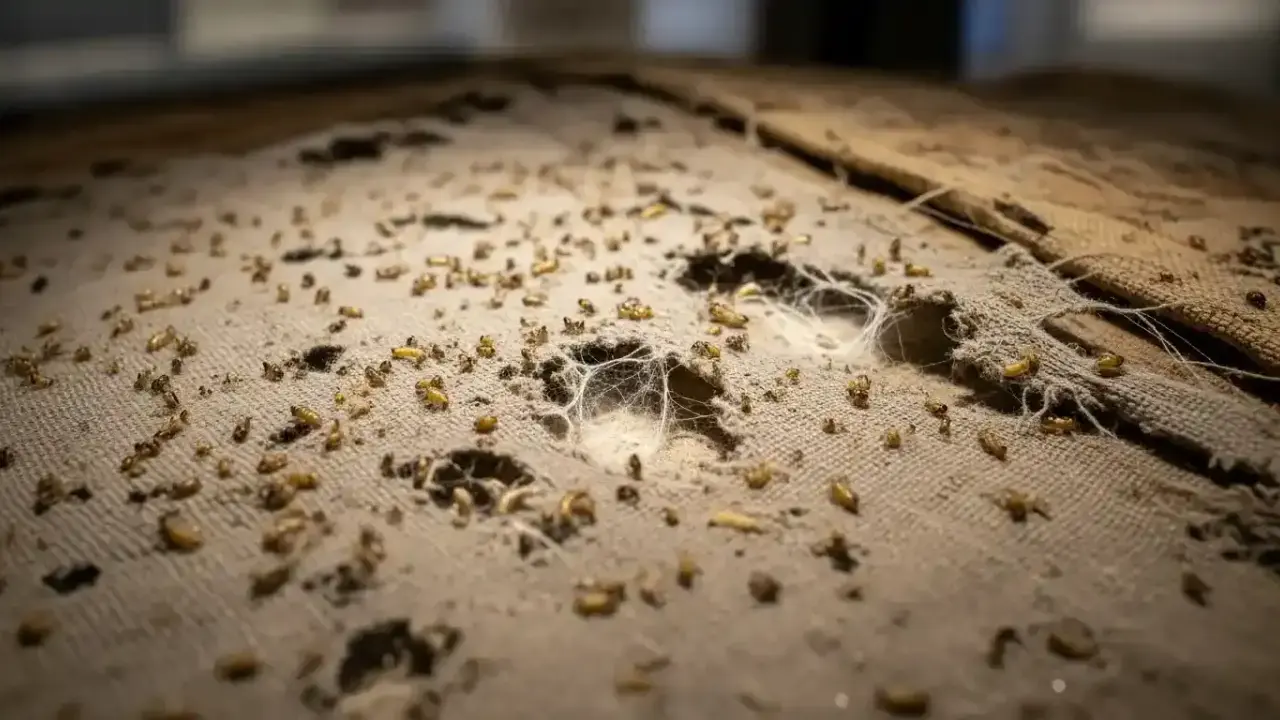
Fabric pests, also known as textile pests, include moths and many beetle species that feed on the natural protein keratin. This protein is found in any textile of animal origin including wool, silk, animal hair, leather, and feathers. It is the larvae of fabric pests that cause the visible damage, not the adults. Adult beetles feed only on nectar and pollen from flowering plants. If left untreated, fabric pests can cause irreplaceable damage to garments, textiles, and heritage collections.
What's Included
Why acting quickly matters
Fabric pest larvae feed undetected for weeks or months before damage becomes visible. A single clothes moth can lay up to 300 eggs, and larvae will feed on wool, silk, and cashmere continuously for up to 18 months. Early treatment prevents irreplaceable damage to garments, carpets, and heritage textiles.
Fabric pest damage to textiles?
Expert identification and treatment for carpet beetles, clothes moths, and other fabric pests. Chemical-free options available for heritage items.
Request a free call back
Prefer to get in touch another way? Contact us or email info@wynyardpestcontrol.co.uk
Related Services
Threat Assessment
Nuisance:
6/10MODERATEFabric pest damage is costly and often not discovered until significant harm has been done. Larvae feed in dark, undisturbed locations making early detection difficult without monitoring.
Hazard:
2/10LOWFabric pests do not bite or transmit disease. The risk is entirely financial. Damage to valuable artefacts, historic textiles, and cultural collections can be irreplaceable.
Vital Statistics
| Common species | Varied Carpet Beetle, Fur Beetle, Leather Beetle, Clothes Moth |
| Varied Carpet Beetle size | 2 to 3 mm (adult), 4 to 5 mm (larva) |
| Fur Beetle size | 4 to 6 mm (adult), up to 6 mm (larva) |
| Leather Beetle size | 6 to 10 mm |
| What causes damage | Larvae only. They digest keratin in natural fibres |
| Fibres at risk | Wool, silk, leather, fur, feathers, animal hair |
| Unusual items at risk | Piano felts, natural bristle brushes, woodwind instrument pads |
| Common source | Bird nests in eaves, soffits, and chimneys |
| Adult lifespan | 2 to 6 weeks (all species). Damaging larval stage: 9 months to 3 years |
Key Facts
- It is the larvae of fabric pests that cause the visible damage, not the adults. Adult beetles feed only on nectar and pollen from flowering plants
- Damage to valuable artefacts, historic textiles, and cultural collections can be irreplaceable. Keratin in natural fibres is the target protein
- Bird nests in eaves, soffits, and chimneys are a common source of fabric pest infestations. Fur beetle larvae commonly inhabit them
- Unusual items at risk include piano felts, natural bristle brushes, and woodwind instrument pads, especially when stored for long periods
Fabric Pest Damage to Textiles or Collections?
Do not let fabric pest larvae continue causing damage. Contact us for species identification and a tailored treatment plan. Chemical-free options available for heritage and museum collections.
Signs of Fabric Pest Infestation
Regular inspections and monitoring can help identify a problem early. Beetle larvae tend to concentrate damage in one main area of an object, whereas moth larvae create more scattered areas of damage across the item.
- Live or dead adult insects: Varied carpet beetles, fur beetles, or textile moths often found gathered around window openings, indicating an infestation
- Damage to natural fabrics: Carpets, tapestries, rugs, leather book bindings, upholstered furniture, silks, and feathered items. Also check pillows, mattresses, cushions, and furniture with traditional fillings such as feathers or horse hair
- Unusual items at risk: Brushes and paint brushes made with natural bristles, pads and felts in woodwind instruments (especially if stored for long periods)
- Faeces and shed skin: Carpet beetle larvae produce faecal pellets about the size of a salt grain and shed brown shell-like cast skins, concentrated in the source area
- Larvae (woolly bears): Carpet beetle larvae have alternate light and brown striped bodies covered with dense tufts of hair. They prefer dark, undisturbed locations
Common Fabric Pest Species
Varied Carpet Beetle (Anthrenus verbasci)
- 3 mm long, ladybird shape. Patterns of black, white, and yellow
- Larva 4 to 5 mm long, brown and hairy with spear-headed hairs
- Normally one generation per year. A common pest in museums and homes
Fur Beetle (Attagenus pellio)
- Adult 4 to 6 mm, elongate oval shape. Red-brown to black with a small white spot on each wing case
- Larva 6 mm long with long orange tufts of hair. A common inhabitant of bird nests
- Development may extend to three years depending on conditions. Larvae attack furs, skins, woollens, and stored grain
Leather Beetle (Dermestes maculatus)
- Also known as skin or hide beetle. Adult 6 to 10 mm, black upperside, white underside
- Scavenger feeding on skin, feathers, animal hair, and dried fish
- Lifecycle 2 to 3 months. Some species, known as bow bugs, infest violin cases and feed on bow hair
Treatment Options
Professional treatment targets all stages of a fabric pest's lifecycle. NPTA-qualified technicians have access to a range of specialised treatments:
- pH-neutral insecticide spray: Quickly reduces textile pests within infected areas without harming fabrics
- Heat pod treatment: Chemical-free treatment that eliminates all life stages by heating infected items to a controlled temperature for a set time period
- Controlled Atmosphere Technology (C.A.T): Uses inert gases such as nitrogen or carbon dioxide to create an anaerobic atmosphere in which fabric pests are eliminated. Does not leave any harmful residue or degrade delicate objects
- Proofing and prevention: Recommendations for ongoing protection of textiles and valuables
Fabric Pest Prevention
- Regular inspection: Monitor textiles, carpets, and stored items for early signs of damage
- Vacuum frequently: Especially under furniture and in undisturbed areas where larvae feed
- Clean before storing: Wash or dry clean items before long-term storage to remove sweat, oils, and food stains that attract pests
- Sealed storage: Store valuable textiles in sealed containers or garment bags
- Ventilation: Maintain good ventilation and reduce humidity in storage areas
- Check incoming items: Inspect items brought into the home or business for signs of infestation
- Bird nests: Be vigilant with items from bird nests, as fur beetles commonly inhabit them. Check loft spaces and eaves
Fabric Pest Control for Businesses
Museums, antique dealers, galleries, archives, and textile businesses are particularly at risk from fabric pest damage. Damage to valuable artefacts, historic textiles, and cultural collections can be irreplaceable. We provide fabric pest control for businesses across Darlington, Sunderland, and Durham.
- Free business site survey at a convenient time to assess the level of infestation
- Targeted treatment plan based on infestation level, specific pest species, and proofing requirements
- NPTA-qualified technicians regularly inspect premises using a range of textile and fabric pest monitors
- Chemical-free and pH-neutral treatments available for even the most delicate and precious items, including heat treatment as a chemical-free option
- Discreet treatment with minimum disruption to business operations
- Regular visit schedule tailored to infestation levels and treatment requirements
For museums and heritage collections, early intervention is critical. Fabric pests are closely related to clothes moths and carpet beetles. See how we work for details of our approach.
DIY vs Wynyard Pest Control
Vacuum along skirting boards, under heavy furniture, and behind radiators monthly. These dark, undisturbed areas are where fabric pest larvae feed undetected.
| DIY | Wynyard Pest Control | |
|---|---|---|
| Best for | Prevention in wardrobes | Active damage to fabrics or textiles |
| Pest identified | ✗ Moth vs beetle often confused | ✓ Professional ID determines treatment |
| Hidden damage found | ✗ Visible surfaces only | ✓ Full survey including underlay and voids |
| Pet and child safe | ⚠ Naphthalene and spray risks | ✓ Targeted, controlled application |
| Effectiveness | Deters adults only | Larvae and eggs eliminated |
| Follow-up visits | ✗ None | ✓ Included in programme |
| Guarantee | ✗ None | ✓ Elimination guarantee |
When DIY may be sufficient: Preventing fabric pest damage with regular vacuuming, cedar blocks in wardrobes, and storing infrequently worn woollens in sealed garment bags. Washing or dry cleaning items before long-term storage removes eggs and larvae.
When you need Wynyard Pest Control: If you are finding holes in clothing, bare patches on wool carpets, or shed larval cases along skirting boards, the infestation is active. Fabric pests feed in dark, undisturbed areas and cause significant damage before being noticed. Properties with period features, antique textiles, or large carpet areas across Hartlepool, Stockton, and Darlington should seek professional treatment early.
Seasonal Fabric Pest Activity in the North East
Hover or tap a month to see Fabric & Textile Pest activity details
Larvae overwintering in dark, undisturbed areas. Minimal adult activity.
Larvae continue feeding slowly in heated buildings. No adult emergence.
First adult carpet beetles emerging. Check windowsills for adults attracted to light.
Adult carpet beetles active outdoors feeding on pollen. Clothes moths beginning to emerge indoors.
Peak adult emergence. Carpet beetles and clothes moths laying eggs on natural fibres. Monitor with pheromone traps.
Peak egg-laying period. New larvae hatching and beginning to feed on textiles.
Maximum larval activity. Most fabric damage occurs during summer months. Inspect stored textiles.
Continued larval feeding. Second generation of adults possible in warm conditions.
Larval activity continuing. Pre-winter inspections recommended for vulnerable collections.
Adult activity declining. Larvae settling into overwintering positions.
Minimal adult activity. Larvae dormant or feeding slowly in warm harbourage.
Lowest activity. Overwintering larvae in carpets, upholstery, and stored textiles.
Fabric pests including carpet beetles and textile moths are most damaging between May and September when adults emerge and lay eggs on natural fibre materials. Larvae cause all the damage, feeding undetected in dark, undisturbed areas. Museums, galleries, and heritage collections are particularly vulnerable during the warmer months.
Heritage collections and valuable textiles should have pheromone monitoring in place before spring. Early detection prevents irreplaceable damage to artefacts, historic textiles, and cultural collections.
Spring (March to May) - Adults emerge and lay eggs: Carpet beetles, fur beetles, and other fabric pest adults emerge from pupae and seek out natural fibre materials to lay their eggs. Varied carpet beetles are attracted to flowers and enter buildings through open windows. Watch for: small round beetles (2 to 4mm) on windowsills and light fittings, cast larval skins near skirting boards and in wardrobes, and irregular holes appearing in woollen garments, carpets, and upholstery in homes across Hartlepool, Sunderland, and Durham.
Summer (June to August) - Peak breeding and larval feeding: Warm conditions accelerate egg hatching and larval development. Larvae of carpet beetles, fur beetles, and case-bearing clothes moths feed voraciously on keratin in wool, silk, fur, feathers, and animal-based materials. Museums and heritage properties face the highest risk during this period. Watch for: woolly bear larvae (hairy, slow-moving caterpillars) under furniture and behind skirting boards, bare patches on wool carpets and rugs, and damage to natural bristle brushes, taxidermy, and stored textiles.
Autumn (September to November) - Larvae continue feeding indoors: While adult beetle flights decrease, larvae that hatched in summer continue feeding in heated buildings. Centrally heated homes and commercial premises across Middlesbrough, Stockton, and Darlington provide warm enough conditions for year-round larval activity. Watch for: case-bearing moth larvae crawling on walls and ceilings, increasing damage to items stored in dark wardrobes and drawers, and bird nests in eaves and soffits acting as a source of infestation - fur beetle larvae commonly inhabit old nests.
Winter (December to February) - Slower but not dormant: In unheated areas, fabric pest larvae enter a resting phase and development slows. In heated homes and climate-controlled storage, feeding continues throughout winter. Watch for: ongoing damage to stored garments, carpets, and upholstered furniture. Winter is ideal for prevention: vacuum thoroughly behind furniture and along skirting boards, launder or dry-clean natural fibre garments before storing, remove old bird nests from eaves and soffits, and inspect loft insulation made from natural materials.
Our Fabric & Textile Pest Control Process
A structured, three-stage approach that treats the problem and prevents it returning.
Step 1
Inspect and Plan
A detailed property inspection identifies entry points, infestation hotspots, and the species involved. A targeted treatment plan is developed based on findings.
Step 2
Treatment
Professional control measures are applied using advanced techniques and CRRU-compliant products. Proofing and sealing work addresses the root cause at the same time.
Step 3
Ongoing Support
Follow-up visits confirm the problem is resolved. You receive clear documentation, prevention advice, and recommendations for ongoing protection.
Why Choose Us for Fabric & Textile Pest Control
Species Identification
We identify the exact species involved because different fabric pests require different control methods.
Heritage Expertise
We protect collections in museums, galleries, historic properties, and textile businesses using methods suited to irreplaceable items.
Chemical-Free Options
Heat pod treatment and Controlled Atmosphere Technology provide effective alternatives for sensitive items.
Monitoring Systems
Pheromone traps and fabric pest monitors provide ongoing surveillance and early warning of new activity.
NPTA Member
We are full members of the National Pest Technicians Association (NPTA). This means our technicians meet strict training and competency standards, carry appropriate insurance, and follow the association's code of practice. NPTA membership is your assurance that the work is carried out professionally and responsibly.
Fair, Transparent Pricing
Every job is different. The cost depends on the type of pest, scale of the problem, and what treatment is needed. We provide a free assessment and an honest quotation before any work begins. No hidden costs, no surprises.
View our pricing guideSatisfaction Guaranteed
All fabric pest treatments include follow-up monitoring. If activity persists after treatment, we will return and re-treat at no additional charge.
Frequently Asked Questions
Fabric pests are insects whose larvae feed on keratin, a natural protein found in textiles of animal origin such as wool, silk, leather, fur, feathers, and animal hair. Common fabric pests include carpet beetles (varied carpet beetle, fur beetle, leather beetle) and textile moths (clothes moth, case-bearing moth).
Look for damage to natural fabric items, live or dead beetles or moths near windows, faecal pellets the size of a salt grain, shed skins, and larvae hiding in dark undisturbed areas. Beetle larvae (woolly bears) have striped hairy bodies and are often found under furniture or in wardrobes.
Any item containing natural fibres of animal origin, including woollen carpets, rugs, tapestries, silk garments, leather book bindings, upholstered furniture with feather or horse hair fillings, furs, natural bristle brushes, and woodwind instrument pads and felts.
Clothes moths are one type of fabric pest. The term also includes several beetle species such as the varied carpet beetle, fur beetle, and leather beetle. All fabric pests share the ability for their larvae to digest keratin in natural fibres, but different species require different control methods.
Related Services
Our Other Services
Areas We Cover
We provide fabric & textile pest control services across the North East of England.
Ready to talk to us?
Free survey and quotation for businesses and homeowners. No obligation, no pressure.
We will get back to you as soon as we can.