
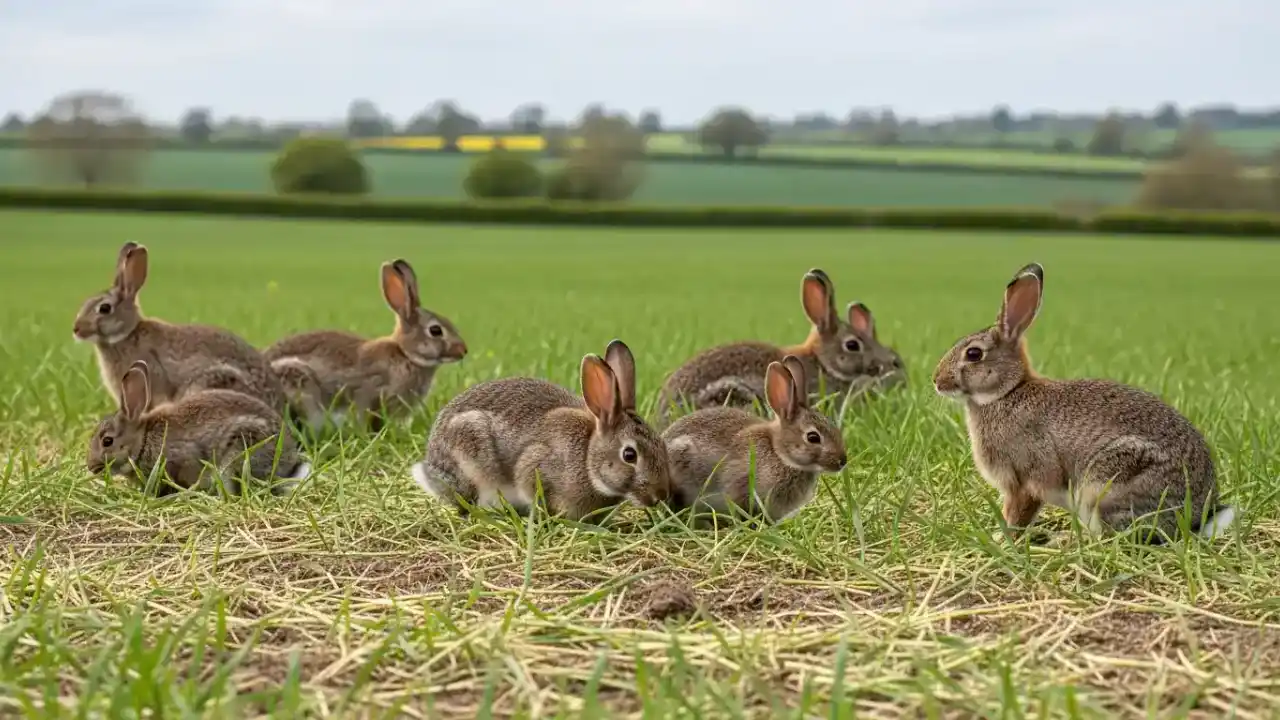
Rabbit Control
Professional rabbit management for farms, estates, gardens, and commercial land across the North East. Multiple control methods, crop protection, and scheduled programmes.
Why You Need Professional Rabbit Control
Rabbits cause an estimated 100 million pounds of damage to UK agriculture annually. A single rabbit eats approximately 500g of vegetation per day, and populations can grow rapidly with each doe producing up to 30 young per year. We provide professional rabbit management using a range of proven methods including ferreting, trapping, shooting, and fencing, tailored to the scale and type of damage you are experiencing.
What's Included
Why acting quickly matters
Rabbit populations grow rapidly. Each doe can produce up to 30 young per year, and offspring reach sexual maturity at just 3 to 4 months. A small rabbit presence in spring can become a major problem by summer. Early intervention with professional control prevents numbers from reaching levels where damage becomes severe and costly.
Rabbits damaging your crops, garden, or land?
Free survey and quotation. Professional management using proven methods for farms, estates, and gardens.
Request a free call back
Prefer to get in touch another way? Contact us or email info@wynyardpestcontrol.co.uk
Related Services
Threat Assessment
Nuisance:
8/10VERY HIGHRabbits cause extensive and costly damage to crops, gardens, young trees, sports grounds, and infrastructure. Their burrowing undermines banks, embankments, and foundations. Damage is concentrated along field margins, hedgerows, and boundaries but can extend across entire fields in severe cases.
Hazard:
4/10MODERATERabbits are vectors for myxomatosis and rabbit haemorrhagic disease (RHD), both of which cause significant mortality in wild rabbit populations. Rabbit burrows can create trip hazards on public land and damage to machinery. Droppings can contaminate grazing land. Occupiers of land have a legal obligation to control rabbits under the Pests Act 1954.
Vital Statistics
| Species | European rabbit (Oryctolagus cuniculus) |
| Body length | 38 to 50cm |
| Weight | 1.2 to 2kg |
| Colour | Grey-brown with a white cotton-ball tail |
| Lifespan | 1 to 2 years (wild), up to 9 years |
| Breeding season | January to August (peak March to May) |
| Litter size | 3 to 7 kittens, up to 5 litters per year |
| Gestation period | 28 to 31 days |
| Sexual maturity | 3 to 4 months |
| Daily food intake | Approximately 500g of vegetation |
| Estimated UK population | 40 to 45 million |
| Legal status | Classified as pest under Pests Act 1954 |
Key Facts
- Rabbits cause an estimated 100 million pounds of damage to UK agriculture annually through crop grazing, bark stripping, and burrowing.
- Occupiers of land have a legal obligation to control rabbits under the Pests Act 1954. Failure to do so can result in action by the local authority at the landowner's expense.
- A single doe can produce up to 30 young per year. Rabbit populations can double within a few months in favourable conditions.
- Rabbit burrows undermine banks, embankments, railway cuttings, and building foundations, creating structural risks and trip hazards.
- Young trees are particularly vulnerable to rabbit damage. Bark stripping around the base (ring-barking) kills the tree. Tree guards are essential for new plantings in rabbit areas.
- Rabbits were introduced to Britain by the Normans in the 12th century and are now found throughout the UK with an estimated population of 40 to 45 million.
- Myxomatosis, introduced in the 1950s, initially killed 99% of the UK rabbit population but the species has developed partial resistance. The disease still causes seasonal mortality.
- Rabbit droppings are round, dry pellets about 8 to 12mm in diameter. A single rabbit produces approximately 300 to 500 pellets per day.
- Rabbit-proof fencing, properly installed with buried mesh, is the most reliable long-term protection for gardens, crops, and young woodland plantations.
"Very friendly and good service staff!"
Lam Stephen · Google review, April 2026
Rabbit numbers getting out of control?
We assess the situation, recommend the right combination of methods, and implement a management plan that delivers results.
Rabbit Biology and Behaviour
Understanding rabbit biology explains why populations grow so quickly and why professional management is often necessary to prevent serious damage.
Breeding: Rabbits are among the most prolific breeders of any UK mammal. The breeding season runs from January to August, peaking in spring (March to May). A doe can produce 3 to 7 kittens per litter and have up to 5 litters per year. Under ideal conditions, a single doe can produce 30 or more young annually. Young rabbits reach sexual maturity at just 3 to 4 months, meaning the offspring of an early spring litter are breeding by midsummer.
Social behaviour: Rabbits live in social groups centred on a warren (burrow system). Dominant does hold the best burrow positions, closest to good feeding areas. Males establish a hierarchy through aggression and scent marking. The social structure means that removing individual rabbits without reducing the overall population has limited effect.
Feeding: Rabbits are herbivores that eat approximately 500g of vegetation per day. They graze selectively, preferring young, nutritious growth including cereal crops, vegetables, and the bark and shoots of young trees. Rabbits practise caecotrophy, re-ingesting their soft faecal pellets to extract maximum nutrition from their food.
Activity patterns: Rabbits are crepuscular, most active at dawn and dusk. They spend the majority of the day in their burrows, emerging to feed in late afternoon and early morning. On quiet, undisturbed land, they may feed throughout the day.
Signs of Rabbit Damage
Rabbit damage to crops is often concentrated along field margins nearest to hedgerows and woodland edges where rabbits shelter. Damage spreading deeper into the field indicates a growing population.
Recognising the signs of rabbit damage early allows you to act before populations grow and damage becomes extensive.
- Crop grazing: Clean-cut, angled bites on plant stems and leaves. Damage is typically concentrated along field margins near hedgerows, woodland, and other cover. As populations grow, damage extends deeper into the field.
- Bark stripping: Rabbits strip bark from the base of young trees and shrubs, particularly during winter when other food is scarce. Ring-barking (complete removal of bark around the circumference) kills the tree.
- Burrow systems (warrens): Multiple entrance holes (8 to 15cm diameter) with spoil heaps of excavated earth. Warrens can be extensive, with dozens of entrances connected by underground tunnels. Common locations include hedgerow banks, field margins, embankments, and beneath outbuildings.
- Droppings: Round, dry pellets about 8 to 12mm in diameter. Found in clusters, often near warren entrances and along feeding routes. A single rabbit produces 300 to 500 pellets per day.
- Grazing patterns: Closely cropped vegetation in a band around the warren entrance, extending outward as the population grows. The boundary between grazed and ungrazed vegetation can be surprisingly sharp.
- Scrapes: Shallow depressions in the soil where rabbits dig for roots or create latrine sites. Often found on prominent features like mounds and banks.
Agricultural Rabbit Management
Occupiers of land have a legal obligation to control rabbits under the Pests Act 1954. The most effective agricultural management combines active control with fencing and habitat management.
On agricultural land, rabbit management is not optional. The Pests Act 1954 places a duty on occupiers of land to control rabbit populations and prevent them from spreading to neighbouring land. We provide comprehensive agricultural rabbit management programmes.
Crop protection: Rabbit damage to winter wheat, oilseed rape, vegetable crops, and grassland can be significant. We assess the level of damage, the size and location of the rabbit population, and recommend a management plan that combines active control with preventative measures.
Woodland and tree protection: Young woodland plantations, orchard trees, and amenity plantings are vulnerable to rabbit browsing and bark stripping. Tree guards (spiral or mesh) protect individual trees. For larger plantings, rabbit-proof fencing around the boundary is more cost-effective.
Grassland management: On grazing land, rabbits compete directly with livestock for forage. A population of 7 to 10 rabbits consumes as much grass as one sheep. On horse paddocks and sports grounds, rabbit burrowing creates trip hazards and uneven surfaces.
For agricultural clients, we provide seasonal management programmes with scheduled visits during key periods (spring breeding season, autumn pre-winter). Regular management keeps populations at acceptable levels and prevents the rapid growth that leads to serious crop damage.
Rabbit Control Methods
Effective rabbit management typically uses a combination of methods, selected based on the site, the size of the population, and the level of damage. We assess each situation and recommend the most appropriate approach.
Ferreting: Ferrets are used to flush rabbits from their burrows into nets placed over the warren entrances. This is one of the most effective methods for clearing established warrens. Best carried out between November and February when vegetation cover is low and rabbits are concentrated in their burrows.
Long netting: Long, lightweight nets are set across fields or between a warren and feeding area at dusk, then rabbits are driven towards the net at dawn. Effective for open land and field margins.
Drop trapping: Live-capture traps placed over warren entrances or in rabbit runs. Traps are checked at least twice daily. Humane and effective for smaller populations and gardens.
Shooting: Targeted shooting at dawn and dusk using a rifle or shotgun. Effective for reducing numbers on larger areas and maintaining low populations after initial control. All shooting is carried out safely by trained operators with appropriate risk assessments.
Fencing: Rabbit-proof fencing is the most reliable long-term protection for gardens, crops, and woodland. Standard specification: galvanised wire mesh with 31mm mesh size, 1050mm above ground, with at least 150mm buried below ground and turned outward as an apron to prevent digging. Properly installed fencing can last 20 years or more.
DIY vs Wynyard Pest Control
| DIY | Wynyard Pest Control | |
|---|---|---|
| Best for | Small garden, a few rabbits | Agricultural land, large populations, serious damage |
| Population assessment | ✗ Guesswork | ✓ Professional survey and count |
| Control methods | Fencing only | Ferreting, netting, trapping, shooting, fencing |
| Warren management | ✗ Not possible | ✓ Full warren clearance and blocking |
| Ongoing management | ✗ Not practical | ✓ Scheduled seasonal programmes |
| Guarantee | ✗ None | ✓ Results guarantee |
For small gardens with a few visiting rabbits, installing rabbit-proof fencing is usually the most practical DIY solution. Standard galvanised wire mesh (31mm gauge) should be 1050mm above ground with 150mm buried and turned outward. This is effective and relatively straightforward to install.
When you need Wynyard Pest Control: If you have an established warren on your land, rabbit damage across a larger area, or a population that is growing despite your efforts, professional management is needed. DIY methods cannot replicate the effectiveness of ferreting, long netting, or coordinated shooting programmes, and they cannot address the warren itself.
For agricultural land, scheduled professional management is the most cost-effective approach. The cost of regular management is far less than the value of crops lost to uncontrolled rabbit damage.
Seasonal Rabbit Activity in the North East
Hover or tap a month to see Rabbit activity details
Breeding season begins. Does producing first litters. Bark stripping damage to trees at its worst.
Breeding underway. Young from first litters growing. Winter crop damage visible. Peak ferreting season.
Peak breeding period. Spring crops emerging and vulnerable. Grazing damage to cereals and grassland increasing.
Peak crop damage as spring growth coincides with peak breeding. Young rabbits appearing above ground.
Large numbers of young rabbits now active. Vegetable gardens and crops under maximum pressure. Population at seasonal peak.
Population near maximum. Continued crop and garden damage. Early-born young now breeding themselves.
Breeding slowing. Population at its highest for the year. Damage to crops and gardens continues.
Breeding season ending. Harvest period. Population beginning to decline from predation and disease.
Population declining naturally. Myxomatosis outbreaks common in autumn. New season crop damage begins.
Rabbits concentrated near warrens. Good period for population assessment and planning winter management.
Ideal period for ferreting and warren management. Low vegetation makes access and netting easier.
Peak ferreting season. Bark stripping of young trees begins. Early breeding activity starting in mild years.
Rabbit damage peaks from March to July when breeding activity coincides with spring and summer crop growth. Populations are at their highest from May to August. The most effective period for professional control (ferreting and warren management) is November to February when rabbits are concentrated in their burrows and low vegetation allows easier access.
The best time to manage rabbit populations is autumn and winter, before the spring breeding season. Book a survey now to plan your rabbit management programme for the year ahead.
Spring (March to May) - Breeding peak: Rabbit breeding reaches full intensity in spring, with does producing multiple litters of 3 to 7 kits per litter throughout the season. Damage to lawns, garden borders, crops, and young trees accelerates rapidly. New warren entrances appear in banks, hedgerows, and garden perimeters. This is the most critical period for agricultural and garden damage across the North East.
Summer (June to August) - Population peak: Rabbit populations reach their annual maximum by mid-summer, with up to 80% of the year's young born by August. Grazing damage to crops, pasture, and amenity grassland is at its highest. Rabbit damage costs UK agriculture an estimated £115 million per year, with much of this concentrated in the spring and summer months.
Autumn (September to November) - Harvest and transition: Rabbit damage to autumn-sown crops and newly planted hedgerow or woodland becomes a concern. Population numbers start to decline through natural mortality, disease (myxomatosis and RHD), and predation. This is the beginning of the most effective period for professional ferreting and warren management.
Winter (December to February) - Best control window: The most effective period for professional rabbit control. Vegetation is low, warrens are clearly visible, and ferreting is most productive when rabbit numbers are concentrated in fewer active warrens. Rabbit-proof fencing installation is also most practical during winter when ground conditions and visibility favour construction work.
Why Choose Us for Rabbit Control
Multiple Methods
We use the right combination of control methods (ferreting, netting, trapping, shooting, fencing) for each situation and location.
Agricultural Experience
Extensive experience managing rabbit populations on farmland, estates, horticultural sites, and mixed-use land across the North East.
Fencing Expertise
Expert guidance on rabbit-proof fencing specification, installation, and maintenance for gardens, crops, and new woodland plantings.
Large-Area Coverage
We manage rabbit populations across large sites, multiple fields, and whole estates. Coordinated management across boundaries delivers better results.
Scheduled Programmes
For agricultural and commercial clients, we provide seasonal management programmes with scheduled visits timed to key periods in the farming calendar.
Results-Focused
We target the population causing damage, monitor the outcome, and carry out follow-up control until the problem is at an acceptable level.
Rabbit-Proof Fencing
Properly installed rabbit-proof fencing is the most reliable long-term protection for gardens, crops, and new tree plantings. It can last 20 years or more with minimal maintenance.
Rabbit-proof fencing is the single most effective long-term measure for protecting valuable crops, gardens, and young woodland from rabbit damage. We advise on specification, installation, and maintenance.
Standard specification:
- Galvanised wire mesh with a maximum mesh size of 31mm x 31mm
- Height: 1050mm above ground level
- Buried depth: at least 150mm below ground, turned outward at a 90-degree angle for a further 150mm to form an underground apron
- Posts: treated wooden stakes at 3-metre intervals, with straining posts at corners and changes of direction
- Top wire: a single strand of plain wire along the top of the fence for additional tension
Gates: Any gates in the fence line must be fitted with the same mesh specification and have minimal clearance at the base (no more than 25mm). Self-closing mechanisms prevent gates being left open accidentally.
Maintenance: Inspect fencing regularly for damage, particularly after high winds, heavy rain, and flooding. Check for digging attempts along the base. Repair any gaps immediately as rabbits will find and exploit even small openings.
Electric fencing: For temporary protection (crops during the growing season, new plantings), electric rabbit netting provides effective, portable protection. The netting is electrified by a battery or mains-powered energiser and delivers a deterrent shock on contact.
Rabbit Prevention and Garden Protection
For homeowners, protecting gardens from rabbit damage combines physical barriers with planting choices and garden management.
Physical barriers:
- Rabbit-proof fencing around the entire garden or around specific vulnerable areas (vegetable plots, flower borders, young trees)
- Tree guards: spiral or mesh guards around the base of young trees and shrubs. Ensure guards extend high enough (at least 600mm) to prevent bark stripping when snow raises the ground level
- Netting over vegetable beds and fruit cages during the growing season
Planting choices: Some plants are naturally less attractive to rabbits, though no plant is completely rabbit-proof. Plants that rabbits tend to avoid include lavender, rosemary, box, daffodils, foxglove, aquilegia, and most ornamental grasses. Plants they frequently damage include lettuce, beans, peas, brassicas, tulips, roses, and most young soft-stemmed plants.
Garden management:
- Clear dense ground cover near boundaries where rabbits shelter before entering the garden
- Block gaps under gates, fences, and hedges where rabbits squeeze through
- Remove fallen fruit and vegetable waste that attracts rabbits into the garden
For gardens bordering farmland, woodland, or open countryside, ongoing rabbit pressure is likely. Combining physical barriers with professional management of the wider rabbit population is the most effective approach.
Legal Requirements for Rabbit Control
Rabbit control in the UK is governed by specific legislation that places obligations on landowners and defines permitted control methods.
Pests Act 1954: Occupiers of land have a legal duty to control rabbits and prevent them from spreading to neighbouring land. If a landowner fails to control rabbits, the local authority can serve a notice requiring action and, if necessary, carry out control work at the landowner's expense.
Permitted methods:
- Ferreting (using ferrets to flush rabbits from burrows)
- Long netting and drop trapping
- Shooting (with appropriate firearms and risk assessment)
- Fencing (rabbit-proof fencing to protect vulnerable areas)
- Gassing (aluminium phosphide, restricted to trained professionals with BASIS accreditation)
Prohibited methods:
- Spring traps set in the open (spring traps must be set in tunnel devices)
- Self-locking snares
- Poisoning (except by authorised gassing)
Ground Nesting Birds (Oryctolagus) Order: Rabbit control may be restricted during the bird nesting season (March to August) on certain sites where ground-nesting birds are present. Professional advice should be sought before carrying out rabbit management on sites with conservation designations.
Myxomatosis and Rabbit Haemorrhagic Disease
Two viral diseases cause significant mortality in wild rabbit populations. Understanding these diseases helps you assess the health of rabbit populations on your land and the timing of management operations.
Myxomatosis: Introduced to the UK in 1953, myxomatosis initially killed an estimated 99% of the UK rabbit population. The virus is spread by rabbit fleas and mosquitoes. Symptoms include swelling of the eyes, nose, and genitals, followed by skin tumours and secondary infections. Death usually occurs within 10 to 14 days. UK rabbits have developed partial genetic resistance, and mortality rates are now lower, but the disease still causes significant seasonal die-offs, particularly in autumn. Myxomatosis does not affect humans, pets, or livestock.
Rabbit Haemorrhagic Disease (RHD): A highly contagious and rapidly fatal viral disease. RHD1 arrived in the UK in 1992, and the newer variant RHD2 was identified in 2010. RHD2 is particularly concerning as it can affect young rabbits (previously resistant to RHD1) and is harder to detect. Death can occur within 24 to 72 hours, often with few visible symptoms. RHD does not affect humans or livestock but is devastating to rabbit populations.
Impact on management: Disease outbreaks can temporarily reduce rabbit numbers, but populations recover quickly due to their high breeding rate. Disease should not be relied upon as a substitute for active management. Following an outbreak, the reduced competition for food can actually lead to faster population recovery as surviving rabbits breed more successfully.
Domestic rabbits: Pet rabbits can be vaccinated against both myxomatosis and RHD. If you keep domestic rabbits in an area with wild rabbit populations, vaccination is strongly recommended.
Our Rabbit Control Process
A structured, three-stage approach that treats the problem and prevents it returning.
Step 1
Inspect and Plan
A detailed property inspection identifies entry points, infestation hotspots, and the species involved. A targeted treatment plan is developed based on findings.
Step 2
Treatment
Professional control measures are applied using advanced techniques and CRRU-compliant products. Proofing and sealing work addresses the root cause at the same time.
Step 3
Ongoing Support
Follow-up visits confirm the problem is resolved. You receive clear documentation, prevention advice, and recommendations for ongoing protection.
Rabbit numbers getting out of control?
We assess the situation, recommend the right combination of methods, and implement a management plan that delivers results.
What to Expect from a Rabbit Management Visit
Our rabbit management service begins with a thorough assessment of the problem, the population size, and the most appropriate methods for your situation.
- Site survey: We walk the site to assess the extent of rabbit activity, locate warrens, identify feeding patterns, and estimate the population size. We note the type of damage (crop, garden, tree, infrastructure) and its severity.
- Management plan: Based on the survey, we recommend a combination of control methods suited to the site. For larger areas, this may involve a phased approach starting with warren management, followed by population reduction, and then ongoing monitoring.
- Implementation: Control methods are implemented at the appropriate time of year for maximum effectiveness. Ferreting is most effective in winter when rabbits are concentrated in warrens. Shooting is carried out at dawn and dusk when rabbits are most active. Fencing can be installed at any time.
- Monitoring: We monitor rabbit activity after the initial management phase and carry out follow-up control as needed. For agricultural clients on contract, scheduled visits are timed to coincide with key periods in the farming calendar.
- Reporting: You receive a clear report covering the survey findings, the methods used, the results achieved, and recommendations for ongoing management or prevention.

NPTA Member
We are full members of the National Pest Technicians Association (NPTA). This means our technicians meet strict training and competency standards, carry appropriate insurance, and follow the association's code of practice. NPTA membership is your assurance that the work is carried out professionally and responsibly.
Fair, Transparent Pricing
Every job is different. The cost depends on the type of pest, scale of the problem, and what treatment is needed. We provide a free assessment and an honest quotation before any work begins. No hidden costs, no surprises.
View our pricing guideSatisfaction Guaranteed
Our rabbit management service targets the population causing damage on your land. If rabbit activity in the treated area returns to problem levels within the agreed service period, we will revisit and carry out further management at no extra cost. For agricultural clients on contract, our programmes include scheduled visits and monitoring.
Frequently Asked Questions
Rabbits cause an estimated 100 million pounds of damage to UK agriculture annually. A single rabbit eats approximately 500g of vegetation per day. They damage crops, bark-strip young trees, undermine banks and foundations with their burrows, and can make sports grounds and gardens unusable. Seven to ten rabbits consume as much grass as one sheep.
Yes. Rabbits are classified as pests under the Pests Act 1954, and occupiers of land have a legal obligation to control them. Various methods are legally permitted, and we ensure all control is carried out humanely and lawfully. Some methods (gassing with aluminium phosphide) are restricted to trained, accredited professionals.
Properly installed rabbit-proof fencing is highly effective and can last 20 years or more, but it must be maintained. Rabbits can exploit small gaps, and ground movement, flooding, or tree fall can create access points. We advise on fencing specification that minimises maintenance and maximises longevity.
The most effective period for active control (ferreting, warren management, shooting) is November to February when rabbits are concentrated in their burrows and vegetation cover is low. However, management can be carried out year-round. Fencing can be installed at any time. We recommend planning your annual programme in autumn for the best results.
Yes. For agricultural land, estates, and commercial properties with ongoing rabbit pressure, we provide scheduled management contracts with visits timed to key periods (pre-breeding in winter, crop emergence in spring, post-harvest assessment). Regular management is more cost-effective than reactive treatment.
For a small garden, installing rabbit-proof fencing is usually the most practical DIY approach. For larger areas or established warrens, professional management is needed. Ferreting, long netting, and warren gassing require specialist equipment, training, and (for gassing) professional accreditation. We are happy to advise on whether your situation warrants professional management.
Rabbit populations can recover quickly due to their high breeding rate. A doe can produce up to 30 young per year, and offspring reach sexual maturity at 3 to 4 months. This is why ongoing management is usually more effective than a one-off reduction. Combining active control with fencing and habitat management provides the most lasting results.
Yes. Rabbit management is most effective when coordinated across neighbouring properties. Rabbits do not respect boundaries, and controlling them on one property while leaving them unmanaged on adjacent land limits the long-term benefit. We can help coordinate management across multiple landholdings for better results.
Related Services
Our Other Services
Areas We Cover
We provide rabbit control services across the North East of England.
Ready to talk to us?
Free survey and quotation for businesses and homeowners. No obligation, no pressure.
We will get back to you as soon as we can.