
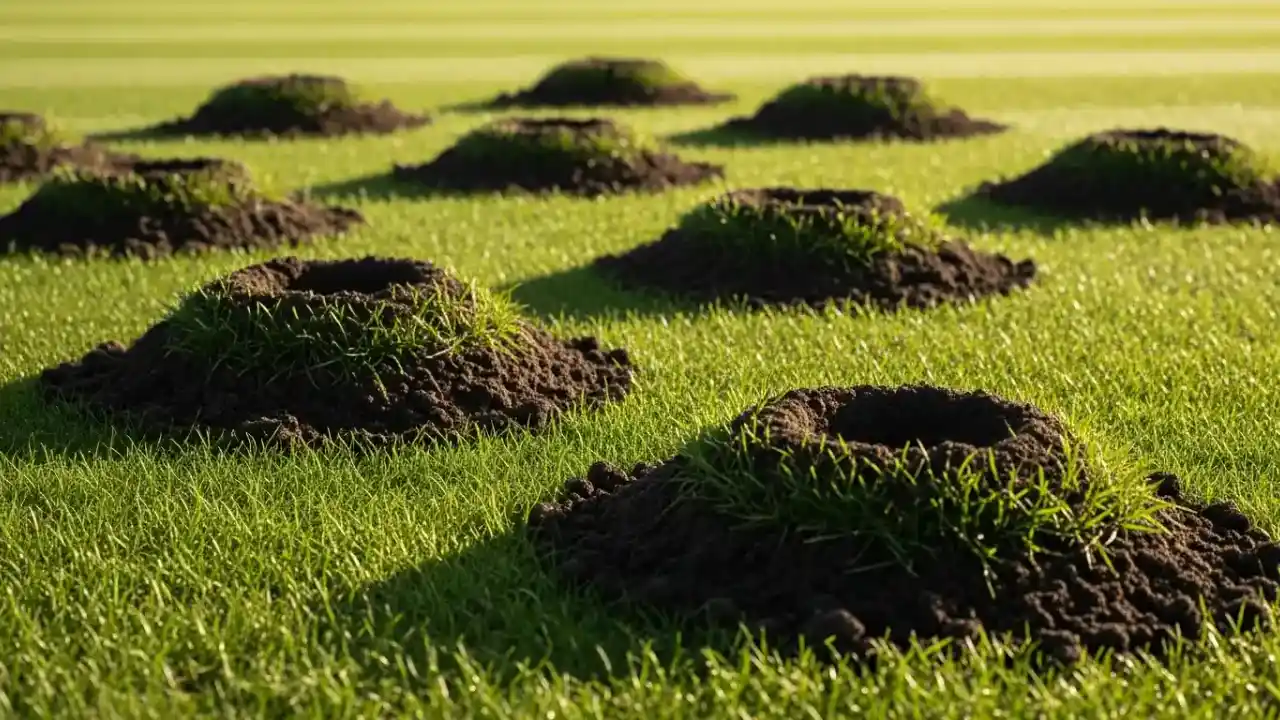
Mole Control
Professional mole catching and trapping for gardens, sports grounds, and farmland across the North East. NPTA member, traditional and modern techniques.
Why You Need Professional Mole Control
Mole damage to lawns, sports pitches, and agricultural land is a persistent problem across the North East. A single mole can produce dozens of molehills and tunnel across hundreds of square metres, undermining root systems, contaminating silage, and ruining playing surfaces. Our experienced mole catchers use traditional trapping methods, the most effective and humane form of mole control, to resolve the problem quickly and prevent further damage.
What's Included
Why acting quickly matters
Mole tunnel networks expand rapidly. A mole can extend its tunnel system by up to 4 metres per hour in suitable soil, and established networks are much harder to manage than early-stage activity. If you are seeing new molehills appearing, acting quickly limits the damage and reduces the time needed to resolve the problem.
Moles damaging your lawn or grounds?
Rapid response trapping across the North East. Free survey and quotation for domestic and commercial clients.
Request a free call back
Prefer to get in touch another way? Contact us or email info@wynyardpestcontrol.co.uk
Related Services
Threat Assessment
Nuisance:
7/10HIGHMoles cause extensive damage to lawns, sports grounds, golf courses, and agricultural land. Molehills ruin playing surfaces, contaminate silage with soil, undermine root systems, and create trip hazards on amenity land. Even a single mole can damage a large area in a short period.
Hazard:
3/10LOWMoles pose a low direct health risk to humans. The main hazards are trip risks from molehills and surface tunnels on public amenity land, sports pitches, and equestrian properties. Soil contamination of silage and hay crops from molehill earth can introduce Listeria bacteria, posing a risk to livestock.
Vital Statistics
| Species | European mole (Talpa europaea) |
| Body length | 14 to 16cm |
| Weight | 75 to 130g |
| Colour | Dark grey to black velvety fur |
| Lifespan | Typically 3 to 5 years |
| Litter size | 3 to 4 young, one litter per year |
| Breeding season | February to June, young born March to May |
| Diet | Earthworms (80%), insect larvae, slugs, leather jackets |
| Daily food intake | 50 to 100% of body weight per day |
| Tunnelling speed | Up to 4 metres per hour in suitable soil |
| Territory | 100 to 1,000 square metres per mole |
| Legal status | Not protected, professional control permitted |
Key Facts
- A single mole can create 20 to 30 new molehills per week during peak activity in spring. One mole can produce over 100 molehills in a season.
- Molehill soil in silage or hay can introduce Listeria bacteria, a serious risk to cattle and sheep. Agricultural mole control protects livestock health.
- Mole tunnels undermine root systems, causing grass and plants to die off. On sports pitches and golf courses, this creates uneven surfaces and safety risks.
- Surface tunnels create trip hazards on public amenity land, sports grounds, and equestrian properties, creating potential liability for landowners.
- Moles are solitary and territorial. A large number of molehills across a garden or field is often the work of just one or two moles.
- Moles eat up to 100% of their body weight daily and will starve within 12 to 24 hours without food. This high metabolic rate drives constant tunnelling.
- Traditional spring-loaded traps remain the most effective and humane method of mole control. Poison baits, sonic devices, and home remedies are far less reliable.
- Moles are active year-round but cause the most visible surface damage in spring and autumn when the soil is soft and wet enough for surface tunnelling.
- Mole fur has no natural direction or nap, allowing the animal to move forwards and backwards through tunnels with equal ease.
"Very friendly and good service staff!"
Lam Stephen · Google review, April 2026
Seeing new molehills?
Act early before tunnel networks expand. Free survey and quotation for gardens, sports grounds, and farmland.
European Mole Biology
The European mole (Talpa europaea) is the only mole species found in the UK. It is a small, powerful burrowing mammal perfectly adapted to a subterranean lifestyle. Understanding mole biology helps explain why they cause so much damage and why professional trapping is the most effective control method.
Physical characteristics: Moles grow to 14 to 16cm in body length with a short tail of 2 to 4cm. They weigh between 75 and 130g, with males typically heavier than females. Their dark grey to black fur is velvety and has no natural direction, allowing the animal to move forwards and backwards through tunnels with equal ease. Their front paws are large, broad, and turned outward, acting as powerful shovels for excavating soil.
Senses: Moles have tiny, almost non-functional eyes and no external ears. They rely on touch and vibration to navigate and locate prey. The snout is covered in sensitive nerve endings called Eimer's organs that detect the movement of earthworms and larvae in the surrounding soil.
Metabolism: Moles have an exceptionally high metabolic rate and must eat frequently, consuming 50 to 100% of their body weight in food every day. They cannot survive more than 12 to 24 hours without eating. This drives their constant tunnelling activity as they search for prey.
Signs of Mole Activity
A large number of molehills across a garden or field is often the work of just one or two moles. Moles are solitary and defend large territories.
Identifying mole activity early allows for faster, more effective trapping before tunnel networks become extensive.
- Molehills: The most obvious sign. Mounds of excavated soil pushed up from below, typically 15 to 30cm across and 10 to 20cm high. Fresh molehills are made of dark, moist soil. As they dry, they become lighter in colour and can be distinguished from older hills.
- Surface tunnels: Raised ridges visible across the lawn or field surface. These are shallow feeding tunnels close to the surface where moles hunt for earthworms. They are often most visible after rain when moles move closer to the surface.
- Subsidence lines: Sunken lines or channels where surface tunnels have collapsed, creating uneven ground. This is particularly problematic on sports pitches and golf courses.
- Dead patches: Areas of grass that have turned brown or died off where tunnelling has severed root systems. This is most visible in dry weather when grass cannot recover from root damage.
- Disturbed soil near foundations: Moles sometimes tunnel alongside building foundations, garden walls, and paved areas where the soil-to-structure interface provides easy digging.
If you are seeing fresh molehills appearing regularly, the mole is actively extending its tunnel system. This is the best time to arrange trapping, as the mole is moving through its tunnels frequently and is more likely to encounter a well-placed trap. Contact us for a free assessment.
Mole Tunnel Systems
Understanding how moles construct and use their tunnel systems is key to effective trapping. There are two distinct types of mole tunnel:
Deep permanent tunnels: These run 30 to 60cm below the surface and form the main network that the mole uses repeatedly. They connect the nest to feeding areas and are maintained year-round. Deep tunnels rarely produce molehills after initial construction. They are the primary travel routes and the most productive locations for trap placement.
Shallow feeding tunnels: These run just below the surface and are the tunnels that cause visible ridges across lawns and fields. Moles use them to hunt for earthworms and insect larvae close to the surface. Many shallow tunnels are used only once or twice and then abandoned, which is why placing traps in shallow runs can be less reliable. Experienced mole catchers can distinguish active shallow runs from abandoned ones by their condition and location.
The nest: The nest is a larger underground chamber lined with dry grass and leaves, usually located under a particularly large molehill (a fortress mole). Nests are typically found at the edge of the territory, often under a hedge, wall, or building foundation where the ground provides insulation and protection.
Professional mole catchers identify the most active deep runs through a combination of experience, ground reading, and testing techniques. Setting traps in the right tunnel is the single most important factor in successful mole control.
Mole Damage to Lawns and Gardens
Even a single mole can ruin a well-maintained lawn in a matter of weeks. Early trapping limits the damage and prevents tunnel networks from expanding.
For homeowners, mole damage to lawns and gardens is the most common reason for calling a professional mole catcher. The damage moles cause includes:
- Molehills on lawns: Mounds of excavated soil that spoil the appearance of the lawn, smother grass, and introduce weed seeds from deeper soil layers to the surface.
- Root damage: Tunnelling severs grass roots, causing brown patches that can take weeks to recover. In dry weather, damaged areas may not recover at all without reseeding.
- Uneven surfaces: Surface tunnels and collapsed runs create bumps and dips that make mowing difficult and create trip hazards.
- Flower bed and border damage: Moles tunnel through borders and raised beds, disturbing bulbs, root systems, and seedlings.
- Path and patio undermining: Extensive tunnelling alongside paths, patios, and retaining walls can cause subsidence and cracking.
For domestic gardens, a single mole is usually responsible for all the damage. Once removed, the territory may remain vacant for weeks or months before another mole moves in from surrounding land. For gardens bordering open countryside, ongoing seasonal management may be needed.
Mole Damage to Sports Grounds and Amenity Land
Mole damage on sports pitches, golf courses, and equestrian properties creates safety risks and potential liability for landowners and operators.
Mole damage on sports grounds, golf courses, cricket pitches, bowling greens, and equestrian properties is a serious operational and safety issue.
Safety risks: Molehills and collapsed tunnels create uneven surfaces that increase the risk of ankle injuries, falls, and horse stumbles. On public amenity land, landowners and operators have a duty of care to maintain safe surfaces. Mole damage that causes injury can result in liability claims.
Playing surface quality: Golf courses, cricket squares, bowling greens, and football pitches require level, well-maintained turf. Even a small number of molehills can make a surface unplayable and trigger costly remedial work including relevelling, reseeding, and topdressing.
Equestrian properties: Mole activity in paddocks, schooling arenas, and cross-country courses creates hazards for horses and riders. Collapsed tunnels can cause horses to stumble, and uneven ground increases the risk of tendon injuries.
We provide scheduled mole management programmes for sports grounds, golf courses, and amenity land managers. Regular trapping visits during spring and autumn, when mole activity peaks, keep damage to a minimum and maintain playing surfaces to the required standard.
Seasonal Mole Activity in the North East
Hover or tap a month to see Mole activity details
Moles active in deep tunnels. Less surface evidence. Tunnelling continues below frost line.
Breeding season begins. Males tunnel actively to find mates. New molehills appear as territory expands.
Peak molehill activity. Breeding tunnels extensive. Soil conditions ideal for tunnelling after winter rain.
Young born in underground nests. Males continue expanding tunnel systems. Most visible surface damage.
Young moles developing underground. Continued tunnelling activity. Spring lawn damage most apparent.
Young moles disperse to establish own territories. New tunnel systems created. Breeding season ends.
Established territories maintained. Deeper tunnelling as soil dries. Less surface evidence in dry conditions.
Continued deep tunnelling. Earthworm activity lower in dry soil. Moles follow worms to deeper, moist layers.
Autumn rain softens soil. Surface tunnelling resumes. New molehills appear after summer lull.
Increased surface activity as soil moisture rises. Earthworm populations recover. New molehill clusters appear.
Activity continues as ground remains soft. Moles building food stores of earthworms for winter.
Moles remain active year-round. Deeper tunnelling as ground cools. Less surface evidence.
Moles are active year-round but cause the most visible damage in spring and autumn when soil conditions favour surface tunnelling. The breeding season runs from February to June, with peak molehill activity in March and April. Summer brings a lull in surface evidence as moles tunnel deeper in dry soil, but activity resumes with autumn rain.
Spring is the peak period for mole damage. Book a trapping visit early in the season before tunnel networks expand and damage spreads across the lawn or grounds.
Spring (March to May) - Peak damage period: Mole activity is at its most visible during spring. The breeding season runs from February to June, with males tunnelling extensively to find mates. Young moles disperse from the maternal territory in March and April, creating new tunnel networks that throw up fresh molehills across lawns, sports pitches, and agricultural land. Properties in Darlington, Stockton, and Durham with clay-rich soils are particularly affected.
Summer (June to August) - Reduced surface evidence: As soil dries out in summer, moles tunnel deeper to follow their earthworm food source. Surface molehill production drops significantly, leading many property owners to assume the moles have gone. In reality, the tunnel system remains active below ground. This lull can be deceptive - moles are still present but working at greater depth.
Autumn (September to November) - Activity resumes: Autumn rain softens the soil and brings earthworms closer to the surface, triggering a second peak in mole activity. New molehills appear rapidly as moles expand their tunnel systems in the newly workable ground. This is one of the most effective periods for trapping, as moles use their tunnels intensively.
Winter (December to February) - Steady activity: Moles remain active year-round as they do not hibernate. Winter tunnel activity continues, particularly in well-drained and south-facing areas where soil is softer. Males begin expanding their territory in late winter ahead of the breeding season, and fresh molehills may appear in previously unaffected areas.
Why Choose Us for Mole Control
Experienced Mole Catchers
Our team has extensive practical experience in traditional mole trapping methods. We read the ground, identify active runs, and place traps where they are most effective.
All Land Types
We work on domestic gardens, sports grounds, golf courses, bowling greens, equestrian properties, and agricultural land across the North East.
Rapid Response
We can usually attend within 24 to 48 hours of your initial contact. Early trapping limits damage and prevents tunnel networks from expanding.
Results-Focused
Traditional trapping remains the most reliable and humane mole control method. We monitor traps regularly and stay on-site until the problem is resolved.
No-Catch-No-Fee
We offer no-catch-no-fee options for domestic mole trapping. You only pay when we deliver results.
Ongoing Management
For sports grounds, golf courses, and agricultural clients, we provide scheduled seasonal management programmes to keep mole activity under control.
Agricultural Mole Management
Mole activity on agricultural land creates specific problems that affect crop quality, livestock health, and land management.
Silage and hay contamination: Molehill soil mixed into silage or hay during harvesting introduces soil bacteria, including Listeria monocytogenes, which can cause listeriosis in cattle and sheep. This is a serious livestock health issue. Mole control on grassland used for silage and hay production is a direct animal welfare measure.
Crop damage: On arable land, moles disrupt root systems and can cause uneven seed germination. Molehill soil smothers young crops and creates areas where weeds establish more easily.
Machinery damage: Large molehills and collapsed tunnel systems can damage mowing equipment, combine headers, and silage harvesting machinery. Stone contamination from deeper soil layers brought to the surface by moles increases the risk of damage to cutting blades.
Land drainage: Mole tunnels can interfere with field drainage systems, particularly older clay pipe drains. Tunnelling alongside or through drain runs can cause blockages and localised waterlogging.
For agricultural clients, we provide seasonal trapping programmes timed to coincide with peak mole activity in spring and autumn. Regular management keeps mole populations at acceptable levels and reduces the impact on crop quality and livestock health.
DIY vs Wynyard Pest Control
| DIY | Wynyard Pest Control | |
|---|---|---|
| Best for | Very small garden, single molehill | Established tunnel systems, multiple molehills |
| Trap placement | ✗ Guesswork without experience | ✓ Placed in confirmed active runs |
| Tunnel identification | ✗ Difficult without training | ✓ Active vs abandoned runs identified |
| Success rate | Low without experience | High with professional trap setting |
| Follow-up | ✗ None | ✓ Regular checks until resolved |
| Guarantee | ✗ None | ✓ Results guarantee |
Many homeowners try DIY mole control before calling a professional. Common approaches include sonic mole repellers, castor oil granules, mothballs, garlic, and shop-bought traps. In practice, the effectiveness of these methods varies considerably.
Sonic repellers: Battery or solar-powered devices that emit vibrations into the soil. While moles may avoid the immediate area around the device temporarily, they typically redirect their tunnelling rather than leaving. Multiple devices would be needed to cover a garden, and moles often habituate to the vibration within days.
Castor oil and home remedies: Castor oil granules, garlic, mothballs, and other scent-based deterrents have no scientifically proven effectiveness against moles. At best, they may provide very short-term displacement.
Shop-bought traps: Spring-loaded scissor traps and barrel traps are available from garden centres. These can work, but success depends entirely on correct placement in an active tunnel run. Without the ability to distinguish active from abandoned tunnels and deep runs from shallow feeding tunnels, most DIY trap placements miss the target.
When you need Wynyard Pest Control: If you have multiple molehills, expanding tunnel networks, or mole damage across lawns, borders, or larger grounds, professional trapping is by far the most reliable solution. Our experienced mole catchers read the ground, identify active deep runs, and place traps where they are most likely to intercept the mole. Most moles are caught within one to five days of traps being set correctly.
Mole Trapping Methods
Traditional spring-loaded traps set in active deep runs remain the most effective and humane method of mole control, with a high success rate when set by an experienced catcher.
Professional mole control relies on several types of trap, each suited to different tunnel configurations and ground conditions.
Duffus traps: The most widely used professional mole trap in the UK. A powerful spring-loaded scissor trap that is placed in a deep permanent tunnel run. When the mole passes through the tunnel, it triggers the trap mechanism and is killed instantly. Duffus traps are effective, humane, and reusable.
Talpex traps: A barrel-style trap that sits within the tunnel bore. The mole enters the trap from either direction and triggers a powerful spring mechanism. Talpex traps are particularly useful in heavier clay soils and can be set in both deep and surface runs.
Half-barrel traps: A simpler design that sits in a shallow surface run. Less powerful than Duffus or Talpex traps but useful for catching moles in shallow feeding tunnels near the surface.
All traps used by our mole catchers are set to kill quickly and humanely. Traps are checked at regular intervals, typically every 24 to 48 hours, and moles are removed promptly. We do not use poison baits or gas cartridges for mole control. Traditional trapping is safer, more effective, and avoids any risk to non-target wildlife, pets, or children.
Mole Prevention Advice
Preventing moles from establishing in a new area is difficult because they live underground and travel through existing tunnel networks in surrounding land. However, some measures can reduce the impact of mole activity:
- Lawn management: Keeping grass short and well-maintained does not prevent moles, but it makes molehills more visible so you can act quickly when new activity appears.
- Gravel and stone barriers: A vertical barrier of compacted gravel or stone around a small garden area can deter moles from tunnelling into it, though this is expensive and impractical for larger areas.
- Mesh installation: Heavy-duty galvanised wire mesh laid horizontally beneath the turf at a depth of around 10cm can prevent moles from pushing soil to the surface. This is sometimes used on high-value bowling greens and cricket squares but is not practical for general use.
- Drainage improvement: Well-drained soil is less attractive to earthworms, which may slightly reduce mole activity. However, this effect is marginal and not a reliable prevention method.
For most properties, the most practical approach is rapid professional trapping when new mole activity appears, combined with monitoring to catch any new arrivals before they establish extensive tunnel systems.
Our Mole Control Process
A structured, three-stage approach that treats the problem and prevents it returning.
Step 1
Inspect and Plan
A detailed property inspection identifies entry points, infestation hotspots, and the species involved. A targeted treatment plan is developed based on findings.
Step 2
Treatment
Professional control measures are applied using advanced techniques and CRRU-compliant products. Proofing and sealing work addresses the root cause at the same time.
Step 3
Ongoing Support
Follow-up visits confirm the problem is resolved. You receive clear documentation, prevention advice, and recommendations for ongoing protection.
Seeing new molehills?
Act early before tunnel networks expand. Free survey and quotation for gardens, sports grounds, and farmland.
What to Expect from a Mole Trapping Visit
Most moles are caught within one to five days of traps being set in active tunnel runs. Our catchers check traps regularly and remove moles promptly.
Knowing what to expect from a professional mole trapping visit helps you understand the process and get the best results.
- Site assessment: The mole catcher inspects the affected area, examining the pattern of molehills and surface tunnels to identify the mole's territory and the main tunnel routes.
- Active run identification: The catcher identifies which tunnels are actively in use by carefully pressing down sections of tunnel and checking whether the mole has repaired them within 24 hours. This distinguishes active permanent runs from abandoned feeding tunnels.
- Trap setting: Traps are set in confirmed active deep runs. The traps are carefully positioned and covered with soil to exclude light and draughts, which could alert the mole to the disturbance. Markers are placed discreetly to locate trap positions.
- Monitoring: Traps are checked every 24 to 48 hours. The catcher looks for triggered traps, new mole activity, and any signs that the mole has bypassed a trap position. Traps may be moved or adjusted based on what the catcher observes.
- Confirmation: Once the mole is caught, the catcher confirms the catch, removes all traps, and advises on lawn recovery and whether any further monitoring is recommended.
For domestic gardens, most mole problems are resolved within one to two visits over five to ten days. For larger areas such as sports grounds, golf courses, and farmland, a systematic trapping programme over several weeks may be needed.
"Have been with these guys since 2022, amazing customer service and knowledge - highly recommend"
Serious Lee · Google review, March 2026

NPTA Member
We are full members of the National Pest Technicians Association (NPTA). This means our technicians meet strict training and competency standards, carry appropriate insurance, and follow the association's code of practice. NPTA membership is your assurance that the work is carried out professionally and responsibly.
Fair, Transparent Pricing
Every job is different. The cost depends on the type of pest, scale of the problem, and what treatment is needed. We provide a free assessment and an honest quotation before any work begins. No hidden costs, no surprises.
View our pricing guideSatisfaction Guaranteed
Our mole control service is results-focused. We set professional traps in active tunnel runs and monitor them regularly until the problem is resolved. If mole activity returns in the treated area within the agreed service period, we will revisit and carry out additional trapping at no extra cost.
Frequently Asked Questions
Most moles are caught within one to five days of traps being set in active tunnel runs. Some moles are trap-shy and may take longer. Our experienced catchers know how to read tunnel systems and position traps for the best results.
Moles are territorial, and it can take weeks or months for another mole to move into the vacated territory. In areas surrounded by open land, new moles may eventually arrive. For properties with ongoing mole pressure, we offer scheduled management visits to catch new arrivals before they establish extensive tunnel networks.
Most commercially available mole repellents, including sonic devices, castor oil products, and mothballs, have limited effectiveness. Professional trapping remains the most reliable method of mole control. We are happy to assess your situation and recommend the best approach.
Moles are solitary and territorial. A surprisingly large area of damage is usually the work of just one or two moles. During the breeding season, a female may share her territory with young for a short period, but otherwise each mole occupies and defends its own tunnel system.
Yes. The spring-loaded traps we use are designed to kill instantly. They are considered the most humane method of mole control by professional bodies and animal welfare organisations. Traps are checked at least every 24 to 48 hours and moles are removed promptly. We do not use poisons or fumigants.
Yes, we offer no-catch-no-fee options for domestic mole trapping. If we do not catch the mole, you do not pay for the trapping element of the service. Contact us for details and terms.
Mole tunnels occasionally run alongside building foundations where the soil-to-structure interface provides easier digging. While moles are unlikely to damage sound foundations directly, extensive tunnelling can cause minor subsidence in paths, patios, and garden walls. On older properties with shallow foundations, professional assessment may be appropriate.
Yes. We provide mole management programmes for sports grounds, golf courses, cricket pitches, bowling greens, and equestrian properties. Scheduled seasonal trapping during spring and autumn keeps mole activity to a minimum and maintains playing surfaces to the required standard.
Related Services
Our Other Services
Areas We Cover
We provide mole control services across the North East of England.
Ready to talk to us?
Free survey and quotation for businesses and homeowners. No obligation, no pressure.
We will get back to you as soon as we can.