
Fox Control and Deterrence
Urban and rural fox management, deterrence, and property proofing across the North East. Humane, effective, and legally compliant.
Why You Need Professional Fox Control and Deterrence
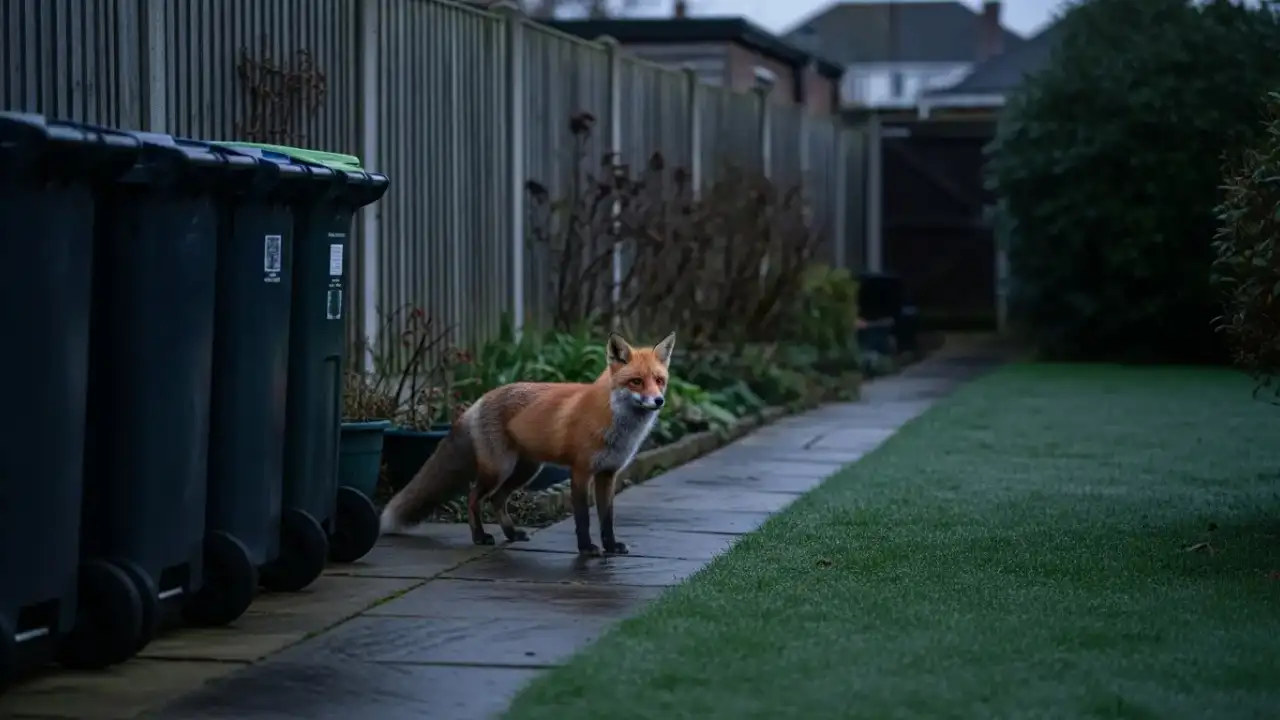
Foxes cause problems in both urban and rural settings. Urban foxes raid bins, damage gardens, defecate on lawns and play areas, and cause noise disturbance with loud calling during the breeding season. In rural areas, foxes threaten poultry, lambs, and gamebirds. We provide humane, effective fox management that combines deterrence, property proofing, habitat modification, and, where legally permitted and necessary, direct control.
What's Included
Why acting quickly matters
Fox problems tend to worsen once the animals habituate to a location. If a fox has found a reliable food source in your garden, around your bins, or near your poultry, it will return repeatedly and become harder to deter. Early intervention with professional deterrence and proofing is more effective than waiting.
Fox problems on your property?
Free survey and quotation. Humane deterrence, property proofing, and management for homes, businesses, and farms.
Request a free call back
Prefer to get in touch another way? Contact us or email info@wynyardpestcontrol.co.uk
Related Services
Threat Assessment
Nuisance:
7/10HIGHFoxes cause significant nuisance in urban and suburban areas. They raid bins and scatter waste, dig holes in gardens and lawns, foul in gardens and on doorsteps, and produce loud screaming calls during the breeding season (December to February). They also damage fences, compost bins, and garden furniture.
Hazard:
5/10MODERATEFoxes carry sarcoptic mange (transferable to dogs, causing intense itching and hair loss), Toxocara canis (roundworm eggs in fox faeces, a health risk in areas used by children), and occasionally other parasites. Fox faeces in gardens, play areas, and sports grounds pose a public health concern. Livestock losses from fox predation can be significant for poultry keepers and sheep farmers.
Vital Statistics
| Species | Red fox (Vulpes vulpes) |
| Body length | 60 to 75cm plus 35 to 50cm tail |
| Weight | 5 to 8kg (males typically heavier) |
| Colour | Reddish-brown with white underparts and black lower legs |
| Lifespan | 1 to 3 years (urban), up to 5 years (rural) |
| Breeding season | December to February, cubs born March to April |
| Litter size | 4 to 6 cubs, one litter per year |
| Diet | Omnivore: small mammals, birds, insects, fruit, scraps |
| Territory | 0.2 to 0.4 sq km (urban), 2 to 5 sq km (rural) |
| Urban fox population (England) | Estimated 150,000 |
| Legal status | No specific pest classification; can be managed under general law |
Key Facts
- Fox faeces can contain Toxocara canis (roundworm) eggs, which if ingested by children can cause toxocariasis, a condition that in rare cases can damage eyesight. Fox faeces in play areas, sandpits, and sports grounds should be removed promptly.
- Sarcoptic mange in foxes is transferable to dogs through direct contact or shared environments. Affected dogs develop intense itching, hair loss, and skin lesions. Veterinary treatment is required.
- Fox predation is a serious threat to free-range poultry. A single fox can kill multiple birds in one attack, often killing more than it can carry away.
- Foxes are not classified as pests under UK law, but they can be controlled lawfully using approved methods. Foxes must not be snared or trapped using self-locking snares.
- Foxes are territorial and removing one fox from an area typically results in another fox moving in within days or weeks. Deterrence and food source removal are more sustainable long-term solutions in urban areas.
- Urban foxes are increasingly bold and can become habituated to human presence. They are commonly seen during daylight in residential areas, particularly during the breeding season.
- The loud screaming call heard at night during winter is the mating call of the vixen (female fox). It is most frequent in December and January during the peak of the breeding season.
- Fox cubs are born in March and April and become independent by autumn. The dispersal period (September to November) is when young foxes are most likely to appear in new areas.
- Foxes are excellent climbers and can scale standard garden fences. They also dig beneath fences and squeeze through surprisingly small gaps.
"Really good experience with this company. They were quick to respond, professional and easy to deal with. [the technician] handled the job and was friendly, knowledgeable and explained everything clearly. Would definitely recommend."
Beth Smith · Google review, March 2026
Foxes causing damage or nuisance?
We assess your situation and recommend the most practical and humane approach for your property and location.
Fox Biology and Behaviour
Understanding fox behaviour is essential for effective management. Foxes are intelligent, adaptable animals that learn quickly and adjust their behaviour to exploit food sources and shelter.
Social structure: Foxes typically live in family groups consisting of a dominant dog fox and vixen, subordinate vixens, and cubs of the year. Group size varies but is typically 2 to 5 adults. The dominant pair breeds, while subordinate vixens may help raise the cubs.
Territory: Urban foxes hold territories of 0.2 to 0.4 square kilometres, while rural foxes range over 2 to 5 square kilometres. Territory boundaries are marked with urine, faeces, and secretions from scent glands. Fox faeces are deliberately placed on prominent objects (garden ornaments, plant pots, fence posts) as territorial markers.
Diet: Foxes are true omnivores and highly opportunistic feeders. In urban areas, their diet includes household waste, pet food, bird table scraps, fruit, and small mammals. In rural areas, they eat rabbits, voles, ground-nesting birds, insects, earthworms, and berries. Foxes cache food by burying it for later retrieval, which explains the digging holes that appear in gardens.
Activity patterns: Foxes are primarily crepuscular and nocturnal, most active around dusk and dawn. However, urban foxes are increasingly active during daylight, particularly in quiet residential areas. Cubs play and explore during daytime from May onwards.
Signs of Fox Activity
Foxes typically visit multiple gardens in a territory each night. If you are finding droppings, digging, and bin damage, a fox has established your property as part of its regular route.
Recognising fox activity early allows you to act before the animals become fully established and habituated to your property.
- Droppings: Fox droppings are dark, twisted, and pointed at one end. They are typically deposited on prominent objects (fence posts, garden ornaments, plant pots, door mats) as territorial markers. The smell is distinctive and musky.
- Digging: Foxes dig in lawns and flower beds to cache food for later retrieval and to hunt for earthworms and insect larvae. Holes are typically 5 to 10cm deep.
- Bin damage: Raided bins, scattered waste bags, and knocked-over food waste caddies. Foxes are persistent and learn quickly how to access bins that are not properly secured.
- Smell: A strong, musky odour around the garden, particularly near areas where foxes mark their territory with urine.
- Noise: Loud screaming and barking, particularly from December to February during the breeding season. The vixen's mating call is a high-pitched scream that is frequently mistaken for a person or animal in distress.
- Tracks: Fox footprints in soft ground or snow. Prints are oval, about 5cm long, with four toes and a central pad. Fox tracks tend to follow a straight line rather than the meandering path of a domestic dog.
- Earth (den) entrances: Foxes dig earth (den) entrances under sheds, decking, outbuildings, and in dense vegetation. The entrance is typically larger than a rabbit hole (20 to 25cm across) with a worn, smooth edge and a fan of excavated soil.
Urban Fox Management
In urban areas, deterrence and food source removal are more effective and sustainable long-term strategies than lethal control. New foxes move into vacated territories within days.
Urban fox management focuses on making your property less attractive to foxes and blocking their access to food, shelter, and denning sites. Removing individual foxes from urban areas is rarely a long-term solution, as new foxes quickly move into vacated territory. The most effective approach combines several measures.
Food source removal: The single most effective fox deterrent. Secure all bins with lockable lids or bungee cords. Use heavy-duty food waste caddies. Remove fallen fruit from gardens. Take in pet food bowls overnight. Stop feeding birds at ground level (foxes eat spilled seed and attract rodents that foxes then hunt). Remove compost bins that contain food waste.
Property proofing: Block access under sheds, decking, and outbuildings by installing galvanised mesh or concrete boards. Foxes dig, so mesh should be buried 30cm below ground or laid flat outward beneath the soil. Repair holes in boundary fences. Install fox-proof fencing (at least 1.8m high with a 30cm outward-angled overhang at the top, or electric fencing).
Deterrent devices: Motion-activated water sprinklers are among the most effective fox deterrents. They trigger when a fox enters the protected area and deliver a sudden jet of water. Motion-activated lights and ultrasonic devices can also help, though foxes may habituate to lights and ultrasonic signals over time. Scent-based deterrents (male lion dung granules, citronella) provide short-term results but need frequent reapplication.
Habitat modification: Cut back overgrown vegetation that provides cover. Remove log piles, old furniture, and debris that foxes use for shelter. Keep lawns short to remove foraging cover. Clean up after BBQs and outdoor eating.
Rural Fox Management
In rural settings, fox management often involves more direct intervention to protect livestock, gamebirds, and ground-nesting wildlife. The approach depends on the type and scale of the problem.
Poultry protection: Fox predation is the biggest single cause of poultry losses for free-range and smallholding operations. A fox can kill multiple birds in a single attack, often killing far more than it needs. Effective protection requires fox-proof housing (solid construction, secure latching, no gaps larger than 80mm) and fox-proof runs (galvanised welded mesh, buried 30cm below ground or with an outward-facing apron, and a roof or inward overhang).
Lambing protection: Fox predation during lambing, while less common than many farmers believe, does occur and can cause losses. Effective measures include secure lambing sheds, fox-deterrent lighting in fields, and, where necessary, targeted fox management during the lambing period.
Estate and land management: On rural estates, fox management is often part of a broader predator control programme to protect gamebirds, ground-nesting birds, and other wildlife. This may include cage trapping, lamping, and coordinated management across neighbouring landholdings.
All rural fox management is carried out humanely and in compliance with the Animal Welfare Act 2006 and all relevant legislation. We advise on the most appropriate methods for your specific situation and implement them to the highest professional standards.
DIY vs Wynyard Pest Control
| DIY | Wynyard Pest Control | |
|---|---|---|
| Best for | Minor, occasional fox visits | Persistent fox problems, livestock protection |
| Problem assessment | ✗ Limited to visible signs | ✓ Full site survey and behaviour assessment |
| Proofing quality | ⚠ Often incomplete | ✓ Professional specification and installation |
| Deterrent selection | Trial and error | Evidence-based recommendations |
| Legal compliance | ⚠ Risk of illegal methods | ✓ All methods legal and humane |
| Follow-up | ✗ None | ✓ Monitored and adjusted |
| Guarantee | ✗ None | ✓ Service guarantee |
Many homeowners attempt DIY fox deterrence before calling a professional. Some measures can be effective for minor, occasional fox visits, but persistent fox problems usually require a professional assessment.
What works for DIY: Securing bins with locks or bungee cords. Removing food sources from the garden. Motion-activated sprinklers placed on known fox routes. These measures can reduce visits from opportunistic foxes.
What often fails: Ultrasonic deterrents (foxes habituate quickly). Scent-based repellents (need constant reapplication and are washed away by rain). Partial fencing (foxes climb or dig around incomplete barriers). Removing one fox without addressing food sources (a new fox moves in).
When you need Wynyard Pest Control: If foxes have established a regular route through your property, are denning under your shed or decking, are threatening livestock, or are causing repeated damage despite DIY attempts, a professional assessment identifies the root cause and implements a comprehensive solution. We combine deterrence, proofing, and habitat modification for lasting results.
Seasonal Fox Control & Deterrence Activity in the North East
Hover or tap a month to see Fox Control & Deterrence activity details
Peak mating season. Loud screaming calls at night. Foxes actively defending territories. Urban fox complaints increase.
Mating season continues. Vixens preparing earth (den) sites. Fox activity and noise prominent.
Cubs born underground. Vixen stays close to the earth. Dog fox brings food. Garden digging increases.
Cubs growing and beginning to emerge. Increased feeding demands on adults. Garden damage and food scavenging peak.
Cubs visible above ground, playing near the earth. Peak demand for food. Poultry and livestock most at risk.
Cubs becoming independent. Family groups still together. Garden activity remains high.
Cubs approaching adult size. Learning to hunt. Opportunistic garden raids continue.
Quieter period. Family groups beginning to break up. Cubs becoming more independent.
Young foxes dispersing to find new territories. New foxes may appear in previously unaffected areas.
Dispersal continues. Territory establishment by young foxes. Increased encounters as foxes explore.
Territory boundaries being established. Scent marking increases. Pre-breeding season behaviour begins.
Breeding season begins. Loud calling at night. Foxes very active marking territories and seeking mates.
Fox activity in the North East follows a clear seasonal pattern. The breeding season runs from December to February, with cubs born in March and April. The loudest disturbance occurs during winter mating, while garden damage and food scavenging peak from March to June when cubs are growing. Young foxes disperse from September to November, potentially appearing in new areas.
Fox problems tend to peak during the breeding season (December to February) and again when cubs are growing (March to June). Early proofing and deterrence prevents problems from becoming established.
Winter (December to February) - Mating season: The fox mating season produces the loud, distinctive screaming calls that trigger many residential call-outs across the North East. Foxes are at their most vocal and territorial during this period. Urban fox sightings increase as animals range more widely to find mates. Properties in Darlington, Middlesbrough, and Newcastle see the highest nuisance reports during winter.
Spring (March to June) - Cubs and scavenging: Vixens give birth in March and April, typically producing 4 to 5 cubs per litter. As cubs grow, food demand on the vixen increases dramatically, leading to bolder daytime scavenging. Garden damage peaks during this period - foxes dig under fences, raid bins, and target poultry enclosures. This is the most important period for fox-proofing gardens and securing livestock.
Summer (July to September) - Dispersal: Young foxes leave the family group from late summer, exploring new territory and often appearing in unfamiliar locations. Daytime sightings of confused or bold young foxes increase. Garden damage from digging remains common. This is a good period for installing deterrent measures before the autumn/winter cycle begins again.
Autumn (October to November) - Pre-mating territory marking: Fox activity intensifies as animals establish territories ahead of the mating season. Scent-marking behaviour increases, producing strong odours in gardens and around outbuildings. Foxes move closer to buildings as natural food becomes scarcer, targeting bins and pet food left outdoors.
Why Choose Us for Fox Control and Deterrence
Urban and Rural
We manage fox problems in residential gardens, town centres, commercial sites, farms, and rural estates across the North East.
Deterrence First
We prioritise humane deterrence, property proofing, and habitat modification wherever they are effective and sustainable.
Property Proofing
Professional-grade proofing to prevent foxes accessing gardens, under decking, sheds, outbuildings, and poultry enclosures.
Livestock Protection
Specialist poultry and livestock proofing advice, fencing improvements, and direct management for farms and smallholdings.
Legal Compliance
All fox management is carried out humanely and in full compliance with the Animal Welfare Act 2006 and all relevant legislation.
Lasting Solutions
We address the root cause (food sources, access, denning sites) rather than providing a temporary fix that foxes quickly work around.
Fox-Related Health Concerns
While foxes pose a lower direct health risk than rodents, there are specific health concerns that property owners should be aware of.
Toxocariasis: Fox faeces can contain eggs of the roundworm Toxocara canis. If ingested, typically by young children playing in contaminated soil or sandpits, the larvae can migrate through the body and in rare cases cause damage to the eyes or other organs. Fox faeces should be removed promptly from gardens, play areas, and sports grounds. Sandpits should be covered when not in use.
Sarcoptic mange: Foxes commonly suffer from sarcoptic mange, caused by the mite Sarcoptes scabiei. The mite is transferable to domestic dogs through direct contact with foxes or indirect contact via contaminated bedding, soil, or surfaces. Affected dogs develop intense itching, hair loss, and crusty skin lesions. Veterinary treatment is required. Cats are generally resistant.
Fleas and ticks: Foxes carry fleas and ticks that can transfer to pets and, less commonly, to humans. Fox fleas (Archaeopsylla erinacei) are different from cat and dog fleas but can bite humans.
Echinococcosis: The tapeworm Echinococcus multilocularis has not been confirmed in UK foxes, but it is present in fox populations on the European continent. This is monitored by UK veterinary authorities.
Fox Proofing for Poultry and Livestock
Foxes can dig under fences, climb over them, and squeeze through small gaps. Effective poultry proofing requires a comprehensive approach to all possible entry routes.
Protecting poultry and livestock from fox predation requires robust physical barriers. The following specifications provide effective protection:
Poultry housing: The house itself must be solidly constructed with no gaps larger than 80mm. Doors must close securely with latches that cannot be nudged open (foxes are surprisingly dexterous). Pop holes should have secure closures. Automated pop hole doors that close at dusk are a good investment.
Runs and enclosures:
- Use welded mesh, not chicken wire. Standard chicken wire is thin enough for foxes to bite through.
- Mesh gauge should be 19mm x 19mm or smaller to prevent fox paws reaching through.
- Bury mesh at least 300mm below ground and angle it outward as an apron to prevent digging. Alternatively, lay a 600mm apron of mesh flat on the ground outside the fence.
- Height should be at least 1.8 metres with a 300mm inward overhang at the top, or fit a roof.
- Electric fencing (poultry netting with an energiser) provides excellent protection and can be moved for rotational grazing.
Lambing fields: Fox-deterrent lighting, regular human presence during the lambing period, and secure lambing sheds all reduce the risk of fox predation. In areas with persistent fox problems, targeted fox management before and during lambing may be necessary.
We provide a full poultry and livestock proofing advisory service, assessing your current setup, identifying vulnerabilities, and recommending specific improvements.
Legal Position on Fox Control
Fox control in the UK is governed by several pieces of legislation. Understanding the legal position ensures any management is carried out lawfully.
Key legal points:
- Foxes are not classified as pests or vermin under UK law. They are classified as wild animals.
- There is no statutory obligation to control foxes on your land (unlike rabbits under the Pests Act 1954).
- Foxes can be controlled lawfully using humane methods where there is a legitimate reason, such as protecting livestock, preventing the spread of disease, or preventing serious damage to property.
- The use of self-locking snares is illegal. Free-running snares may be used but must comply with strict regulations including daily inspection.
- The Hunting Act 2004 prohibits hunting foxes with dogs in England and Wales. Up to two dogs may be used to flush a fox from cover for the purpose of shooting.
- Poisoning foxes is illegal under the Wildlife and Countryside Act 1981 and the Animals Act.
- The Animal Welfare Act 2006 requires that all fox management is carried out humanely and without causing unnecessary suffering.
All fox management carried out by Wynyard Pest Control is fully compliant with these legal requirements. We advise clients on the legal position for their specific situation and implement only lawful, humane methods.
Fox Behaviour Myths and Facts
Fox behaviour is widely misunderstood, and common myths can lead to inappropriate responses. Understanding the facts helps you manage fox interactions more effectively.
Myth: Foxes attack people. Fact: Unprovoked fox attacks on humans are extremely rare. Foxes are naturally wary of people and will avoid contact. A fox that appears bold or unafraid in an urban setting has simply habituated to human presence through repeated, non-threatening encounters. They are not aggressive.
Myth: A fox seen in daylight is sick or rabid. Fact: The UK has been rabies-free since 1922. Urban foxes are increasingly active during daylight, particularly in quiet residential areas and during the breeding season when demand for food is high. A fox seen during the day is usually healthy and simply taking advantage of available food while disturbance is low.
Myth: Removing a fox solves the problem. Fact: Fox territories in urban areas are quickly reoccupied. Removing one fox creates a vacancy that another fox will fill within days or weeks. Unless the food source and shelter that attracted the original fox are also removed, the replacement fox will behave in exactly the same way.
Myth: Foxes kill cats. Fact: Foxes and domestic cats coexist in urban areas with very little conflict. Cats are similar in size to foxes and are effective at defending themselves. There is very little evidence of foxes killing healthy adult cats. Kittens and very elderly or unwell cats may be at slight risk.
Myth: Feeding foxes makes them tame and dangerous. Fact: Feeding foxes does habituate them to human presence, making them bolder and more persistent visitors. While this is not dangerous, it can increase nuisance behaviour and make them harder to deter. We recommend against feeding foxes deliberately.
Our Fox Control and Deterrence Process
A structured, three-stage approach that treats the problem and prevents it returning.
Step 1
Inspect and Plan
A detailed property inspection identifies entry points, infestation hotspots, and the species involved. A targeted treatment plan is developed based on findings.
Step 2
Treatment
Professional control measures are applied using advanced techniques and CRRU-compliant products. Proofing and sealing work addresses the root cause at the same time.
Step 3
Ongoing Support
Follow-up visits confirm the problem is resolved. You receive clear documentation, prevention advice, and recommendations for ongoing protection.
Foxes causing damage or nuisance?
We assess your situation and recommend the most practical and humane approach for your property and location.
What to Expect from a Fox Management Visit
Our fox management service begins with a thorough site assessment to understand the nature and extent of the problem.
- Site survey: We inspect the property and surrounding area to identify fox activity, access routes, denning sites, and food sources. We look for tracks, droppings, digging, damage, and evidence of denning.
- Behaviour assessment: Understanding why foxes are visiting your property is key to effective management. We assess what is attracting them (food, shelter, denning site) and how they are accessing the property.
- Recommendations: Based on the assessment, we recommend a tailored combination of measures. For urban properties, this typically includes food source removal advice, property proofing specifications, and deterrent device recommendations. For rural properties, it may include fencing improvements, poultry housing upgrades, and, where necessary, direct fox management.
- Implementation: We can carry out proofing work, install deterrent devices, and implement management measures. For complex situations, we provide a written management plan.
- Follow-up: We monitor the outcome and adjust the approach if needed. Our aim is a lasting solution, not a temporary fix.

NPTA Member
We are full members of the National Pest Technicians Association (NPTA). This means our technicians meet strict training and competency standards, carry appropriate insurance, and follow the association's code of practice. NPTA membership is your assurance that the work is carried out professionally and responsibly.
Fair, Transparent Pricing
Every job is different. The cost depends on the type of pest, scale of the problem, and what treatment is needed. We provide a free assessment and an honest quotation before any work begins. No hidden costs, no surprises.
View our pricing guideSatisfaction Guaranteed
Our fox management service is tailored to your situation. We assess the cause of the problem, implement deterrence and proofing measures, and monitor the outcome. If fox activity returns within the agreed service period and is linked to the same access route or food source, we will revisit and carry out further work at no extra cost.
Frequently Asked Questions
Foxes are not classified as pests under UK law, but they can be managed under certain circumstances. In most urban situations, deterrence, property proofing, and food source removal are more effective and sustainable than removing individual foxes. Removing one fox typically results in another moving into the same territory within days. We assess each situation and recommend the most practical, lasting solution.
Motion-activated water sprinklers are the most effective deterrent device for urban gardens. They work best when combined with food source removal and proofing. Ultrasonic devices can provide some initial deterrence, but foxes habituate to them over time. Scent-based deterrents are short-lived and need constant reapplication. We can advise on the most effective combination for your situation.
Foxes can carry sarcoptic mange (transferable to dogs), Toxocara canis (roundworm, risk from fox faeces in areas used by children), and various parasites. The UK is rabies-free. If you have concerns about fox faeces in play areas, sandpits, or gardens, prompt removal using gloves and cleaning of the area is recommended.
Block access by installing galvanised welded mesh or concrete board around the base of the decking. Mesh should be buried at least 300mm below ground or laid as a flat outward apron beneath the soil to prevent digging. If foxes are already denning under the decking, we will confirm they are not present before sealing the area.
Foxes can be killed humanely using legal methods where there is a legitimate reason (livestock protection, preventing disease, preventing serious damage). Self-locking snares, poisoning, and hunting with dogs are illegal. The Animal Welfare Act 2006 requires that all methods used are humane. We advise on the legal position and implement only lawful methods.
Sarcoptic mange from foxes causes intense itching, hair loss, and crusty skin in dogs. It is treatable but requires veterinary attention. Contact your vet promptly. The mite can also cause temporary itching in humans but does not establish a lasting infection. Treat the dog's bedding and commonly used areas to reduce the risk of reinfection.
Yes. Foxes are excellent climbers and can scale standard 1.5m to 1.8m garden fences. To deter climbing, fences should be at least 1.8m high with a 300mm inward-angled overhang at the top. Alternatively, electric fencing provides effective deterrence. Foxes also dig, so the base of any fox-proof fence should be buried or have an outward apron.
Yes. We assess your current poultry housing and run setup, identify vulnerabilities, and recommend specific improvements. Key elements include welded mesh (not chicken wire), buried or aproned mesh to prevent digging, secure latches, and adequate height with an inward overhang or roof. We can advise on electric fencing options as well.
Related Services
Our Other Services
Areas We Cover
We provide fox control and deterrence services across the North East of England.
Ready to talk to us?
Free survey and quotation for businesses and homeowners. No obligation, no pressure.
We will get back to you as soon as we can.