
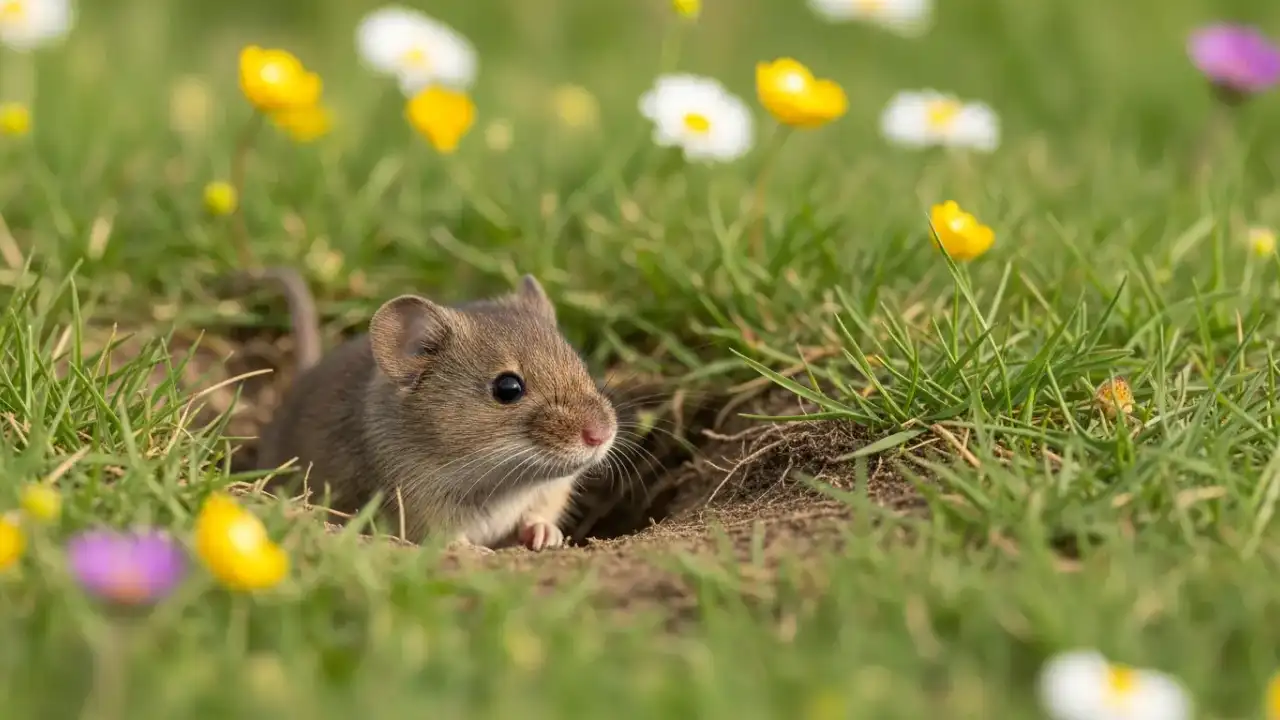
Vole Species Awareness
Water vole identification, protected species guidance, and habitat assessment for landowners and developers across the North East.
Why You Need Professional Vole Species Awareness
The water vole (Arvicola amphibius) is the UK's fastest declining native mammal and is fully protected under the Wildlife and Countryside Act 1981. Misidentifying a water vole as a rat or failing to check for water vole presence before development work near watercourses can result in criminal prosecution. We help landowners, developers, and contractors identify vole species, assess habitats, and understand their legal obligations.
What's Included
Why acting quickly matters
If you are planning development work, land drainage, bank reinforcement, or vegetation clearance near any watercourse, pond, or ditch, check for water vole presence before work begins. Failing to do so can result in prosecution. We provide rapid habitat assessments to help you comply with the law.
Planning work near a watercourse?
Check for water voles before work begins. Free initial advice on your legal obligations and habitat assessment.
Request a free call back
Prefer to get in touch another way? Contact us or email info@wynyardpestcontrol.co.uk
Related Services
Threat Assessment
Nuisance:
2/10LOWVoles cause minimal property damage. Water vole burrowing along riverbanks is a natural process. Field voles may occasionally damage garden plants and young trees. Bank voles can enter outbuildings and sheds in rural areas.
Hazard:
2/10LOWVoles pose no significant direct health risk to humans. The primary hazard is legal risk: water voles are fully protected and any disturbance, capture, or habitat damage can result in criminal prosecution with unlimited fines.
Vital Statistics
| Water vole (Arvicola amphibius) | UK's largest vole, 14 to 22cm body length |
| Water vole weight | 150 to 350g |
| Water vole lifespan | Typically 12 to 18 months |
| Water vole litter size | 2 to 8 young, 2 to 5 litters per year |
| Water vole breeding season | March to October |
| Water vole diet | Grasses, reeds, sedges, waterside vegetation |
| Field vole (Microtus agrestis) | 8 to 13cm body length, 14 to 50g |
| Bank vole (Myodes glareolus) | 8 to 12cm body length, 15 to 40g |
| Water vole legal status | Fully protected under Wildlife and Countryside Act 1981 |
| Population decline | Estimated 90% decline since the 1970s |
Key Facts
- Water voles are fully protected under the Wildlife and Countryside Act 1981. It is illegal to intentionally kill, injure, or take a water vole, or to damage, destroy, or obstruct a water vole burrow.
- Misidentifying a water vole as a rat and poisoning it is a criminal offence. Professional identification is essential before any pest control work near watercourses.
- Development work, bank reinforcement, dredging, or vegetation clearance near watercourses where water voles are present requires professional assessment and may need a Natural England licence.
- Mink predation is the primary cause of water vole decline in the UK. A single mink can eliminate an entire water vole colony along a stretch of waterway.
- Water voles are sometimes called water rats, but they are not rats. They have a blunt, rounded face, small rounded ears, and a short furry tail, quite different from the pointed face and long scaly tail of a brown rat.
- Water vole populations have declined by an estimated 90% since the 1970s, making them one of the UK's most endangered mammals.
- Water voles create distinctive feeding stations of neatly cut vegetation at 45-degree angles, typically grasses and sedges, piled at the water's edge.
- Field voles are the most abundant British mammal, with populations estimated at 75 million. They are not protected and do not require special management.
- The water vole is the animal on which Kenneth Grahame's character Ratty in The Wind in the Willows is based.
"Have been with these guys since 2022, amazing customer service and knowledge - highly recommend"
Serious Lee · Google review, March 2026
Unsure if water voles are present?
We help landowners and developers identify vole species and understand their legal obligations before work begins.
Identifying Water Voles
Water voles are frequently mistaken for brown rats. Correct identification is essential before any pest control or land management work near watercourses.
Correct identification of water voles is critical because they are fully protected by law, while brown rats (which occupy similar habitats near water) are not. Misidentification can lead to accidental harm to a protected species and criminal prosecution.
Water vole characteristics:
- Body length 14 to 22cm with a short, furry tail (about half the body length)
- Weight 150 to 350g, with a rounded, stocky body
- Blunt, rounded face with small, rounded ears that are almost hidden in the fur
- Dark brown to chestnut fur, sometimes black in some populations
- Characteristically plops into the water when disturbed, making a distinctive splash
How to distinguish from brown rats:
- Rats have a pointed face with prominent ears and a long, scaly, hairless tail (as long as or longer than the body)
- Rats are larger (20 to 27cm body length) and heavier (280 to 500g)
- Rat burrows tend to have spoil heaps of excavated earth outside the entrance, while water vole burrows are neat and rounded
- Rat droppings are larger (15 to 20mm), tapered, and spindle-shaped. Water vole droppings are smaller (8 to 12mm), rounded, and often greenish when fresh
If you are unsure whether you have water voles or rats near a watercourse on your property, contact us before taking any action. We can carry out a site visit to identify the species and advise on the appropriate course of action.
Field Voles and Bank Voles
The UK has three vole species: the water vole (protected), the field vole (not protected), and the bank vole (not protected). Knowing the difference helps you understand your legal obligations.
Field vole (Microtus agrestis): The most abundant British mammal with an estimated population of 75 million. Body length 8 to 13cm with a very short tail (about one-third of body length). Grey-brown fur with a blunt nose. Lives in grassland, rough pasture, young woodland plantations, and field margins. Creates characteristic surface runways through grass. Does not burrow near water. Can occasionally damage young trees and garden plants but is not usually considered a significant pest.
Bank vole (Myodes glareolus): Body length 8 to 12cm with a tail about half the body length. Rich chestnut-brown fur with a paler underside. Lives in hedgerows, woodland, scrub, and gardens. Feeds on berries, nuts, seeds, and insects. May enter sheds and outbuildings in rural areas, particularly in autumn. Not protected and does not require special management.
Neither field voles nor bank voles are protected under wildlife legislation, and normal land management activities do not need to consider their presence. However, if you are unsure which species you have, particularly near watercourses, professional identification is recommended before taking any action.
Signs of Water Vole Presence
Water vole surveys are most effective between April and September when signs of activity are most visible. Early assessment avoids delays to planned works.
Water vole habitat assessments look for specific signs that indicate the presence of this protected species. Signs are most visible during the active season (April to September).
- Burrows: Neat, rounded entrance holes in the riverbank, typically 4 to 8cm in diameter. Often at or just above the water level. Water vole burrows lack the spoil heaps of earth that are typical of rat burrows.
- Latrines: Concentrated piles of droppings at regular intervals along the waterway, often on rocks, logs, or raised areas. Water vole droppings are cylindrical, 8 to 12mm long, with blunt ends. Fresh droppings are greenish and have a distinct grassy smell.
- Feeding stations: Piles of neatly cut vegetation at the water's edge. Water voles bite through plant stems at a distinctive 45-degree angle. Grasses, sedges, and reeds are cut into short lengths and left in piles near the burrow or at favoured feeding spots.
- Lawns: Closely cropped areas of grass near the water's edge where water voles have grazed. These are sometimes called water vole lawns.
- Runways: Well-worn paths through bankside vegetation, typically running between burrow entrances and feeding areas. More obvious in tall grass and reed beds.
- Splash sounds: The characteristic plop of a water vole entering the water when disturbed. This sound is distinctive and louder than a rat entering water.
Legal Protection for Water Voles
Water voles are fully protected. Any activity that kills, injures, captures, or disturbs water voles, or damages or destroys their burrows, is a criminal offence.
Water voles were added to Schedule 5 of the Wildlife and Countryside Act 1981 in 2008, giving them full legal protection. The following actions are criminal offences:
- Intentionally killing, injuring, or taking (capturing) a water vole
- Intentionally or recklessly damaging, destroying, or obstructing access to any structure or place used by water voles for shelter or protection (their burrows)
- Intentionally or recklessly disturbing water voles while they are using such a structure or place
- Possessing or selling water voles or any part of a water vole
What this means in practice:
- Rodenticide must not be used near watercourses where water voles may be present without first confirming that the target species is rats, not water voles
- Bank reinforcement, dredging, and vegetation clearance along watercourses must be assessed for water vole presence before work begins
- Development projects near watercourses, ponds, and ditches should include water vole surveys as part of the ecological assessment
- Mink trapping programmes near water vole habitat must use appropriate traps that do not risk catching water voles
Penalties for water vole offences include unlimited fines and up to six months in prison per offence.
Development and Land Management Near Water
Any development work, drainage, bank reinforcement, or vegetation clearance near watercourses should include a water vole assessment before work begins.
Development and land management activities near watercourses are the most common situations where water vole protection becomes relevant. Key scenarios include:
Riverbank reinforcement: Installing hard bank protection (sheet piling, concrete, gabion baskets) destroys water vole burrows and removes the soft earth banks they need for burrowing. A water vole survey should be carried out before any bank reinforcement work. If water voles are present, a Natural England licence for displacement or translocation may be required.
Dredging and channel maintenance: Mechanical dredging of watercourses can destroy water vole burrows and kill animals in their burrows. Manual or carefully managed mechanical work, timed to avoid the breeding season, may be possible with appropriate mitigation.
Vegetation clearance: Removing bankside vegetation (reeds, sedges, tall grasses) eliminates water vole food sources and cover. Clearance should be carried out in stages, leaving refugia, and timed to avoid the breeding season where possible.
New development: Housing, commercial, and infrastructure developments near watercourses, ponds, and ditches should include water vole surveys as part of the ecological impact assessment. Planning authorities may require survey data before granting permission.
Agricultural drainage: Draining fields adjacent to watercourses or modifying field drains that connect to water vole habitat can affect water levels and bankside conditions. Assessment is recommended before significant drainage works.
We provide initial habitat assessments and advice on whether your planned works are likely to affect water voles. Where formal surveys or a Natural England licence are required, we can recommend appropriate ecological consultants.
Seasonal Vole Activity in the North East
Hover or tap a month to see Vole Species Awareness activity details
Water voles less active. Reduced surface signs. Burrows still occupied but activity minimal.
Water voles beginning to become more active. Little surface evidence. Pre-season habitat assessment possible.
Breeding season begins. Water voles establishing territories. Early signs of activity appear along watercourses.
Active season underway. Burrows, feeding stations, and latrines visible. Optimal survey season begins.
Peak breeding period. Territories defended. All signs of activity clearly visible. Best survey conditions.
Breeding continues. Young in burrows. Maximum population along watercourses. Peak survey season.
Young dispersing to establish new territories. Activity along wider stretches of waterway.
Late breeding continues. Vegetation growth may obscure some signs. Still within optimal survey window.
Breeding season ending. Activity declining. Late survey window. Signs still visible but less obvious.
Activity reducing as weather cools. Old latrines and feeding signs still visible. Last practical survey opportunity.
Water voles retreating to burrows. Surface signs fading. Not suitable for reliable surveys.
Water voles in burrows. Minimal surface activity. No surveys possible. Plan ahead for spring assessments.
Water vole surveys are most effective between April and September when signs of activity (burrows, latrines, feeding stations) are clearly visible. The breeding season runs from March to October. Development work near watercourses should ideally be timed outside the breeding season, and surveys should be completed well in advance of planned work to allow time for licensing if needed.
Planning development or land management work near a watercourse? Arrange a water vole habitat assessment between April and September for the most reliable results.
Spring (April to May) - Survey season begins: Water vole surveys become effective from April as animals emerge from winter burrows and establish new territories. Latrines (piles of droppings) appear at territory boundaries along watercourses. Feeding stations with neatly cut plant stems become visible. This is the earliest reliable survey period for development projects requiring water vole assessments.
Summer (June to August) - Peak survey period: Water vole activity is at its highest and survey results are most reliable during summer. Breeding is in full swing, with females producing 2 to 5 litters per year. Burrow entrances, latrines, and feeding signs are clearly visible along riverbanks, ditches, and drainage channels across the North East.
Autumn (September to October) - Activity declines: Water vole activity reduces as breeding finishes and animals prepare for winter. Survey reliability decreases after September as vegetation dies back and signs become less distinct. This is the last practical window for surveys before the winter period when accurate assessment becomes impossible.
Winter (November to March) - Dormant period: Water voles retreat to burrow systems and are rarely seen above ground. Surveys during winter are unreliable and not recommended for planning applications. However, winter is the best period for habitat management and enhancement work, as the risk of disturbing active burrows is lowest.
Why Choose Us for Vole Species Awareness
Species Identification
We accurately distinguish between protected water voles and unprotected field and bank voles, preventing costly misidentification.
Legal Guidance
Clear advice on your obligations under the Wildlife and Countryside Act 1981. We ensure you understand the legal position before any work begins.
Development Support
Practical guidance for landowners, developers, and contractors working near watercourses. We help you avoid delays and prosecution.
Habitat Assessment
We assess watercourse habitats for signs of water vole activity and advise on whether formal surveys are needed.
Rapid Response
If you need an urgent assessment before work can proceed, we respond quickly to minimise project delays.
Free Initial Advice
We provide free initial guidance on water vole queries. Contact us to discuss your situation before committing to a site visit.
Water Vole Habitat in the North East
Water voles are found along slow-moving rivers, streams, ditches, canals, ponds, and lakes where soft, earth banks and dense bankside vegetation provide suitable burrowing and feeding habitat. In the North East, water voles are present along a number of watercourses, though populations are fragmented and declining.
Suitable habitat features:
- Soft earth banks suitable for burrowing (not hard clay, rock, or reinforced banks)
- Dense bankside vegetation including grasses, sedges, reeds, and rushes
- Slow-moving or still water with relatively stable water levels
- Absence of mink (the primary predator of water voles in the UK)
- Connected waterway networks that allow movement between colonies
Unsuitable habitat:
- Fast-flowing rocky streams and rivers
- Heavily managed or canalised watercourses with hard banks
- Watercourses with little or no bankside vegetation
- Areas with high mink density
Water vole habitat can be found in unexpected locations, including farm ditches, garden ponds, and drainage channels that may not look like obvious wildlife habitat. If you are planning work near any watercourse, pond, or ditch, checking for water vole presence is a sensible precaution.
Causes of Water Vole Decline
Water vole populations in the UK have declined by an estimated 90% since the 1970s. The main causes of this decline are:
Mink predation: The American mink, escaped and released from fur farms since the 1950s, is the single biggest threat to water voles. Mink are semi-aquatic predators that can enter water vole burrows and kill entire colonies. A single female mink can eliminate all water voles along several kilometres of waterway in one breeding season. Mink control programmes are an important part of water vole conservation.
Habitat loss: Intensification of agriculture, channelisation of watercourses, removal of bankside vegetation, and hard bank reinforcement have destroyed much of the UK's water vole habitat. Modern land drainage has lowered water tables and dried out ditches and pond margins.
Pollution: Agricultural run-off, sewage discharge, and chemical contamination degrade water quality and reduce the invertebrate populations that are part of the water vole's wider ecosystem.
Development: Housing, roads, and commercial development near watercourses fragment water vole habitat and isolate populations, making them more vulnerable to local extinction.
Conservation efforts including mink control, habitat restoration, and legal protection are helping to stabilise some populations, but the water vole remains one of the UK's most at-risk native mammals.
Water Vole Conservation and Mink Control
Conserving water voles requires a combination of habitat protection, mink control, and population monitoring. As a pest control company working near watercourses, we play a role in supporting water vole conservation.
Mink control: American mink are the primary predator driving water vole decline. Mink trapping programmes along watercourses are one of the most effective conservation interventions. We use humane live-capture traps (mink rafts) placed on watercourses to detect and remove mink. Traps must be designed to avoid capturing water voles, which is why professional management is essential.
Habitat restoration: Restoring bankside vegetation along watercourses provides food and cover for water voles. Planting native grasses, sedges, and reeds along bare or heavily managed banks creates suitable habitat. Reducing intensive management of riverbanks and ditch margins allows natural vegetation to establish.
Connectivity: Water voles need connected networks of suitable habitat to maintain viable populations. Isolated colonies are vulnerable to local extinction from mink predation or habitat loss. Maintaining corridors of suitable habitat along watercourses, even through agricultural and developed areas, supports population resilience.
Monitoring: Regular surveys of watercourses for water vole signs help track population trends and identify areas where conservation action is needed. Local Wildlife Trusts and volunteer groups carry out monitoring programmes that landowners can contribute to.
What to Expect from a Water Vole Assessment
A preliminary habitat assessment can usually be completed in a single visit and provides clear guidance on whether formal surveys are needed before your planned works can proceed.
If you are planning work near a watercourse and need to check for water vole presence, our assessment process is straightforward.
- Initial enquiry: Contact us with details of your planned works and the location. We can often provide initial advice on whether a water vole assessment is likely to be needed based on the habitat type and proximity to water.
- Site visit: We visit the watercourse and surrounding area to assess habitat suitability for water voles. We examine the banks for burrow entrances, check for latrines and feeding stations, and assess the vegetation and water conditions.
- Species identification: If signs of small mammal activity are found near the water, we identify whether they are from water voles, brown rats, field voles, or bank voles. Correct identification is critical to determining your legal obligations.
- Advice and reporting: We provide a clear written assessment covering what was found, which species are present (or likely present), and what this means for your planned works. If formal protected species surveys are needed, we advise on timing, methodology, and recommend licensed ecologists.
- Ongoing support: We can advise on mink management near water vole habitat and provide guidance on habitat enhancement measures that support water vole populations alongside your land management activities.
Our Vole Species Awareness Process
A structured, three-stage approach that treats the problem and prevents it returning.
Step 1
Inspect and Plan
A detailed property inspection identifies entry points, infestation hotspots, and the species involved. A targeted treatment plan is developed based on findings.
Step 2
Treatment
Professional control measures are applied using advanced techniques and CRRU-compliant products. Proofing and sealing work addresses the root cause at the same time.
Step 3
Ongoing Support
Follow-up visits confirm the problem is resolved. You receive clear documentation, prevention advice, and recommendations for ongoing protection.
Unsure if water voles are present?
We help landowners and developers identify vole species and understand their legal obligations before work begins.
Useful Resources and External Guidance
For water vole-related queries that require specialist ecological input, the following organisations provide advice:
- Natural England: Government body responsible for licensing mitigation and translocation of water voles for development projects. Provides guidance on survey requirements and best practice.
- The Wildlife Trusts: Local Wildlife Trusts across the North East carry out water vole monitoring, habitat restoration, and mink control programmes.
- Environment Agency: Responsible for watercourse management and can provide information on water vole records in your area.
- People's Trust for Endangered Species (PTES): Runs the National Water Vole Monitoring Programme and provides resources for landowners.
If you are unsure whether water voles are present on your land or near a planned development, contact us for free initial advice. We can carry out a preliminary habitat assessment and advise on the most appropriate next steps.
"Really good experience with this company. They were quick to respond, professional and easy to deal with. [the technician] handled the job and was friendly, knowledgeable and explained everything clearly. Would definitely recommend."
Beth Smith · Google review, March 2026
NPTA Member
We are full members of the National Pest Technicians Association (NPTA). This means our technicians meet strict training and competency standards, carry appropriate insurance, and follow the association's code of practice. NPTA membership is your assurance that the work is carried out professionally and responsibly.
Fair, Transparent Pricing
Every job is different. The cost depends on the type of pest, scale of the problem, and what treatment is needed. We provide a free assessment and an honest quotation before any work begins. No hidden costs, no surprises.
View our pricing guideSatisfaction Guaranteed
Our vole awareness service provides accurate species identification and clear advice on your legal obligations. We ensure you understand the legal position before any decisions are made about land management or development work near watercourses.
Frequently Asked Questions
Water voles are smaller than brown rats, with a rounder face, small ears partly hidden in fur, and a short furry tail (about half their body length). Rats have pointed faces, prominent ears, and a long scaly tail as long as or longer than their body. Water vole burrows have neat, rounded entrances without spoil heaps. If you are unsure, contact us for professional identification before taking any action.
Work near water vole habitat requires careful planning. Depending on the nature and proximity of the work, you may need a displacement or translocation licence from Natural England. We can carry out a preliminary assessment and advise on whether your planned works are likely to affect water voles and what steps to take.
Do not disturb them or their burrows. Contact us for advice on your legal obligations and practical options. In many cases, water voles and land management activities can coexist with appropriate planning and timing of works.
You must not use rodenticide near watercourses where water voles may be present without first confirming that the target species is rats, not water voles. Poisoning a water vole is a criminal offence. If you suspect rat activity near a watercourse, contact us for professional identification and advice on safe, legal control methods.
The optimal survey period is April to September when signs of water vole activity (burrows, latrines, feeding stations) are most visible. Two survey visits are recommended, ideally one in spring (April to June) and one in summer (July to September). Planning surveys early gives you time to obtain any necessary licences before work begins.
No. Field voles and bank voles are not protected under wildlife legislation. Only the water vole is fully protected. However, if you are unsure which species you have on your land, particularly near watercourses, professional identification is recommended before any control or management work takes place.
The primary causes are predation by American mink (escaped from fur farms), loss of suitable bankside habitat through agricultural intensification and hard bank reinforcement, pollution of watercourses, and fragmentation of populations by development. Conservation efforts including mink control and habitat restoration are helping to stabilise some populations.
Water voles can be displaced or translocated under a Natural England licence as part of a development mitigation plan. This involves carefully managed capture and release to suitable receptor habitat. The process requires detailed survey work, a licence application, and preparation of the receptor site. We can advise on the process and recommend licensed ecologists.
Related Services
Our Other Services
Areas We Cover
We provide vole species awareness services across the North East of England.
Ready to talk to us?
Free survey and quotation for businesses and homeowners. No obligation, no pressure.
We will get back to you as soon as we can.