
Snake Species Awareness
UK snake identification, encounter advice, and protected species guidance for property owners and developers across the North East.
Why You Need Professional Snake Species Awareness
The UK has three native snake species and one legless lizard commonly mistaken for a snake. All are protected to varying degrees under the Wildlife and Countryside Act 1981. We provide species identification, practical encounter advice, and guidance on legal obligations for property owners, developers, and land managers who find snakes on their land.
What's Included
Why acting quickly matters
If you or someone else has been bitten by an adder, seek medical attention immediately. Go to your nearest A&E department. Keep calm, immobilise the affected limb, and do not attempt to suck out the venom or apply a tourniquet. For dogs bitten by adders, contact your veterinary practice immediately.
Need snake identification or encounter advice?
We provide rapid identification from photographs and practical guidance on managing snake encounters safely and legally.
Request a free call back
Prefer to get in touch another way? Contact us or email info@wynyardpestcontrol.co.uk
Related Services
Threat Assessment
Nuisance:
3/10LOWSnakes cause no property damage and are generally shy, avoiding human contact. Occasional encounters in gardens, on paths, and on development sites can cause concern, particularly when adders are involved. Snakes in buildings are extremely rare.
Hazard:
4/10MODERATEThe adder is the UK's only venomous snake. Bites are painful and can cause significant swelling and nausea, but are rarely life-threatening with prompt medical attention. Children and dogs are at higher risk of serious reaction. On public sites, commercial land, and development areas, adder presence requires risk assessment and management.
Vital Statistics
| Adder (Vipera berus) | 50 to 65cm, grey/brown with dark zigzag dorsal pattern |
| Grass snake (Natrix helvetica) | Up to 150cm, olive/green with yellow and black collar |
| Smooth snake (Coronella austriaca) | 60 to 75cm, grey/brown, very rare, confined to southern heathland |
| Slow worm (Anguis fragilis) | 30 to 50cm, legless lizard, smooth shiny skin, often mistaken for a snake |
| Venomous species | Adder only (the UK's only venomous snake) |
| Adder bite fatalities (UK) | 14 recorded deaths since 1876, last fatality in 1975 |
| Adder activity | March to October, basking in sunny spots |
| Grass snake activity | April to October, often found near water and compost heaps |
| Legal protection | All species protected against killing, injuring, and selling |
| Smooth snake and slow worm | Additionally protected against capture and habitat disturbance |
Key Facts
- All UK snake species are protected under the Wildlife and Countryside Act 1981. It is illegal to kill, injure, or sell any native snake or slow worm.
- The smooth snake and slow worm have additional protection. It is an offence to capture, disturb, or damage their habitat without a licence.
- Adder bites require immediate medical attention. While rarely fatal (14 deaths since 1876, last in 1975), bites can cause significant pain, swelling, and systemic symptoms, particularly in children and dogs.
- Land clearance, demolition, and vegetation removal on sites where reptiles are present may require a reptile survey and mitigation plan to comply with the law.
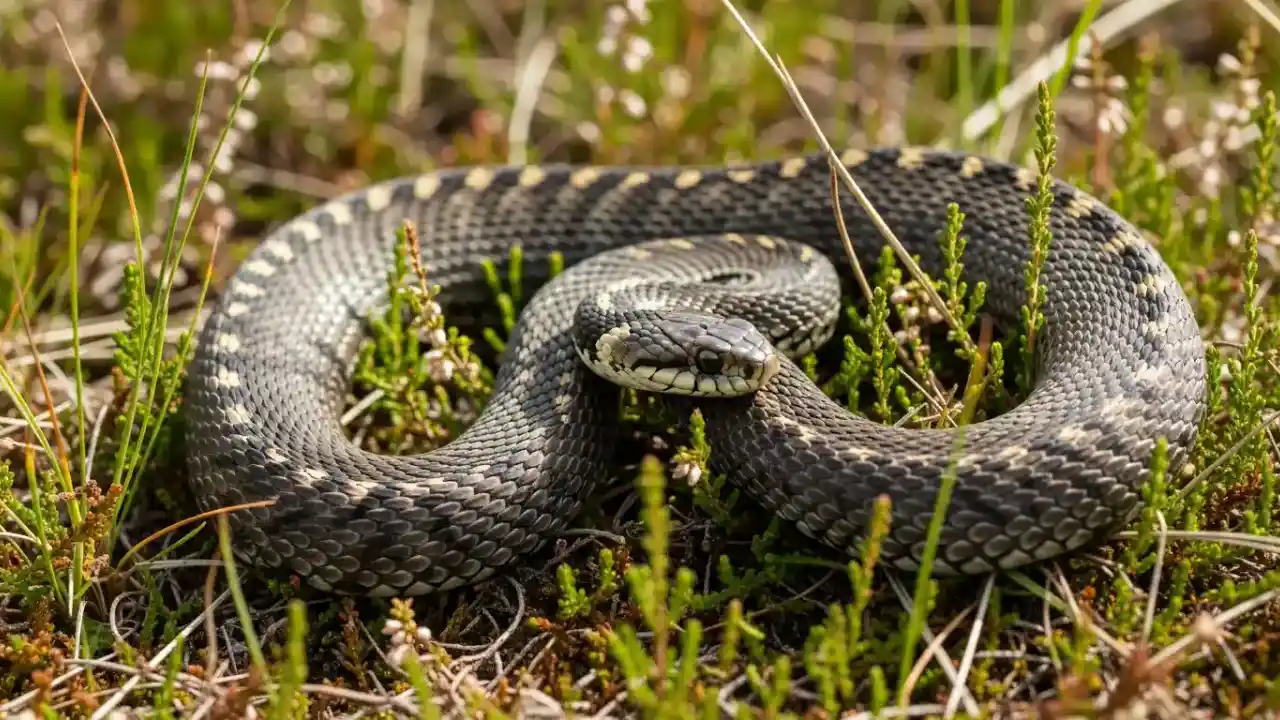
- The adder is the UK's only venomous snake. It can be identified by a distinctive dark zigzag pattern running along its back. Male adders are grey with a black zigzag; females are brown with a darker brown zigzag.
- Grass snakes are the UK's longest native snake, growing up to 150cm. They are non-venomous and identified by a distinctive yellow and black collar behind the head.
- Grass snakes are strong swimmers and are commonly found near ponds, streams, and garden compost heaps where they lay their eggs in the warmth of decomposing vegetation.
- Slow worms are not snakes but legless lizards. They have smooth, shiny skin, can blink (snakes cannot), and can shed their tail when threatened.
- Adders are generally shy and avoid confrontation. Most bites occur when people accidentally step on them or attempt to handle them.
"Top service, fast and responsive"
Christopher Nottingham · Google review, April 2026
Found a snake on your property or development site?
Free initial advice on species identification, legal obligations, and what to do next.
UK Snake Species Identification
The adder is the UK's only venomous snake. It can be identified by the distinctive dark zigzag pattern running along its back. If you are unsure, do not approach the snake.
The UK has three native snake species and one legless lizard that is commonly mistaken for a snake. All four are protected under wildlife legislation.
Adder (Vipera berus): The UK's only venomous snake. Adults grow to 50 to 65cm. The most distinctive feature is a dark zigzag pattern running along the entire length of the back. Males are typically grey with a black zigzag; females are brown with a darker brown zigzag. Some individuals are melanistic (entirely black). Adders have a triangular head wider than the neck, vertical slit pupils, and a stocky body. They are found on heathland, moorland, woodland edges, and rough grassland. Adders bask in sunny spots, particularly on south-facing banks, log piles, and stone walls.
Grass snake (Natrix helvetica): The UK's longest native snake, growing up to 150cm. Non-venomous. Identified by an olive-green or brown body with dark markings along the sides and a distinctive yellow and black collar behind the head. Has round pupils and a slender body. Strong swimmers, commonly found near ponds, streams, ditches, and garden compost heaps where they lay eggs. If threatened, grass snakes may play dead or release a foul-smelling secretion.
Smooth snake (Coronella austriaca): The UK's rarest reptile. Grows to 60 to 75cm. Grey or brown with a pattern of paired dark spots along the back. Slender build with a flat head and round pupils. Confined to lowland heathland in Dorset, Hampshire, and Surrey. Extremely unlikely to be encountered in the North East.
Slow worm (Anguis fragilis): Not a snake but a legless lizard. Grows to 30 to 50cm. Smooth, shiny skin with a metallic sheen. Uniform brown, grey, or copper colour. Males may have blue spots. Unlike snakes, slow worms can blink and have visible ear openings. Found in gardens, compost heaps, allotments, and rough grassland. Often found under garden debris, logs, and flat stones.
Encountering Snakes Safely
Snake encounters in the UK are uncommon, and serious incidents are rare. All UK snakes are shy and prefer to avoid human contact. Understanding how to respond to an encounter reduces risk and ensures legal compliance.
If you see a snake:
- Do not attempt to handle, catch, or kill it. All UK snakes are legally protected.
- Keep a safe distance (at least 2 metres) and observe from a distance if you wish to identify the species.
- If possible, take a photograph from a safe distance for identification. We can identify species from photographs.
- Snakes will usually move away if left undisturbed. They do not chase or pursue humans.
- Keep dogs on leads in areas where adders are known to be present, particularly on heathland and moorland.
If a snake is in your home or building: This is extremely rare in the UK. If it happens, do not attempt to catch the snake. Close doors to contain it in one room, open a window or door to the outside, and contact us for advice. The snake will usually find its own way out.
Reducing encounters in gardens: Keep grass short in areas you use regularly. Clear log piles, rubble, and sheet materials (corrugated iron, plastic sheeting) where snakes may shelter. If you want to encourage snakes as a wildlife feature, create dedicated log and stone piles in a quieter corner of the garden.
Adder Bites: First Aid and Response
Adder bites are rarely fatal but require immediate medical attention. Since 1876, there have been 14 recorded fatalities from adder bites in the UK, the last in 1975.
The adder is the UK's only venomous snake, and while bites are uncommon, they require prompt medical attention. Most bites occur when people accidentally step on an adder, sit on one while sunbathing, or attempt to pick one up.
Symptoms of an adder bite: Pain and swelling at the bite site, which may spread along the limb. Two small puncture marks may be visible. Nausea, vomiting, and dizziness in some cases. Bruising and discolouration around the bite. In more severe cases (less than 10% of bites), symptoms can include difficulty breathing, confusion, and systemic allergic reaction.
First aid for adder bites:
- Stay calm and keep still. Panic and movement increase the spread of venom through the body.
- Immobilise the affected limb. Do not apply a tourniquet, ice, or attempt to suck out the venom.
- Remove rings, watches, and tight clothing near the bite before swelling develops.
- Go to the nearest A&E department as quickly as possible. Drive if possible rather than walking.
- Note the time of the bite and, if safe to do so, take a photograph of the snake for identification.
- Do not attempt to catch or kill the snake.
Dogs and adder bites: Dogs are commonly bitten on the nose or legs when investigating adders. Symptoms include rapid swelling, pain, lethargy, and in severe cases collapse. Contact your veterinary practice immediately if you suspect your dog has been bitten.
Legal Protection for UK Snakes
All UK snake species and slow worms are protected under the Wildlife and Countryside Act 1981, but the level of protection differs between species.
Adder and grass snake: Protected under Section 9 (Part 1) of the Act. It is an offence to intentionally kill or injure either species, or to offer them for sale. Their habitat is not specifically protected, but disturbance during the course of development may require mitigation.
Smooth snake: Fully protected under Section 9 (Parts 1, 4, and 5). In addition to the protections above, it is an offence to intentionally capture, disturb, or handle a smooth snake, or to damage, destroy, or obstruct access to any structure or place it uses for shelter or protection.
Slow worm: Fully protected under Section 9 (Parts 1 and 5). It is an offence to kill, injure, capture, or sell slow worms, or to damage or destroy their habitat.
What this means in practice: You must not kill, injure, or attempt to catch any UK snake or slow worm. If snakes are present on a development site, land clearance and vegetation removal must be managed to avoid harm. For smooth snakes and slow worms, additional survey and mitigation requirements may apply. If you find any reptile on your property, leave it alone and seek advice if you need guidance.
Snakes and Development Sites
Reptile surveys and mitigation plans are required for many development projects. Failure to assess for reptile presence before land clearance can result in prosecution.
Reptile surveys are a common requirement for development projects on brownfield land, heathland, grassland, and sites with suitable reptile habitat. Local planning authorities may impose a survey condition before granting permission.
When a reptile survey is needed: Sites with rough grassland, scrub, south-facing banks, log piles, rubble, or areas of undisturbed ground may support reptile populations. Brownfield sites and former industrial land are frequently used by slow worms and grass snakes. A habitat assessment determines whether a full reptile survey is needed.
Survey method: Reptile surveys use artificial refugia (corrugated metal or felt sheets) placed across the site. Surveyors check these at regular intervals during the active season (April to September) to count and identify reptile species present. A minimum of seven survey visits is standard practice.
Mitigation: If reptiles are found on a development site, a mitigation strategy is required. This typically involves trapping and translocating reptiles to a suitable receptor site before work begins. The receptor site must be prepared in advance and provide suitable habitat for the species being moved. Mitigation is carried out under a method statement agreed with the local planning authority or Natural England.
We provide initial habitat assessments for development sites and advise on whether a formal reptile survey is likely to be required. Where full ecological surveys are needed, we recommend licensed reptile ecologists and help coordinate the process.
Seasonal Snake Activity in the North East
Hover or tap a month to see Snake Species Awareness activity details
All UK reptiles in hibernation. No activity or encounters. Safe period for land clearance on assessed sites.
Hibernation continues. Adders may emerge on unusually mild days. Pre-season habitat assessments possible.
Adders emerging from hibernation and basking. Males appear first. First encounters of the season.
Adder mating season. Males actively searching for females. Grass snakes emerging. Reptile survey season begins.
All species active. Grass snakes laying eggs in compost heaps. Peak activity and survey period.
Peak reptile activity. Young adders born (live-bearing). Grass snakes active near water. Full survey season.
All species at peak activity. Hot weather increases basking. Highest encounter risk.
Continued high activity. Grass snake eggs hatching. Young slow worms visible. Survey season continues.
Activity declining. Reptiles feeding heavily before hibernation. Late survey window. Last encounters of season.
Most reptiles entering hibernation. Occasional basking on warm days. Activity minimal.
Hibernation underway. No activity. Safe period for land clearance on previously assessed sites.
Deep hibernation. No encounters. Planning period for spring reptile surveys on development sites.
UK reptiles are active from March to October, with peak activity from April to August. Adders emerge from hibernation in March and are most frequently encountered during basking in spring. Reptile surveys for development sites must be carried out during the active season (April to September). Land clearance on assessed sites is safest during the hibernation period (November to February) following appropriate mitigation.
Planning development on a site with potential reptile habitat? Arrange a habitat assessment early so that survey work can be completed during the active season (April to September).
Spring (March to May) - Emergence and basking: UK reptiles emerge from hibernation in March, with adders typically the first species to appear. Basking behaviour is at its most frequent in spring as snakes warm up after winter torpor. This is when most human encounters occur, particularly on footpaths, south-facing banks, and garden edges near suitable habitat. Reptile surveys for development projects should begin in April.
Summer (June to August) - Peak activity: All three UK snake species are at their most active during summer. Grass snakes are frequently found near water, compost heaps, and garden ponds. Adders are less visible in mid-summer as they retreat from the hottest conditions. Slow worms (legless lizards) are regularly encountered under garden debris and in warm, sheltered spots.
Autumn (September to October) - Pre-hibernation: Snakes feed intensively before hibernation, building fat reserves for the winter. Activity becomes more concentrated around hibernation sites (hibernacula). Reptile survey season ends in September. This is the best period for installing reptile exclusion fencing ahead of construction work, as animals can be moved to receptor sites before they enter hibernation.
Winter (November to February) - Hibernation: All UK reptiles hibernate during winter, typically in underground burrows, rubble piles, or south-facing banks. Disturbance to hibernation sites is a wildlife offence. Construction work near known hibernation areas should be timed to avoid this period or undertaken with appropriate ecological supervision.
Why Choose Us for Snake Species Awareness
Species Identification
We identify UK snake species and slow worms accurately and advise on the specific legal protections that apply to each.
Encounter Guidance
Practical, calm advice on what to do if you find a snake on your property, in your garden, or on a development site.
Risk Assessment
For commercial sites, public land, and holiday parks, we assess adder risk and advise on practical management measures.
Development Support
Guidance on reptile survey requirements, timing, and mitigation for land clearance and construction projects.
Rapid Identification
Send us a photograph and we can usually identify the species within hours, giving you immediate clarity on what you are dealing with.
Free Initial Advice
We provide free initial guidance on snake encounters and identification. Contact us before taking any action.
Snake Habitats in the North East
Adders and grass snakes are present in parts of the North East, though they are less common here than in southern England. Understanding where snakes are likely to be found helps property owners, land managers, and walkers manage encounters.
Adder habitats: Heathland, moorland edges, rough grassland, woodland clearings and rides, and south-facing banks with good sun exposure. Adders hibernate communally in underground sites (often old rabbit burrows, tree root systems, or stone walls) from October to February and emerge to bask in March. In the North East, adders are found on upland moorland fringes, coastal dunes, and in some lowland grassland areas.
Grass snake habitats: Gardens, allotments, field margins, hedgerows, pond and stream edges, and compost heaps. Grass snakes are more closely associated with water than adders and are strong swimmers. They lay eggs in warm, decomposing material such as garden compost heaps, manure piles, and hay stacks. In the North East, grass snakes are found in lowland areas, particularly near waterbodies.
Slow worm habitats: Gardens, allotments, churchyards, railway embankments, brownfield sites, and rough grassland. Slow worms are secretive and usually found under cover (logs, flat stones, corrugated iron, black plastic sheeting). They are more common than many people realise and are frequently encountered during gardening.
Managing Snake Risk on Public Land
Landowners and site operators have a duty of care to manage known adder risk on public land. Risk assessment and sensible management reduce encounters without harming protected wildlife.
For operators of public sites, holiday parks, footpaths, and nature reserves where adders are known to be present, managing the risk to the public requires a balanced approach that protects both people and the legally protected snakes.
Risk assessment: We can carry out an assessment of your site to identify areas where adders are likely to bask, hibernate, and move. This allows you to focus management efforts on the areas where encounters are most likely.
Practical management measures:
- Keep grass and vegetation short along paths, access points, and areas used by the public. Adders avoid open, short-cropped areas where they feel exposed.
- Install advisory signage at site entrances and known adder areas. Signs should explain what adders look like, what to do if one is seen, and first aid for bites.
- Maintain paths to a good width so that walkers do not need to step into long grass or vegetation.
- Manage basking areas: if adders are basking near a path, consider rerouting the path or creating a buffer of short vegetation between the basking area and the path.
- Keep dogs on leads in areas where adders are known to be present.
These measures reduce the risk of encounters without harming the adders. Killing or relocating adders is illegal and not an acceptable management approach.
Reptile Conservation in the North East
All UK reptile species have declined over recent decades due to habitat loss, fragmentation, and changes in land management. Encouraging reptiles on suitable land benefits biodiversity and helps maintain healthy populations of these protected species.
Creating reptile habitat:
- Log piles and brash: Stacked logs, brash piles, and fallen timber provide shelter, hibernation sites, and basking platforms. Place them in sunny, sheltered locations on south-facing aspects.
- Compost heaps: Grass snakes lay their eggs in warm, decomposing vegetation. Maintaining a compost heap in a quiet corner of the garden can provide a breeding site.
- Rough grassland: Areas of uncut or infrequently cut grassland provide feeding habitat for field voles (adder prey) and ground cover for slow worms and grass snakes. Managing grass on a rotational cutting regime benefits reptiles.
- Refugia: Flat stones, paving slabs, corrugated metal, or roofing felt placed in sunny positions provide basking sites. Reptiles shelter beneath these surfaces to thermoregulate.
- Pond edges: Gradual, vegetated pond margins benefit grass snakes and provide a supply of their amphibian prey.
Reptile-friendly land management can be incorporated into existing garden and estate management plans without significant cost or effort. The presence of reptiles is an indicator of a healthy, biodiverse environment.
What to Expect from a Reptile Assessment
A habitat assessment can be carried out at any time of year. Full reptile surveys must be completed during the active season (April to September) and require a minimum of seven visits.
If you need a reptile assessment for a development site, land clearance, or to identify a snake found on your property, our process is straightforward.
- Habitat assessment: We visit the site and assess its potential to support reptiles based on habitat features (grassland, scrub, basking areas, hibernation features). This determines whether a full reptile survey is needed. A habitat assessment can be carried out at any time of year.
- Species identification: If you have found a snake or slow worm and need identification, send us a photograph from a safe distance. We can usually confirm the species within hours. For live sightings, we can arrange a site visit if needed.
- Full reptile survey: If the habitat assessment indicates reptile potential, a full survey may be needed. This involves placing artificial refugia (corrugated tin or roofing felt sheets) across the site and checking them on at least seven occasions during the active season (April to September). The survey identifies which species are present and provides an estimate of population size.
- Mitigation advice: If reptiles are found on a development site, we advise on mitigation requirements (trapping and translocation, habitat creation, timing of works) and can recommend licensed reptile ecologists to carry out the mitigation work.
- Risk management: For public sites with known adder populations, we provide risk assessments and practical management recommendations to reduce encounter risk.
Our Snake Species Awareness Process
A structured, three-stage approach that treats the problem and prevents it returning.
Step 1
Inspect and Plan
A detailed property inspection identifies entry points, infestation hotspots, and the species involved. A targeted treatment plan is developed based on findings.
Step 2
Treatment
Professional control measures are applied using advanced techniques and CRRU-compliant products. Proofing and sealing work addresses the root cause at the same time.
Step 3
Ongoing Support
Follow-up visits confirm the problem is resolved. You receive clear documentation, prevention advice, and recommendations for ongoing protection.
Found a snake on your property or development site?
Free initial advice on species identification, legal obligations, and what to do next.
Useful Resources and External Guidance
For reptile-related queries that require specialist ecological input, the following organisations provide advice:
- Amphibian and Reptile Conservation (ARC): The leading UK charity for reptile and amphibian conservation. Provides advice on identification, survey methods, and habitat management.
- Natural England: Government body responsible for licensing reptile mitigation on development sites. Provides guidance on survey requirements and best practice.
- NHS 111: For medical advice if bitten by an adder. For serious symptoms, go directly to A&E.
- Local herpetological groups: Volunteer groups that monitor reptile populations and can assist with identification.
If you are unsure what species you have found or need advice on managing a snake encounter, contact us for free initial guidance. We can identify species from photographs and advise on the most appropriate next steps.
"[The technician] helped us get rid of pigeons from nesting under our solar panels and gave us some great advice how to keep them out."
Gemma Nelson · Google review, March 2026

NPTA Member
We are full members of the National Pest Technicians Association (NPTA). This means our technicians meet strict training and competency standards, carry appropriate insurance, and follow the association's code of practice. NPTA membership is your assurance that the work is carried out professionally and responsibly.
Fair, Transparent Pricing
Every job is different. The cost depends on the type of pest, scale of the problem, and what treatment is needed. We provide a free assessment and an honest quotation before any work begins. No hidden costs, no surprises.
View our pricing guideSatisfaction Guaranteed
Our snake awareness service provides accurate species identification and clear, practical advice on managing encounters and legal obligations. We ensure you understand what species you are dealing with and what steps to take.
Frequently Asked Questions
Do not try to handle it. Most UK snakes are harmless and will move on if left alone. If you need identification, take a photograph from a safe distance and contact us. Adders can be identified by their distinctive dark zigzag pattern along the back. Grass snakes have a yellow and black collar behind the head. Slow worms have smooth, shiny skin and are legless lizards, not snakes.
Adder bites are rarely life-threatening but can cause significant pain, swelling, and nausea. Since 1876, there have been 14 recorded fatalities from adder bites in the UK, the last in 1975. Seek medical attention promptly if bitten. Keep calm, immobilise the affected limb, and go to your nearest A&E department. Do not attempt to suck out the venom or apply a tourniquet.
You must not kill or injure any UK snake species. Catching and relocating snakes requires appropriate authority for fully protected species (smooth snake, slow worm). If snakes are regularly present and causing concern, we can advise on habitat management to make the area less attractive. For development sites, a reptile survey and mitigation plan may be required.
No. Grass snakes are completely non-venomous and harmless to humans. They may hiss and strike defensively if cornered, but they do not bite aggressively and their bite is not harmful. They are beneficial garden wildlife, feeding on frogs, toads, newts, and fish.
If your development site has suitable reptile habitat (rough grassland, scrub, south-facing banks, rubble, brownfield land), the local planning authority may require a reptile survey as a condition of planning permission. We can carry out a preliminary habitat assessment and advise on whether a full survey is likely to be needed.
Slow worms are legless lizards, not snakes. Key differences: slow worms can blink (snakes cannot), they have visible ear openings, they can shed their tail when threatened, and their skin has a smooth, metallic sheen. They are completely harmless and are a protected species. If you find one in your garden, leave it alone.
UK snakes are active from March to October, with peak activity from April to August. Adders emerge from hibernation in March and are most often seen basking in sunny spots during spring. Grass snakes are most active from April to September. All species hibernate from October to February.
You cannot legally kill or remove snakes from your garden, but you can make it less attractive to them. Keep grass short in areas you use regularly. Remove log piles, rubble, and sheet materials where snakes shelter. Clear dense vegetation. However, if you have a wildlife-friendly garden with a pond or compost heap, grass snakes and slow worms may be beneficial residents.
Related Services
Our Other Services
Areas We Cover
We provide snake species awareness services across the North East of England.
Ready to talk to us?
Free survey and quotation for businesses and homeowners. No obligation, no pressure.
We will get back to you as soon as we can.