
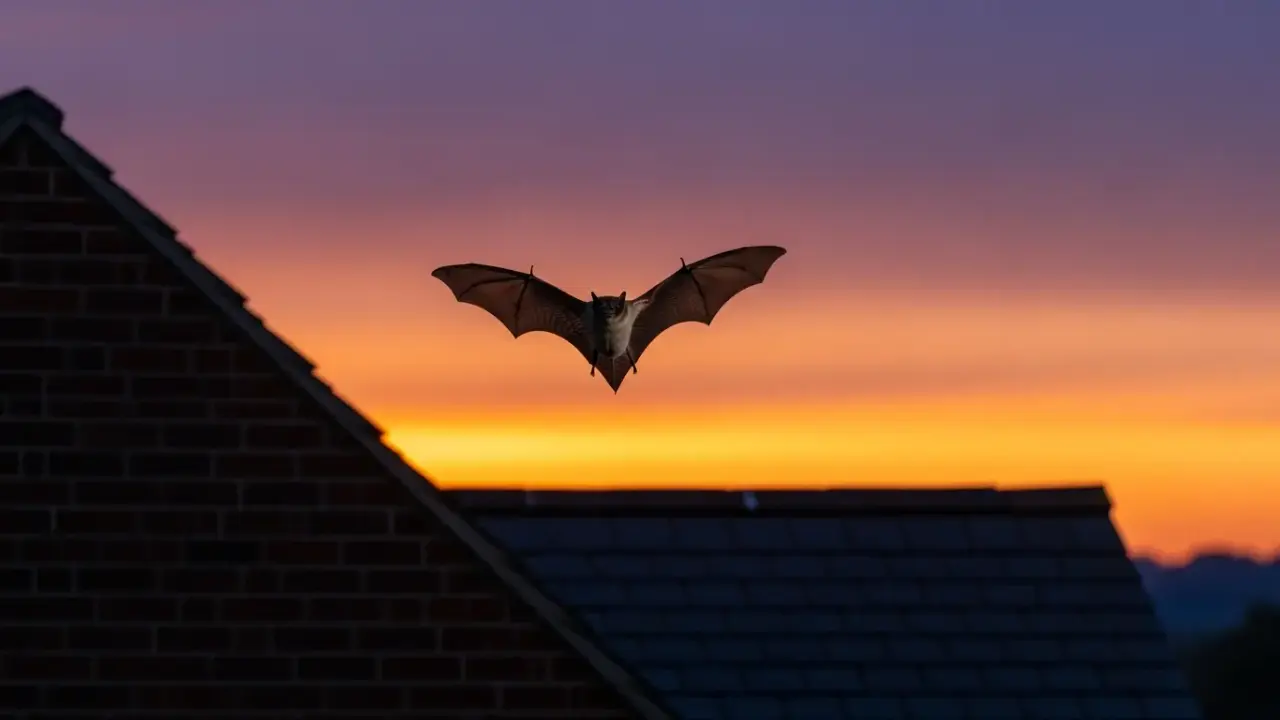
Bat Species Awareness
Protected species guidance, bat awareness surveys, and legal compliance advice for property owners and developers across the North East.
Why You Need Professional Bat Species Awareness
All 18 UK bat species and their roosts are legally protected under the Wildlife and Countryside Act 1981 and the Conservation of Habitats and Species Regulations 2017. Disturbing bats or damaging a roost, even accidentally, is a criminal offence that can result in prosecution, unlimited fines, and imprisonment. We provide bat awareness surveys, practical advice on living with bats, and guidance on legal obligations for property owners, developers, and building contractors.
What's Included
Why acting quickly matters
If you have discovered bats during building work, all work in the affected area must stop immediately. Continuing work after discovering bats is a criminal offence. Contact us for rapid advice on your legal obligations and next steps.
Found bats during building work?
All work must stop immediately. Contact us for rapid advice on your legal obligations and next steps.
Request a free call back
Prefer to get in touch another way? Contact us or email info@wynyardpestcontrol.co.uk
Related Services
Threat Assessment
Nuisance:
2/10LOWBats cause minimal property damage. Noise from large colonies in roof spaces and accumulation of droppings and urine staining are the most common concerns. The smell from large roosts can be noticeable in warm weather.
Hazard:
2/10LOWUK bats pose a very low health risk. Bat droppings are dry and composed mainly of insect remains. There is a theoretical risk of European Bat Lyssavirus (EBLV), a rabies-related virus, but only two cases have ever been recorded in UK bats. The primary hazard is legal risk: disturbing bats or damaging a roost is a criminal offence with serious penalties.
Vital Statistics
| UK species | 18 breeding species recorded |
| Most common (North East) | Common pipistrelle, soprano pipistrelle, brown long-eared |
| Common pipistrelle weight | 3 to 8g (lighter than a 20p coin) |
| Common pipistrelle wingspan | 20 to 25cm |
| Diet | Insects, primarily midges, moths, and mosquitoes |
| Feeding rate | Up to 3,000 insects per night per bat |
| Lifespan | 4 to 5 years typical, up to 30 years recorded |
| Breeding | One pup per year (occasionally twins) |
| Hibernation | November to March, varies by species and weather |
| Legal protection | Wildlife and Countryside Act 1981, Conservation of Habitats and Species Regulations 2017 |
| Roost protection | Roosts protected even when bats are absent |
Key Facts
- It is a criminal offence to deliberately or recklessly kill, injure, or capture any bat. Penalties include unlimited fines and up to six months in prison.
- Bat roosts are protected year-round, even when no bats are present. Blocking a roost entrance, removing roost material, or carrying out work that damages a roost is illegal.
- If bats are discovered during building work, all work must stop immediately. Continuing work after discovering bats is a criminal offence.
- Planning authorities can require bat surveys before granting planning permission for building work, conversions, and demolitions.
- A single common pipistrelle bat can eat up to 3,000 insects in one night, making bats a valuable natural pest control for midges, moths, and mosquitoes.
- Common pipistrelles weigh between 3 and 8 grams, less than a 20 pence coin, and can squeeze through gaps as small as 15mm.
- Brown long-eared bats are the second most common species in buildings. They roost in the ridge area of roofs and are identified by their large ears, nearly as long as their body.
- Bat droppings in the UK are not a significant health risk. They are dry, crumbly, and composed mainly of insect exoskeletons. They can be swept up safely.
- UK bat populations declined dramatically in the 20th century due to habitat loss, pesticide use, and loss of roosting sites. Legal protection has helped stabilise some populations.
"[The technician] helped us get rid of pigeons from nesting under our solar panels and gave us some great advice how to keep them out."
Gemma Nelson · Google review, March 2026
Concerned about bats on your property?
Free initial advice on your legal obligations and practical options. We help you understand what you can and cannot do.
UK Bat Species
The UK has 18 species of bat, all of which are legally protected. The most commonly encountered species in buildings in the North East are:
Common pipistrelle (Pipistrellus pipistrellus): The most common bat in the UK. Weighs 3 to 8g with a wingspan of 20 to 25cm. Roosts in crevices around buildings including under tiles, behind fascia boards, and in cavity walls. Colonies can number several hundred bats in summer maternity roosts. Identified by its small size and jerky, fast flight pattern. Echolocation peaks at 45kHz.
Soprano pipistrelle (Pipistrellus pygmaeus): Very similar in appearance to the common pipistrelle but recognised as a separate species in 1999. Tends to roost in newer buildings and has a preference for foraging near water. Echolocation peaks at 55kHz, which is how the two pipistrelle species are distinguished in the field.
Brown long-eared bat (Plecotus auritus): A medium-sized bat with very large ears, nearly as long as its body. Weighs 6 to 12g. Roosts inside roof spaces, often in the ridge area, and is frequently found in older buildings, churches, and barns. Flies slowly and can hover, gleaning insects from foliage. Colonies are typically small, 10 to 30 bats.
Daubenton's bat (Myotis daubentonii): A medium-sized bat that feeds low over water, skimming insects from the surface with its large feet. Common along rivers, canals, and reservoirs in the North East. Roosts in bridges, tunnels, and stone structures near water. Colonies are typically 20 to 50 bats.
Natterer's bat (Myotis nattereri): A medium-sized bat with distinctively pale undersides. Roosts in old buildings, barns, and bridges. Feeds in woodland and along hedgerows, catching insects in flight and by gleaning from surfaces.
Legal Protection for Bats
All UK bat species and their roosts are protected by law. The penalties for disturbance include unlimited fines and up to six months in prison.
Bats are among the most strongly protected wildlife species in the UK. Two overlapping pieces of legislation provide their protection:
Wildlife and Countryside Act 1981: Makes it an offence to intentionally or recklessly kill, injure, or take any bat. It is also an offence to intentionally or recklessly disturb a bat while it is occupying a roost, or to damage, destroy, or obstruct access to a bat roost.
Conservation of Habitats and Species Regulations 2017: Makes it an offence to deliberately capture, kill, or disturb any bat, or to damage or destroy a breeding site or resting place (roost). This regulation extends protection to cover reckless as well as deliberate acts.
Key points for property owners:
- A bat roost is any structure or place that bats use for shelter or protection. This includes the roost itself and the access points bats use to enter and leave.
- Roosts are protected whether or not bats are present. A roost used by bats in summer remains legally protected even during winter when bats are elsewhere.
- You do not need to have known bats were present to be prosecuted. The offence of reckless disturbance means that failing to check for bats before carrying out work can be an offence.
- If bats are found during building work, all work in the affected area must stop immediately and advice sought from Natural England or the Bat Conservation Trust helpline.
Signs of Bat Activity in Buildings
Bat droppings are often the first sign of a roost. They are small, dark, and crumbly, distinguishable from mouse droppings by crumbling into a fine powder of insect remains when rubbed.
Bats can roost in buildings without the occupants being aware. Knowing what signs to look for helps identify bat presence before any work is carried out that might disturb them.
- Droppings: Bat droppings are small (5 to 10mm), dark brown to black, and dry. They crumble easily between fingers into a fine powder of insect exoskeletons. Mouse droppings are similar in size but are hard, smooth, and do not crumble. Bat droppings accumulate below entry points, along walls, and on window ledges.
- Urine staining: Yellowish staining on walls, window frames, and stonework below entry points. Can be particularly noticeable on light-coloured render or stonework.
- Scratch marks: Faint claw marks around entry points where bats grip the surface as they enter and exit. Visible on painted surfaces and soft stone.
- Noise: Squeaking and chittering sounds from within roof spaces, wall cavities, or behind cladding, particularly around dusk from May to September. Large maternity colonies can produce audible chattering.
- Bat sightings: Bats emerging at dusk from a specific point on the building is the clearest evidence of a roost. Emergence surveys carried out at dusk during May to September are the standard method for confirming roost presence and estimating colony size.
- Staining on timbers: In loft spaces, dark oily staining on ridge boards, purlins, and rafters where bats have been roosting over a long period.
What to Do If You Find Bats
If bats are discovered during building work, all work in the affected area must stop immediately. Continuing work is a criminal offence.
If you discover bats in your property, during building work, or in any other situation, the correct response depends on the circumstances.
Bats in your loft or roof space: In most cases, no action is needed. Bats in a roof space cause minimal damage and pose no significant health risk. You are legally entitled to continue living in and using your property normally. You must not block their access, disturb them, or carry out work that could affect the roost without appropriate advice.
Bats discovered during building work: All work in the affected area must stop immediately. Do not attempt to handle, move, or exclude the bats. Contact us, Natural England, or the Bat Conservation Trust helpline for advice. Work can only resume once an appropriate assessment has been carried out and, if necessary, a European Protected Species licence has been obtained from Natural England.
A bat flying inside your home: Open all windows and doors in the room and switch off lights. The bat will usually find its way out once it can detect the air flow. Do not attempt to catch the bat. If the bat does not leave, place a box gently over it, slide a piece of card underneath, and release it outside at dusk. Always wear gloves when handling bats as a precaution.
An injured or grounded bat: Gently place the bat in a box with airholes and a damp cloth. Contact the Bat Conservation Trust helpline or a local bat group for advice. Do not attempt to feed the bat or keep it for an extended period.
Bats and Building Work
Any building work that could affect bat roosts requires professional assessment. Planning authorities increasingly require bat surveys before granting permission.
Building work is the most common cause of bat disturbance in the UK. The following types of work are most likely to affect bats and may require a preliminary roost assessment before proceeding:
- Roof repairs and re-roofing: Removing or replacing tiles, slates, ridge tiles, lead flashing, or roof felt can destroy roost sites and access points.
- Loft conversions: Converting a loft space used by bats into living accommodation will destroy the roost. A European Protected Species licence from Natural England is required.
- Building demolition: Any building being demolished should be assessed for bat presence before work begins.
- Barn conversions: Barns and agricultural buildings are frequently used by bats. Conversion to residential use almost always requires a bat survey and may need a licence.
- External rendering and cladding: Work to external walls can block crevice roost sites used by pipistrelle bats.
- Window and door replacement: Replacing windows or doors near entry points can block access to roosts.
- External lighting: Installing bright external lighting near roost access points can disturb bats and cause them to abandon the roost.
If you are planning any of these types of work, we can carry out a preliminary assessment to determine whether bats are likely to be present and advise on the appropriate next steps. For formal protected species surveys required by planning authorities, we can recommend licensed ecological consultants.
Seasonal Bat Activity in the North East
Hover or tap a month to see Bat Species Awareness activity details
Bats in hibernation in sheltered sites. No building surveys possible. Avoid disturbing potential hibernation sites.
Hibernation continues. Some bats may emerge on mild nights. Pre-season planning for building works.
Bats begin emerging from hibernation. Early activity on mild evenings. Preliminary roost assessments can begin.
Bats returning to summer roost sites. Activity increasing. Emergence surveys can begin from mid-April.
Maternity colonies forming. Females gather at summer roosts. Peak survey season begins. Avoid disturbing known roosts.
Maternity colonies established. Young born. Peak activity and peak survey season. Most sensitive period for disturbance.
Young bats growing and learning to fly. Colonies at maximum size. Peak activity period continues.
Young bats fledging and becoming independent. Colonies begin to disperse. Late survey window.
Maternity colonies dispersing. Bats mating and feeding heavily before hibernation. Last survey opportunity.
Bats feeding on remaining insects and entering hibernation sites. Activity declining. Building works less constrained.
Most bats entering hibernation. Limited activity on mild nights. Avoid disturbing potential hibernation sites.
Bats in deep hibernation. No surveys possible. Ideal period for building works in areas cleared by earlier surveys.
Bat activity in the North East follows a clear seasonal cycle. Bats hibernate from November to March and are most active from May to September. Emergence and activity surveys can only be carried out during the active season (May to September), so planning surveys well in advance of building work is essential to avoid project delays.
Planning building work on a property that may have bats? Arrange a preliminary assessment early to avoid survey season delays. We can advise on timing and next steps.
Spring (April to May) - Emergence: Bats emerge from hibernation as insect prey becomes available. Activity surveys for planning applications can begin from May. Maternity roosts start to form as females gather in traditional sites. This is a critical period for construction and development projects to obtain bat survey results before the active season.
Summer (June to August) - Peak activity: Bat activity is at its highest. Maternity colonies are established, with young born in June and July. Flight activity is visible at dusk around roost exit points. This is the peak survey period - emergence and activity surveys provide the most reliable data during these months. Any building work affecting known roost sites must have a Natural England licence in place.
Autumn (September to October) - Mating and swarming: Bats begin autumn swarming at cave and tunnel entrances, an important mating behaviour. Roost use patterns change as colonies disperse from maternity sites. Activity surveys remain valid until September. Bat activity declines as nights become colder and insect prey reduces.
Winter (November to March) - Hibernation: All UK bat species hibernate during winter, typically in caves, tunnels, trees, or buildings. Bats are at their most vulnerable during this period and must not be disturbed. Hibernation roosts receive the same legal protection as summer roosts. Building work near known hibernation sites requires careful planning and may need a licence.
Why Choose Us for Bat Species Awareness
Protected Species Knowledge
We understand bat legislation thoroughly and can advise property owners, developers, and contractors on their legal obligations clearly and accurately.
Practical Guidance
Clear, straightforward advice on what you can and cannot do when bats are present. We help you find practical solutions within the law.
Rapid Response
If you discover bats during building work, we can provide advice quickly to help you comply with the law and minimise project delays.
Statutory Body Liaison
We guide you through the process of engaging with Natural England, the Bat Conservation Trust, and local bat groups.
Developer Support
For planning applications and development projects, we provide preliminary assessments and coordinate with licensed ecological consultants.
Free Initial Advice
We provide free initial guidance on bat-related queries. If you are unsure whether you need professional help, we are happy to discuss your situation.
Living with Bats
In the majority of cases, bats and building occupants can coexist without conflict. Bats cause very little damage to buildings and their droppings, while messy, are not considered a significant health risk in the UK.
Managing bat droppings: Bat droppings that accumulate on floors, window ledges, and surfaces can be swept or vacuumed up. They are dry and crumbly and pose no significant health risk. For large accumulations in loft spaces, wearing a dust mask is a sensible precaution. Droppings do not damage building materials.
Noise: Colony noise is most noticeable during the maternity season (May to August) when females gather in large groups to give birth and raise young. The chattering tends to reduce from September as bats disperse to autumn and winter roosts. If noise is a concern, we can advise on whether the colony is likely to be a seasonal presence.
Smell: Large colonies can produce a noticeable smell, particularly in warm weather when urine and droppings accumulate. This is usually confined to the roof space and is rarely detectable in living areas. Improved ventilation in the roof space can help.
Lighting: Bats are sensitive to artificial light. If you have bats using your building, avoid installing bright external lights near their entry and exit points. If external lighting is needed, use directional lights pointed away from the roost access and consider PIR (passive infrared) sensors so lights are only on when needed.
Bat Surveys for Planning Applications
Local planning authorities increasingly require bat surveys as part of planning applications for building work that could affect bat habitat. The survey process typically involves two stages:
Preliminary Roost Assessment (PRA): A daytime assessment of the building or site to evaluate its potential to support bats. The surveyor examines the building for features that could be used by bats (crevices, gaps, access points, suitable internal spaces) and looks for evidence of bat use (droppings, staining, scratch marks). A PRA can be carried out at any time of year and determines whether further survey work is needed.
Emergence and activity surveys: If the PRA identifies bat potential, one or more dusk emergence or dawn re-entry surveys are required to confirm whether bats are present, which species are using the building, and the size of the colony. These surveys can only be carried out during the bat active season, typically May to September. At least two survey visits are usually required, with at least two weeks between visits.
We provide preliminary assessments to help property owners and developers understand whether their planned works are likely to require formal bat surveys. Where full ecological surveys are needed, we can recommend licensed bat surveyors and help coordinate the process to avoid delays to your project.
Bat Roosting Habitats
Bats use a variety of roosting habitats depending on the species, the time of year, and what is available in the local area.
Buildings: The most common roosting habitat for pipistrelle and brown long-eared bats. Pipistrelles typically roost in crevices: under tiles, behind fascia boards, in cavity walls, and behind hanging tiles. Brown long-eared bats roost inside roof spaces, usually in the ridge area. Older buildings with more gaps and crevices tend to support more bats than modern, well-sealed construction.
Trees: Bats roost in tree holes, behind loose bark, and in splits and cracks in mature trees. Woodland bats such as noctules and Leisler's bats are particularly dependent on tree roosts. Any tree felling or significant pruning on mature trees should consider the potential for bat presence.
Bridges and tunnels: Daubenton's bats commonly roost in stone bridges, culverts, and tunnels near water. Crevices in stonework and expansion joints are typical roost sites.
Underground sites: Caves, mines, cellars, and ice houses are used as hibernation sites during winter (November to March). Bats select these sites for their stable, cool temperatures and high humidity.
Bat boxes: Specially designed boxes mounted on trees or buildings can provide alternative roosting habitat. They are particularly useful where natural roosting sites have been lost to development or building work. If a roost is being lost to development, providing bat boxes may be part of the mitigation plan required by the Natural England licence.
Bat Conservation and Encouraging Bats
Despite their legal protection, UK bat populations remain well below historical levels. Encouraging bats on your property benefits both wildlife and natural pest control, as a single pipistrelle can eat up to 3,000 insects per night.
How to help bats:
- Install bat boxes: Wooden bat boxes mounted on south or south-west facing walls or trees at a height of 3 to 5 metres provide alternative roosting sites. Several designs are available, from simple crevice boxes to larger maternity boxes. Place them away from artificial lighting.
- Plant night-scented flowers: Species such as evening primrose, honeysuckle, jasmine, and night-scented stock attract moths and other nocturnal insects that bats feed on.
- Create a wildlife pond: Even a small garden pond attracts midges, mosquitoes, and other flying insects that bats feed on. Ponds also attract Daubenton's bats, which feed by skimming insects from the water surface.
- Reduce lighting: Artificial light disrupts bat feeding and commuting behaviour. Use directional, downward-facing lights and PIR sensors to minimise the impact on bats and their insect prey.
- Retain mature trees: Dead wood, loose bark, and tree holes provide natural roost sites. Retain standing deadwood and veteran trees wherever safe to do so.
- Manage hedgerows: Connected hedgerow networks provide commuting routes for bats between roosting and feeding areas. Avoid removing or heavily cutting hedgerows during the bat active season.
Encouraging bats on your property is not only good for conservation but also provides natural control of midges, mosquitoes, and agricultural pest insects.
Our Bat Species Awareness Process
A structured, three-stage approach that treats the problem and prevents it returning.
Step 1
Inspect and Plan
A detailed property inspection identifies entry points, infestation hotspots, and the species involved. A targeted treatment plan is developed based on findings.
Step 2
Treatment
Professional control measures are applied using advanced techniques and CRRU-compliant products. Proofing and sealing work addresses the root cause at the same time.
Step 3
Ongoing Support
Follow-up visits confirm the problem is resolved. You receive clear documentation, prevention advice, and recommendations for ongoing protection.
Concerned about bats on your property?
Free initial advice on your legal obligations and practical options. We help you understand what you can and cannot do.
Useful Resources and External Guidance
For bat-related queries that require specialist ecological input, the following organisations provide advice and support:
- Bat Conservation Trust (BCT): The leading UK charity for bat conservation. Operates a National Bat Helpline (0345 1300 228) for advice on bats in buildings, planning and development, and injured bats. Website: batconservation.org
- Natural England: The government body responsible for issuing European Protected Species licences for work affecting bat roosts. Provides guidance on survey requirements and mitigation.
- Local bat groups: Volunteer groups across the North East that provide practical help with bat identification, roost monitoring, and advice for homeowners.
- NPTA (National Pest Technicians Association): Professional body that provides guidance on protected species for pest control professionals.
If you are unsure whether your situation requires professional advice, contact us for free initial guidance. We are happy to help you understand your obligations and point you in the right direction.
"Really good experience with this company. They were quick to respond, professional and easy to deal with. [the technician] handled the job and was friendly, knowledgeable and explained everything clearly. Would definitely recommend."
Beth Smith · Google review, March 2026
NPTA Member
We are full members of the National Pest Technicians Association (NPTA). This means our technicians meet strict training and competency standards, carry appropriate insurance, and follow the association's code of practice. NPTA membership is your assurance that the work is carried out professionally and responsibly.
Fair, Transparent Pricing
Every job is different. The cost depends on the type of pest, scale of the problem, and what treatment is needed. We provide a free assessment and an honest quotation before any work begins. No hidden costs, no surprises.
View our pricing guideSatisfaction Guaranteed
Our bat awareness service provides you with clear, accurate information about your legal obligations and practical options. We ensure you understand the legal position before any decisions are made. Where specialist ecological surveys or licences are needed, we guide you to the appropriate consultants and help coordinate the process.
Frequently Asked Questions
Do not attempt to handle, disturb, or exclude the bats yourself. Contact us for advice. We can visit to confirm whether bats are present, identify the species, and advise on your options. In many cases, bats in a loft cause no problems and can be left undisturbed.
It depends on the work. Minor internal works away from the roost may proceed, but any work that could affect the roost or disturb the bats requires a European Protected Species licence from Natural England. We can advise on whether your planned works are likely to be affected and what steps to take.
Bat droppings in the UK are not considered a significant health risk. They are dry, crumbly, and composed mainly of insect remains. They can be swept or vacuumed up safely. For large accumulations in loft spaces, wearing a dust mask is a sensible precaution. Always avoid disturbing the bats themselves.
Planning authorities may require a preliminary roost assessment and, if potential is identified, emergence surveys during the bat active season (May to September). We can carry out a preliminary assessment and, if formal ecological surveys are needed, recommend licensed bat surveyors in the region.
You cannot exclude bats from a roost without a licence from Natural England. Blocking entry points, installing one-way excluders, or sealing gaps without a licence is a criminal offence. If bats are causing a genuine problem, we can advise on the licence application process and alternative solutions.
Preliminary roost assessments can be carried out at any time of year. Emergence and activity surveys must be carried out during the bat active season, typically May to September, with at least two survey visits required. Planning building work well in advance allows time for surveys without delaying the project.
European Bat Lyssavirus (EBLV), a rabies-related virus, has been found in a very small number of UK bats (only two confirmed cases in UK bats to date). The risk to the general public is extremely low. As a precaution, you should not handle bats with bare hands. If you are bitten or scratched by a bat, seek medical advice.
Bats cause very little damage to buildings. They do not gnaw wood, wiring, or insulation. The main issues are droppings accumulation, urine staining on surfaces below entry points, and noise from large colonies during summer. These are manageable and do not affect the structural integrity of the building.
Related Services
Our Other Services
Areas We Cover
We provide bat species awareness services across the North East of England.
Ready to talk to us?
Free survey and quotation for businesses and homeowners. No obligation, no pressure.
We will get back to you as soon as we can.