
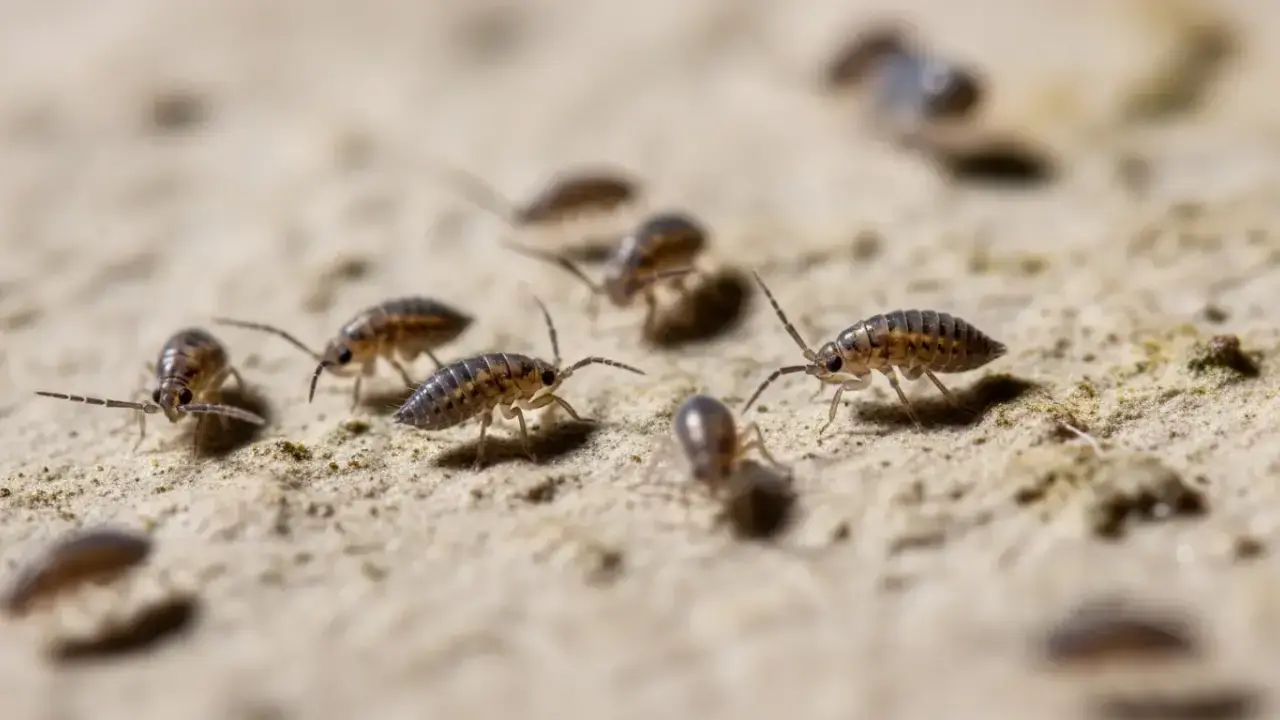
Booklice & Psocid Control
Professional booklice and psocid control for businesses and homes across the North East. Humidity assessment, targeted treatment, and ventilation advice. New build property specialists.
Why You Need Professional Booklice & Psocid Control
Booklice (psocids) are tiny, soft-bodied insects commonly found in damp or humid environments inside UK homes and commercial properties. Despite their name, they are not lice and do not bite or carry disease. They feed on microscopic mould and fungi that grow on surfaces in humid conditions. While harmless to health, large numbers indicate a moisture problem and can cause distress to occupants. They are a common call-out for new build properties where residual construction moisture has not fully dried out.
What's Included
Why acting quickly matters
Booklice reproduce rapidly in humid conditions, with females laying up to 100 eggs each. If the underlying moisture problem is not addressed, populations can double within weeks. In food storage areas, heavy infestations risk contamination and regulatory action.
Need professional booklice control?
Moisture assessment and targeted treatment across the North East. We identify the root cause and provide practical steps to eliminate the problem.
Request a free call back
Prefer to get in touch another way? Contact us or email info@wynyardpestcontrol.co.uk
Related Services
Threat Assessment
Nuisance:
3/10LOWBooklice are harmless but alarming in large numbers. They indicate an underlying moisture or ventilation problem. In food premises, they can contaminate dry goods and trigger food safety concerns.
Hazard:
1/10LOWBooklice do not bite, sting, or carry disease. They pose no direct health risk to people or pets. The primary concern is the underlying damp conditions they indicate.
Vital Statistics
| Common species | Liposcelis bostrychophilus (most common in UK buildings) |
| Size | 1 to 2 mm |
| Colour | Pale, translucent to light brown or grey |
| Diet | Microscopic mould and fungi on damp surfaces |
| Preferred humidity | Above 60% relative humidity |
| Activity | Most active in warm, humid conditions (spring and summer) |
| New build resolution | Typically resolves within 4 to 8 weeks of reducing humidity |
| Health risk | None. Do not bite, sting, or carry disease |
| Lifespan | 1 to 4 months (up to 6 months in optimal conditions) |
Key Facts
- Booklice are an indicator species for excess moisture. They do not cause the damp. They feed on the microscopic mould that grows when humidity is high
- Reducing humidity below 60% relative humidity is the single most effective control measure. Without addressing moisture, booklice will return after any chemical treatment
- New build properties contain significant residual moisture in plaster, screed, and concrete that can take 12 to 24 months to fully dry out
- Booklice are often mistaken for bed bug nymphs, dust mites, or flour mites due to their small size. Professional identification avoids unnecessary treatment
Booklice in Your Home or Business?
Contact us for a moisture assessment and targeted treatment. We identify the root cause and provide practical steps to eliminate the infestation permanently.
Identification
- Appearance: Very small (1 to 2 mm in length). Pale, translucent to light brown or grey. Soft-bodied with a relatively large head
- Wings: Some species are wingless, others have wings but rarely fly
- Behaviour: Found in groups, often running quickly across surfaces. Prefer dark, undisturbed, humid areas
- Common confusion: Often mistaken for bed bug nymphs, dust mites, or flour mites due to their small size
- Most common species: Liposcelis bostrychophilus is the most frequently encountered species in UK buildings. Wingless, approximately 1 mm long, and pale brown
Where Booklice Are Found
- Kitchens and bathrooms: Behind cupboards, under sinks, around window frames, anywhere with condensation or poor ventilation
- Bedrooms: Inside wardrobes, on wallpaper, behind furniture against cold external walls
- New build properties: Residual moisture from plaster, concrete, and paint provides ideal conditions. Very common in homes less than 2 years old
- Stored goods: In food cupboards (flour, cereals, dried goods), old books and papers, cardboard boxes, stored clothing
- Commercial premises: Archives, libraries, museums, food storage areas, warehouses with poor climate control
Why Booklice Appear
A cheap hygrometer lets you monitor humidity levels in affected rooms. If relative humidity is above 60%, booklice conditions are favourable.
Booklice are an indicator species for excess moisture. They do not cause the damp. They feed on the microscopic mould and fungi that grow when humidity is high. Common causes include:
- Poor ventilation (sealed windows, blocked air bricks, no extractor fans)
- Condensation on cold surfaces (single-glazed windows, cold external walls)
- Drying laundry indoors without adequate ventilation
- Leaking pipes or roof
- Rising or penetrating damp
- New build moisture (plaster, screed, concrete drying out over 12 to 24 months)
Treatment Approach
Insecticide alone will not resolve a booklice infestation. The underlying moisture source must be identified and addressed for permanent control.
Treatment follows three steps:
- Step 1: Address the moisture source. This is the most important step. Without reducing humidity, chemical treatment alone will not provide long-term control
- Step 2: Clean and remove food sources. Wipe down affected surfaces to remove mould. Dispose of heavily infested food items. Clean cupboards and storage areas thoroughly
- Step 3: Insecticide treatment (if needed). For heavy infestations, a residual insecticide spray is applied to affected areas. This kills active populations but will not prevent recurrence if the moisture problem is not addressed
Prevention
- Maintain humidity below 60%: Use a hygrometer to monitor and a dehumidifier if needed
- Ventilate kitchens and bathrooms: Install and use extractor fans
- Do not dry laundry indoors: Without opening windows or using a dehumidifier
- Keep air bricks and vents clear: Do not block with furniture or storage
- Store dry goods properly: In airtight containers, not cardboard packaging
- New build properties: Run heating and ventilation systems as soon as possible after completion. Allow adequate time for the building to dry out
Residential Booklice Control
- Booklice in homes are almost always an indicator of excess moisture rather than a hygiene problem
- Most commonly found in new build properties, poorly ventilated kitchens and bathrooms, and homes with condensation issues
- Not dangerous to health and do not bite, but large numbers cause significant distress
- Most domestic infestations resolve within 4 to 8 weeks of improving ventilation and reducing humidity, with or without chemical treatment
- Where chemical treatment is needed, a residual insecticide spray is applied to affected areas alongside environmental advice
- Technician identifies the moisture source and provides practical steps to reduce humidity and prevent recurrence
Commercial Booklice Control
- Booklice are a known issue in archives, libraries, food storage areas, and warehouses with poor climate control
- In food premises, booklice can contaminate dry goods and trigger food safety concerns during inspections
- Professional survey to assess humidity levels, identify infestation sources, and recommend environmental controls
- Targeted insecticide treatment for heavy infestations with follow-up monitoring
- Detailed written report for compliance and audit purposes
- Prevention advice tailored to the specific premises and storage conditions
We provide commercial booklice control across Darlington, Stockton, Sunderland, Hartlepool, and Durham. Booklice are often found alongside silverfish in damp environments. Rental properties and healthcare premises should address ventilation issues promptly to prevent recurrence. Schools and nurseries with damp classrooms are also affected. See how we work for details of our treatment approach.
DIY vs Wynyard Pest Control
Booklice feed on microscopic mould. Reducing indoor humidity below 60% removes their food source and is the most effective long-term control.
| DIY | Wynyard Pest Control | |
|---|---|---|
| Best for | Small numbers in a single room | Recurring or widespread sightings |
| Moisture source found | ✗ Not investigated | ✓ Damp survey and moisture mapping |
| Mould assessed | ✗ Visible surfaces only | ✓ Hidden mould sources identified |
| Pet and child safe | ✓ Ventilation is safe | ✓ Targeted, controlled application |
| Effectiveness | May resolve if moisture drops | Population and conditions addressed |
| Follow-up visits | ✗ None | ✓ Available if needed |
| Guarantee | ✗ None | ✓ Satisfaction guarantee |
When DIY may be sufficient: A few booklice in a newly plastered room or a bathroom with poor ventilation. Improving airflow, using a dehumidifier, and wiping down surfaces to remove microscopic mould will often resolve the issue within a few weeks.
When you need Wynyard Pest Control: If booklice are appearing in large numbers, in multiple rooms, or keep returning despite improved ventilation, there is likely a hidden moisture or mould problem. Older properties across Sunderland, Hartlepool, and Newcastle with condensation, rising damp, or leaking plumbing commonly harbour booklice populations in wall cavities and behind wallpaper.
Seasonal Booklice Activity in the North East
Hover or tap a month to see Booklice & Psocid activity details
Low activity. Heating reduces humidity in most properties, limiting the mould growth that booklice feed on.
Minimal activity. New build properties may still harbour populations due to residual construction moisture.
Activity beginning to increase as temperatures rise and humidity levels climb.
Spring humidity creates conditions for mould growth. Populations starting to build in damp areas.
Warmer, more humid conditions favour rapid reproduction. Check kitchens, bathrooms, and window frames.
Peak conditions. Warm temperatures and high humidity accelerate both mould growth and booklice breeding.
Peak season. Populations can build rapidly in poorly ventilated properties and new builds.
High activity continues. Drying laundry indoors adds moisture and worsens the problem.
Activity remains elevated. Autumn condensation begins on cooler surfaces.
Condensation on cold surfaces creates localised damp patches that sustain populations.
Activity declining as central heating reduces indoor humidity in most properties.
Low activity in most homes. New builds and poorly ventilated properties may still see booklice.
Booklice thrive in warm, humid conditions and are most numerous in late summer and autumn. New-build properties and recently plastered rooms are particularly vulnerable as drying building materials create high humidity. Central heating combined with poor ventilation keeps booklice active through winter in bathrooms, kitchens, and window frames.
In new-build or recently renovated properties, improve ventilation and use dehumidifiers while plaster and paint dry. Most booklice infestations in new homes resolve once humidity drops below 50%.
Spring (March to May) - Populations begin to build: Rising temperatures and increasing rainfall raise humidity levels indoors, encouraging the microscopic mould growth that booklice feed on. New-build properties with residual construction moisture are among the first to see increasing numbers. Watch for: tiny pale insects (1 to 2mm) on windowsills, in kitchen cupboards, and around bathroom grouting; a musty smell in poorly ventilated rooms; and mould spots forming on walls and ceilings in damp rooms across Hartlepool, Sunderland, and Durham.
Summer (June to August) - Peak breeding season: Warm, humid conditions create ideal breeding conditions. Booklice populations can build rapidly in kitchens, bathrooms, and any room where moisture levels exceed 60% relative humidity. Watch for: large numbers of booklice on walls, shelves, and in food cupboards; booklice appearing on stored books, papers, and cardboard packaging; and damp patches behind furniture, inside built-in wardrobes, and around window frames. Food businesses and rental properties across Middlesbrough and Stockton should monitor humidity levels closely.
Autumn (September to November) - Condensation triggers outbreaks: As outdoor temperatures drop and windows are closed, condensation forms on cooler surfaces inside the property. This creates localised damp patches that sustain mould growth and booklice populations well into autumn. Watch for: condensation on windows, particularly in bedrooms and bathrooms; booklice appearing in rooms where laundry is dried indoors; and populations persisting despite cleaning, which indicates an underlying moisture problem rather than a hygiene issue.
Winter (December to February) - Activity declines in most homes: Central heating reduces indoor humidity in most well-ventilated properties, and booklice populations drop naturally. However, in poorly ventilated homes, new builds with trapped construction moisture, and properties with underlying damp issues across Darlington and County Durham, populations can persist year-round. Watch for: continued activity near leaking pipes, in bathrooms without extractor fans, and in loft spaces with inadequate ventilation. Winter is the ideal time to improve ventilation, install extractor fans, and address rising damp or condensation issues.
Our Booklice & Psocid Control Process
A structured, three-stage approach that treats the problem and prevents it returning.
Step 1
Inspect and Plan
A detailed property inspection identifies entry points, infestation hotspots, and the species involved. A targeted treatment plan is developed based on findings.
Step 2
Treatment
Professional control measures are applied using advanced techniques and CRRU-compliant products. Proofing and sealing work addresses the root cause at the same time.
Step 3
Ongoing Support
Follow-up visits confirm the problem is resolved. You receive clear documentation, prevention advice, and recommendations for ongoing protection.
Why Choose Us for Booklice & Psocid Control
Root Cause Focus
We identify and address the moisture issues driving the infestation, not just the symptoms.
New Build Specialists
We have extensive experience with booklice in newly built properties where residual construction moisture is common.
Safe Treatments
Domestic-safe insecticides with minimal preparation. No high-toxicity products used.
Practical Advice
Clear guidance on ventilation, humidity management, and environmental changes to prevent recurrence.

NPTA Member
We are full members of the National Pest Technicians Association (NPTA). This means our technicians meet strict training and competency standards, carry appropriate insurance, and follow the association's code of practice. NPTA membership is your assurance that the work is carried out professionally and responsibly.
Fair, Transparent Pricing
Every job is different. The cost depends on the type of pest, scale of the problem, and what treatment is needed. We provide a free assessment and an honest quotation before any work begins. No hidden costs, no surprises.
View our pricing guideSatisfaction Guaranteed
If booklice activity persists after treatment and environmental recommendations have been implemented, we will return and re-treat at no additional charge.
Frequently Asked Questions
No. Booklice do not bite, sting, or carry disease. They are harmless to humans and pets. However, large numbers are distressing and indicate an underlying moisture or ventilation problem that should be addressed.
New build properties contain significant residual moisture in the plaster, screed, and concrete that can take 12 to 24 months to fully dry out. This elevated humidity creates ideal conditions for booklice. Improving ventilation and running a dehumidifier are the most effective management steps while the building dries out.
Not on its own. Insecticide will reduce active populations but booklice will return if the underlying moisture problem is not fixed. Relative humidity must be reduced and maintained below 60% to break the infestation cycle permanently.
Use extractor fans in kitchens and bathrooms, open windows regularly, avoid drying laundry indoors without ventilation, run a dehumidifier in affected rooms, and ensure air bricks and vents are clear and unblocked.
Improving ventilation and humidity is something you can do yourself and is the most important step. However, DIY insecticide sprays can disperse booklice without eliminating them, making the infestation harder to treat. Professional treatment is recommended for heavy, persistent, or commercial infestations.
Related Services
Our Other Services
Areas We Cover
We provide booklice & psocid control services across the North East of England.
Ready to talk to us?
Free survey and quotation for businesses and homeowners. No obligation, no pressure.
We will get back to you as soon as we can.