
Bee Control
Ethical bee management and live relocation services across the North East. Species identification, honey bee colony removal, beekeeper network, and structural sealing. Relocation always preferred over destruction.
Why You Need Professional Bee Control
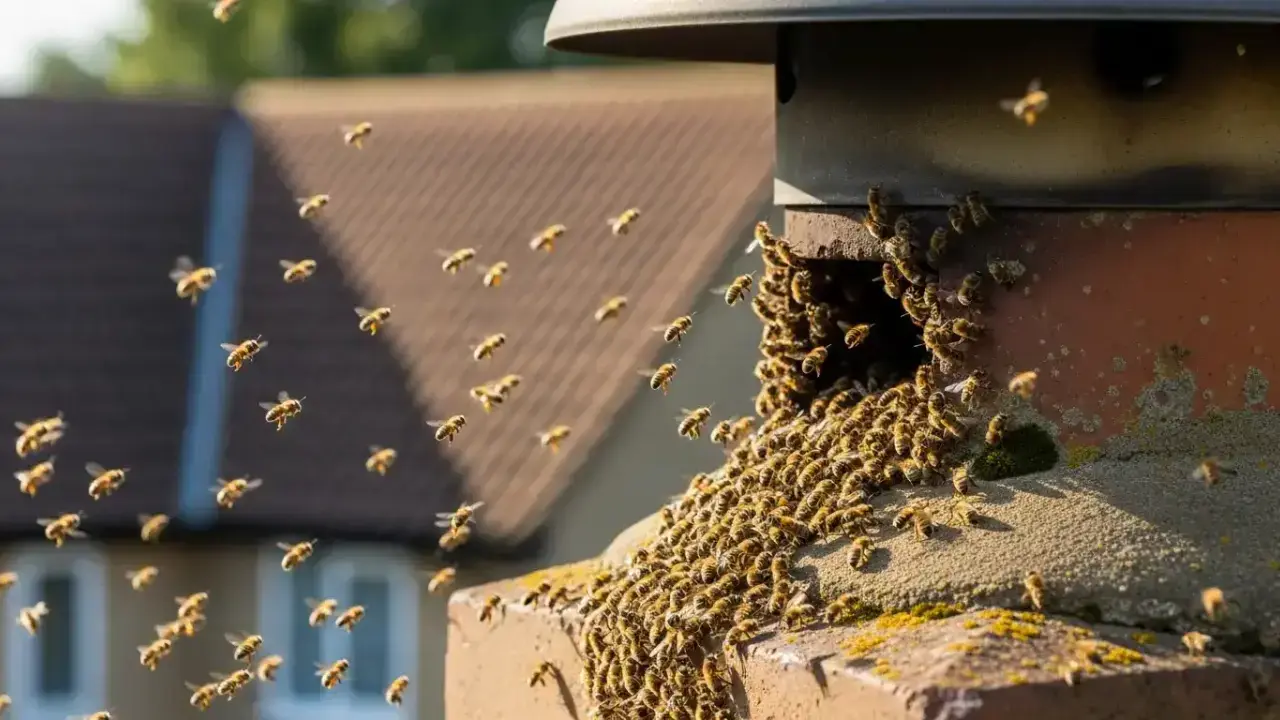
Bees are essential pollinators and legally protected in many circumstances. When a colony establishes inside a building, in a wall void, roof space, or chimney, professional removal is necessary. Killing the colony is rarely the right answer, and in many cases is not even legal. We work with a network of local beekeepers to safely remove and rehome bee colonies wherever possible.
What's Included
Why acting quickly matters
An established honey bee colony inside a wall or roof cavity can grow to 60,000 bees and produce kilograms of honeycomb. The longer a colony remains, the larger and more complex the removal. Abandoned comb attracts secondary pests including wax moths, carpet beetles, and rodents.
Bees nesting in your property?
Species identification and expert advice. If removal is needed, we provide safe live relocation with full void cleaning and sealing.
Request a free call back
Prefer to get in touch another way? Contact us or email info@wynyardpestcontrol.co.uk
Related Services
Threat Assessment
Nuisance:
5/10MODERATEBee colonies in buildings cause structural staining from honey and wax, attract secondary pests, and can be distressing to occupants. Swarms near public areas cause anxiety but are usually temporary.
Hazard:
4/10MODERATEBee stings are painful and can cause serious allergic reactions (anaphylaxis) in sensitive individuals. Established colonies in walls can cause honey and wax damage to building fabric.
Vital Statistics
| Species requiring action | Honey Bees (colony in structure), Bumblebees (rare), Masonry Bees (cosmetic) |
| Honey bee colony size | Up to 60,000 workers |
| Bumblebee colony size | 100 to 400 bees (dies out in autumn) |
| Swarming season | April to June |
| Approach | Live relocation preferred. Destruction as last resort only |
| After removal | Void must be cleaned and sealed to prevent re-colonisation |
| Worker lifespan | Honey bee: 6 weeks (summer). Bumblebee: 2 to 6 weeks |
| Queen lifespan | Honey bee: 2 to 5 years. Bumblebee: 1 year |
Key Facts
- Live removal is the complete and permanent solution. It avoids the ongoing problems caused by leaving dead colony material in the structure
- Exterminating a colony does not solve the structural problem. Wax comb and honey remain inside the building, melting, leaking, fermenting, and attracting other pests
- Without removing the pheromone-scented comb and sealing entry points, new swarms are drawn to the same location year after year
- Many bee species and their nests are protected under the Wildlife and Countryside Act 1981. Professional advice is essential before taking any action
Bees in Your Building?
Contact us for species identification and advice. If professional removal is needed, we provide live relocation with void cleaning, sealing, and proof of rehoming.
Bees, Swarms, or Wasps: Know the Difference
Misidentification is extremely common. Before calling a pest controller, it is worth establishing what you are dealing with:
Why You Cannot Simply Exterminate a Colony
Live removal is the complete and permanent solution. It resolves the problem fully in a single programme.
Many people assume extermination is the simplest solution. In practice:
- It may be illegal: Many bee species and their nests are protected under the Wildlife and Countryside Act 1981
- It does not solve the structural problem: The wax comb and honey remain inside the building. As it degrades, it melts, leaks, and ferments, attracting other pests (wax moths, ants, mice) and causing odour and staining
- Decontamination is still required: The void must be cleaned out and sealed regardless, which adds significant work
- Colonies can return: Without removing the pheromone-scented comb and sealing entry points, new swarms are drawn to the same location year after year
Honey Bee Live Removal and Relocation
Live removal involves accessing the nest, carefully removing the bees and all comb, sealing the entry point, and rehoming the colony at a partner apiary. It is the only approach that resolves the problem completely.
The Process
- Step 1: Site survey. Assess location, access requirements (scaffolding may be needed for high roof or chimney nests), structure type, and colony size
- Step 2: Live removal. Bees are carefully removed, the comb structure extracted, and the queen located and protected
- Step 3: Void cleaning and decontamination. All wax, honey, and residue removed from the cavity
- Step 4: Entry point sealing. Gaps sealed with appropriate materials to prevent future nesting
- Step 5: Rehoming. Colony transferred to a partner beekeeper or apiary
- Step 6: Proof of relocation provided on completion
Other Bee Species
Bumblebees
Bumblebee colonies are small (rarely more than 400 individuals) and die out naturally by autumn. They are generally docile and only sting when directly threatened. The best advice is usually to leave them alone. If a nest is in a location that genuinely cannot be tolerated, we can advise on options. Relocation is possible but must be done by a specialist.
Masonry Bees (Red Mason Bee)
Solitary bees that nest in holes in mortar, soft brick, and fascias. They cause gradual cosmetic damage to older properties. Treatment involves repointing the affected areas and providing alternative nesting habitat. Masonry bees are beneficial pollinators and not aggressive.
Mining Bees
Create small burrows in lawns and sandy soil. Completely harmless. Emerge briefly in spring. Best left alone.
Prevention
- Inspect before swarming season: Check roof soffits, fascias, chimney caps, and air bricks in spring (April to June)
- Seal gaps: In brickwork, mortar joints, and rooflines that are not in active use
- Fit chimney cowls: To unused chimney flues
- Leave swarms alone: If a swarm lands on your property, give it space. Do not attempt to move or spray it. Contact the BBKA swarm line or a local beekeeper
We provide bee removal and relocation services across Darlington, Hartlepool, and Durham. If you are unsure whether you are dealing with bees or wasps, see our wasp and hornet control page for comparison. For schools and healthcare premises, prompt identification is essential to manage risk appropriately. See how we work for details of our approach.
DIY vs Wynyard Pest Control
Most bee problems do not require treatment. Bumble bee nests die off naturally in autumn. Contact us for a free assessment before taking any action.
| DIY | Wynyard Pest Control | |
|---|---|---|
| Best for | Watching and waiting | Bees in a wall cavity or dangerous location |
| Species identified | ✗ Bees vs wasps often confused | ✓ Professional ID on first visit |
| Legal compliance | ⚠ Risk of harming protected species | ✓ Legal, ethical approach |
| Relocation option | ✗ Not available | ✓ Live relocation where possible |
| Effectiveness | May cause more problems | Safe removal or managed coexistence |
| Follow-up visits | ✗ None | ✓ Available if needed |
| Guarantee | ✗ None | ✓ Problem resolved guarantee |
When DIY may be sufficient: A bumble bee nest in the garden that is not causing a problem. Bumble bee colonies are small, rarely aggressive, and die off naturally by late autumn. The nest will not be reused the following year. Leave them alone if possible.
When you need Wynyard Pest Control: If honey bees have established a colony inside a wall cavity, chimney, or roof space, or if a swarm has landed on your property and not moved on within 48 hours, professional assessment is needed. We always prioritise live relocation and will connect you with local beekeepers across Hartlepool, Sunderland, and Durham where possible. Treatment is a last resort, used only when bees pose a genuine risk to health or safety.
Seasonal Bee Activity in the North East
Hover or tap a month to see Bee activity details
Honey bee colonies overwintering. No swarming activity. A good time to seal potential entry points.
Colonies beginning to build up. Queens start laying. No swarms expected yet.
Colony activity increasing. Solitary bees (mining bees, masonry bees) begin to emerge.
Swarming season begins. Honey bee swarms may land on properties. Bumblebee and solitary bee nests establishing.
Peak swarming period. Most honey bee swarm calls received. Scout bees investigating cavities in walls, roofs, and chimneys.
Swarming continues. Established colonies growing. Masonry bees active in mortar joints.
Swarming season winding down. Established colonies at peak size.
Late swarms possible but uncommon. Colonies preparing for autumn.
Bumblebee colonies dying off naturally. Honey bee colonies reducing in size.
Solitary bee and bumblebee activity ended. Honey bees preparing to overwinter.
Minimal activity. Good time to inspect and seal entry points before spring.
Colonies dormant. No swarming risk. Plan any structural repairs before April.
Bee activity follows a clear seasonal cycle. Queen bumblebees emerge from hibernation in March and begin nesting. Colonies grow through spring and peak in summer. Honey bee swarms are most common in May and June. By autumn, bumblebee colonies naturally decline, while honey bee colonies prepare for winter.
Bees are vital pollinators and are not routinely treated. If a bee nest is in a location that poses a genuine risk, we will relocate it where possible. Contact us for advice before taking any action.
Spring (March to May) - Swarming season begins: Honey bee colonies that overwintered successfully begin building up rapidly. By late April, overcrowded hives produce swarms - clusters of thousands of bees that leave the colony with a queen to establish a new home. Scout bees investigate cavities in walls, chimneys, soffits, and roof spaces across Hartlepool, Sunderland, and Durham. Watch for: clusters of bees hanging from branches, fences, or walls (a temporary swarm resting before moving on); individual bees repeatedly entering and leaving a gap in brickwork or roofline; and bumblebees establishing nests in compost heaps, bird boxes, and cavities under sheds.
Summer (June to August) - Peak colony size: Honey bee colonies reach their largest populations. Established colonies in wall cavities and roof spaces can contain 30,000 to 60,000 bees. Late swarms are less common but still occur. Masonry bees are actively nesting in mortar joints of older properties. Watch for: heavy bee traffic around a single entry point on the exterior of the building, honey seeping through ceilings in hot weather from large colonies in roof voids, and solitary bees nesting in mortar joints and fascia boards across properties in Middlesbrough and Stockton.
Autumn (September to November) - Colonies contract: Honey bee colonies reduce in size as the queen slows egg-laying. Bumblebee colonies die off naturally by September, with only newly mated queens surviving to hibernate. Watch for: dying bumblebees on paths and lawns (a normal end-of-season event, not a sign of poisoning); reduced activity at established honey bee colony entrances; and wasps attempting to rob weakened honey bee colonies. Autumn is the window for sealing entry points after colonies have been removed or relocated.
Winter (December to February) - Dormant period: Honey bee colonies cluster inside their nest to survive the cold, rarely flying below 10°C. No swarming occurs during winter. Bumblebee queens hibernate underground in sheltered spots. Watch for: occasional bees emerging on mild winter days to cleanse-fly. This is the ideal time for prevention: seal gaps in soffits and fascia, fit chimney cowls to unused flues, repoint damaged mortar, and plan any structural work before the April swarming season begins.
Our Bee Control Process
A structured, three-stage approach that treats the problem and prevents it returning.
Step 1
Inspect and Plan
A detailed property inspection identifies entry points, infestation hotspots, and the species involved. A targeted treatment plan is developed based on findings.
Step 2
Treatment
Professional control measures are applied using advanced techniques and CRRU-compliant products. Proofing and sealing work addresses the root cause at the same time.
Step 3
Ongoing Support
Follow-up visits confirm the problem is resolved. You receive clear documentation, prevention advice, and recommendations for ongoing protection.
Why Choose Us for Bee Control
Relocation First
We always aim to relocate rather than destroy, working with local beekeepers wherever possible.
Complete Solution
Live removal includes void cleaning, decontamination, and entry point sealing to prevent re-colonisation.
Species Identification
We identify the species to determine the right approach, as different bees require different handling.
Ethical and Legal Compliance
All work respects the ecological importance of bees and complies with the Wildlife and Countryside Act 1981.

NPTA Member
We are full members of the National Pest Technicians Association (NPTA). This means our technicians meet strict training and competency standards, carry appropriate insurance, and follow the association's code of practice. NPTA membership is your assurance that the work is carried out professionally and responsibly.
Fair, Transparent Pricing
Every job is different. The cost depends on the type of pest, scale of the problem, and what treatment is needed. We provide a free assessment and an honest quotation before any work begins. No hidden costs, no surprises.
View our pricing guideSatisfaction Guaranteed
After live removal, if the entry point is properly sealed and new swarms return to the same location within 12 months, we will return to investigate at no additional charge.
Frequently Asked Questions
No. Attempting to remove an established colony without training and protective equipment is dangerous and likely to cause significant harm to both you and the bees. Professional removal is the only safe option.
Not the same colony. Once removed and the void cleaned and sealed, the colony will not return. However, new swarms may be attracted to the same location if the entry point is not properly sealed or any residual pheromone scent remains.
Some species are protected. Honey bees are not currently listed under the Wildlife and Countryside Act 1981, but their removal must still be carried out responsibly and in line with best practice. Bumblebees and some solitary species have greater protection. We always work in line with current legislation.
Colonies can go unnoticed for years. By the time a homeowner notices bees entering a wall or roof, the comb structure inside may be substantial. Early action avoids a larger and more complex removal.
Related Services
Our Other Services
Areas We Cover
We provide bee control services across the North East of England.
Ready to talk to us?
Free survey and quotation for businesses and homeowners. No obligation, no pressure.
We will get back to you as soon as we can.